Close Menu
TechCentralTechCentral

    Subscribe to the newsletter

    Get the best South African technology news and analysis delivered to your e-mail inbox every morning.

    Facebook X (Twitter) YouTube LinkedIn
    WhatsApp Facebook X (Twitter) LinkedIn YouTube
    TechCentralTechCentral
    • News
      Nedbank hires MTN's former tech chief as group CIO - Nikos Angelopoulos

      Nedbank hires MTN’s former tech chief as group CIO

      31 July 2026
      Eskom's diesel bill falls 86% as breakdowns hit eight-year low

      Eskom’s diesel bill falls 86% as breakdowns hit eight-year low

      31 July 2026
      Ramaphosa signs off on taking the grid away from Eskom

      Ramaphosa signs off on taking the grid away from Eskom

      31 July 2026
      Microsoft just had the biggest day in stock market history

      Microsoft just had the biggest day in stock market history

      31 July 2026
      MTN Nigeria's growth engine stalled in second quarter - Karl Toriola

      MTN Nigeria’s growth engine stalled in second quarter

      31 July 2026
    • World
      Meta AI will now tell parents if their teen is in crisis

      Meta AI will now tell parents if their teen is in crisis

      17 July 2026
      IBM shares crash 25% as AI upends software spending - Arvind Krishna

      IBM shares crash 25% as AI upends software spending

      15 July 2026
      Jony Ive's first OpenAI device: an AI smart speaker - Jony Ive and Sam Altman

      Jony Ive’s first OpenAI device: an AI smart speaker

      15 July 2026
      Stripe, Advent in talks to buy PayPal for $53-billion

      Stripe, Advent in talks to buy PayPal for $53-billion

      15 July 2026
      Memory crisis sends smartphone market into steep decline

      Memory crisis sends smartphone market into steep decline

      13 July 2026
    • In-depth
      The plan to stop AI from breaking the world - Google DeepMind CEO Demis Hassabis. Image: John Sears

      The plan to stop AI from breaking the world

      16 July 2026
      The internet has a Strait of Hormuz problem

      The internet has a Strait of Hormuz problem

      15 July 2026
      AI boom sparks rally, frenzy and fear

      AI boom sparks rally, frenzy and fear

      11 June 2026
      Every plug-in hybrid on sale in South Africa, ranked by price - Lamborghini Temerario

      Every plug-in hybrid on sale in South Africa, ranked by price

      7 June 2026
      What Wi-Fi 8 will mean for wireless networks

      What Wi-Fi 8 will mean for wireless networks

      1 June 2026
    • TCS
      TCS+ | Why South African workers must become supervisors of digital labour - Accelera Digital Group Cliff de Wit

      TCS+ | Why South African workers must become supervisors of digital labour

      31 July 2026
      TCS | Rapid deployment rules can't work without municipalities: ACT - Nomvuyiso Batyi

      TCS | Icasa’s rules skip the real bottleneck: ACT

      30 July 2026
      TCS+ | iStore Business on why Apple makes sense for SMEs - Sudesh Pillay and Tamia Nontsikelelo

      TCS+ | iStore Business on why Apple makes sense for SMEs

      30 July 2026
      TCS+ | A smarter approach to cloud for South African businesses - Joel Chacko and Jonathan Oaker

      TCS+ | A smarter approach to cloud for South African businesses

      28 July 2026
      TCS | How Optasia lends billions to people banks can't see - Salvador Anglada

      TCS | How Optasia lends billions to people banks can’t see

      23 July 2026
    • Opinion
      The author, Jannie van Zyl

      Selling vapour is corporate suicide in slow motion

      16 July 2026
      Brazil's online gambling crackdown is a lesson for South Africa

      How Amazon outmanoeuvred Starlink in South Africa

      15 July 2026
      The Popia problem with agentic AI - Herman Haasbroek

      The Popia problem with agentic AI

      14 July 2026
      The author, Fanie van Rooyen

      South Africa can still catch the AI wave – here’s how

      7 July 2026
      The author, Fanie van Rooyen

      The AI utopia South Africa can’t afford

      1 July 2026
    • Company Hubs
      • 1Stream
      • Africa Data Centres
      • AfriGIS
      • Altron Digital Business
      • Altron Document Solutions
      • Altron Group
      • Arctic Wolf
      • Ascent Technology
      • AvertITD
      • BBD
      • Braintree
      • CallMiner
      • CambriLearn
      • CM Telecom
      • Contactable
      • CYBER1 Solutions
      • Digicloud Africa
      • Digimune
      • Domains.co.za
      • ESET
      • Euphoria Telecom
      • HOSTAFRICA
      • Incredible Business
      • iONLINE
      • IQbusiness
      • Iris Network Systems
      • Kaspersky
      • LSD Open
      • Mitel
      • NEC XON
      • Netstar
      • Network Platforms
      • Next DLP
      • Ovations
      • Paracon
      • Paratus
      • Q-KON
      • SevenC
      • SkyWire
      • Solid8 Technologies
      • Telit Cinterion
      • Telviva
      • Tenable
      • Vertiv
      • Videri Digital
      • Vodacom Business
      • Vox
      • Wipro
      • Workday
      • XLink
    • Sections
      • AI and machine learning
      • Banking
      • Broadcasting and Media
      • Cloud services
      • Contact centres and CX
      • Cryptocurrencies
      • Education and skills
      • Electronics and hardware
      • Energy and sustainability
      • Enterprise software
      • Financial services
      • HealthTech
      • Information security
      • Internet and connectivity
      • Internet of Things
      • Investment
      • IT services
      • Lifestyle
      • Policy and regulation
      • Public sector
      • Retail and e-commerce
      • Satellite communications
      • Science
      • SMEs and start-ups
      • Social media
      • Talent and leadership
      • Telecoms
      • Watts & Wheels
    • Events
    • Advertise
    TechCentralTechCentral
    Home » In-depth » Digital TV standards row rages on

    Digital TV standards row rages on

    By Editor5 January 2011
    Twitter LinkedIn Facebook WhatsApp Email Telegram Copy Link
    News Alerts
    WhatsApp
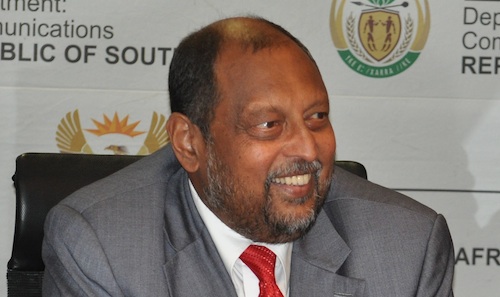
    Communications minister Roy Padayachie

    The battle over which standard SA will use for digital terrestrial television rages on, with a plan by the National Association of Manufacturers in Electronics Components (Namec) to contest a decision by cabinet in favour of the European system.

    Namec chairman Keith Thabo says the group, along with organised labour, have engaged with communications minister Roy Padayachie and President Jacob Zuma.

    The association wants cabinet to reverse its decision that SA will adopt the second generation of the European standard for digital TV.

    The group’s plans to contest the decision, first revealed in the Business Report newspaper on Wednesday, are as a result of its belief that a Brazilian version of a Japanese standard, known ISDB-T, would have a more beneficial economic impact than the European offering.

    On Monday, TechCentral revealed exclusively that cabinet had endorsed a recommendation by a Southern African Development Community (SADC) task team that the region adopt the European standard.

    The news followed a year of uncertainty, during which time the department of communications entertained multiple standards.

    Brazil and Japan lobbied hard to have ISDB-T adopted by the region, eventually prompting SADC communications ministers to appoint a task team to examine the issue.

    The task team reported back on 25 November, recommending that the region adopt Europe’s DVB-T2, but leaving the door open for individual countries to adopt other standards — provided they meet certain technical guidelines.

    Although Padayachie has not yet made a formal announcement on the matter, his adviser, Kuben Govender, has confirmed — in an interview with TechCentral — that cabinet has endorsed DVB-T2.

    Govender has confirmed that cabinet ratified the decision at its last meeting of 2010, held on 15 December, and that the cabinet minutes reflect this.

    However, Namec is angry at the decision, saying cabinet was “clearly poorly advised” on the value of the Japanese-Brazilian standard. “Government didn’t consult enough with stakeholders,” he says.

    Thabo says the department of communications should also not be able to make the decision exclusively. “The department of economic development and the department of science & technology should also have had a say,” he says.

    He says government does not understand that the Japanese-Brazilian standard will have a wider impact on economic growth than the European standard. “ISDB-T gives us free access to middleware that we can modify and develop for ourselves. We could end up with our own standard that can be used to generate jobs and encourage small business,” he says.

    SA’s decision in 2006 to use the European standard was a bad one to begin with, Thabo says.

    “The reason we are in this mess is because the broadcasters managed to persuade late [communications] minister Ivy Matsepe-Casaburri to use the [European] standard. I can’t prove it but money has definitely changed hands somewhere,” he says.

    According to Thabo, the only people who will benefit from the European standard are the large broadcasters and established manufacturers.

    Late last year, Brazil and Japan, in conjunction with government-owned signal distributor Sentech, conducted a trial of ISDB-T in SA.

    Many local engineers called the test a failure, since there was evidence that the signal interfered with established local broadcasts.

    However, Thabo says the information that was released on the trial, was provided by a rival group, the SA Digital Broadcasting Association (Sadiba).

    Sadiba has never supported the Japanenese-Brazilian standard and Thabo says the group has been trying to “peddle propaganda” to prevent its implementation locally.

    However, Sadiba chairman Lynn Mansfield says the group’s aim was to clarify the value of the European standard. “What we were doing was peddling facts,” he says.

    Mansfield says the standard SA implements for digital broadcasting shouldn’t matter to manufacturers because they will build the devices used for viewing the signal, no matter which standard is used to do it.

    “It makes me believe that they have been offered something by the Japanese, the same way the Japanese offered the Brazilians something,” he says.

    He says if cabinet has agreed to go with the European standard then it has made the right choice.

    According to Mansfield, rekindling the fight now is pointless. “Unions must not lose sight of the fact that DVB-T2 will be far better for the economy in the long run,” he says. The efficiency of the technology will free up more valuable spectrum that can be used later by telecommunications operators for high-speed wireless Internet.  — Candice Jones, TechCentral

    See also: Cabinet chooses T2 for digital TV

    • Subscribe to our free daily newsletter
    • Follow us on Twitter or on Facebook

    Follow TechCentral on Google News Add TechCentral as your preferred source on Google


    Jacob Zuma Keith Thabo Kuben Govender Lynn Mansfield Roy Padayachie Sadiba
    WhatsApp YouTube
    Share. Facebook Twitter LinkedIn WhatsApp Telegram Email Copy Link
    Previous ArticleIs Facebook really worth $50bn?
    Next Article ZA Tech Show: Episode 142 – ‘CES slamwich’

    Related Posts

    Brazil's online gambling crackdown is a lesson for South Africa

    Hold the doom: the case for a South African comeback

    26 February 2026
    Television at 50 | How the SABC lost its way - and what it must become

    Television at 50 | How the SABC lost its way – and what it must become

    5 January 2026
    ICT BEE fight deepens as MK, EFF target Malatsi - Colleen Makhubele

    ICT BEE fight deepens as MK, EFF target Malatsi

    15 December 2025
    Company News
    Domains.co.za launches self-hosted n8n VPS hosting

    Domains.co.za launches self-hosted n8n VPS hosting

    31 July 2026
    Smarter.tech '26 shows why smarter technology begins with context - Obsidian Systems

    Context is the missing piece in enterprise AI: Obsidian

    31 July 2026
    Huawei launches 12 intelligent transport solutions in South Africa - Sam Tang

    Huawei launches 12 intelligent transport solutions in South Africa

    30 July 2026
    Opinion
    The author, Jannie van Zyl

    Selling vapour is corporate suicide in slow motion

    16 July 2026
    Brazil's online gambling crackdown is a lesson for South Africa

    How Amazon outmanoeuvred Starlink in South Africa

    15 July 2026
    The Popia problem with agentic AI - Herman Haasbroek

    The Popia problem with agentic AI

    14 July 2026

    Subscribe to Updates

    Get the best South African technology news and analysis delivered to your e-mail inbox every morning.

    Latest Posts
    Nedbank hires MTN's former tech chief as group CIO - Nikos Angelopoulos

    Nedbank hires MTN’s former tech chief as group CIO

    31 July 2026
    Eskom's diesel bill falls 86% as breakdowns hit eight-year low

    Eskom’s diesel bill falls 86% as breakdowns hit eight-year low

    31 July 2026
    Ramaphosa signs off on taking the grid away from Eskom

    Ramaphosa signs off on taking the grid away from Eskom

    31 July 2026
    TCS+ | Why South African workers must become supervisors of digital labour - Accelera Digital Group Cliff de Wit

    TCS+ | Why South African workers must become supervisors of digital labour

    31 July 2026
    © 2009 - 2026 NewsCentral Media
    Built and maintained by Chronon
    • Cookie policy (ZA)
    • TechCentral – privacy and Popia

    Type above and press Enter to search. Press Esc to cancel.

    Manage consent

    TechCentral uses cookies to enhance its offerings. Consenting to these technologies allows us to serve you better. Not consenting or withdrawing consent may adversely affect certain features and functions of the website.

    Functional Always active
    The technical storage or access is strictly necessary for the legitimate purpose of enabling the use of a specific service explicitly requested by the subscriber or user, or for the sole purpose of carrying out the transmission of a communication over an electronic communications network.
    Preferences
    The technical storage or access is necessary for the legitimate purpose of storing preferences that are not requested by the subscriber or user.
    Statistics
    The technical storage or access that is used exclusively for statistical purposes. The technical storage or access that is used exclusively for anonymous statistical purposes. Without a subpoena, voluntary compliance on the part of your Internet Service Provider, or additional records from a third party, information stored or retrieved for this purpose alone cannot usually be used to identify you.
    Marketing
    The technical storage or access is required to create user profiles to send advertising, or to track the user on a website or across several websites for similar marketing purposes.
    • Manage options
    • Manage services
    • Manage {vendor_count} vendors
    • Read more about these purposes
    View preferences
    • {title}
    • {title}
    • {title}