Close Menu
TechCentralTechCentral

    Subscribe to the newsletter

    Get the best South African technology news and analysis delivered to your e-mail inbox every morning.

    Facebook X (Twitter) YouTube LinkedIn
    WhatsApp Facebook X (Twitter) LinkedIn YouTube
    TechCentralTechCentral
    • News
      MultiChoice scraps annual DStv price hikes for 2026 - David Mignot

      MultiChoice scraps annual DStv price hike

      20 February 2026
      What Gen Z really thinks about the tech world it inherited - Tinashe Mazodze

      What Gen Z really thinks about the tech world it inherited

      20 February 2026
      Showmax 'can't continue' in its current form

      Showmax ‘can’t continue’ in its current form

      20 February 2026
      Free Market Foundation slams treasury's proposed gambling tax

      Free Market Foundation slams treasury’s proposed gambling tax

      20 February 2026
      South Africa's dynamic spectrum breakthrough - Paul Colmer

      South Africa’s dynamic spectrum breakthrough

      20 February 2026
    • World
      Prominent Southern African journalist targeted with Predator spyware

      Prominent Southern African journalist targeted with Predator spyware

      18 February 2026
      More drama in Warner Bros tug of war

      More drama in Warner Bros tug of war

      17 February 2026
      Russia bans WhatsApp

      Russia bans WhatsApp

      12 February 2026
      EU regulators take aim at WhatsApp

      EU regulators take aim at WhatsApp

      9 February 2026
      Musk hits brakes on Mars mission

      Musk hits brakes on Mars mission

      9 February 2026
    • In-depth
      How liberalisation is rewiring South Africa's power sector

      How liberalisation is rewiring South Africa’s power sector

      21 January 2026
      The top-performing South African tech shares of 2025

      The top-performing South African tech shares of 2025

      12 January 2026
      Digital authoritarianism grows as African states normalise internet blackouts

      Digital authoritarianism grows as African states normalise internet blackouts

      19 December 2025
      TechCentral's South African Newsmakers of 2025

      TechCentral’s South African Newsmakers of 2025

      18 December 2025
      Black Friday goes digital in South Africa as online spending surges to record high

      Black Friday goes digital in South Africa as online spending surges to record high

      4 December 2025
    • TCS
      Watts & Wheels S1E4: 'We drive an electric Uber'

      Watts & Wheels S1E4: ‘We drive an electric Uber’

      10 February 2026
      TCS+ | How Cloud On Demand is helping SA businesses succeed in the cloud - Xhenia Rhode, Dion Kalicharan

      TCS+ | Cloud On Demand and Consnet: inside a real-world AWS partner success story

      30 January 2026
      Watts & Wheels S1E4: 'We drive an electric Uber'

      Watts & Wheels S1E3: ‘BYD’s Corolla Cross challenger’

      30 January 2026
      Watts & Wheels S1E4: 'We drive an electric Uber'

      Watts & Wheels S1E2: ‘China attacks, BMW digs in, Toyota’s sublime supercar’

      23 January 2026

      TCS+ | Why cybersecurity is becoming a competitive advantage for SA businesses

      20 January 2026
    • Opinion
      A million reasons monopolies don't work - Duncan McLeod

      A million reasons monopolies don’t work

      10 February 2026
      The author, Business Leadership South Africa CEO Busi Mavuso

      Eskom unbundling U-turn threatens to undo hard-won electricity gains

      9 February 2026
      South Africa's skills advantage is being overlooked at home - Richard Firth

      South Africa’s skills advantage is being overlooked at home

      29 January 2026
      Why Elon Musk's Starlink is a 'hard no' for me - Songezo Zibi

      Why Elon Musk’s Starlink is a ‘hard no’ for me

      26 January 2026
      A million reasons monopolies don't work - Duncan McLeod

      South Africa’s new fibre broadband battle

      20 January 2026
    • Company Hubs
      • Africa Data Centres
      • AfriGIS
      • Altron Digital Business
      • Altron Document Solutions
      • Altron Group
      • Arctic Wolf
      • AvertITD
      • Braintree
      • CallMiner
      • CambriLearn
      • CYBER1 Solutions
      • Digicloud Africa
      • Digimune
      • Domains.co.za
      • ESET
      • Euphoria Telecom
      • Incredible Business
      • iONLINE
      • IQbusiness
      • Iris Network Systems
      • LSD Open
      • Mitel
      • NEC XON
      • Netstar
      • Network Platforms
      • Next DLP
      • Ovations
      • Paracon
      • Paratus
      • Q-KON
      • SevenC
      • SkyWire
      • Solid8 Technologies
      • Telit Cinterion
      • Tenable
      • Vertiv
      • Videri Digital
      • Vodacom Business
      • Wipro
      • Workday
      • XLink
    • Sections
      • AI and machine learning
      • Banking
      • Broadcasting and Media
      • Cloud services
      • Contact centres and CX
      • Cryptocurrencies
      • Education and skills
      • Electronics and hardware
      • Energy and sustainability
      • Enterprise software
      • Financial services
      • Information security
      • Internet and connectivity
      • Internet of Things
      • Investment
      • IT services
      • Lifestyle
      • Motoring
      • Public sector
      • Retail and e-commerce
      • Satellite communications
      • Science
      • SMEs and start-ups
      • Social media
      • Talent and leadership
      • Telecoms
    • Events
    • Advertise
    TechCentralTechCentral
    Home » Sections » Motoring » Electric car vs petrol: which is really cheaper to run in South Africa?
    Electric car vs petrol: which is really cheaper to run in South Africa?
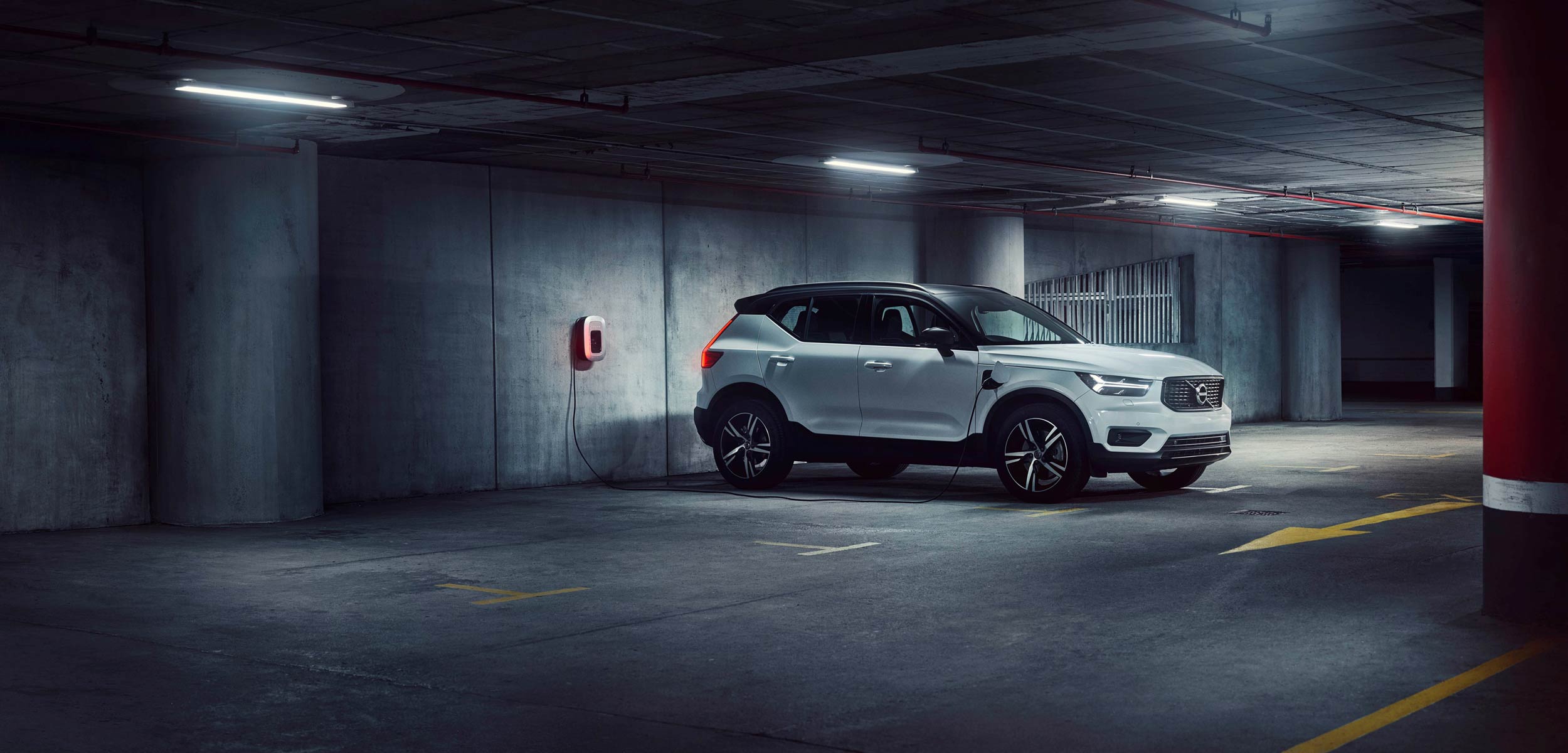
    Volvo XC40

    Electric car vs petrol: which is really cheaper to run in South Africa?

    By William Kelly25 February 2025

    Just how expensive — or cheap — is it to own and run a petrol-powered car compared with one of these newfangled electric vehicles that are slowly making their way onto South Africa’s roads?

    Well, I decided to crunch some numbers and attempt find a definitive answer.

    R3.26/kWh is my base line if you buy electricity in Johannesburg – though who really knows what the true figure is, because the formulae have become so complicated?

    But wait, I hear you say, what about insurance costs? It turns out there’s a whole other can of worms

    A litre of petrol costs around R22/l and gives you about 8.9kWh equivalent when converted to electricity (you can reference the original article here for how this all works – energy is energy is energy is the short answer).

    What we need to remember is this: a 1kWh battery will give you 1kW for one hour. And when flattened completely, it will take a 1kW charger one hour to charge it back up. This assumes perfect charging, but there is a drop-off when the battery starts getting full as the charger has to work harder to ram more electrons into the battery, slowing things down.

    Think of it like pressure – as the battery gets fuller, the pressure of the electrons in it gets higher and that pushes back against the charger (which can’t increase its pressure as it’s running at maximum already), so the flow rate slows down a bit.

    But for illustration, let’s assume we live in a perfect world. For example, a 90kW charger will take round 40 seconds to charge your 1kWhr battery, which is nice and fast.

    Dinosaur food

    Right. Back to petrol. Go juice. Big-bang liquid. Dead dinosaur food. That stuff.

    Let’s take a 50l tank for consideration. Fifty litres x 8.9kWh (rounded up to 9kWh) means you have a big chunk of energy of around 450kWh in your tank when converted to electricity equivalent.

    Let’s assume further that you achieve a fuel consumption rate of 10l/100km. From your 50l tank, you will be able to drive 500km (expending all the 450kWh of electrons in the process). Which means you spend 0.9kWh/km that you travel, on average. Bank that for now.

    TCS | We test drive South Africa’s cheapest electric car

    Let’s now look at an EV. Let’s say it’s a Volvo EX30 with a 69kWh battery pack. That’s a lot less than the 450kWh I have in my petrol-powered car. Yet the Volvo has a claimed range of 440km. Let’s assume a more realistic 380km, based on what I have read (I haven’t driven one yet).

    It means the Volvo does 0.18kWh/km travelled. The Volvo is five times more efficient than the petrol car. But why? Efficiency is where the big differences between internal combustion engine (ICE) vehicles and EVs lie.
    Big-bang liquid

    It costs you 69xR3.26 to fill the Volvo, or R224.94. This is at home, in Joburg, and not on a public charger, which will be more expensive. Rand/km travelled is thus R224.94/380 = 60c.

    It costs R22x50l to fill our ICE vehicle, or R1 100 – and you can’t do this at home. Rand/km travelled is thus R2.20 at a fuel consumption rate of 10l/100km. Let’s adjust that down to 7l/100km for something that is not a Porsche in terms of performance – this reduces your cost to R1.55/km.

    Let’s say you do 10 000km/year. Savings? R9 700 on fuel, or R800/month.

    EVs carry reasonably similar premiums when compared with ICE vehicles. This is going to change, however

    Wonks with bigger brains than me will point out the lower running costs from services – EVs generally have little to no need to be serviced. From brake pads to oil, the costs are substantially lower with an EV. Sure, we have service plans on cars in South Africa to take care of these, but make no mistake: you are still paying for these through your nose.

    But wait, I hear you say, what about insurance costs? It turns out there’s a whole other can of worms.

    When someone crashes into you because they were paying more attention to WhatsApp than to your newly acquired EV baby, you’ll be glad they had insurance to cover their obligations in fixing your EV. Right?

    If, like four out of 10 drivers on our roads, they haven’t bothered with insurance, let’s take a look at what the insurance on your EV is likely to look like.

    Risk premiums

    This is so far out of my comfort zone that I unashamedly turned to someone who actually knows a thing or two about the world of thrills and excitement that is modern insurance. Paul Hughes is a specialist in insurance and what he has to say about it might surprise you.

    As it happens right now in South Africa, he believes EVs carry reasonably similar premiums when compared with ICE vehicles. This is going to change, however, and the reasons are based on a number of unknowns that become known over time.

    Read: South Africa bets big on EVs

    The value is important to understand. Predictably, the biggest difference between an EV and an ICE vehicle from an insurance point of view is the cost of the batteries. In your ICE it’s not a deal breaker; in your EV it just might be.

    This is mainly because battery packs cannot be repaired in a similar fashion to damaged bits in an engine. Replacement values for even minor damage to battery packs are thus baked into the insurance cake and this means that claims could be higher for an accident in an EV than an equivalent accident in an ICE car (if the battery pack is involved). This means possibly more risk for the insurer.
    It makes sense, but of course what is unknown is how often this is likely to happen. Insurance is a self-levelling playing field in that if the risk is higher than the premiums charged to cover the risk, the insurer goes out of business. If the risk is lower than the premiums charged, the insurer will run a surplus, which in theory gets passed back to the insured.

    This can devolve into a separate debate entirely – I haven’t seen any thin insurers recently myself – but that’s not the point. The point is that in an ideal world, the levels of risk are known and accounted for accurately in the premiums charged. However, there simply aren’t enough EVs in the market to understand fully what this risk is. For example, considerable weight is placed on driver experience, and Hughes makes the point that because the performance of EVs can rival ICE-based sports cars, EV drivers may not appreciate how to handle the newfound power and acceleration.

    Inherent in this is the risk of a crash.

    Good news (for now)

    Then again, early EV owners are typically the well-heeled and older segment of the market, who may have a lower risk profile. Also, the risk of theft is quite low compared to ICE vehicles.

    The good news for now, though is that EVs, are still largely being treated by insurance companies – for now – like they would insure petrol-powered cars. As insurers gather more data, premiums may change (up or down).

    Read: EV charging stations in South Africa: expansion paves way for electric car boom

    In summary, then, if you exclude the higher cost you’ll pay upfront for an EV compared to an equivalent ICE model – thanks in large part to the higher taxes South Africans pay for EVs – the message is clear: electric wins hands down. They are simply cheaper to own and run.  – © 2025 NewsCentral Media

    Get breaking news from TechCentral on WhatsApp. Sign up here

    Don’t miss:

    How electricity became a hot global commodity

    Follow TechCentral on Google News Add TechCentral as your preferred source on Google


    Eskom Volvo William Kelly
    WhatsApp YouTube
    Share. Facebook Twitter LinkedIn WhatsApp Telegram Email Copy Link
    Previous ArticleBitcoin bashed
    Next Article Google rejects claims it exploits South African news media

    Related Posts

    Not enough: Eskom unions spurn above-inflation wage offer

    Not enough: Eskom unions spurn above-inflation wage offer

    17 February 2026
    Blu Label lands energy trading licence from Nersa - Mark Levy

    Blu Label lands electricity trading licence from Nersa

    17 February 2026
    Watts & Wheels S1E4: 'We drive an electric Uber'

    Watts & Wheels S1E4: ‘We drive an electric Uber’

    10 February 2026
    Company News
    Service is everyone's problem now - and that's exactly why the Atlassian Service Collection matters

    Service is everyone’s problem now – why the Atlassian Service Collection matters

    20 February 2026
    Customers have new expectations. Is your CX ready? 1Stream

    Customers have new expectations. Is your CX ready?

    19 February 2026
    South Africa's cybersecurity challenge is not a tool problem - Nicholas Applewhite, Trinexia South Africa

    South Africa’s cybersecurity challenge is not a tool problem

    19 February 2026
    Opinion
    A million reasons monopolies don't work - Duncan McLeod

    A million reasons monopolies don’t work

    10 February 2026
    The author, Business Leadership South Africa CEO Busi Mavuso

    Eskom unbundling U-turn threatens to undo hard-won electricity gains

    9 February 2026
    South Africa's skills advantage is being overlooked at home - Richard Firth

    South Africa’s skills advantage is being overlooked at home

    29 January 2026

    Subscribe to Updates

    Get the best South African technology news and analysis delivered to your e-mail inbox every morning.

    Latest Posts
    MultiChoice scraps annual DStv price hikes for 2026 - David Mignot

    MultiChoice scraps annual DStv price hike

    20 February 2026
    What Gen Z really thinks about the tech world it inherited - Tinashe Mazodze

    What Gen Z really thinks about the tech world it inherited

    20 February 2026
    Showmax 'can't continue' in its current form

    Showmax ‘can’t continue’ in its current form

    20 February 2026
    Free Market Foundation slams treasury's proposed gambling tax

    Free Market Foundation slams treasury’s proposed gambling tax

    20 February 2026
    © 2009 - 2026 NewsCentral Media
    • Cookie policy (ZA)
    • TechCentral – privacy and Popia

    Type above and press Enter to search. Press Esc to cancel.

    Manage consent

    TechCentral uses cookies to enhance its offerings. Consenting to these technologies allows us to serve you better. Not consenting or withdrawing consent may adversely affect certain features and functions of the website.

    Functional Always active
    The technical storage or access is strictly necessary for the legitimate purpose of enabling the use of a specific service explicitly requested by the subscriber or user, or for the sole purpose of carrying out the transmission of a communication over an electronic communications network.
    Preferences
    The technical storage or access is necessary for the legitimate purpose of storing preferences that are not requested by the subscriber or user.
    Statistics
    The technical storage or access that is used exclusively for statistical purposes. The technical storage or access that is used exclusively for anonymous statistical purposes. Without a subpoena, voluntary compliance on the part of your Internet Service Provider, or additional records from a third party, information stored or retrieved for this purpose alone cannot usually be used to identify you.
    Marketing
    The technical storage or access is required to create user profiles to send advertising, or to track the user on a website or across several websites for similar marketing purposes.
    • Manage options
    • Manage services
    • Manage {vendor_count} vendors
    • Read more about these purposes
    View preferences
    • {title}
    • {title}
    • {title}