Close Menu
TechCentralTechCentral

    Subscribe to the newsletter

    Get the best South African technology news and analysis delivered to your e-mail inbox every morning.

    Facebook X (Twitter) YouTube LinkedIn
    WhatsApp Facebook X (Twitter) LinkedIn YouTube
    TechCentralTechCentral
    • News
      South Africa's stablecoin silence is becoming a policy failure

      South Africa’s stablecoin silence is becoming a policy failure

      6 February 2026
      Every electric car you can buy in South Africa in early 2026, ranked by price

      Every electric car you can buy in South Africa in early 2026, ranked by price

      6 February 2026
      From stocks to crypto, markets reel as AI doubts grow

      From stocks to crypto, markets reel as AI doubts grow

      6 February 2026
      South Africa deepens China ties as US trade tensions escalate

      South Africa deepens China ties as US trade tensions escalate

      6 February 2026
      Big changes at Lesaka as Bank Zero deal nears completion - Lincoln Mali

      Big changes at Lesaka as Bank Zero deal nears completion

      6 February 2026
    • World
      AI won't replace software, says Nvidia CEO amid market rout - Jensen Huang

      AI won’t replace software, says Nvidia CEO amid market rout

      4 February 2026
      Apple acquires audio AI start-up Q.ai

      Apple acquires audio AI start-up Q.ai

      30 January 2026
      SpaceX IPO may be largest in history

      SpaceX IPO may be largest in history

      28 January 2026
      Nvidia throws AI at the weather

      Nvidia throws AI at weather forecasting

      27 January 2026
      Debate erupts over value of in-flight Wi-Fi

      Debate erupts over value of in-flight Wi-Fi

      26 January 2026
    • In-depth
      How liberalisation is rewiring South Africa's power sector

      How liberalisation is rewiring South Africa’s power sector

      21 January 2026
      The top-performing South African tech shares of 2025

      The top-performing South African tech shares of 2025

      12 January 2026
      Digital authoritarianism grows as African states normalise internet blackouts

      Digital authoritarianism grows as African states normalise internet blackouts

      19 December 2025
      TechCentral's South African Newsmakers of 2025

      TechCentral’s South African Newsmakers of 2025

      18 December 2025
      Black Friday goes digital in South Africa as online spending surges to record high

      Black Friday goes digital in South Africa as online spending surges to record high

      4 December 2025
    • TCS
      TCS+ | How Cloud On Demand is helping SA businesses succeed in the cloud - Xhenia Rhode, Dion Kalicharan

      TCS+ | Cloud On Demand and Consnet: inside a real-world AWS partner success story

      30 January 2026
      Watts & Wheels S1E3: 'BYD's Corolla Cross challenger'

      Watts & Wheels S1E3: ‘BYD’s Corolla Cross challenger’

      30 January 2026
      Watts & Wheels S1E3: 'BYD's Corolla Cross challenger'

      Watts & Wheels S1E2: ‘China attacks, BMW digs in, Toyota’s sublime supercar’

      23 January 2026

      TCS+ | Why cybersecurity is becoming a competitive advantage for SA businesses

      20 January 2026
      Watts & Wheels S1E3: 'BYD's Corolla Cross challenger'

      Watts & Wheels: S1E1 – ‘William, Prince of Wheels’

      8 January 2026
    • Opinion
      South Africa's skills advantage is being overlooked at home - Richard Firth

      South Africa’s skills advantage is being overlooked at home

      29 January 2026
      Why Elon Musk's Starlink is a 'hard no' for me - Songezo Zibi

      Why Elon Musk’s Starlink is a ‘hard no’ for me

      26 January 2026
      South Africa's new fibre broadband battle - Duncan McLeod

      South Africa’s new fibre broadband battle

      20 January 2026
      AI moves from pilots to production in South African companies - Nazia Pillay SAP

      AI moves from pilots to production in South African companies

      20 January 2026
      South Africa's new fibre broadband battle - Duncan McLeod

      ANC’s attack on Solly Malatsi shows how BEE dogma trumps economic reality

      14 December 2025
    • Company Hubs
      • Africa Data Centres
      • AfriGIS
      • Altron Digital Business
      • Altron Document Solutions
      • Altron Group
      • Arctic Wolf
      • AvertITD
      • Braintree
      • CallMiner
      • CambriLearn
      • CYBER1 Solutions
      • Digicloud Africa
      • Digimune
      • Domains.co.za
      • ESET
      • Euphoria Telecom
      • Incredible Business
      • iONLINE
      • IQbusiness
      • Iris Network Systems
      • LSD Open
      • NEC XON
      • Netstar
      • Network Platforms
      • Next DLP
      • Ovations
      • Paracon
      • Paratus
      • Q-KON
      • SevenC
      • SkyWire
      • Solid8 Technologies
      • Telit Cinterion
      • Tenable
      • Vertiv
      • Videri Digital
      • Vodacom Business
      • Wipro
      • Workday
      • XLink
    • Sections
      • AI and machine learning
      • Banking
      • Broadcasting and Media
      • Cloud services
      • Contact centres and CX
      • Cryptocurrencies
      • Education and skills
      • Electronics and hardware
      • Energy and sustainability
      • Enterprise software
      • Financial services
      • Information security
      • Internet and connectivity
      • Internet of Things
      • Investment
      • IT services
      • Lifestyle
      • Motoring
      • Public sector
      • Retail and e-commerce
      • Satellite communications
      • Science
      • SMEs and start-ups
      • Social media
      • Talent and leadership
      • Telecoms
    • Events
    • Advertise
    TechCentralTechCentral
    Home » In-depth » Eskom 21 days from going broke

    Eskom 21 days from going broke

    By Lisa Steyn9 January 2015
    Twitter LinkedIn Facebook WhatsApp Email Telegram Copy Link
    News Alerts
    WhatsApp

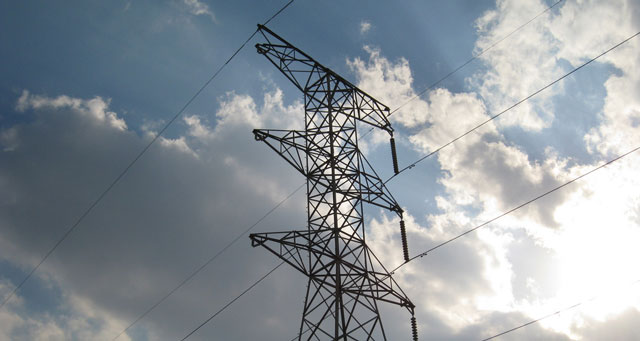
    eskom-640

    Power utility Eskom is 21 days from going broke, the minister of public enterprises has confirmed.

    “Eskom will run out of money by the end of January,” minister Lynne Brown said this week. Brown confirmed the “pressure on the company’s liquidity position”, but would not say how it would be resolved. “It must still be addressed,” she said.

    The only options appear to be a government bailout — in the form of a cash injection — or further guarantees, or severe load shedding.

    As the utility struggles to keep the lights on, open-cycle gas turbines are guzzling diesel and Eskom will be cashless in a matter of days.

    Eskom said it used 140m litres of diesel in November. The utility would not say what it paid per litre of diesel but said it cost on average R1bn/month at present. Monthly revenues are R10bn but this has to cover other costs.

    The embattled state-owned enterprise is creating diesel-generated power at R3/kWh, compared with its normal electricity operating costs of 62c/kWh. It sells electricity at the regulated price of 70c/kWh. The larger of the two gas turbines, Ankerlig, consumes 425 000l of diesel every hour and the other, Gourikwa, uses 236 000l/h. These plants are meant to run for three hours at a time but have recently been run for stretches of up to 12 hours.

    Industry insiders say powering the national grid on diesel is “madness”, not to mention the possibility that Eskom may now need to borrow more to fund this. But major energy users say the lights must be kept on at all costs.

    Finance minister Nhlanhla Nene, who has made clear there is not a cent to spare from the treasury, will be tested in finding a solution as there are no easy answers.

    Ratings agencies are likely to downgrade the country’s credit rating to junk (which, in turn, will raise the government’s cost of borrowing) should the country be plunged into darkness by full-scale load shedding, but investors will also be anxious if the government issues more debt or guarantees.

    In a Bloomberg report on 11 December, Brown is quoted as saying the state would help Eskom to raise money to buy diesel for February. The funds could be raised with the help of bonds backed by state guarantees.

    With state guarantees amounting to R466bn, as reported by Business Day last year, a treasury official told parliament it had reached its “prudency” limit in this regard.

    Government debt, if the loan guarantees to state-owned enterprises are counted, would be close to 65% of gross domestic product, said Peter Attard Montalto, emerging markets analyst at Nomura International.

    Despite that, a solution for a cashless Eskom would have to come from the treasury, he said. “It has the capacity to provide an emergency bridging loan to them, or provide additional guarantees or stronger guarantees to issue more debt this month or next month to raise more cash.”

    These guarantees would probably make investors anxious, given that such liabilities were being watched by the ratings agencies, Montalto said. The worst possible solution would be a cash injection — even more so than load shedding, he said. “It depends when it happens. Most load shedding last year was after business hours. But if you are doing full 2008-style load shedding and impacting on business, it would be an issue.”

    Moody’s cut Eskom’s rating below the sovereign rating to junk status in November, and the other agencies have kept the utility at investment grade but put it on negative watch.

    Credit rating risk
    The country rating is as much at risk, with ratings agencies citing government debt and electricity outages as key concerns.

    Asked how it will pay for February’s diesel, Eskom said: “In the event Eskom gets certainty on how the diesel costs will be recovered, Eskom can responsibly bridge the delayed cash flow with funding.”

    Eskom said it was managing its liquidity situation to ensure it does not result in a crisis and noted the problem was also owed to lower sales, building new capacity and the lack of cost-reflective tariffs.

    Brown said she was concerned about the effect of the power disruptions on the lives of South Africans. “The feedback received from Eskom and [cabinet’s recently established electricity] war room is that the constrained power system will, over the medium term, continue until well into 2016,” Brown said.

    “Eskom’s problems are technical, but it’s manifesting as a financial issue because they need money to fix them,” said Doug Kuni, chairman of the South African Independent Power Producers Association. The new build, which has experienced significant cost overruns, has in particular drained the utility of money, he said.

    “The insanity of running the country on diesel is with all of us. And now they are looking for money to buy more diesel,” said Kuni. Even if Eskom found the money to buy the diesel, it wouldn’t save the country, he said. “On Monday when people are back from leave and everyone turns on the switches, you will see what Eskom is going to do: it will publish a full load-shedding schedule.”

    eskom-640

    He believes, however, that load shedding is the best option at this point. “Domestic users will make a plan; they will buy generators or use gas. To burn diesel is madness. They are losing money all the time … but they are trying to keep the lights on so next year’s elections don’t look so bad.

    “I predict in the first quarter South Africa will be cut to junk, especially if Eskom produces a load-shedding schedule in the first quarter.”

    Shaun Nel, spokesman for the Energy Intensive User Group of Southern Africa, said a cashless Eskom would mean it could not buy more diesel and “the load shedding will be significantly worse”.

    Nel said the distress on Eskom’s finances would ultimately mean energy tariffs would have to increase, but in the short term the treasury would have to step in.

    Already the state has approved a support package — although not yet in effect — that includes a cash injection of R20bn (raised through the sale of Eskom’s assets) and existing government guarantees that would allow the utility to borrow R250bn over the next five years. The National Energy Regulator of South Africa (Nersa) also approved additional revenue, though there would be a higher tariff of R7,8bn for the upcoming financial year. But this will not solve Eskom’s immediate cash problem.

    The only option
    Nersa spokesman Charles Hlebela told the Mail & Guardian that “if an application is received from Eskom, the energy regulator will consider such an application and due processes will be followed”.

    Nel said: “We anticipate being in this situation for the next three years until a few of Medupi’s units come online and right now diesel is the only option. Without diesel there will have to be forced power cuts and rationing and shutting down parts of the economy, or people will have to invest in generators and other alternatives.”

    Months ago, Eskom indicated an intention to convert the open-cycle gas turbines from using diesel to gas to save costs, although there has been no progress on this front.

    According to those privy to the growing crisis at Eskom, the power utility has been running on about 5% reserves since 2010 and that is the underlying reason why power plants could not be shut down for proper maintenance, which requires about six weeks. This could only happen if the country had sufficient electricity reserves.

    “If you don’t take a car in for a full service in 10 years, small problems become big problems,” one source said.

    “Keeping the lights on for the bloody elections [2009] and for the World Cup was all they cared for. It is bad; if one thing goes wrong, you will see a blackout.”

    Another source refuted claims that there had been political pressure on Eskom ahead of elections to keep the lights on, but confirmed there had been financial pressures. The source said the “struggle to pay salaries” led to the bosses at Eskom “cutting” operational budgets.

    “It’s becoming clear now that financial interests of board members led to Eskom management being micromanaged. Those board members said they were acting with political backing but clearly they did not know what they were doing,” another source said.

    The national treasury did not respond to questions.  — (c) 2015 Mail & Guardian

    • Visit the Mail & Guardian Online, the smart news source

    Doug Kuni Eskom Lynne Brown Nersa Nhlanhla Nene Nomura International Peter Attard Montalto Shaun Nel
    WhatsApp YouTube Follow on Google News Add as preferred source on Google
    Share. Facebook Twitter LinkedIn WhatsApp Telegram Email Copy Link
    Previous ArticleEskom begs for more money
    Next Article The Imitation Game: history, drama or myth?

    Related Posts

    Outa warns homeowners against rushing to register rooftop solar

    Outa warns homeowners against rushing to register rooftop solar

    27 January 2026
    How liberalisation is rewiring South Africa's power sector

    How liberalisation is rewiring South Africa’s power sector

    21 January 2026
    No risk of load shedding after Koeberg output scaled back

    No risk of load shedding after Koeberg output scaled back

    21 January 2026
    Company News
    The skills gap is a thinking gap: why South African employers can't find problem solvers

    The skills gap is a thinking gap: why SA employers can’t find problem solvers

    6 February 2026
    Vox Kiwi Wireless: fibre-like broadband for South African homes

    Vox Kiwi Wireless: fibre-like broadband for South African homes

    5 February 2026
    NEC XON achieves an African first with full Fortinet accreditation - Ian Kruger

    NEC XON achieves an African first with full Fortinet accreditation

    5 February 2026
    Opinion
    South Africa's skills advantage is being overlooked at home - Richard Firth

    South Africa’s skills advantage is being overlooked at home

    29 January 2026
    Why Elon Musk's Starlink is a 'hard no' for me - Songezo Zibi

    Why Elon Musk’s Starlink is a ‘hard no’ for me

    26 January 2026
    South Africa's new fibre broadband battle - Duncan McLeod

    South Africa’s new fibre broadband battle

    20 January 2026

    Subscribe to Updates

    Get the best South African technology news and analysis delivered to your e-mail inbox every morning.

    Latest Posts
    South Africa's stablecoin silence is becoming a policy failure

    South Africa’s stablecoin silence is becoming a policy failure

    6 February 2026
    Every electric car you can buy in South Africa in early 2026, ranked by price

    Every electric car you can buy in South Africa in early 2026, ranked by price

    6 February 2026
    From stocks to crypto, markets reel as AI doubts grow

    From stocks to crypto, markets reel as AI doubts grow

    6 February 2026
    South Africa deepens China ties as US trade tensions escalate

    South Africa deepens China ties as US trade tensions escalate

    6 February 2026
    © 2009 - 2026 NewsCentral Media
    • Cookie policy (ZA)
    • TechCentral – privacy and Popia

    Type above and press Enter to search. Press Esc to cancel.

    Manage consent

    TechCentral uses cookies to enhance its offerings. Consenting to these technologies allows us to serve you better. Not consenting or withdrawing consent may adversely affect certain features and functions of the website.

    Functional Always active
    The technical storage or access is strictly necessary for the legitimate purpose of enabling the use of a specific service explicitly requested by the subscriber or user, or for the sole purpose of carrying out the transmission of a communication over an electronic communications network.
    Preferences
    The technical storage or access is necessary for the legitimate purpose of storing preferences that are not requested by the subscriber or user.
    Statistics
    The technical storage or access that is used exclusively for statistical purposes. The technical storage or access that is used exclusively for anonymous statistical purposes. Without a subpoena, voluntary compliance on the part of your Internet Service Provider, or additional records from a third party, information stored or retrieved for this purpose alone cannot usually be used to identify you.
    Marketing
    The technical storage or access is required to create user profiles to send advertising, or to track the user on a website or across several websites for similar marketing purposes.
    • Manage options
    • Manage services
    • Manage {vendor_count} vendors
    • Read more about these purposes
    View preferences
    • {title}
    • {title}
    • {title}