Close Menu
TechCentralTechCentral

    Subscribe to the newsletter

    Get the best South African technology news and analysis delivered to your e-mail inbox every morning.

    Facebook X (Twitter) YouTube LinkedIn
    WhatsApp Facebook X (Twitter) LinkedIn YouTube
    TechCentralTechCentral
    • News
      Intel is back in the game - Intel CEO Lip-Bu Tan. Laure Andrillon/Reuters

      Intel is back in the game

      24 July 2026
      Fat bonuses at Telkom despite group missing own targets - Serame Taukobong

      Fat bonuses at Telkom despite group missing own targets

      23 July 2026
      TCS | How Optasia lends billions to people banks can't see - Salvador Anglada

      TCS | How Optasia lends billions to people banks can’t see

      23 July 2026
      Massive changes coming to Amazon Prime Video - Jeff Bezos

      Massive changes coming to Amazon Prime Video

      23 July 2026
      Load shedding is over - and that's exposing a new energy crisis

      Load shedding is over – and that’s exposing a new energy crisis

      23 July 2026
    • World
      Meta AI will now tell parents if their teen is in crisis

      Meta AI will now tell parents if their teen is in crisis

      17 July 2026
      IBM shares crash 25% as AI upends software spending - Arvind Krishna

      IBM shares crash 25% as AI upends software spending

      15 July 2026
      Jony Ive's first OpenAI device: an AI smart speaker - Jony Ive and Sam Altman

      Jony Ive’s first OpenAI device: an AI smart speaker

      15 July 2026
      Stripe, Advent in talks to buy PayPal for $53-billion

      Stripe, Advent in talks to buy PayPal for $53-billion

      15 July 2026
      Memory crisis sends smartphone market into steep decline

      Memory crisis sends smartphone market into steep decline

      13 July 2026
    • In-depth
      The plan to stop AI from breaking the world - Google DeepMind CEO Demis Hassabis. Image: John Sears

      The plan to stop AI from breaking the world

      16 July 2026
      The internet has a Strait of Hormuz problem

      The internet has a Strait of Hormuz problem

      15 July 2026
      AI boom sparks rally, frenzy and fear

      AI boom sparks rally, frenzy and fear

      11 June 2026
      Every plug-in hybrid on sale in South Africa, ranked by price - Lamborghini Temerario

      Every plug-in hybrid on sale in South Africa, ranked by price

      7 June 2026
      What Wi-Fi 8 will mean for wireless networks

      What Wi-Fi 8 will mean for wireless networks

      1 June 2026
    • TCS
      The rands-and-cents case for electric trucks - William Kelly Watts & Wheels with Wills

      The rands-and-cents case for electric trucks

      20 July 2026
      Watts & Wheels S1E7: 'Ferrari's EV breaks the internet'

      Watts & Wheels S1E7: ‘Ferrari’s EV breaks the internet’

      8 July 2026
      TCS | Pick n Pay's Enrico Ferigolli on Penny, the AI that shops for you

      TCS | Pick n Pay’s Enrico Ferigolli on Penny, the AI that shops for you

      2 July 2026
      TCS+ | How Tracker is turning vehicle data into business strategy - Silvia Schollenberger

      TCS+ | How Tracker is turning vehicle data into business strategy

      1 July 2026
      TCS+ | IBM Bob: an AI-powered 'development partner' for the enterprise - David Spurway

      TCS+ | IBM Bob: an AI-powered development partner for the enterprise

      30 June 2026
    • Opinion
      Selling vapour is corporate suicide in slow motion - Jannie van Zyl

      Selling vapour is corporate suicide in slow motion

      16 July 2026
      Brazil's online gambling crackdown is a lesson for South Africa

      How Amazon outmanoeuvred Starlink in South Africa

      15 July 2026
      The Popia problem with agentic AI - Herman Haasbroek

      The Popia problem with agentic AI

      14 July 2026
      The author, Fanie van Rooyen

      South Africa can still catch the AI wave – here’s how

      7 July 2026
      The author, Fanie van Rooyen

      The AI utopia South Africa can’t afford

      1 July 2026
    • Company Hubs
      • 1Stream
      • Africa Data Centres
      • AfriGIS
      • Altron Digital Business
      • Altron Document Solutions
      • Altron Group
      • Arctic Wolf
      • Ascent Technology
      • AvertITD
      • BBD
      • Braintree
      • CallMiner
      • CambriLearn
      • CM Telecom
      • Contactable
      • CYBER1 Solutions
      • Digicloud Africa
      • Digimune
      • Domains.co.za
      • ESET
      • Euphoria Telecom
      • HOSTAFRICA
      • Incredible Business
      • iONLINE
      • IQbusiness
      • Iris Network Systems
      • Kaspersky
      • LSD Open
      • Mitel
      • NEC XON
      • Netstar
      • Network Platforms
      • Next DLP
      • Ovations
      • Paracon
      • Paratus
      • Q-KON
      • SevenC
      • SkyWire
      • Solid8 Technologies
      • Telit Cinterion
      • Telviva
      • Tenable
      • Vertiv
      • Videri Digital
      • Vodacom Business
      • Vox
      • Wipro
      • Workday
      • XLink
    • Sections
      • AI and machine learning
      • Banking
      • Broadcasting and Media
      • Cloud services
      • Contact centres and CX
      • Cryptocurrencies
      • Education and skills
      • Electronics and hardware
      • Energy and sustainability
      • Enterprise software
      • Financial services
      • HealthTech
      • Information security
      • Internet and connectivity
      • Internet of Things
      • Investment
      • IT services
      • Lifestyle
      • Policy and regulation
      • Public sector
      • Retail and e-commerce
      • Satellite communications
      • Science
      • SMEs and start-ups
      • Social media
      • Talent and leadership
      • Telecoms
      • Watts & Wheels
    • Events
    • Advertise
    TechCentralTechCentral
    Home » Top » Facebook imagines tapping brain waves

    Facebook imagines tapping brain waves

    By Agency Staff20 April 2017
    Twitter LinkedIn Facebook WhatsApp Email Telegram Copy Link
    News Alerts
    WhatsApp

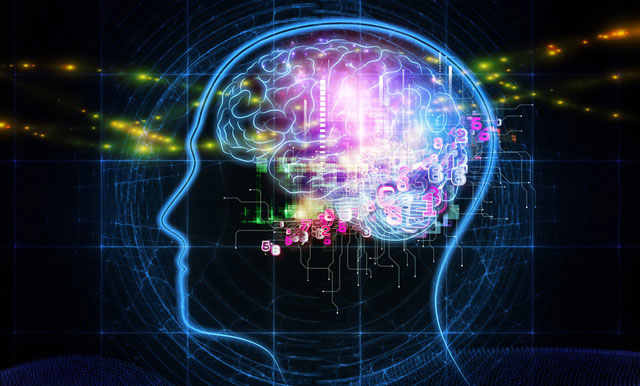
    Facebook’s research unit, Building 8, is working to make it possible for people to type using signals from their brains, part of the lab’s broader effort to free people from their phones.

    Regina Dugan, hired from Google parent Alphabet last year to oversee the lab, said that within “a few years”, Facebook aims to develop a system that can type at 100 words per minute, just from monitoring the brain, without using any kind of implant. The company is working with outside academics on the issue.

    This would give “the ability to text a friend without taking out your phone or the ability to send a quick e-mail without leaving the party,” Dugan said on Wednesday at the social network operator’s F8 developer conference. The technology may not require thinking in actual letters, she said. The lab also is working on a way for people to hear through their skin.

    “One day, not so far away, it may be possible for me to think in Mandarin and for you to feel it instantly in Spanish,” Dugan said.

    Far-fetched as it may sound, Dugan said researchers have already found it possible to use brain waves for typing at eight words per minute. She said the power of the brain is much greater than what is translated through speech, comparing the brain’s ability versus speech to “four HD movies per second streaming over a 1980s dial-up modem”.

    It’s one of many Facebook initiatives for the very long term. The company also talked on Wednesday about the future of augmented reality — saying it will only work if people can wear clear, fashionable AR glasses that don’t obscure their eyes. Executives also talked about advancements in their efforts to spread internet connectivity, like using a helicopter to broadcast internet access in a disaster zone.

    For its more near-term goal of making videos and images more immersive, Facebook unveiled a design for two new three-dimensional cameras. The cameras, which look like black disco balls or bug eyes, will be given to some filmmakers and partners to help create more 3D video content.

    Silicon Valley is in a race to come up with the next world-changing technology, after smartphones. Self-driving cars and artificial intelligence are all the rage, but several start-ups have begun work on understanding brains. Elon Musk, CEO of Tesla and SpaceX, recently formed a company called Neuralink that would implant electrodes in the brain to upload and download thoughts.

    For Facebook, the research connects to its overall goals because it relates to improving people’s social experiences, Dugan said. It could also make it possible for those who are deaf or otherwise disabled to communicate more easily.

    “If we fail, it’s going to suck,” Dugan said.  — (c) 2017 Bloomberg LP

    Follow TechCentral on Google News Add TechCentral as your preferred source on Google


    Elon Musk Facebook Neuralink Regina Dugan SpaceX Tesla
    WhatsApp YouTube
    Share. Facebook Twitter LinkedIn WhatsApp Telegram Email Copy Link
    Previous ArticleLessons of the ‘Facebook murder’
    Next Article SA researchers discover unusual planet

    Related Posts

    Intel is back in the game - Intel CEO Lip-Bu Tan. Laure Andrillon/Reuters

    Intel is back in the game

    24 July 2026
    From care homes to production lines, the robots are coming

    From care homes to production lines, the robots are coming

    21 July 2026
    The plan to stop AI from breaking the world - Google DeepMind CEO Demis Hassabis. Image: John Sears

    The plan to stop AI from breaking the world

    16 July 2026
    Company News
    Why Africa's cloud needs more than one path

    Why Africa’s cloud needs more than one path

    23 July 2026
    Samsung's new Galaxy Z series: foldables, perfected

    Samsung’s new Galaxy Z series: foldables, perfected

    22 July 2026
    Is your cloud PBX a hacker's back door? Centracom

    Is your cloud PBX a hacker’s back door?

    22 July 2026
    Opinion
    Selling vapour is corporate suicide in slow motion - Jannie van Zyl

    Selling vapour is corporate suicide in slow motion

    16 July 2026
    Brazil's online gambling crackdown is a lesson for South Africa

    How Amazon outmanoeuvred Starlink in South Africa

    15 July 2026
    The Popia problem with agentic AI - Herman Haasbroek

    The Popia problem with agentic AI

    14 July 2026

    Subscribe to Updates

    Get the best South African technology news and analysis delivered to your e-mail inbox every morning.

    Latest Posts
    Intel is back in the game - Intel CEO Lip-Bu Tan. Laure Andrillon/Reuters

    Intel is back in the game

    24 July 2026
    Fat bonuses at Telkom despite group missing own targets - Serame Taukobong

    Fat bonuses at Telkom despite group missing own targets

    23 July 2026
    TCS | How Optasia lends billions to people banks can't see - Salvador Anglada

    TCS | How Optasia lends billions to people banks can’t see

    23 July 2026
    Massive changes coming to Amazon Prime Video - Jeff Bezos

    Massive changes coming to Amazon Prime Video

    23 July 2026
    © 2009 - 2026 NewsCentral Media
    Built and maintained by Chronon
    • Cookie policy (ZA)
    • TechCentral – privacy and Popia

    Type above and press Enter to search. Press Esc to cancel.

    Manage consent

    TechCentral uses cookies to enhance its offerings. Consenting to these technologies allows us to serve you better. Not consenting or withdrawing consent may adversely affect certain features and functions of the website.

    Functional Always active
    The technical storage or access is strictly necessary for the legitimate purpose of enabling the use of a specific service explicitly requested by the subscriber or user, or for the sole purpose of carrying out the transmission of a communication over an electronic communications network.
    Preferences
    The technical storage or access is necessary for the legitimate purpose of storing preferences that are not requested by the subscriber or user.
    Statistics
    The technical storage or access that is used exclusively for statistical purposes. The technical storage or access that is used exclusively for anonymous statistical purposes. Without a subpoena, voluntary compliance on the part of your Internet Service Provider, or additional records from a third party, information stored or retrieved for this purpose alone cannot usually be used to identify you.
    Marketing
    The technical storage or access is required to create user profiles to send advertising, or to track the user on a website or across several websites for similar marketing purposes.
    • Manage options
    • Manage services
    • Manage {vendor_count} vendors
    • Read more about these purposes
    View preferences
    • {title}
    • {title}
    • {title}