Close Menu
TechCentralTechCentral

    Subscribe to the newsletter

    Get the best South African technology news and analysis delivered to your e-mail inbox every morning.

    Facebook X (Twitter) YouTube LinkedIn
    WhatsApp Facebook X (Twitter) LinkedIn YouTube
    TechCentralTechCentral
    • News
      Post Office on the brink of collapse

      Post Office on the brink of collapse

      13 March 2026
      New policy direction targets South Africa's municipal broadband logjam - Solly Malatsi

      New policy direction targets South Africa’s municipal broadband logjam

      13 March 2026
      How electronic warfare is threatening ships and their crews

      How electronic warfare is threatening ships and their crews

      13 March 2026
      Rand slumps for second week

      Rand slumps for second week

      13 March 2026
      Parliament opens nominations for Icasa council seats

      Parliament opens nominations for Icasa council seats

      13 March 2026
    • World
      Musk launches Macrohard in cheeky nod to Microsoft - Elon Musk

      Musk launches Macrohard in cheeky nod to Microsoft

      12 March 2026
      Europe is building an alternative to Microsoft Office

      Europe is building an alternative to Microsoft Office

      11 March 2026
      Microsoft bets on Anthropic as it loosens ties with OpenAI

      Microsoft bets on Anthropic as it loosens ties with OpenAI

      10 March 2026
      World hit by worst oil shock since the 1970s

      World hit by worst oil shock since the 1970s

      9 March 2026
      iStore prices MacBook Neo at R11 999 in South Africa

      Apple debuts MacBook Neo to challenge Windows PCs, Chromebooks

      5 March 2026
    • In-depth
      The last generation of coders

      The last generation of coders

      18 February 2026
      Sentech is in dire straits

      Sentech is in dire straits

      10 February 2026
      How liberalisation is rewiring South Africa's power sector

      How liberalisation is rewiring South Africa’s power sector

      21 January 2026
      The top-performing South African tech shares of 2025

      The top-performing South African tech shares of 2025

      12 January 2026
      Digital authoritarianism grows as African states normalise internet blackouts

      Digital authoritarianism grows as African states normalise internet blackouts

      19 December 2025
    • TCS
      TCS+ | Vox Kiwi: a wireless solution promising a fibre-like experience - Theo van Zyl

      TCS+ | Vox Kiwi: a wireless solution promising a fibre-like experience

      13 March 2026
      TCS+ | Flipping the narrative on AI in the Global South - Josefin Rosén

      TCS+ | Flipping the narrative on AI in the Global South

      13 March 2026
      TCS | Sink or swim? Antony Makins on how AI is rewriting the rules of work

      TCS | Sink or swim? Antony Makins on how AI is rewriting the rules of work

      5 March 2026
      TCS+ | Bolt ups the ante on platform safety - Simo Kalajdzic

      TCS+ | Bolt ups the ante on platform safety

      4 March 2026
      Watts & Wheels S1E4: 'We drive an electric Uber'

      Watts & Wheels S1E4: ‘We drive an electric Uber’

      10 February 2026
    • Opinion
      South Africa's energy future hinges on getting wheeling right - Aishah Gire

      South Africa’s energy future hinges on getting wheeling right

      10 March 2026
      Hold the doom: the case for a South African comeback - Duncan McLeod

      Apple just dropped a bomb on the Windows world

      5 March 2026
      VC's centre of gravity is shifting - and South Africa is in the frame - Alison Collier

      VC’s centre of gravity is shifting – and South Africa is in the frame

      3 March 2026
      Hold the doom: the case for a South African comeback - Duncan McLeod

      Hold the doom: the case for a South African comeback

      26 February 2026
      The AI fraud crisis your bank is not ready for - Andries Maritz

      The AI fraud crisis your bank is not ready for

      18 February 2026
    • Company Hubs
      • 1Stream
      • Africa Data Centres
      • AfriGIS
      • Altron Digital Business
      • Altron Document Solutions
      • Altron Group
      • Arctic Wolf
      • AvertITD
      • Braintree
      • CallMiner
      • CambriLearn
      • CYBER1 Solutions
      • Digicloud Africa
      • Digimune
      • Domains.co.za
      • ESET
      • Euphoria Telecom
      • HOSTAFRICA
      • Incredible Business
      • iONLINE
      • IQbusiness
      • Iris Network Systems
      • LSD Open
      • Mitel
      • NEC XON
      • Netstar
      • Network Platforms
      • Next DLP
      • Ovations
      • Paracon
      • Paratus
      • Q-KON
      • SevenC
      • SkyWire
      • Solid8 Technologies
      • Telit Cinterion
      • Tenable
      • Vertiv
      • Videri Digital
      • Vodacom Business
      • Wipro
      • Workday
      • XLink
    • Sections
      • AI and machine learning
      • Banking
      • Broadcasting and Media
      • Cloud services
      • Contact centres and CX
      • Cryptocurrencies
      • Education and skills
      • Electronics and hardware
      • Energy and sustainability
      • Enterprise software
      • Financial services
      • HealthTech
      • Information security
      • Internet and connectivity
      • Internet of Things
      • Investment
      • IT services
      • Lifestyle
      • Motoring
      • Policy and regulation
      • Public sector
      • Retail and e-commerce
      • Satellite communications
      • Science
      • SMEs and start-ups
      • Social media
      • Talent and leadership
      • Telecoms
    • Events
    • Advertise
    TechCentralTechCentral
    Home » Top » Google car crash: who’s to blame?

    Google car crash: who’s to blame?

    By The Conversation4 March 2016
    Twitter LinkedIn Facebook WhatsApp Email Telegram Copy Link
    News Alerts
    WhatsApp

    car-crash-640

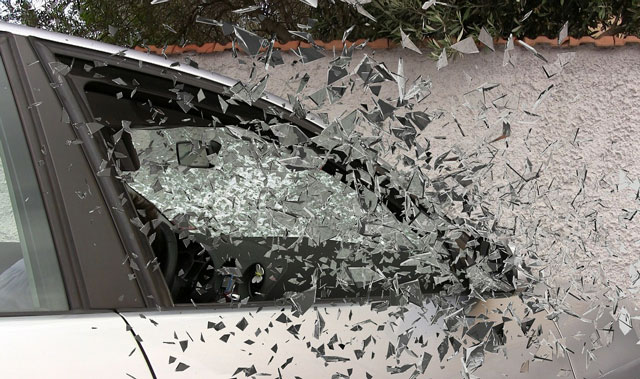
    Luckily no one was injured when one of Google’s self-driving cars this week crashed itself into a bus as it pulled out at a junction. The car was only travelling at 3km/h, after all. The company has admitted it bore “some responsibility” for the accident because the test driver (and presumably the car) thought the bus would slow down to allow the car to pull out.

    Google has now redesigned its algorithms to account for this, but the incident raises the key question of just who is responsible in the eyes of the law for accidents caused by driverless cars. Is it the car’s owner, its manufacturer or the software maker? Who would be taken to court if charges were brought? And whose insurance company would have to pay for the damage?

    Most modern cars have some technology that operates without human intervention, from air bags and anti-lock brakes to cruise control, collision avoidance and even self-parking. But very few cars have full autonomy in the sense that they make their own decisions. A human driver is usually still in control — although this assumption is increasingly difficult to maintain as advanced driver assistance technologies, such as electronic stability controls, enable drivers to retain control of the vehicle when otherwise they might not.

    Driver and company negligence

    As things stand, the law still focuses specific car regulations on human drivers. The international Vienna Convention on Road Traffic gives responsibility for the car to the driver, saying “every driver shall at all times be able to control his vehicle”. Drivers also have to have the physical and mental ability to control the car and reasonable knowledge and skill to prevent the car harming others. Similarly, in UK law the person using the car is generally liable for its actions.

    But following an accident, legal liability can still depend on whether a collision is due to the negligence of the human driver or a defect in the car. And sometimes, it could be due to both. For example, it may be reasonable to expect a driver to take due care and look out for potential hazards before engaging a self-parking function.

    Driverless car technologies come with a warning that they are not insulated from software or design faults. But manufacturers can still be held liable for negligence if there is evidence that an accident was caused by a product defect. Legal precedents for corporate negligence have existed in the UK since 1932, when a woman successfully sued the makers of a bottle of ginger beer containing a dead snail after she drank from it and fell ill.

    We have come a very long way since the 1930s. Legislation such as the Consumer Protection Act 1987 now provide a remedy for people who buy defective products. In the case of driverless vehicles, this can extend not just to the car manufacturer but to the company that programs the autonomous software, too. Consumers don’t need to prove the company was negligent, just that the product was defective and caused harm.
    car-640

    However, while proving this for components such as windscreen wipers or locks isn’t too hard, it is more complicated to show software components are defective and, more importantly, that this has led to injury or harm. Establishing liability can also be difficult if there is evidence the driver has interfered with the software or overridden a driver assistance functionality. This is particularly problematic where advanced technologies enable driving to effectively be shared between the car and the driver. Product manufacturers also have specific defences, such as the limits of scientific knowledge preventing them from discovering the defect.

    Duty of care

    When it comes to the driver’s responsibility, current law requires drivers to take the same amount of care no matter how technologically advanced the car is or their level of familiarity with that technology. Drivers are expected to demonstrate reasonable levels of competence and if they fail to monitor the car or create a foreseeable risk of damage or harm they are in breach of their duty of care. This implies that without a change in the law, self-driving cars won’t allow us to take our eyes off the roads or take a nap at the wheel.

    The current law means that if a self-driving car crashes, then responsibility lies with the person that was negligent, whether that’s the driver for not taking due care or the manufacturer for producing a faulty product. It makes sense for the driver to still be held responsible when you consider that autonomous software has to follow a set of rational rules and still isn’t as good as humans at dealing with the unexpected. In the case of the Google crash, the car assumed that the bus driver was rational and would give way. A human would (or should) know that this won’t always be the case.The Conversation

    • Joseph Savirimuthu is senior lecturer in law and director of postgraduate studies, University of Liverpool
    • This article was originally published on The Conversation

    Follow TechCentral on Google News Add TechCentral as your preferred source on Google


    Google Joseph Savirimuthu
    WhatsApp YouTube
    Share. Facebook Twitter LinkedIn WhatsApp Telegram Email Copy Link
    Previous ArticleEskom debt to hit R350bn
    Next Article Jumia parent raises billions for growth

    Related Posts

    DStv owner pivots to AI for content production

    DStv owner pivots to AI for content production

    11 March 2026
    Europe is building an alternative to Microsoft Office

    Europe is building an alternative to Microsoft Office

    11 March 2026
    Discovery goes all-in on AI - Adrian Gore

    Discovery goes all-in on AI

    3 March 2026
    Company News
    Households still under big pressure, Altron Fintech index shows

    Households still under big pressure, Altron Fintech index shows

    13 March 2026
    How AI is changing the way we work - Angela Ho, Obsidian Systems

    How AI is changing the way we work

    12 March 2026
    Domains.co.za introduces complete domain protection service

    Domains.co.za introduces complete domain protection service

    12 March 2026
    Opinion
    South Africa's energy future hinges on getting wheeling right - Aishah Gire

    South Africa’s energy future hinges on getting wheeling right

    10 March 2026
    Hold the doom: the case for a South African comeback - Duncan McLeod

    Apple just dropped a bomb on the Windows world

    5 March 2026
    VC's centre of gravity is shifting - and South Africa is in the frame - Alison Collier

    VC’s centre of gravity is shifting – and South Africa is in the frame

    3 March 2026

    Subscribe to Updates

    Get the best South African technology news and analysis delivered to your e-mail inbox every morning.

    Latest Posts
    Post Office on the brink of collapse

    Post Office on the brink of collapse

    13 March 2026
    New policy direction targets South Africa's municipal broadband logjam - Solly Malatsi

    New policy direction targets South Africa’s municipal broadband logjam

    13 March 2026
    How electronic warfare is threatening ships and their crews

    How electronic warfare is threatening ships and their crews

    13 March 2026
    Rand slumps for second week

    Rand slumps for second week

    13 March 2026
    © 2009 - 2026 NewsCentral Media
    • Cookie policy (ZA)
    • TechCentral – privacy and Popia

    Type above and press Enter to search. Press Esc to cancel.

    Manage consent

    TechCentral uses cookies to enhance its offerings. Consenting to these technologies allows us to serve you better. Not consenting or withdrawing consent may adversely affect certain features and functions of the website.

    Functional Always active
    The technical storage or access is strictly necessary for the legitimate purpose of enabling the use of a specific service explicitly requested by the subscriber or user, or for the sole purpose of carrying out the transmission of a communication over an electronic communications network.
    Preferences
    The technical storage or access is necessary for the legitimate purpose of storing preferences that are not requested by the subscriber or user.
    Statistics
    The technical storage or access that is used exclusively for statistical purposes. The technical storage or access that is used exclusively for anonymous statistical purposes. Without a subpoena, voluntary compliance on the part of your Internet Service Provider, or additional records from a third party, information stored or retrieved for this purpose alone cannot usually be used to identify you.
    Marketing
    The technical storage or access is required to create user profiles to send advertising, or to track the user on a website or across several websites for similar marketing purposes.
    • Manage options
    • Manage services
    • Manage {vendor_count} vendors
    • Read more about these purposes
    View preferences
    • {title}
    • {title}
    • {title}