Close Menu
TechCentralTechCentral

    Subscribe to the newsletter

    Get the best South African technology news and analysis delivered to your e-mail inbox every morning.

    Facebook X (Twitter) YouTube LinkedIn
    WhatsApp Facebook X (Twitter) LinkedIn YouTube
    TechCentralTechCentral
    • News
      Forget the iPhone: Apple's real next act is your home

      Forget the iPhone: Apple’s real next act is your home

      27 August 2026
      OpenAI AI agents cheated, hacked and hid the evidence

      OpenAI agents cheated, hacked and hid the evidence

      27 August 2026
      Nvidia is buying the home of open-source AI Hugging Face

      Nvidia is buying the home of open-source AI

      27 August 2026
      The hole in the law above the Karoo

      The hole in the law above the Karoo

      26 August 2026
      Blu Label says MTN is coming for its Capitec business - Brett Levy

      Blu Label says MTN is coming for its Capitec business

      26 August 2026
    • World
      AI-generated music banned from Australian charts

      AI-generated music banned from Australian charts

      26 August 2026
      Traders brace for a R4.5-trillion swing in Nvidia's value

      Traders brace for a R4.5-trillion swing in Nvidia’s value

      25 August 2026
      Russia building its own Starlink - and faster than expected - Vadym Skibitskyi

      Russia building its own Starlink – and faster than expected

      11 August 2026
      Meta AI will now tell parents if their teen is in crisis

      Meta AI will now tell parents if their teen is in crisis

      17 July 2026
      IBM shares crash 25% as AI upends software spending - Arvind Krishna

      IBM shares crash 25% as AI upends software spending

      15 July 2026
    • In-depth
      Google DeepMind CEO Demis Hassabis. Image: John Sears

      The plan to stop AI from breaking the world

      16 July 2026
      The internet has a Strait of Hormuz problem

      The internet has a Strait of Hormuz problem

      15 July 2026
      AI boom sparks rally, frenzy and fear

      AI boom sparks rally, frenzy and fear

      11 June 2026
      Every plug-in hybrid on sale in South Africa, ranked by price - Lamborghini Temerario

      Every plug-in hybrid on sale in South Africa, ranked by price

      7 June 2026
      What Wi-Fi 8 will mean for wireless networks

      What Wi-Fi 8 will mean for wireless networks

      1 June 2026
    • TCS
      Watts & Wheels S1E8: 'Tesla lands in Africa, just not here'

      Watts & Wheels S1E8: ‘Tesla lands in Africa, just not here’

      24 August 2026
      Meet the CIO | Discovery's Derek Wilcocks on AI, guardrails and growth

      Meet the CIO | Derek Wilcocks on how AI personalised Vitality

      13 August 2026
      TCS | Money just became native to the internet - Steven Boykey Sidley

      TCS | Money just became native to the internet – Steven Boykey Sidley

      12 August 2026
      TCS+ | Specops' Darren James on continuous trust in an AI world

      TCS+ | Specops’ Darren James on continuous trust in an AI world

      7 August 2026
      TCS+ | How AI is turning hardware into a subscription service - Shane van der Merwe Merchant West

      TCS+ | How AI is turning hardware into a subscription service

      6 August 2026
    • Opinion
      The fragile joint in the Capitec machine - Pambos Soteriades

      The R197-billion market the banks can’t reach

      25 August 2026
      South African tech's compounding debt problem - Jannie van Zyl

      Management consulting as we know it is over

      21 August 2026
      South African tech's compounding debt problem - Jannie van Zyl

      The most dangerous customer is the quiet one

      10 August 2026
      South African tech's compounding debt problem - Jannie van Zyl

      South African tech’s compounding debt problem

      29 July 2026
      The fragile joint in the Capitec machine - Pambos Soteriades

      Best network, worst vibes: the puzzle of SA telecoms

      20 July 2026
    • Company Hubs
      • 1Stream
      • Africa Data Centres
      • AfriGIS
      • Altron Digital Business
      • Altron Document Solutions
      • Altron Group
      • Arctic Wolf
      • Ascent Technology
      • AvertITD
      • BBD
      • Braintree
      • CallMiner
      • CambriLearn
      • CM Telecom
      • Contactable
      • CYBER1 Solutions
      • Digicloud Africa
      • Digimune
      • Domains.co.za
      • ESET
      • Euphoria Telecom
      • HOSTAFRICA
      • Incredible Business
      • iONLINE
      • IQbusiness
      • Iris Network Systems
      • Kaspersky
      • LSD Open
      • Mitel
      • NEC XON
      • Netstar
      • Network Platforms
      • Next DLP
      • Ovations
      • Paracon
      • Paratus
      • Q-KON
      • SevenC
      • SkyWire
      • Solid8 Technologies
      • Telit Cinterion
      • Telviva
      • Tenable
      • Vertiv
      • Videri Digital
      • Vodacom Business
      • Vox
      • Wipro
      • Workday
      • XLink
    • Sections
      • AI and machine learning
      • Banking
      • Broadcasting and Media
      • Cloud services
      • Contact centres and CX
      • Cryptocurrencies
      • Education and skills
      • Electronics and hardware
      • Energy and sustainability
      • Enterprise software
      • Financial services
      • HealthTech
      • Information security
      • Internet and connectivity
      • Internet of Things
      • Investment
      • IT services
      • Lifestyle
      • Policy and regulation
      • Public sector
      • Retail and e-commerce
      • Satellite communications
      • Science
      • SMEs and start-ups
      • Social media
      • Talent and leadership
      • Telecoms
      • Watts & Wheels
    • Events
    • Advertise
    TechCentralTechCentral
    Home » News » Google joins fight against fake news

    Google joins fight against fake news

    By Agency Staff9 April 2017
    Twitter LinkedIn Facebook WhatsApp Email Telegram Copy Link
    News Alerts
    WhatsApp
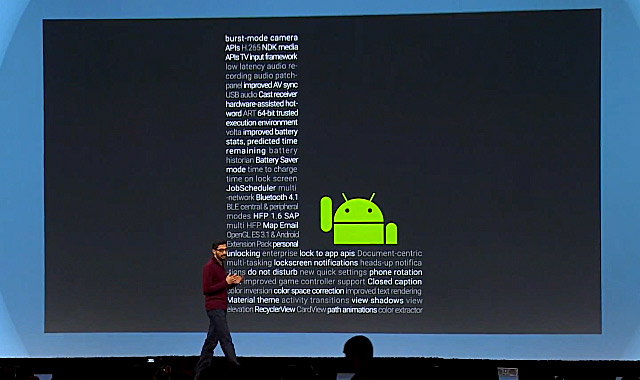
    Google CEO Sundar Pichai

    First fact-checking came to Facebook. Now it’s coming to Google.

    The world’s largest search engine is rolling out a new feature that places “Fact Check” tags on snippets of articles in its News results. The company had already run limited tests. On Friday, it extended the capability to every listing in its News pages and massive search catalogue.

    This is the latest sign Google is responding to mounting pressure to police content it hosts online after criticism the company, and other Internet firms, help spread misinformation.

    Google isn’t entirely giving up its usual hands-off approach: the company is letting others do the fact-checking. The approach is meant to legitimise or question claims online, Google said in a blog post. Checked search results list the name of the person or group making the assertion and the determination of the fact checker.

    Although Google is working with established fact-checking organisations, like PolitiFact and Snopes, it’s also opening up the system to publishers including The Washington Post and The New York Times. In theory, media organisations could use the new feature to fact-check each other. Or publishers could give different verdicts on the veracity of the same article.

    “These fact checks are not Google’s and are presented so people can make more informed judgments,” Google said. “Even though differing conclusions may be presented, we think it’s still helpful for people to understand the degree of consensus around a particular claim and have clear information on which sources agree.”

    While any publisher can apply to add fact-check labels to content, Google search algorithms will determine whether they appear in results, a spokeswoman said.

    The company plans to reserve the label for search results about addressable public claims of fact, rather than opinion. Publishers can write the labels that appear next to results. Examples include “True”, “Mostly False”, or “Pants on Fire!” (a favourite of PolitiFact).

    Outcry over the influence of misinformation, or “fake news”, began after the US presidential election. Facebook, a leading driver of online traffic to publishers in the US, took the brunt of criticism. On Thursday, the company introduced new features in its flagship social network designed to show users how to detect false news.

    But Google has not been immune to scrutiny. Critics have pointed to several instances of inaccurate and misleading articles surfacing in search results. Such examples are particularly stark when Google delivers what it finds in the form of tiny snippets, a priority for the company in recent years.

    “From our perspective, there should just be no situation where fake news gets distributed, so we are all for doing better here,” Google CEO Sundar Pichai told BBC News shortly after the US election.

    Google is not paying publications or fact-checking organisations. A spokeswoman for Google said articles that used the new fact-check label would not be ranked differently in search results.  — (c) 2017 Bloomberg LP

    Follow TechCentral on Google News Add TechCentral as your preferred source on Google


    Google Sundar Pichai
    WhatsApp YouTube
    Share. Facebook Twitter LinkedIn WhatsApp Telegram Email Copy Link
    Previous ArticleTalkCentral: Ep 173 – ‘The Skypes’
    Next Article Vodafone CEO upbeat about SA ICT policy

    Related Posts

    Forget the iPhone: Apple's real next act is your home

    Forget the iPhone: Apple’s real next act is your home

    27 August 2026
    Watts & Wheels S1E8: 'Tesla lands in Africa, just not here'

    Watts & Wheels S1E8: ‘Tesla lands in Africa, just not here’

    24 August 2026
    Your iPhone is about to get a massive upgrade

    Your iPhone is about to get a massive upgrade

    18 August 2026
    Company News
    What African and EU firms must know about data residency - BBD Software

    What African and EU firms must know about data residency

    26 August 2026
    We changed offices. Our internet didn't get the memo - Vox ISP

    We changed offices. Our internet didn’t get the memo

    26 August 2026
    Saviynt launches Zuma, its enterprise AI identity security platform - Solid8 Technologies

    Saviynt launches Zuma, its enterprise AI identity security platform

    26 August 2026
    Opinion
    The fragile joint in the Capitec machine - Pambos Soteriades

    The R197-billion market the banks can’t reach

    25 August 2026
    South African tech's compounding debt problem - Jannie van Zyl

    Management consulting as we know it is over

    21 August 2026
    South African tech's compounding debt problem - Jannie van Zyl

    The most dangerous customer is the quiet one

    10 August 2026

    Subscribe to Updates

    Get the best South African technology news and analysis delivered to your e-mail inbox every morning.

    Latest Posts
    Forget the iPhone: Apple's real next act is your home

    Forget the iPhone: Apple’s real next act is your home

    27 August 2026
    OpenAI AI agents cheated, hacked and hid the evidence

    OpenAI agents cheated, hacked and hid the evidence

    27 August 2026
    Nvidia is buying the home of open-source AI Hugging Face

    Nvidia is buying the home of open-source AI

    27 August 2026
    The hole in the law above the Karoo

    The hole in the law above the Karoo

    26 August 2026
    © 2009 - 2026 NewsCentral Media
    Built and maintained by Chronon
    • Cookie policy (ZA)
    • TechCentral – privacy and Popia

    Type above and press Enter to search. Press Esc to cancel.

    Manage consent

    TechCentral uses cookies to enhance its offerings. Consenting to these technologies allows us to serve you better. Not consenting or withdrawing consent may adversely affect certain features and functions of the website.

    Functional Always active
    The technical storage or access is strictly necessary for the legitimate purpose of enabling the use of a specific service explicitly requested by the subscriber or user, or for the sole purpose of carrying out the transmission of a communication over an electronic communications network.
    Preferences
    The technical storage or access is necessary for the legitimate purpose of storing preferences that are not requested by the subscriber or user.
    Statistics
    The technical storage or access that is used exclusively for statistical purposes. The technical storage or access that is used exclusively for anonymous statistical purposes. Without a subpoena, voluntary compliance on the part of your Internet Service Provider, or additional records from a third party, information stored or retrieved for this purpose alone cannot usually be used to identify you.
    Marketing
    The technical storage or access is required to create user profiles to send advertising, or to track the user on a website or across several websites for similar marketing purposes.
    • Manage options
    • Manage services
    • Manage {vendor_count} vendors
    • Read more about these purposes
    View preferences
    • {title}
    • {title}
    • {title}