
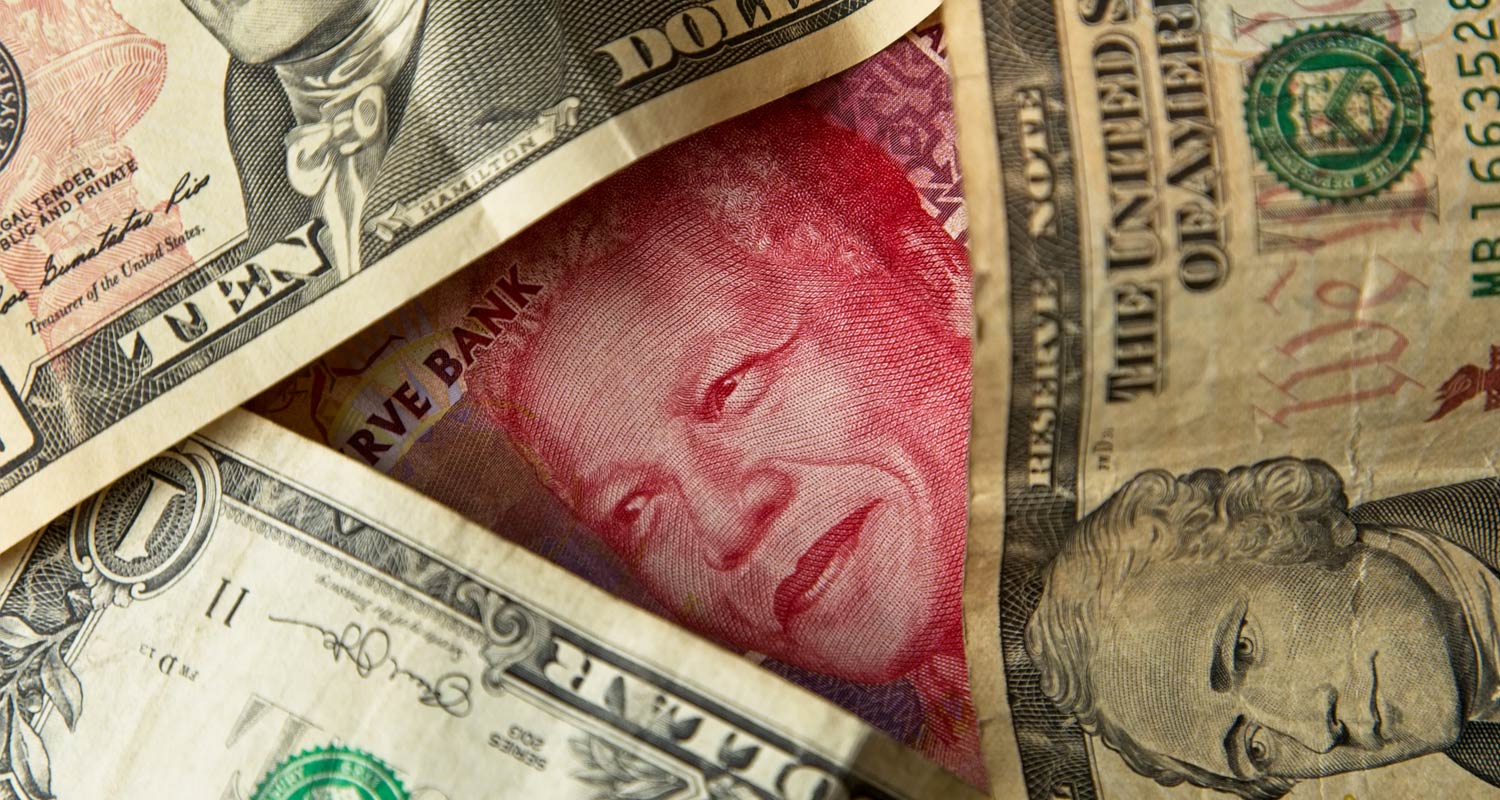
The rand strengthened on Friday to its firmest level since the US and Israel attacked Iran on 28 February, but the rally is unlikely to show up on the shelf price of a laptop or a server any time soon.
A global shortage of memory and storage chips is doing far more damage to South African technology prices than the exchange rate is repairing.
At 2.29pm, the rand traded at R15.9925/US$, about 0.8% stronger than its previous close, lifted by rising gold prices and a weaker dollar.
Gold, one of South Africa’s main exports, rose to a more than three-month high on Friday and was on track for a third consecutive weekly gain. The metal was supported by the softer dollar and by the US treasury’s announcement that it would double the size of buybacks of longer-dated securities over the next quarter.
Treasury secretary Scott Bessent said he may increase the repurchases further. The dollar was set to end a bumpy week lower, making greenback-priced bullion more affordable for buyers outside the US.
On the JSE, the Top-40 index was last up 2.2%. South Africa’s benchmark 2035 government bond firmed in early deals, with the yield down half a basis point to 8.56%. Like other emerging market currencies, the rand has been at the mercy of global market sentiment since the war began.
Why the rally won’t reach the shelves
South Africa’s technology sector is almost entirely dependent on imported hardware. Laptops, servers, networking equipment, smartphones and components are priced in dollars, which means the exchange rate feeds directly into local prices – in both directions. In March, with the rand at R17.23/$ and global chip prices climbing, distributors were warning of a squeeze from both sides at once.
Half of that squeeze has now eased. The other half has not. Distributors buy stock months ahead and hedge with forward exchange contracts, so inventory landed at weaker rates cannot be repriced downwards without booking a loss on it. Any benefit from this week’s move will only reach buyers when the current stock cycle turns over – a matter of months, not days.
More importantly, the dollar cost of the hardware itself keeps rising. Gartner has estimated a 130% increase in combined DRAM and SSD prices by the end of 2026, enough to push global PC prices up 17% and smartphone prices up 13%.
Local retailers have reported DDR5 memory rising by as much as 230% in a single quarter, with older DDR4 modules up 150-200% as manufacturers shift wafer capacity towards high-bandwidth memory for AI accelerators.
There is little sign of relief. SK Hynix CEO Kwak Noh-jung has said 2027 will be the worst year in the memory industry’s history on the supply side, with demand outstripping his company’s capacity beyond 2030. Locally, distributor Mustek told shareholders in February that shortages driven by global AI infrastructure build-outs would persist into 2027.
For the companies that import the hardware, currency strength cuts both ways. Mustek CEO Hein Engelbrecht told TechCentral in February that the group’s gross margins typically compress when the rand firms and expand when it weakens – the mirror image of what consumers experience.
The distributor reported revenue down 2.4% to R3.54-billion for the six months to 31 December 2025, a decline Engelbrecht attributed largely to the stronger currency, even as headline earnings per share surged 256%.
The offsetting benefit is on the balance sheet: a firmer rand turns foreign exchange losses into gains and reduces the cost of servicing dollar-denominated supplier credit. Mustek swung R63.8-million in its favour on currency in that period alone.
Where the rand does help
The clearest beneficiaries are buyers of things that cannot be stockpiled. Hyperscale cloud services, enterprise software licences and software subscriptions are billed against dollar benchmarks and repriced continuously, so a firmer rand lowers the local cost of the same workload almost immediately – no inventory cycle to work through.
Read: Memory crisis sends smartphone market into steep decline
Network operators are the other winners. Vodacom, MTN and Telkom spent a combined R27-billion on South African network infrastructure in a single financial year, much of it on radio, transmission and core equipment sourced in dollars. Every cent of rand strength buys more base stations for the same budget. – © 2026 NewsCentral Media, with additional reporting by Anathi Madubela and Nilutpal Timsina, © 2026 Reuters
- Subscribe to TechCentral’s daily newsletter
- Get breaking news alerts on WhatsApp