
Close Menu
TechCentralTechCentral

    Subscribe to the newsletter

    Get the best South African technology news and analysis delivered to your e-mail inbox every morning.

    Facebook X (Twitter) YouTube LinkedIn
    WhatsApp Facebook X (Twitter) LinkedIn YouTube
    TechCentralTechCentral
    • News
      Vuyani Jarana: Mobile coverage masks a deeper broadband failure

      Vuyani Jarana: Mobile coverage masks a deeper broadband failure

      30 January 2026
      SABC Plus to flight Microsoft AI training videos

      SABC Plus to flight Microsoft AI training videos

      30 January 2026
      Fibre ducts

      Fibre industry consolidation in KZN

      30 January 2026
      Watts & Wheels S1E3: 'BYD's Corolla Cross challenger'

      Watts & Wheels S1E3: ‘BYD’s Corolla Cross challenger’

      30 January 2026
      What ordinary South Africans really think of AI

      What ordinary South Africans really think of AI

      30 January 2026
    • World
      Apple acquires audio AI start-up Q.ai

      Apple acquires audio AI start-up Q.ai

      30 January 2026
      SpaceX IPO may be largest in history

      SpaceX IPO may be largest in history

      28 January 2026
      Nvidia throws AI at the weather

      Nvidia throws AI at weather forecasting

      27 January 2026
      Debate erupts over value of in-flight Wi-Fi

      Debate erupts over value of in-flight Wi-Fi

      26 January 2026
      Intel takes another hit - Intel CEO Lip-Bu Tan. Laure Andrillon/Reuters

      Intel takes another hit

      23 January 2026
    • In-depth
      How liberalisation is rewiring South Africa's power sector

      How liberalisation is rewiring South Africa’s power sector

      21 January 2026
      The top-performing South African tech shares of 2025

      The top-performing South African tech shares of 2025

      12 January 2026
      Digital authoritarianism grows as African states normalise internet blackouts

      Digital authoritarianism grows as African states normalise internet blackouts

      19 December 2025
      TechCentral's South African Newsmakers of 2025

      TechCentral’s South African Newsmakers of 2025

      18 December 2025
      Black Friday goes digital in South Africa as online spending surges to record high

      Black Friday goes digital in South Africa as online spending surges to record high

      4 December 2025
    • TCS
      TCS+ | How Cloud On Demand is helping SA businesses succeed in the cloud - Xhenia Rhode, Dion Kalicharan

      TCS+ | Cloud On Demand and Consnet: inside a real-world AWS partner success story

      30 January 2026
      Watts & Wheels S1E3: 'BYD's Corolla Cross challenger'

      Watts & Wheels S1E2: ‘China attacks, BMW digs in, Toyota’s sublime supercar’

      23 January 2026

      TCS+ | Why cybersecurity is becoming a competitive advantage for SA businesses

      20 January 2026
      Watts & Wheels S1E3: 'BYD's Corolla Cross challenger'

      Watts & Wheels: S1E1 – ‘William, Prince of Wheels’

      8 January 2026
      TCS+ | Africa's digital transformation - unlocking AI through cloud and culture - Cliff de Wit Accelera Digital Group

      TCS+ | Cloud without culture won’t deliver AI: Accelera’s Cliff de Wit

      12 December 2025
    • Opinion
      South Africa's skills advantage is being overlooked at home - Richard Firth

      South Africa’s skills advantage is being overlooked at home

      29 January 2026
      Why Elon Musk's Starlink is a 'hard no' for me - Songezo Zibi

      Why Elon Musk’s Starlink is a ‘hard no’ for me

      26 January 2026
      South Africa's new fibre broadband battle - Duncan McLeod

      South Africa’s new fibre broadband battle

      20 January 2026
      AI moves from pilots to production in South African companies - Nazia Pillay SAP

      AI moves from pilots to production in South African companies

      20 January 2026
      South Africa's new fibre broadband battle - Duncan McLeod

      ANC’s attack on Solly Malatsi shows how BEE dogma trumps economic reality

      14 December 2025
    • Company Hubs
      • Africa Data Centres
      • AfriGIS
      • Altron Digital Business
      • Altron Document Solutions
      • Altron Group
      • Arctic Wolf
      • AvertITD
      • Braintree
      • CallMiner
      • CambriLearn
      • CYBER1 Solutions
      • Digicloud Africa
      • Digimune
      • Domains.co.za
      • ESET
      • Euphoria Telecom
      • Incredible Business
      • iONLINE
      • IQbusiness
      • Iris Network Systems
      • LSD Open
      • NEC XON
      • Netstar
      • Network Platforms
      • Next DLP
      • Ovations
      • Paracon
      • Paratus
      • Q-KON
      • SevenC
      • SkyWire
      • Solid8 Technologies
      • Telit Cinterion
      • Tenable
      • Vertiv
      • Videri Digital
      • Vodacom Business
      • Wipro
      • Workday
      • XLink
    • Sections
      • AI and machine learning
      • Banking
      • Broadcasting and Media
      • Cloud services
      • Contact centres and CX
      • Cryptocurrencies
      • Education and skills
      • Electronics and hardware
      • Energy and sustainability
      • Enterprise software
      • Financial services
      • Information security
      • Internet and connectivity
      • Internet of Things
      • Investment
      • IT services
      • Lifestyle
      • Motoring
      • Public sector
      • Retail and e-commerce
      • Satellite communications
      • Science
      • SMEs and start-ups
      • Social media
      • Talent and leadership
      • Telecoms
    • Events
    • Advertise
    TechCentralTechCentral
    Home » In-depth » How Makate won the ‘please call me’ case

    How Makate won the ‘please call me’ case

    By Ray Mahlaka28 April 2016
    Twitter LinkedIn Facebook WhatsApp Email Telegram Copy Link
    News Alerts
    WhatsApp

    gavel-640

    The constitutional court’s scathing judgment that ordered Vodacom to compensate Nkosana Makate for his “please call me” idea, in theory, brings an end to a legal case akin to a David vs Goliath battle.

    The case, which was before the high court in Johannesburg — later appealed to the supreme court of appeal and finally the constitutional court — has dragged on for nearly 10 years in compensating Makate for the innovation.

    However, the nub of the case was a dispute between two parties with an unequal bargaining power — typical of an underdog taking a telecommunications giant to task.

    The backstory on the case is important to unpack.

    It all started with a love affair in 2000 when Makate’s girlfriend (now wife) was a student at the University of Fort Hare in the Eastern Cape and had no money for airtime. A long-distance relationship, the lack of airtime and several communication hurdles sparked the idea for “please call me”, a free service that allows a user without airtime to send a text to be called back.

    Makate, a Vodacom trainee accountant at the time, consulted his superior and mentor Lazarus Muchenje about “please call me”, who then advised him to speak to board member and director of product development and management Philip Geissler. Makate’s discussion with Geissler led to the idea being captured in a proposal and concept document.

    Negotiations then followed between Makate and Geissler that Vodacom would use the “please call me” and put the idea on trial for commercial viability. In an oral agreement, Geissler agreed to pay Makate a 15% share of the revenues Vodacom would generate from the innovation if it was technically and financially viable.

    Vodacom in 2001 went to market with “please call me”, which was a game changer for South Africa’s fledgling telecoms sector.

    In a Vodacom internal newsletter and magazine, Makate was praised for his innovative thinking. It read: “Vodacom has launched a new product called ‘call me’, thanks to Kenneth [Nkosana] Makate from our finance department. Kenneth suggested the service to the product development team, which immediately took up the idea… ‘Call me’ has been a big success.”

    Despite its success, Vodacom did not negotiate compensation with Makate. In fact, the then-Vodacom CEO Alan Knott-Craig in his autobiography Second is Nothing claimed to have come up with “please call me” when he observed two security guards from a balcony trying to call each other without having airtime.
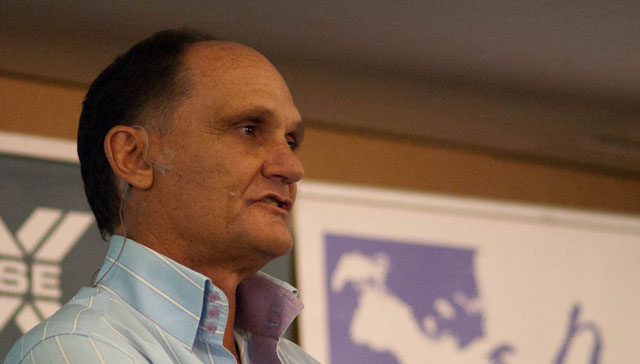
    Former Vodacom CEO Alan Knott-Craig
    Former Vodacom CEO Alan Knott-Craig

    The initial legal dispute for Makate to be compensated began in 2008 and the high court case, presided by judge Phillip Coppin, subsequently concluded that Makate had successfully proved the remuneration agreement between him and Geissler. The court also rejected Knott-Craig’s version of being the brains behind “please call me”.

    However, Coppin dismissed Makate’s claim on the basis that he did not prove that Geissler did have ostensible authority to bind Vodacom in an agreement for compensation. The court also found that Makate’s claim against Vodacom had expired (a term known in legal circles as prescription, documented in the archaic Prescription Act 68 of 1969), as he did not file the claim within three years of Vodacom going to market with “please call me”. Makate appealed the ruling which was later upheld by the supreme court.

    Constitutional court findings

    However, at the constitutional court, Vodacom’s case went downhill. On Tuesday, justice Chris Jafta did not mince his words in his majority judgment when describing Vodacom’s actions.

    As Jafta put it: “In not compensating the applicant [Makate] … Vodacom associated itself with the dishonourable conduct of its former CEO, Mr Knott-Craig and his colleague, Mr Geissler. This leaves a sour taste in the mouth. It is not the kind of conduct to be expected from an ethical corporate entity.”

    He continued: “The service had become so popular and profitable that revenue in huge sums of money was generated, for Vodacom to smile all the way to the bank. Yet it did not compensate the applicant [Makate] even with a penny for his idea.”

    Although the constitutional court found that it was neither necessary nor justified to interfere with the factual findings made by the high court and supreme court of appeal, it overturned the ruling of both courts.
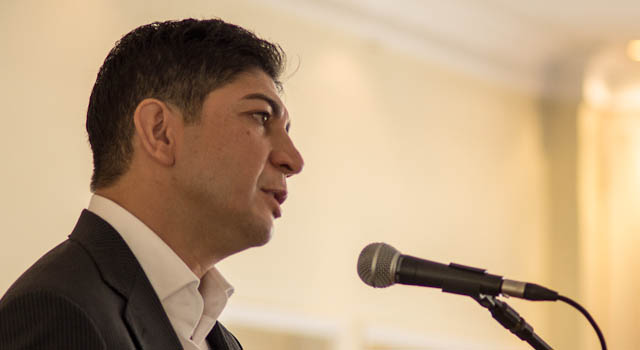
    Shameel Joosub
    Shameel Joosub may have to decide how much Nkosana Makate gets paid

    On the matter of ostensible authority, Jafta found that given Geissler’s position at Vodacom, he “held the power to consider new products”.

    “He [Geissler] was not only Vodacom’s frontman in its dealings with third parties in relation to new products but … as the evidence suggested, he could make or break any new product.”

    In this regard, the court found that Vodacom had created the appearance that Geissler had the authority to enter into and reach an agreement with Makate on Vodacom’s behalf.

    On prescription, Jafta said it should be interpreted in line with the constitution. He raised section 39 (2) of the constitution, which stipulates that any legislation must promote the spirit, purport, and objects of the bill of rights.

    The Prescription Act bars anyone from pursuing litigation for a claim after three years has lapsed “from the date on which the debt arose”. Jafta said “debt” must be viewed as an obligation to pay money, deliver goods, or render services. In the case of Makate he didn’t “ask to enforce any of these obligations”.

    “Instead, he requested an order forcing Vodacom to commence negotiations with him for determining compensation for the profitable use of his idea.” Thus, prescription does not apply.

    Matter is still ongoing

    It seems like the matter will be ongoing even after the court ordered Vodacom to negotiate “in good faith” with Makate to determine a “reasonable compensation” for his innovation. But justice Jafta warned: “They are not allowed to enter into those negotiations just to go through the motions. For that would not be what they have agreed to do but a charade. Both sides must enter into negotiations with serious intent to reach consensus.”

    He further ordered Vodacom to commence negotiations within 30 days.

    Millions if not billions of rand are at stake. Makate believes “please call me” has generated R70bn for Vodacom since its inception and he wants a 15% cut. If consensus can’t be reached on compensation, then Vodacom’s CEO — Shameel Joosub — must determine the compensation amount. Vodacom said it is still studying the judgment.

    After the judgment, arguments have been raised about whether it will have a bearing on intellectual property rights in South Africa — whether innovations produced belong to the company employing you and forms part of your line of work. Furthermore, it has raised questions about whether being paid a salary constitutes as compensation or whether one should enter negotiations for separate revenue share once the product has been introduced to the market.

    The jury is still out.

    • This article was originally published on Moneyweb and is used here with permission


    Alan Knott-Craig Chris Jafta Lazarus Muchenje Nkosana Makate Philip Geissler Vodacom
    WhatsApp YouTube Follow on Google News Add as preferred source on Google
    Share. Facebook Twitter LinkedIn WhatsApp Telegram Email Copy Link
    Previous ArticlePetrol price set to rise in May
    Next Article 10 things you didn’t know about MTN

    Related Posts

    Mobile operators face tougher rules on data and billing

    Mobile operators face tougher rules on data and billing

    26 January 2026
    South Africa's new fibre broadband battle - Duncan McLeod

    South Africa’s new fibre broadband battle

    20 January 2026

    TCS+ | Why cybersecurity is becoming a competitive advantage for SA businesses

    20 January 2026
    Company News
    Huawei turns 25 in South Africa, celebrates with major device discounts

    Huawei turns 25 in South Africa, celebrates with major device discounts

    30 January 2026
    Phishing has not disappeared, but it has grown up - KnowBe4

    Phishing has not disappeared, but it has grown up

    30 January 2026
    Smartphone affordability: South Africa's new economic divide - PayJoy

    Smartphone affordability: South Africa’s new economic divide

    29 January 2026
    Opinion
    South Africa's skills advantage is being overlooked at home - Richard Firth

    South Africa’s skills advantage is being overlooked at home

    29 January 2026
    Why Elon Musk's Starlink is a 'hard no' for me - Songezo Zibi

    Why Elon Musk’s Starlink is a ‘hard no’ for me

    26 January 2026
    South Africa's new fibre broadband battle - Duncan McLeod

    South Africa’s new fibre broadband battle

    20 January 2026

    Subscribe to Updates

    Get the best South African technology news and analysis delivered to your e-mail inbox every morning.

    Latest Posts
    Vuyani Jarana: Mobile coverage masks a deeper broadband failure

    Vuyani Jarana: Mobile coverage masks a deeper broadband failure

    30 January 2026
    TCS+ | How Cloud On Demand is helping SA businesses succeed in the cloud - Xhenia Rhode, Dion Kalicharan

    TCS+ | Cloud On Demand and Consnet: inside a real-world AWS partner success story

    30 January 2026
    Huawei turns 25 in South Africa, celebrates with major device discounts

    Huawei turns 25 in South Africa, celebrates with major device discounts

    30 January 2026
    SABC Plus to flight Microsoft AI training videos

    SABC Plus to flight Microsoft AI training videos

    30 January 2026
    © 2009 - 2026 NewsCentral Media
    • Cookie policy (ZA)
    • TechCentral – privacy and Popia

    Type above and press Enter to search. Press Esc to cancel.

    Manage consent

    TechCentral uses cookies to enhance its offerings. Consenting to these technologies allows us to serve you better. Not consenting or withdrawing consent may adversely affect certain features and functions of the website.

    Functional Always active
    The technical storage or access is strictly necessary for the legitimate purpose of enabling the use of a specific service explicitly requested by the subscriber or user, or for the sole purpose of carrying out the transmission of a communication over an electronic communications network.
    Preferences
    The technical storage or access is necessary for the legitimate purpose of storing preferences that are not requested by the subscriber or user.
    Statistics
    The technical storage or access that is used exclusively for statistical purposes. The technical storage or access that is used exclusively for anonymous statistical purposes. Without a subpoena, voluntary compliance on the part of your Internet Service Provider, or additional records from a third party, information stored or retrieved for this purpose alone cannot usually be used to identify you.
    Marketing
    The technical storage or access is required to create user profiles to send advertising, or to track the user on a website or across several websites for similar marketing purposes.
    • Manage options
    • Manage services
    • Manage {vendor_count} vendors
    • Read more about these purposes
    View preferences
    • {title}
    • {title}
    • {title}