Close Menu
TechCentralTechCentral

    Subscribe to the newsletter

    Get the best South African technology news and analysis delivered to your e-mail inbox every morning.

    Facebook X (Twitter) YouTube LinkedIn
    WhatsApp Facebook X (Twitter) LinkedIn YouTube
    TechCentralTechCentral
    • News
      Broadband Infraco in limbo

      Broadband Infraco in limbo

      11 February 2026
      Home affairs' R10 ID fee is forcing companies to rethink identity verification

      Standard Bank joins smart ID push with fee-free launch

      11 February 2026
      Zscaler assets seized from South African data centres

      Zscaler assets seized from South African data centres

      11 February 2026
      SA app wants to end guesswork in online grocery shopping - We Need Milk CEO Arjan van den Berg

      SA app wants to end guesswork in online grocery shopping

      11 February 2026
      Absa appoints M-Pesa boss to lead personal and private banking - Sitoyo Lopokoiyit

      Absa appoints M-Pesa boss to lead personal and private banking

      11 February 2026
    • World
      EU regulators take aim at WhatsApp

      EU regulators take aim at WhatsApp

      9 February 2026
      Musk hits brakes on Mars mission

      Musk hits brakes on Mars mission

      9 February 2026
      Crypto firm accidentally sends R700-billion in bitcoin to its users

      Crypto firm accidentally sends R700-billion in bitcoin to its users

      8 February 2026
      AI won't replace software, says Nvidia CEO amid market rout - Jensen Huang

      AI won’t replace software, says Nvidia CEO amid market rout

      4 February 2026
      Apple acquires audio AI start-up Q.ai

      Apple acquires audio AI start-up Q.ai

      30 January 2026
    • In-depth
      How liberalisation is rewiring South Africa's power sector

      How liberalisation is rewiring South Africa’s power sector

      21 January 2026
      The top-performing South African tech shares of 2025

      The top-performing South African tech shares of 2025

      12 January 2026
      Digital authoritarianism grows as African states normalise internet blackouts

      Digital authoritarianism grows as African states normalise internet blackouts

      19 December 2025
      TechCentral's South African Newsmakers of 2025

      TechCentral’s South African Newsmakers of 2025

      18 December 2025
      Black Friday goes digital in South Africa as online spending surges to record high

      Black Friday goes digital in South Africa as online spending surges to record high

      4 December 2025
    • TCS
      Watts & Wheels S1E4: 'We drive an electric Uber'

      Watts & Wheels S1E4: ‘We drive an electric Uber’

      10 February 2026
      TCS+ | How Cloud On Demand is helping SA businesses succeed in the cloud - Xhenia Rhode, Dion Kalicharan

      TCS+ | Cloud On Demand and Consnet: inside a real-world AWS partner success story

      30 January 2026
      Watts & Wheels S1E4: 'We drive an electric Uber'

      Watts & Wheels S1E3: ‘BYD’s Corolla Cross challenger’

      30 January 2026
      Watts & Wheels S1E4: 'We drive an electric Uber'

      Watts & Wheels S1E2: ‘China attacks, BMW digs in, Toyota’s sublime supercar’

      23 January 2026

      TCS+ | Why cybersecurity is becoming a competitive advantage for SA businesses

      20 January 2026
    • Opinion
      South Africa's skills advantage is being overlooked at home - Richard Firth

      South Africa’s skills advantage is being overlooked at home

      29 January 2026
      Why Elon Musk's Starlink is a 'hard no' for me - Songezo Zibi

      Why Elon Musk’s Starlink is a ‘hard no’ for me

      26 January 2026
      South Africa's new fibre broadband battle - Duncan McLeod

      South Africa’s new fibre broadband battle

      20 January 2026
      AI moves from pilots to production in South African companies - Nazia Pillay SAP

      AI moves from pilots to production in South African companies

      20 January 2026
      South Africa's new fibre broadband battle - Duncan McLeod

      ANC’s attack on Solly Malatsi shows how BEE dogma trumps economic reality

      14 December 2025
    • Company Hubs
      • Africa Data Centres
      • AfriGIS
      • Altron Digital Business
      • Altron Document Solutions
      • Altron Group
      • Arctic Wolf
      • AvertITD
      • Braintree
      • CallMiner
      • CambriLearn
      • CYBER1 Solutions
      • Digicloud Africa
      • Digimune
      • Domains.co.za
      • ESET
      • Euphoria Telecom
      • Incredible Business
      • iONLINE
      • IQbusiness
      • Iris Network Systems
      • LSD Open
      • NEC XON
      • Netstar
      • Network Platforms
      • Next DLP
      • Ovations
      • Paracon
      • Paratus
      • Q-KON
      • SevenC
      • SkyWire
      • Solid8 Technologies
      • Telit Cinterion
      • Tenable
      • Vertiv
      • Videri Digital
      • Vodacom Business
      • Wipro
      • Workday
      • XLink
    • Sections
      • AI and machine learning
      • Banking
      • Broadcasting and Media
      • Cloud services
      • Contact centres and CX
      • Cryptocurrencies
      • Education and skills
      • Electronics and hardware
      • Energy and sustainability
      • Enterprise software
      • Financial services
      • Information security
      • Internet and connectivity
      • Internet of Things
      • Investment
      • IT services
      • Lifestyle
      • Motoring
      • Public sector
      • Retail and e-commerce
      • Satellite communications
      • Science
      • SMEs and start-ups
      • Social media
      • Talent and leadership
      • Telecoms
    • Events
    • Advertise
    TechCentralTechCentral
    Home » Sections » Electronics and hardware » India seeks unprecedented access to smartphone software

    India seeks unprecedented access to smartphone software

    India has proposed requiring smartphone makers to share source code with the government.
    By Agency Staff12 January 2026
    Twitter LinkedIn Facebook WhatsApp Email Telegram Copy Link
    News Alerts
    WhatsApp
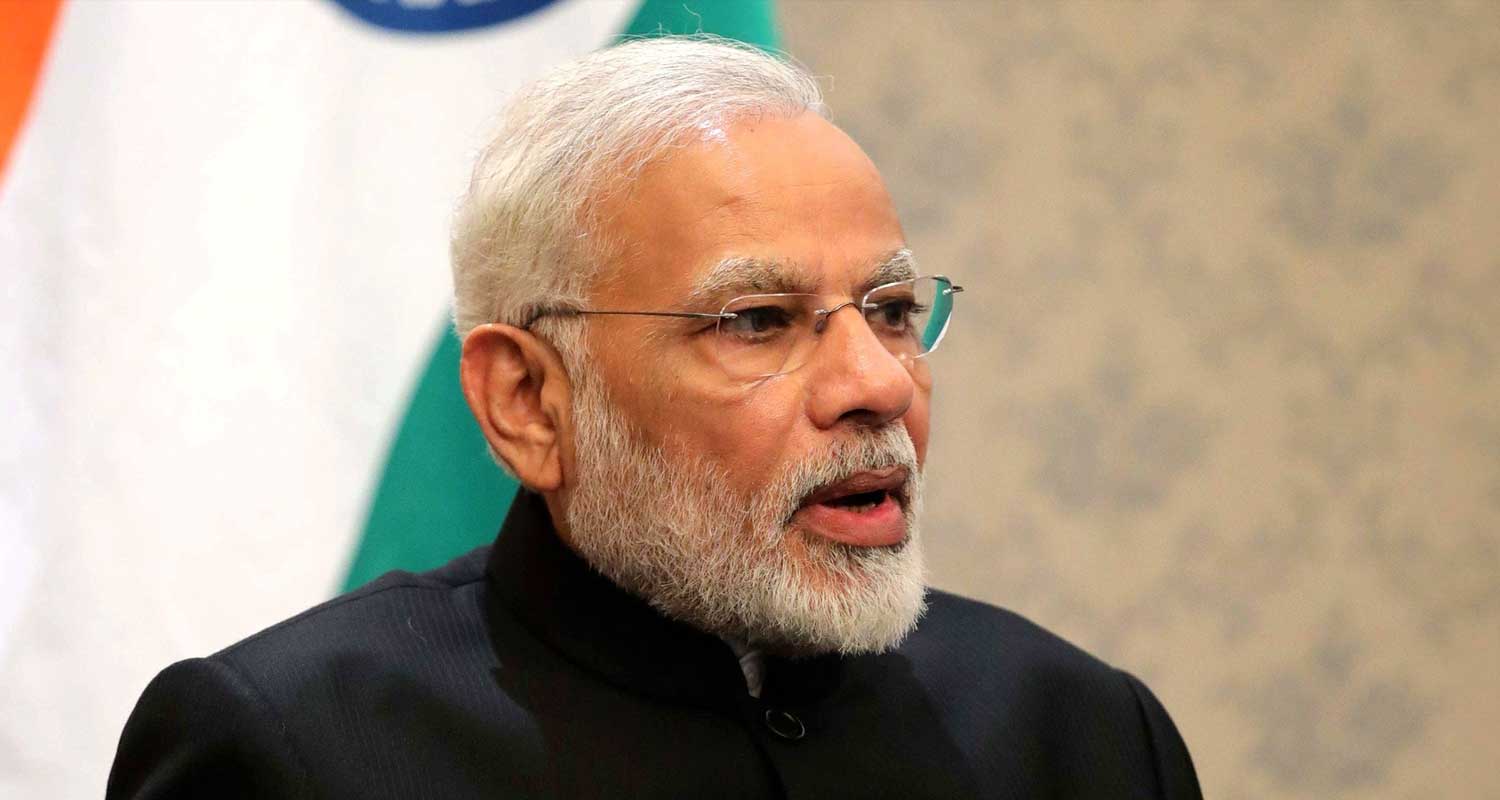
    India seeks unprecedented access to smartphone software - Narendra Modi
    Indian Prime Minister Narendra Modi

    India has proposed requiring smartphone makers to share source code with the government and make several software changes as part of a raft of security measures, prompting behind-the-scenes opposition from giants like Apple and Samsung.

    The tech companies have countered that the package of 83 security standards, which would also include a requirement to alert the government to major software updates, lacks any global precedent and risks revealing proprietary details, according to four people familiar with the discussions and a Reuters review of confidential government and industry documents.

    The plan is part of Prime Minister Narendra Modi’s efforts to boost security of user data as online fraud and data breaches increase in the world’s second-largest smartphone market, with nearly 750 million phones.

    Major countries in the EU, North America, Australia and Africa do not mandate these requirements

    IT secretary S Krishnan said on Saturday “any legitimate concerns of the industry will be addressed with an open mind”, adding it was “premature to read more into it”.

    An IT ministry statement said late on Sunday that the consultations are aimed at developing “an appropriate and robust regulatory framework for mobile security”, and it “routinely” engaged with the industry “to better understand technical and compliance burden”.

    The IT ministry added it “refutes the statement” that it is considering seeking source code from smartphone makers, without elaborating or commenting on the government or industry documents cited by Reuters.

    Apple, South Korea’s Samsung, Google, China’s Xiaomi and MAIT, the Indian industry group that represents the firms, did not respond to requests for comment.

    Source code

    Indian government requirements have irked technology firms before. Last month it revoked an order mandating a state-run cybersafety app on phones amid concerns over surveillance. But the government brushed aside lobbying last year and required rigorous testing for security cameras over fears of Chinese spying.

    Xiaomi and Samsung — whose phones use Google’s Android operating system — hold 19% and 15%, respectively, of India’s market share and Apple 5%, Counterpoint Research estimates.

    Read: Trump’s visa overhaul hits India’s IT titans

    Among the most sensitive requirements in the new Indian Telecom Security Assurance Requirements is access to source code — the underlying programming instructions that make phones work. This would be analysed and possibly tested at designated Indian labs, the documents show.

    The Indian proposals also require companies to make software changes to allow pre-installed apps to be uninstalled and to block apps from using cameras and microphones in the background to “avoid malicious usage”.

    India

    “Industry raised concerns that globally, security requirements have not been mandated by any country,” said a December IT ministry document detailing meetings that officials held with Apple, Samsung, Google and Xiaomi.

    The security standards, drafted in 2023, are in the spotlight now as the government is considering imposing them legally. IT ministry and tech executives are due to meet on Tuesday for more discussions, sources said.

    Smartphone makers closely guard their source code. Apple declined China’s request for source code between 2014 and 2016, and US law enforcement has also tried and failed to get it.

    Seeking government approval for software updates is ‘impractical’ as they need to be issued promptly

    India’s proposals for “vulnerability analysis” and “source code review” would require smartphone makers to perform a “complete security assessment”, after which test labs in India could check their claims through source code review and analysis.

    “This is not possible … due to secrecy and privacy,” MAIT said in a confidential document drafted in response to the government proposal, and seen by Reuters. “Major countries in the EU, North America, Australia and Africa do not mandate these requirements.”

    MAIT asked the ministry last week to drop the proposal, a source with direct knowledge said.

    Logs

    The Indian proposals would mandate automatic and periodic malware scanning on phones. Device makers would also have to inform the National Centre for Communication Security about major software updates and security patches before releasing them to users, and the centre would have the right to test them.

    MAIT’s document says regular malware scanning significantly drains a phone’s battery and seeking government approval for software updates is “impractical” as they need to be issued promptly.

    Read: India’s UPI shows what South Africa’s PayShap could become – if we dare

    India also wants the phone’s logs to be stored for at least 12 months on the device. “There is not enough room on-device to store one-year log events,” MAIT said in the document.  — Aditya Kalra and Munsif Vengattil, (c) 2026 Reuters

    Get breaking news from TechCentral on WhatsApp. Sign up here.



    Apple Google Narendra Modi Samsung Xiaomi
    WhatsApp YouTube Follow on Google News Add as preferred source on Google
    Share. Facebook Twitter LinkedIn WhatsApp Telegram Email Copy Link
    Previous ArticleEskom says SA power system strongest in five years
    Next Article Apple tops global smartphone rankings in 2025

    Related Posts

    Dr Google, meet Dr Chatbot - neither is ready to see you now

    Dr Google, meet Dr Chatbot – neither is ready to see you now

    10 February 2026
    Xiaomi Redmi Note 15 Series launches with podcast recorded at Tugela Falls

    Xiaomi Redmi Note 15 Series launches with podcast recorded at Tugela Falls

    9 February 2026
    AI chatbots are coming to Apple CarPlay

    AI chatbots are coming to Apple CarPlay

    8 February 2026
    Company News

    Why Acer is the strategic choice for South Africa’s educational future

    11 February 2026
    Fyndae is building Africa's human verification layer for community security and collaboration

    Fyndae wants to turn lost-item recovery into Africa’s trust infrastructure

    11 February 2026
    How NEC XON tackled identity risk for a major telco - Michael de Neuilly Rice

    How NEC XON tackled identity risk for a major telco

    11 February 2026
    Opinion
    South Africa's skills advantage is being overlooked at home - Richard Firth

    South Africa’s skills advantage is being overlooked at home

    29 January 2026
    Why Elon Musk's Starlink is a 'hard no' for me - Songezo Zibi

    Why Elon Musk’s Starlink is a ‘hard no’ for me

    26 January 2026
    South Africa's new fibre broadband battle - Duncan McLeod

    South Africa’s new fibre broadband battle

    20 January 2026

    Subscribe to Updates

    Get the best South African technology news and analysis delivered to your e-mail inbox every morning.

    Latest Posts
    Broadband Infraco in limbo

    Broadband Infraco in limbo

    11 February 2026

    Why Acer is the strategic choice for South Africa’s educational future

    11 February 2026
    Home affairs' R10 ID fee is forcing companies to rethink identity verification

    Standard Bank joins smart ID push with fee-free launch

    11 February 2026
    Zscaler assets seized from South African data centres

    Zscaler assets seized from South African data centres

    11 February 2026
    © 2009 - 2026 NewsCentral Media
    • Cookie policy (ZA)
    • TechCentral – privacy and Popia

    Type above and press Enter to search. Press Esc to cancel.

    Manage consent

    TechCentral uses cookies to enhance its offerings. Consenting to these technologies allows us to serve you better. Not consenting or withdrawing consent may adversely affect certain features and functions of the website.

    Functional Always active
    The technical storage or access is strictly necessary for the legitimate purpose of enabling the use of a specific service explicitly requested by the subscriber or user, or for the sole purpose of carrying out the transmission of a communication over an electronic communications network.
    Preferences
    The technical storage or access is necessary for the legitimate purpose of storing preferences that are not requested by the subscriber or user.
    Statistics
    The technical storage or access that is used exclusively for statistical purposes. The technical storage or access that is used exclusively for anonymous statistical purposes. Without a subpoena, voluntary compliance on the part of your Internet Service Provider, or additional records from a third party, information stored or retrieved for this purpose alone cannot usually be used to identify you.
    Marketing
    The technical storage or access is required to create user profiles to send advertising, or to track the user on a website or across several websites for similar marketing purposes.
    • Manage options
    • Manage services
    • Manage {vendor_count} vendors
    • Read more about these purposes
    View preferences
    • {title}
    • {title}
    • {title}