Close Menu
TechCentralTechCentral

    Subscribe to the newsletter

    Get the best South African technology news and analysis delivered to your e-mail inbox every morning.

    Facebook X (Twitter) YouTube LinkedIn
    WhatsApp Facebook X (Twitter) LinkedIn YouTube
    TechCentralTechCentral
    • News
      The real reason Absa wrote off R2.4-billion in software - Johnson Idesoh

      The real reason Absa wrote off R2.4-billion in software

      27 March 2026
      MTN Group shakes up board with five new directors

      MTN Group shakes up board with five new directors

      27 March 2026
      Anoosh Rooplal

      TCS | Anoosh Rooplal on the Post Office’s last stand

      27 March 2026
      Global crackdown on children's screen time gathers pace

      Global crackdown on children’s screen time gathers pace

      27 March 2026
      Big Tech's Big Tobacco moment has arrived

      Big Tech’s Big Tobacco moment has arrived

      27 March 2026
    • World

      Apple plans to open Siri to rival AI services

      27 March 2026
      It's official: ads are coming to ChatGPT

      It’s official: ads are coming to ChatGPT

      23 March 2026
      Mystery Chinese AI model revealed to be Xiaomi's

      Mystery Chinese AI model revealed to be Xiaomi’s

      19 March 2026
      A mystery AI model has developers buzzing

      A mystery AI model has developers buzzing

      18 March 2026
      Samsung's trifold gamble ends in retreat

      Samsung’s trifold gamble ends in retreat

      17 March 2026
    • In-depth
      The last generation of coders

      The last generation of coders

      18 February 2026
      Sentech is in dire straits

      Sentech is in dire straits

      10 February 2026
      How liberalisation is rewiring South Africa's power sector

      How liberalisation is rewiring South Africa’s power sector

      21 January 2026
      The top-performing South African tech shares of 2025

      The top-performing South African tech shares of 2025

      12 January 2026
      Digital authoritarianism grows as African states normalise internet blackouts

      Digital authoritarianism grows as African states normalise internet blackouts

      19 December 2025
    • TCS
      Meet the CIO | HealthBridge CTO Anton Fatti on the future of digital health

      Meet the CIO | Healthbridge CTO Anton Fatti on the future of digital health

      23 March 2026
      TCS+ | Arctic Wolf unpacks the evolving threat landscape for SA businesses - Clare Loveridge and Jason Oehley

      TCS+ | Arctic Wolf unpacks the evolving threat landscape for SA businesses

      19 March 2026
      TCS+ | Vox Kiwi: a wireless solution promising a fibre-like experience - Theo van Zyl

      TCS+ | Vox Kiwi: a wireless solution promising a fibre-like experience

      13 March 2026
      TCS+ | Flipping the narrative on AI in the Global South - Josefin Rosén

      TCS+ | Flipping the narrative on AI in the Global South

      13 March 2026
      TCS | Sink or swim? Antony Makins on how AI is rewriting the rules of work

      TCS | Sink or swim? Antony Makins on how AI is rewriting the rules of work

      5 March 2026
    • Opinion
      South Africa's energy future hinges on getting wheeling right - Aishah Gire

      South Africa’s energy future hinges on getting wheeling right

      10 March 2026
      Hold the doom: the case for a South African comeback - Duncan McLeod

      Apple just dropped a bomb on the Windows world

      5 March 2026
      VC's centre of gravity is shifting - and South Africa is in the frame - Alison Collier

      VC’s centre of gravity is shifting – and South Africa is in the frame

      3 March 2026
      Hold the doom: the case for a South African comeback - Duncan McLeod

      Hold the doom: the case for a South African comeback

      26 February 2026
      The AI fraud crisis your bank is not ready for - Andries Maritz

      The AI fraud crisis your bank is not ready for

      18 February 2026
    • Company Hubs
      • 1Stream
      • Africa Data Centres
      • AfriGIS
      • Altron Digital Business
      • Altron Document Solutions
      • Altron Group
      • Arctic Wolf
      • Ascent Technology
      • AvertITD
      • Braintree
      • CallMiner
      • CambriLearn
      • CYBER1 Solutions
      • Digicloud Africa
      • Digimune
      • Domains.co.za
      • ESET
      • Euphoria Telecom
      • HOSTAFRICA
      • Incredible Business
      • iONLINE
      • IQbusiness
      • Iris Network Systems
      • LSD Open
      • Mitel
      • NEC XON
      • Netstar
      • Network Platforms
      • Next DLP
      • Ovations
      • Paracon
      • Paratus
      • Q-KON
      • SevenC
      • SkyWire
      • Solid8 Technologies
      • Telit Cinterion
      • Telviva
      • Tenable
      • Vertiv
      • Videri Digital
      • Vodacom Business
      • Wipro
      • Workday
      • XLink
    • Sections
      • AI and machine learning
      • Banking
      • Broadcasting and Media
      • Cloud services
      • Contact centres and CX
      • Cryptocurrencies
      • Education and skills
      • Electronics and hardware
      • Energy and sustainability
      • Enterprise software
      • Financial services
      • HealthTech
      • Information security
      • Internet and connectivity
      • Internet of Things
      • Investment
      • IT services
      • Lifestyle
      • Motoring
      • Policy and regulation
      • Public sector
      • Retail and e-commerce
      • Satellite communications
      • Science
      • SMEs and start-ups
      • Social media
      • Talent and leadership
      • Telecoms
    • Events
    • Advertise
    TechCentralTechCentral
    Home » Sections » Information security » How worried should South Africans be about Covid-19 cellphone tracing?

    How worried should South Africans be about Covid-19 cellphone tracing?

    By The Conversation28 April 2020
    Twitter LinkedIn Facebook WhatsApp Email Telegram Copy Link
    News Alerts
    WhatsApp

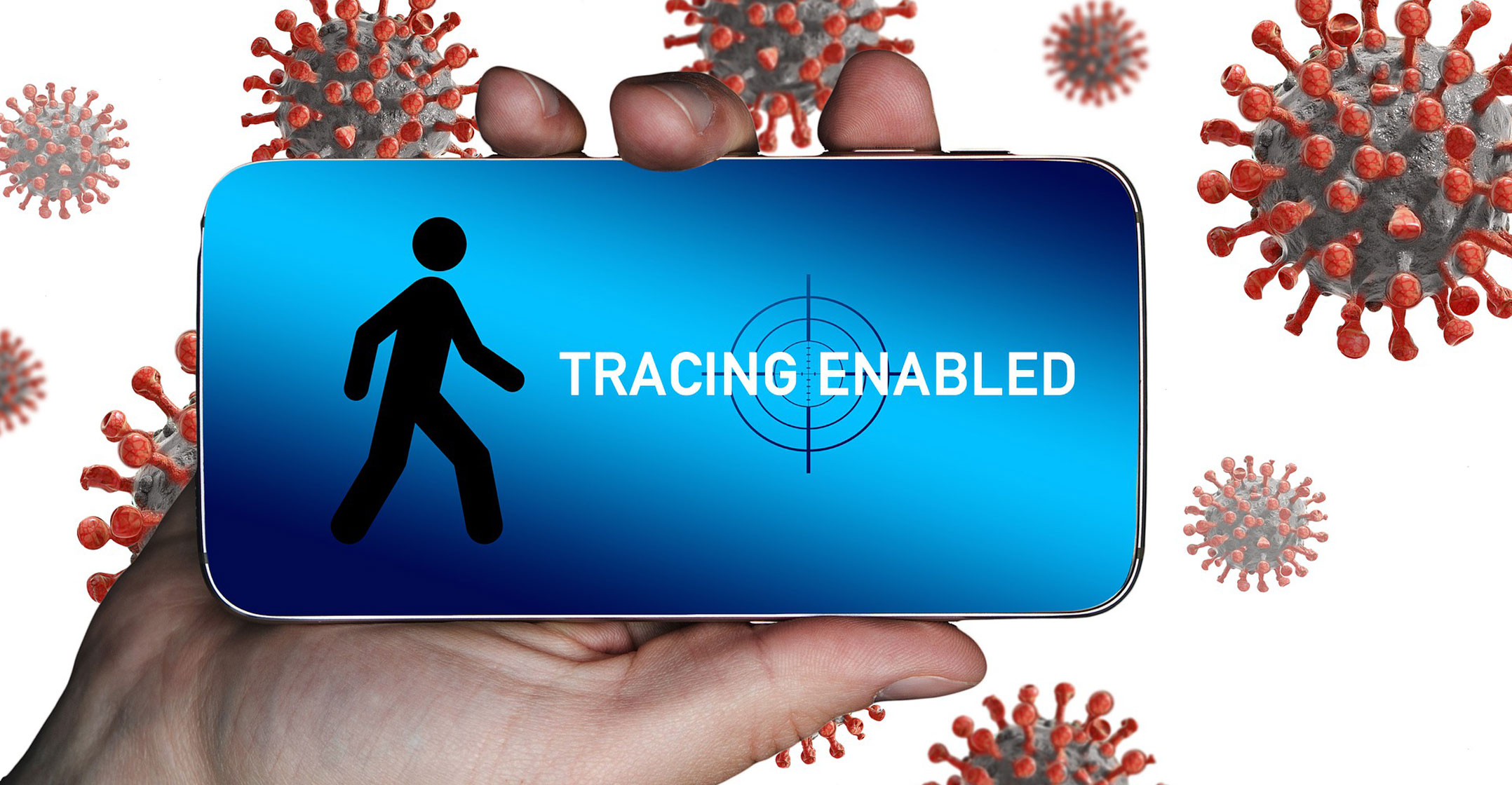
    Tracking people infected with Covid-19 has become an important weapon in global responses to combating the virus. Using geolocation, mobile technology offers a simple solution for tracing people possibly exposed to Covid-19. With big data analytics there is the potential for tracking the pandemic’s spread, and employing analytics to forecast future patterns of contagion.

    But at what cost? These are exceptional times calling for extraordinary measures. But do they justify the wholesale sacrifice of our rights? Concerns loom large across the globe. More than 100 civil society signatories and intergovernmental organisations have already warned as much in a joint letter.

    The mobile phone industry is reportedly exploring the creation of a global data-sharing system that could track individuals around the world. For now, however, monitoring appears to be happening at national level.

    South Africa has joined several governments in passing regulations that allow the collection and storage of data from mobile companies

    South Africa has joined several governments in passing regulations that allow the collection and storage of data from mobile companies. It has also appointed a former constitutional court justice, Kate O’Regan, as the Covid-19 judge. Her job will be to oversee data collection for the country’s contact-tracing database led by the director-general of health, Dr Anban Pillay.

    The appointment of O’Regan indicates that the country is taking seriously concerns about the risks that monitoring can pose for human rights. Nevertheless, concerns remain about the ability of the judge (or parliament, which ultimately has oversight) to ensure that data, once collected, is not abused.

    Best practices

    A set of principles and best practices have emerged internationally to guide data collection in disaster conditions. These include that:

    • Measures are transparent and accountable;
    • The limitations of rights are proportional to the harms they are intended to prevent or limit;
    • Data collection is minimised and time constrained;
    • Data is retained for research or public-use purposes and unused personal data is destroyed;
    • Data is anonymised in such a way that individuals cannot be re-identified; and
    • Third-party sharing both within and outside of government is prevented.

    However, South Africa’s data protection framework is not yet in place. Large parts of the Protection of Personal Information Act have not yet come into force. The Office of the Information Regulator has been established. And three years ago advocate Pansy Tlakula was appointed chair. But key sections of the act are not in play. Thus, her powers to act are constrained.

    There is synchronicity, however, between the principles and requirements of the Covid-19 regulations, and the lawful data processing principles the act describes.

    The regulator has issued guidelines for the collection of data to manage and curb the spread of Covid-19. These guidelines are contained in the Disaster Management Act (regulations). And she has called for proactive compliance by responsible parties when processing personal information of data subjects who have been tested for, or are infected with, Covid-19.

    The guidelines confirm the powers of the state to conduct mass surveillance of both Covid-19 carriers, and potential carriers, through the sharing of data by mobile operators. They also include reference to some of the privacy touchstones in data collection, particularly when consent is not obtained.

    Amendments to the disaster management regulations empower the director-general of health to direct, without prior notice, an electronic communications service provider to provide him with information for the Covid-19 tracing database to facilitate Covid-19 monitoring.

    Big questions remain about the practical realities of ensuring that data remains secure, especially considering the department’s own tenuous history in this regard

    But these powers are circumscribed.

    The regulations allow for the collection of location data of any person (and their personal identifiers) reasonably suspected to have contracted Covid-19, or that may have come into contact with someone who has. The commencement date is 5 March 2020.

    The contents of the communication may not be intercepted by the director-general – or anyone else.

    The regulations state that the department of health will keep the information “confidential”. But big questions remain about the practical realities of ensuring that data remains secure, especially considering the department’s own tenuous history in relation to data protection.

    The regulations empower the director-general to instruct a mobile operator to provide the information mentioned. But the actual modalities of the data collection by the health department is less clear — particularly how the data is collected and transmitted to the database securely.

    Limited collection

    For instance, once a request for the data from an operator is made and provided to the director-general, who will receive the information to inform the contacts? Who will ensure they are tested?

    Importantly, the regulations limit the collection of data only to the purpose of addressing, preventing or combating the spread of Covid-19. The data collected may only be disclosed by authorised persons for this purpose.

    The director-general is required to file weekly reports stating the number, names and details of all persons whose location or movements were obtained to the designated judge. This will contribute to the oversight of collection. It will also go some way to constraining data collection to what’s strictly necessary.

    The duration of data collection is circumscribed and terminates with the end of the national state of disaster

    The duration of data collection is circumscribed and terminates with the end of the national state of disaster. And within six weeks of it lapsing, the director-general is required to file a report with the Covid-19 judge detailing steps taken to de-identify the data. This includes providing notifications to every person whose information was obtained.

    The regulations require that all information on the Covid-19 tracing database, which has not been de-identified, be destroyed once the state of disaster has ended. But de-identification is not defined. This is a major concern, given the very real possibility of re-identification with the use of other publicly available, or hacked, databases.

    These measures go some way to safeguarding South Africans’ individual rights while acting in the public interest to contain the virus.

    But the regulations could be improved by:

    • Requiring that data subjects be informed as soon as they are tracked, but no later than six weeks after the termination of the state of disaster;
    • Explicitly empowering the judge to appoint technical experts to assist her in reviewing the use of data. This could include helping to ensure its security;
    • Explicitly giving the judge access to the database and the data supplied by the cellular providers to verify reporting. This could also assist in monitoring security and other data processing protection measures;
    • Requiring immediate notification of all compromises of privacy or security of the data to the persons whose data is compromised; and
    • Clearly prescribing data processing standards that respect the principles set out in the act.The Conversation

    Written by Alison Gillwald, adjunct professor, Nelson Mandela School of Public Governance, University of Cape Town; Andrew Rens, senior research fellow, Research ICT Africa, American University; Anri van der Spuy, PhD researcher, London School of Economics and Political Science; and Gabriella Razzano, lawyer and researcher, London School of Economics and Political Science

    • This article is republished from The Conversation under a Creative Commons licence.

    Follow TechCentral on Google News Add TechCentral as your preferred source on Google


    Allison Gillwald Andrew Rens Kate O'Regan top
    WhatsApp YouTube
    Share. Facebook Twitter LinkedIn WhatsApp Telegram Email Copy Link
    Previous ArticleBackspace: ‘E-commerce’
    Next Article Telkom in intriguing move to open the copper local loop

    Related Posts

    18GW in unplanned breakdowns cripple Eskom

    2 November 2021

    Nersa kicks the Karpowership can down the road

    13 September 2021

    If you think South African load shedding is bad, try Zimbabwe’s

    13 September 2021
    Company News
    Durban's finance leaders are done with AI theatre - Sage Intacct

    Durban’s finance leaders are done with AI theatre

    26 March 2026
    Defend your cloud with Altron Digital Business

    Defend your cloud with Altron Digital Business

    26 March 2026
    Why most Cisco partners leave money on the table at renewal time - Westcon-Comstor

    Why most Cisco partners leave money on the table at renewal time

    25 March 2026
    Opinion
    South Africa's energy future hinges on getting wheeling right - Aishah Gire

    South Africa’s energy future hinges on getting wheeling right

    10 March 2026
    Hold the doom: the case for a South African comeback - Duncan McLeod

    Apple just dropped a bomb on the Windows world

    5 March 2026
    VC's centre of gravity is shifting - and South Africa is in the frame - Alison Collier

    VC’s centre of gravity is shifting – and South Africa is in the frame

    3 March 2026

    Subscribe to Updates

    Get the best South African technology news and analysis delivered to your e-mail inbox every morning.

    Latest Posts
    The real reason Absa wrote off R2.4-billion in software - Johnson Idesoh

    The real reason Absa wrote off R2.4-billion in software

    27 March 2026
    MTN Group shakes up board with five new directors

    MTN Group shakes up board with five new directors

    27 March 2026
    Anoosh Rooplal

    TCS | Anoosh Rooplal on the Post Office’s last stand

    27 March 2026
    Global crackdown on children's screen time gathers pace

    Global crackdown on children’s screen time gathers pace

    27 March 2026
    © 2009 - 2026 NewsCentral Media
    • Cookie policy (ZA)
    • TechCentral – privacy and Popia

    Type above and press Enter to search. Press Esc to cancel.

    Manage consent

    TechCentral uses cookies to enhance its offerings. Consenting to these technologies allows us to serve you better. Not consenting or withdrawing consent may adversely affect certain features and functions of the website.

    Functional Always active
    The technical storage or access is strictly necessary for the legitimate purpose of enabling the use of a specific service explicitly requested by the subscriber or user, or for the sole purpose of carrying out the transmission of a communication over an electronic communications network.
    Preferences
    The technical storage or access is necessary for the legitimate purpose of storing preferences that are not requested by the subscriber or user.
    Statistics
    The technical storage or access that is used exclusively for statistical purposes. The technical storage or access that is used exclusively for anonymous statistical purposes. Without a subpoena, voluntary compliance on the part of your Internet Service Provider, or additional records from a third party, information stored or retrieved for this purpose alone cannot usually be used to identify you.
    Marketing
    The technical storage or access is required to create user profiles to send advertising, or to track the user on a website or across several websites for similar marketing purposes.
    • Manage options
    • Manage services
    • Manage {vendor_count} vendors
    • Read more about these purposes
    View preferences
    • {title}
    • {title}
    • {title}