
Close Menu
TechCentralTechCentral

    Subscribe to the newsletter

    Get the best South African technology news and analysis delivered to your e-mail inbox every morning.

    Facebook X (Twitter) YouTube LinkedIn
    WhatsApp Facebook X (Twitter) LinkedIn YouTube
    TechCentralTechCentral
    • News
      The real reason Absa wrote off R2.4-billion in software - Johnson Idesoh

      The real reason Absa wrote off R2.4-billion in software

      27 March 2026
      MTN Group shakes up board with five new directors

      MTN Group shakes up board with five new directors

      27 March 2026
      Anoosh Rooplal

      TCS | Anoosh Rooplal on the Post Office’s last stand

      27 March 2026
      Global crackdown on children's screen time gathers pace

      Global crackdown on children’s screen time gathers pace

      27 March 2026
      Big Tech's Big Tobacco moment has arrived

      Big Tech’s Big Tobacco moment has arrived

      27 March 2026
    • World

      Apple plans to open Siri to rival AI services

      27 March 2026
      It's official: ads are coming to ChatGPT

      It’s official: ads are coming to ChatGPT

      23 March 2026
      Mystery Chinese AI model revealed to be Xiaomi's

      Mystery Chinese AI model revealed to be Xiaomi’s

      19 March 2026
      A mystery AI model has developers buzzing

      A mystery AI model has developers buzzing

      18 March 2026
      Samsung's trifold gamble ends in retreat

      Samsung’s trifold gamble ends in retreat

      17 March 2026
    • In-depth
      The last generation of coders

      The last generation of coders

      18 February 2026
      Sentech is in dire straits

      Sentech is in dire straits

      10 February 2026
      How liberalisation is rewiring South Africa's power sector

      How liberalisation is rewiring South Africa’s power sector

      21 January 2026
      The top-performing South African tech shares of 2025

      The top-performing South African tech shares of 2025

      12 January 2026
      Digital authoritarianism grows as African states normalise internet blackouts

      Digital authoritarianism grows as African states normalise internet blackouts

      19 December 2025
    • TCS
      Meet the CIO | HealthBridge CTO Anton Fatti on the future of digital health

      Meet the CIO | Healthbridge CTO Anton Fatti on the future of digital health

      23 March 2026
      TCS+ | Arctic Wolf unpacks the evolving threat landscape for SA businesses - Clare Loveridge and Jason Oehley

      TCS+ | Arctic Wolf unpacks the evolving threat landscape for SA businesses

      19 March 2026
      TCS+ | Vox Kiwi: a wireless solution promising a fibre-like experience - Theo van Zyl

      TCS+ | Vox Kiwi: a wireless solution promising a fibre-like experience

      13 March 2026
      TCS+ | Flipping the narrative on AI in the Global South - Josefin Rosén

      TCS+ | Flipping the narrative on AI in the Global South

      13 March 2026
      TCS | Sink or swim? Antony Makins on how AI is rewriting the rules of work

      TCS | Sink or swim? Antony Makins on how AI is rewriting the rules of work

      5 March 2026
    • Opinion
      South Africa's energy future hinges on getting wheeling right - Aishah Gire

      South Africa’s energy future hinges on getting wheeling right

      10 March 2026
      Hold the doom: the case for a South African comeback - Duncan McLeod

      Apple just dropped a bomb on the Windows world

      5 March 2026
      VC's centre of gravity is shifting - and South Africa is in the frame - Alison Collier

      VC’s centre of gravity is shifting – and South Africa is in the frame

      3 March 2026
      Hold the doom: the case for a South African comeback - Duncan McLeod

      Hold the doom: the case for a South African comeback

      26 February 2026
      The AI fraud crisis your bank is not ready for - Andries Maritz

      The AI fraud crisis your bank is not ready for

      18 February 2026
    • Company Hubs
      • 1Stream
      • Africa Data Centres
      • AfriGIS
      • Altron Digital Business
      • Altron Document Solutions
      • Altron Group
      • Arctic Wolf
      • Ascent Technology
      • AvertITD
      • Braintree
      • CallMiner
      • CambriLearn
      • CYBER1 Solutions
      • Digicloud Africa
      • Digimune
      • Domains.co.za
      • ESET
      • Euphoria Telecom
      • HOSTAFRICA
      • Incredible Business
      • iONLINE
      • IQbusiness
      • Iris Network Systems
      • LSD Open
      • Mitel
      • NEC XON
      • Netstar
      • Network Platforms
      • Next DLP
      • Ovations
      • Paracon
      • Paratus
      • Q-KON
      • SevenC
      • SkyWire
      • Solid8 Technologies
      • Telit Cinterion
      • Telviva
      • Tenable
      • Vertiv
      • Videri Digital
      • Vodacom Business
      • Wipro
      • Workday
      • XLink
    • Sections
      • AI and machine learning
      • Banking
      • Broadcasting and Media
      • Cloud services
      • Contact centres and CX
      • Cryptocurrencies
      • Education and skills
      • Electronics and hardware
      • Energy and sustainability
      • Enterprise software
      • Financial services
      • HealthTech
      • Information security
      • Internet and connectivity
      • Internet of Things
      • Investment
      • IT services
      • Lifestyle
      • Motoring
      • Policy and regulation
      • Public sector
      • Retail and e-commerce
      • Satellite communications
      • Science
      • SMEs and start-ups
      • Social media
      • Talent and leadership
      • Telecoms
    • Events
    • Advertise
    TechCentralTechCentral
    Home » Sections » Enterprise software » Linux on the desktop is gaining ground

    Linux on the desktop is gaining ground

    Linux is gaining ground on the desktop as it becomes easier to use and as Microsoft’s attention shifts towards cloud services.
    By Nkosinathi Ndlovu11 March 2024
    Twitter LinkedIn Facebook WhatsApp Email Telegram Copy Link
    News Alerts
    WhatsApp

    Linux on the desktop is enjoying something of a resurgence in popularity as the age-old battle between the underdog open-source operating system and market leader Microsoft Windows hots up again.

    So, is this the year that Linux, in its many variants, becomes the mainstream desktop operating system? That’s unlikely. But the reasons why Linux is growing its market share on the desktop are nonetheless interesting.

    On an expanded definition – counting all computing form factors, including mobile devices and the computer servers that populate vast data centres – Linux is the most widely used operating system in the world, and has been for years.

    I wish we were better at having a standardised desktop that goes across all the distributions

    This is because most of the world’s “computers” are smartphones that run Google’s Android operating system, which is built on Linux and other open-source software. According to analysis site Statcounter, Android had 43.74% of the world’s total operating system market share as of February 2024, followed by Windows with 27.39% and iOS with 17.82%.

    In the desktop world, however, the picture is rather different. Windows still holds a commanding 72.13% of the market (also as of February 2024), while Linux has managed to increase its share to a meagre 4.03% — even as it enjoys strong growth off a low base, gaining 1.09 percentage points year on year. That might not sound like a lot, but it represents annual growth of 37.1%.

    It is clear from the statistics that the “year of the Linux desktop” is still far away. Linus Torvalds, the creator of the Linux operating system, believes the software is unlikely ever to dominate on the desktop because, unlike Windows, which is a single operating system with a few different versions, Linux has many different operating systems, or distros, with many different versions. This fragmentation increases complexity for users who may be daunted by the prospect of learning a how the user interface works for each Linux distro they come across.

    Growing in popularity

    According to Linux resource site DistroWatch, there are more than 200 Linux distributions with more than 21 different desktop interfaces available.

    “I wish we were better at having a standardised desktop that goes across all the distributions. This is not a kernel issue; it’s more of a personal annoyance of how the fragmentation among different vendors has perhaps held the desktop back a bit,” said Torvalds in a TFiR interview in 2018.

    Even so, Linux continues to grow in popularity. The first reason for this may be that Microsoft has shifted its primary focus away from Windows to its enterprise cloud business.

    Read: Open-source software worth a lot more than you pay for it

    “Microsoft will probably start giving Windows away for free at some point,” said Julian Gericke, chief technology officer at LSD Open, a firm that specialises in the commercial application of open-source software.

    “They’ve done an amazing job at pivoting what was their core revenue stream – their proprietary operating system and the productivity suite (Office) that runs on top of it into a consumption business – Microsoft 365 and Azure (which will include their AI services). Windows is far less relevant today than it was in the heyday of 1995.”
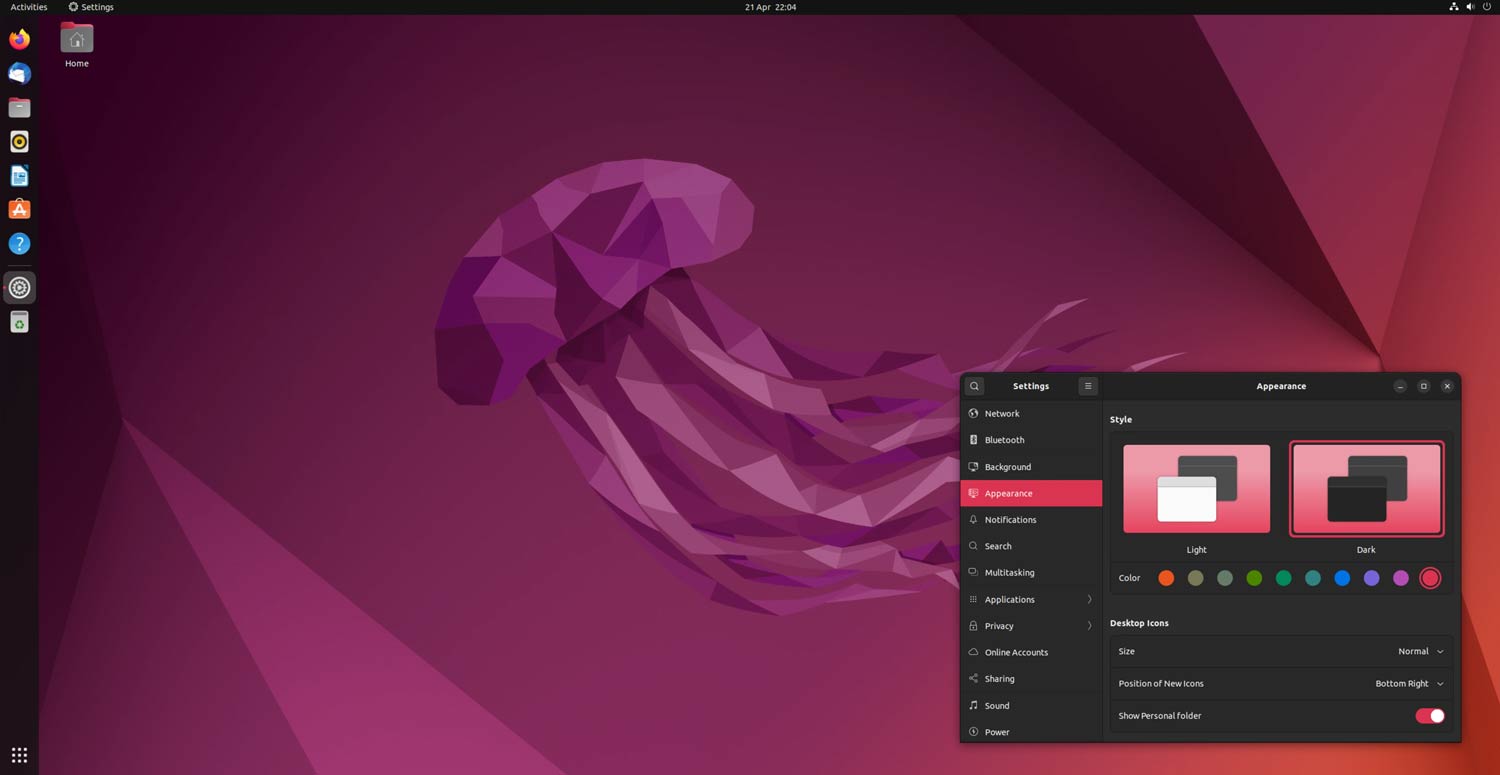
    Linux distributions like Ubuntu have made the open-source operating system more accessible to ordinary users

    Adding to Linux’s growing popularity are changes in user perceptions about the difficulty involved in installing and using it on the desktop. User-friendlier distributions, such as Linux Mint and the South African-born Ubuntu, developed by a team led by Mark Shuttleworth, have made it easier for non-technical users to explore the Linux universe.

    “To be fair, Linux on the desktop is largely a niche space. There has been growth over the years, with more and more user-centric distributions becoming available, such as Mint and more recently Pop!_OS,” said Gericke.

    Installing applications on Linux has also become much simpler than in the past. Containerised application programs such as Flatpak, Snap and AppImage have made it much easier to install Linux apps without having to worry about finicky distribution-specific issues.

    User-friendlier distributions have made it easier for non-technical users to explore the Linux universe

    Installing the Linux kernel itself can be as simple as mounting a virtual disk and following a simple click-by-click tutorial, although a more technically demanding install, like Gentoo’s, is available for the open-source purists, or anyone looking for a challenge.

    Gericke said the slight gains Linux is making in the end-user space will continue to be overshadowed by its dominance in core infrastructure. The internet runs on Linux, he said.

    Linux is the preferred operating system for server workloads, the edge devices in internet-of-things networks and the tools that integrate artificial intelligence into web applications.

    “Of course, while AI modelling runs on GPUs (graphics processing units) or TPUs (tensor processing units), the OS underpinning AI orchestrators is inevitably Linux as well. At least presently, there aren’t any alternative operating systems that offer the same open standards and integration possibilities to unseat it,” said Gericke.  – © 2024 NewsCentral Media

    Get breaking news alerts from TechCentral on WhatsApp

    Follow TechCentral on Google News Add TechCentral as your preferred source on Google


    DistroWatch Gentoo Linus Torvalds Linux Mark Shuttleworth Microsoft Ubuntu
    WhatsApp YouTube
    Share. Facebook Twitter LinkedIn WhatsApp Telegram Email Copy Link
    Previous ArticleMusk says xAI will open-source Grok
    Next Article Companies must act now on CIPC hack

    Related Posts

    Defend your cloud with Altron Digital Business

    Defend your cloud with Altron Digital Business

    26 March 2026
    AI is coming to your accounting software

    Sage bets AI can save small business owners from admin hell

    13 March 2026
    Musk launches Macrohard in cheeky nod to Microsoft - Elon Musk

    Musk launches Macrohard in cheeky nod to Microsoft

    12 March 2026
    Company News
    Durban's finance leaders are done with AI theatre - Sage Intacct

    Durban’s finance leaders are done with AI theatre

    26 March 2026
    Defend your cloud with Altron Digital Business

    Defend your cloud with Altron Digital Business

    26 March 2026
    Why most Cisco partners leave money on the table at renewal time - Westcon-Comstor

    Why most Cisco partners leave money on the table at renewal time

    25 March 2026
    Opinion
    South Africa's energy future hinges on getting wheeling right - Aishah Gire

    South Africa’s energy future hinges on getting wheeling right

    10 March 2026
    Hold the doom: the case for a South African comeback - Duncan McLeod

    Apple just dropped a bomb on the Windows world

    5 March 2026
    VC's centre of gravity is shifting - and South Africa is in the frame - Alison Collier

    VC’s centre of gravity is shifting – and South Africa is in the frame

    3 March 2026

    Subscribe to Updates

    Get the best South African technology news and analysis delivered to your e-mail inbox every morning.

    Latest Posts
    The real reason Absa wrote off R2.4-billion in software - Johnson Idesoh

    The real reason Absa wrote off R2.4-billion in software

    27 March 2026
    MTN Group shakes up board with five new directors

    MTN Group shakes up board with five new directors

    27 March 2026
    Anoosh Rooplal

    TCS | Anoosh Rooplal on the Post Office’s last stand

    27 March 2026
    Global crackdown on children's screen time gathers pace

    Global crackdown on children’s screen time gathers pace

    27 March 2026
    © 2009 - 2026 NewsCentral Media
    • Cookie policy (ZA)
    • TechCentral – privacy and Popia

    Type above and press Enter to search. Press Esc to cancel.

    Manage consent

    TechCentral uses cookies to enhance its offerings. Consenting to these technologies allows us to serve you better. Not consenting or withdrawing consent may adversely affect certain features and functions of the website.

    Functional Always active
    The technical storage or access is strictly necessary for the legitimate purpose of enabling the use of a specific service explicitly requested by the subscriber or user, or for the sole purpose of carrying out the transmission of a communication over an electronic communications network.
    Preferences
    The technical storage or access is necessary for the legitimate purpose of storing preferences that are not requested by the subscriber or user.
    Statistics
    The technical storage or access that is used exclusively for statistical purposes. The technical storage or access that is used exclusively for anonymous statistical purposes. Without a subpoena, voluntary compliance on the part of your Internet Service Provider, or additional records from a third party, information stored or retrieved for this purpose alone cannot usually be used to identify you.
    Marketing
    The technical storage or access is required to create user profiles to send advertising, or to track the user on a website or across several websites for similar marketing purposes.
    • Manage options
    • Manage services
    • Manage {vendor_count} vendors
    • Read more about these purposes
    View preferences
    • {title}
    • {title}
    • {title}