Close Menu
TechCentralTechCentral

    Subscribe to the newsletter

    Get the best South African technology news and analysis delivered to your e-mail inbox every morning.

    Facebook X (Twitter) YouTube LinkedIn
    WhatsApp Facebook X (Twitter) LinkedIn YouTube
    TechCentralTechCentral
    • News
      Why Telkom is pouring capex into IT - Serame Taukobong

      Why Telkom is pouring capital spending into IT

      2 June 2026
      Telkom's data growth story still has years to run: CEO

      Telkom’s data growth story still has years to run: CEO

      2 June 2026
      Reserve Bank draws a line on inflation - Lesetja Kganyago. Siphiwe Sibeko/Reuters

      Reserve Bank draws a line on inflation

      2 June 2026

      Clashing judgments leave South Africa’s crypto law unsettled

      2 June 2026
      Telkom's four-year SIU standoff awaits a final ruling

      Telkom’s four-year SIU standoff awaits a final ruling

      2 June 2026
    • World
      Astronomers discover exoplanets with magnetic fields

      Strange winds reveal magnetic fields on distant ‘hot Jupiters’

      2 June 2026
      Nvidia's first CPUs to debut in Windows laptops this week

      Nvidia CPUs to debut in Windows laptops this week

      31 May 2026
      Watch: Bezos rocket erupts in fireball during ground test

      Watch: Bezos rocket erupts in fireball during ground test

      29 May 2026
      AI boom hands Samsung chip workers life-changing bonuses

      AI boom hands Samsung chip workers life-changing bonuses

      27 May 2026
      Luce lit: Ferrari unveils its first electric car

      Luce lit: Ferrari unveils its first electric car

      26 May 2026
    • In-depth
      Alfa's electric rebel - Alfa Romeo Junior Elettrica Veloce

      Alfa’s electric rebel

      29 April 2026
      Africa switches on as Europe dims the lights

      Africa switches on as Europe dims the lights

      9 April 2026
      The biggest untapped EV market on Earth is hiding in plain sight

      The biggest untapped EV market on Earth is hiding in plain sight

      1 April 2026
      AI, cybersecurity power standout year for Datatec - Jens Montanana

      The R16-billion tech giant hiding in plain sight

      26 March 2026
      The last generation of coders

      The last generation of coders

      18 February 2026
    • TCS
      TCS | Charge's R1.8-billion bet on an off-grid EV future - Charge chairman Joubert Roux

      TCS | Charge’s R1.8-billion bet on an off-grid EV future

      18 May 2026
      TCS+ | The Up&Up Group on the hidden cost of AI - Jason Harrison

      TCS+ | The Up&Up Group on the hidden cost of AI

      13 May 2026
      Michael Rossouw

      TCS+ | The retirement decision most South Africans get wrong

      6 May 2026
      TCS | The Cape Town start-up listening for TB with AI - Braden van Breda

      TCS | The Cape Town start-up listening for TB with AI

      4 May 2026

      TCS+ | ‘The ISP for ISPs’: Vox’s shift to wholesale aggregator

      20 April 2026
    • Opinion
      Treasury's crypto crackdown is a betrayal of Mandela's promise - Duncan McLeod

      Treasury’s crypto crackdown is a betrayal of Mandela’s promise

      22 May 2026
      South Africa is sleepwalking into another AI policy failure - Celeste Labuschagne

      South Africa is sleepwalking into another AI policy failure

      20 May 2026
      AI won't fix your culture - it will expose it - Jackie Kennedy

      AI won’t fix your culture – it will expose it

      19 May 2026
      Treasury's crypto crackdown is a betrayal of Mandela's promise - Duncan McLeod

      Free calls, dead voice and Shameel Joosub’s Spanish ghost

      22 April 2026
      The conflict of interest at the heart of PayShap's slow adoption - Cheslyn Jacobs

      The conflict of interest at the heart of PayShap’s slow adoption

      26 March 2026
    • Company Hubs
      • 1Stream
      • Africa Data Centres
      • AfriGIS
      • Altron Digital Business
      • Altron Document Solutions
      • Altron Group
      • Arctic Wolf
      • Ascent Technology
      • AvertITD
      • BBD
      • Braintree
      • CallMiner
      • CambriLearn
      • CM Telecom
      • Contactable
      • CYBER1 Solutions
      • Digicloud Africa
      • Digimune
      • Domains.co.za
      • ESET
      • Euphoria Telecom
      • HOSTAFRICA
      • Incredible Business
      • iONLINE
      • IQbusiness
      • Iris Network Systems
      • Kaspersky
      • LSD Open
      • Mitel
      • NEC XON
      • Netstar
      • Network Platforms
      • Next DLP
      • Ovations
      • Paracon
      • Paratus
      • Q-KON
      • SevenC
      • SkyWire
      • Solid8 Technologies
      • Telit Cinterion
      • Telviva
      • Tenable
      • Vertiv
      • Videri Digital
      • Vodacom Business
      • Wipro
      • Workday
      • XLink
    • Sections
      • AI and machine learning
      • Banking
      • Broadcasting and Media
      • Cloud services
      • Contact centres and CX
      • Cryptocurrencies
      • Education and skills
      • Electronics and hardware
      • Energy and sustainability
      • Enterprise software
      • Financial services
      • HealthTech
      • Information security
      • Internet and connectivity
      • Internet of Things
      • Investment
      • IT services
      • Lifestyle
      • Motoring
      • Policy and regulation
      • Public sector
      • Retail and e-commerce
      • Satellite communications
      • Science
      • SMEs and start-ups
      • Social media
      • Talent and leadership
      • Telecoms
    • Events
    • Advertise
    TechCentralTechCentral
    Home » World » Microsoft takes path less travelled to build a quantum computer

    Microsoft takes path less travelled to build a quantum computer

    By Agency Staff11 December 2017
    Twitter LinkedIn Facebook WhatsApp Email Telegram Copy Link
    News Alerts
    WhatsApp

    In the race to commercialise a new type of powerful computer, Microsoft has just pulled up to the starting line with a slick-looking set of wheels. There’s just one problem: it doesn’t have an engine – at least not yet.

    The Redmond, Washington-based tech giant is competing with Google, IBM and a clutch of small, specialised companies to develop quantum computers — machines that, in theory, will be many times more powerful than existing computers by bending the laws of physics.

    Microsoft says it has a different approach that will make its technology less error-prone and more suitable for commercial use. If it works. On Monday, the company unveiled a new programming language called Q# — pronounced “Q sharp” — and tools that help coders craft software for quantum computers. Microsoft is also releasing simulators that will let programmers test that software on a traditional desktop computer or through its Azure cloud computing service.

    We are talking to multiple customers today and we are proposing quantum-inspired services for certain problems

    The machines are one of the advanced technologies, along with artificial intelligence and augmented reality, that Microsoft CEO Satya Nadella considers crucial to the future of his company.

    Microsoft, like IBM and Google, will most likely rent computing time on these quantum machines through the Internet as a service.

    D-Wave Systems in 2011 became the first company to sell a quantum computer, although its technology has been controversial and can only perform a certain subset of mathematical problems. Google and IBM have produced machines that are thought to be close to achieving “quantum supremacy” — the ability to tackle a problem too complex to solve on any standard supercomputer. IBM and start-up Rigetti Computing also have software for their machines.

    Microsoft, in contrast, is still trying to build a working machine. It is pursuing a novel design based on controlling an elusive particle called a Majorana fermion that no one was sure even existed a few years ago.

    Majorana fermion

    Engineers are close to being able to control the Majorana fermion in a way that will enable them to perform calculations, Todd Holmdahl, head of Microsoft’s quantum computing efforts, said in an interview.

    Holmdahl, who led development of the Xbox and the company’s HoloLens goggles, said Microsoft will have a quantum computer on the market within five years.

    “We are talking to multiple customers today and we are proposing quantum-inspired services for certain problems,” he added.
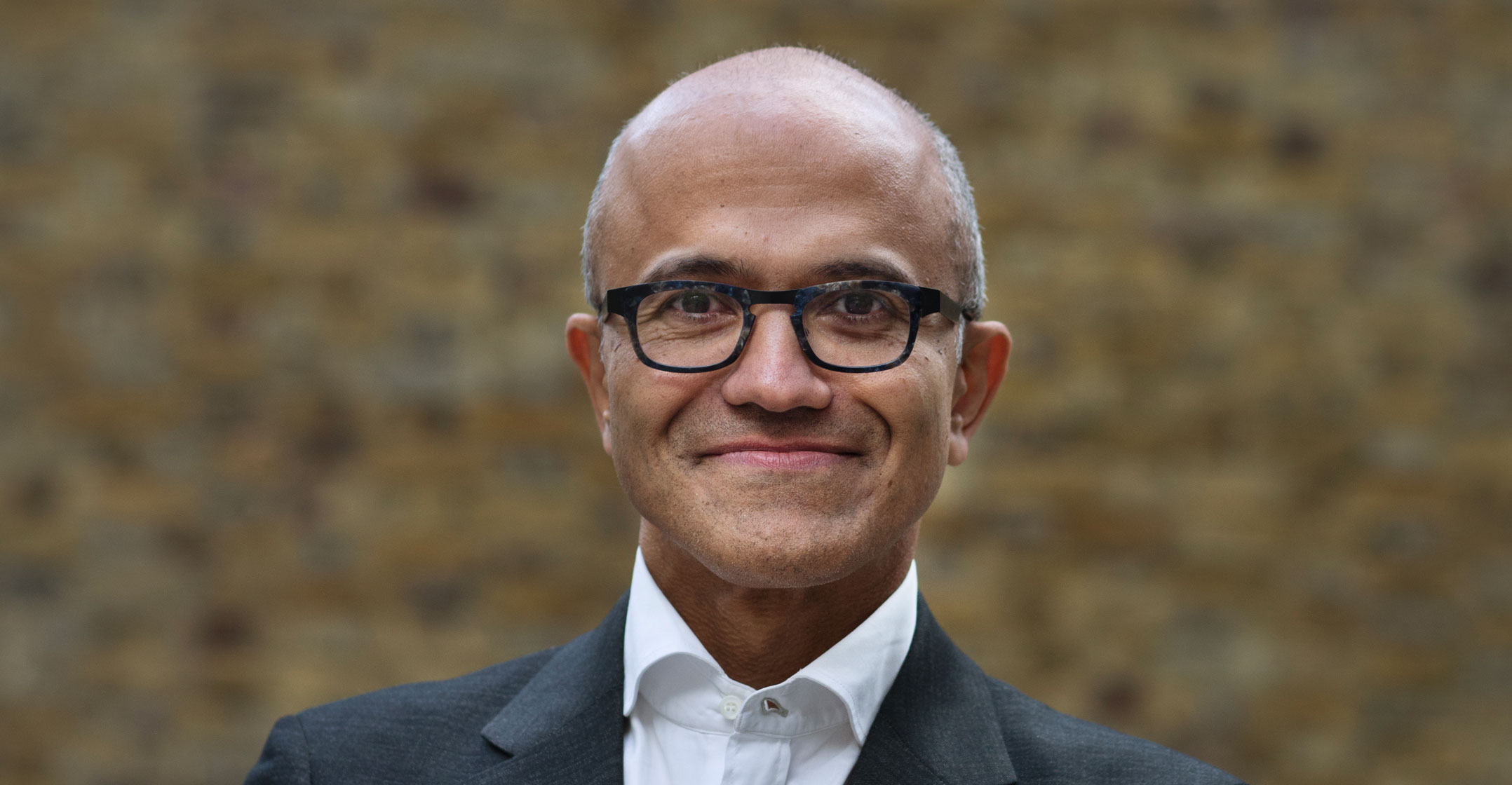
    Microsoft CEO Satya Nadella

    These systems push the boundaries of how atoms and other tiny particles work. While traditional computers process bits of information as ones or zeroes, quantum machines rely on “qubits” that can be a one and a zero at the same time. So two qubits can represent four numbers simultaneously, and three qubits can represent eight numbers, and so on. This means quantum computers can perform calculations much faster than standard machines and tackle problems that are way more complex.

    Applications could include things like creating new drugs and new materials or solving complex chemistry problems. The “killer app” of quantum computing is discovering a more efficient way to synthesise ammonia for fertiliser — a process that currently consumes 3% of the world’s natural gas, according to Krysta Svore, who oversees the software aspects of Microsoft’s quantum work.

    The technology is still emerging from a long research phase, and its capabilities are hotly debated

    The technology is still emerging from a long research phase, and its capabilities are hotly debated. Researchers have only been able to keep qubits in a quantum state for fractions of a second. When qubits fall out of a quantum state they produce errors in their calculations, which can negate any benefit of using a quantum computer.

    Microsoft says it uses a different design — called a topological quantum computer — that in theory will create more stable qubits. This could produce a machine with an error rate from 1 000 to 10 000 times better than computers other companies are building, Holmdahl said.

    Reducing or correcting the errors in quantum calculations is essential for the technology to fulfil its commercial potential, said Jonathan Breeze, a research fellow working on advanced materials at Imperial College London.The lower error rate of Microsoft’s design may mean it can be more useful for tackling real applications — even with a smaller number of qubits — perhaps less than 100.

    Svore said her team has already proven mathematically that algorithms that use a quantum approach can speed up machine learning applications substantially — enabling them to run as much as 4 000 times faster. (Machine learning is a type of artificial intelligence behind recent advances in computers’ ability to identify objects in images, translate languages and drive cars).

    “We want to solve today’s unsolvable problems and we have an opportunity with a unique, differentiated technology to do that,” Holmdahl said.  — Reported by Jeremy Kahn and Dina Bass, (c) 2017 Bloomberg LP

    Follow TechCentral on Google News Add TechCentral as your preferred source on Google


    Google IBM Microsoft Satya Nadella Todd Holmdahl top
    WhatsApp YouTube
    Share. Facebook Twitter LinkedIn WhatsApp Telegram Email Copy Link
    Previous ArticleIsaac Mophatlane joins Crossfin board
    Next Article Why EOH shares went into a tailspin

    Related Posts

    Nvidia storms the Windows PC market with RTX Spark - Jensen Huang

    Nvidia storms the Windows PC market with RTX Spark

    1 June 2026
    Zila Tech rewires Kenyan schools with Google - Digicloud Africa Google

    Zila Tech rewires Kenyan schools with Google

    1 June 2026
    Nvidia's first CPUs to debut in Windows laptops this week

    Nvidia CPUs to debut in Windows laptops this week

    31 May 2026
    Company News
    The hidden infrastructure behind AI - Open Access Data Centres OADC

    The hidden infrastructure behind AI

    2 June 2026
    Addressing the 57% blind spot: Kaspersky on measuring SOC effectiveness

    Addressing the 57% blind spot: Kaspersky on measuring SOC effectiveness

    2 June 2026
    Strike48 report: security leaders wary of AI agents - Maidar Secure

    Strike48 report: security leaders wary of AI agents

    2 June 2026
    Opinion
    Treasury's crypto crackdown is a betrayal of Mandela's promise - Duncan McLeod

    Treasury’s crypto crackdown is a betrayal of Mandela’s promise

    22 May 2026
    South Africa is sleepwalking into another AI policy failure - Celeste Labuschagne

    South Africa is sleepwalking into another AI policy failure

    20 May 2026
    AI won't fix your culture - it will expose it - Jackie Kennedy

    AI won’t fix your culture – it will expose it

    19 May 2026

    Subscribe to Updates

    Get the best South African technology news and analysis delivered to your e-mail inbox every morning.

    Latest Posts
    Why Telkom is pouring capex into IT - Serame Taukobong

    Why Telkom is pouring capital spending into IT

    2 June 2026
    Telkom's data growth story still has years to run: CEO

    Telkom’s data growth story still has years to run: CEO

    2 June 2026
    Reserve Bank draws a line on inflation - Lesetja Kganyago. Siphiwe Sibeko/Reuters

    Reserve Bank draws a line on inflation

    2 June 2026
    Astronomers discover exoplanets with magnetic fields

    Strange winds reveal magnetic fields on distant ‘hot Jupiters’

    2 June 2026
    © 2009 - 2026 NewsCentral Media
    • Cookie policy (ZA)
    • TechCentral – privacy and Popia

    Type above and press Enter to search. Press Esc to cancel.

    Manage consent

    TechCentral uses cookies to enhance its offerings. Consenting to these technologies allows us to serve you better. Not consenting or withdrawing consent may adversely affect certain features and functions of the website.

    Functional Always active
    The technical storage or access is strictly necessary for the legitimate purpose of enabling the use of a specific service explicitly requested by the subscriber or user, or for the sole purpose of carrying out the transmission of a communication over an electronic communications network.
    Preferences
    The technical storage or access is necessary for the legitimate purpose of storing preferences that are not requested by the subscriber or user.
    Statistics
    The technical storage or access that is used exclusively for statistical purposes. The technical storage or access that is used exclusively for anonymous statistical purposes. Without a subpoena, voluntary compliance on the part of your Internet Service Provider, or additional records from a third party, information stored or retrieved for this purpose alone cannot usually be used to identify you.
    Marketing
    The technical storage or access is required to create user profiles to send advertising, or to track the user on a website or across several websites for similar marketing purposes.
    • Manage options
    • Manage services
    • Manage {vendor_count} vendors
    • Read more about these purposes
    View preferences
    • {title}
    • {title}
    • {title}