Close Menu
TechCentralTechCentral

    Subscribe to the newsletter

    Get the best South African technology news and analysis delivered to your e-mail inbox every morning.

    Facebook X (Twitter) YouTube LinkedIn
    WhatsApp Facebook X (Twitter) LinkedIn YouTube
    TechCentralTechCentral
    • News
      Vula Medical named as South Africa's 2025 app of the year

      Vula Medical named as South Africa’s 2025 app of the year

      5 December 2025
      Netflix, Warner Bros talks raise fresh headaches for MultiChoice

      Netflix, Warner Bros talks raise fresh headaches for MultiChoice

      5 December 2025
      Big Microsoft 365 price increases coming next year

      Big Microsoft price increases coming next year

      5 December 2025
      Vodacom to take control of Safaricom in R36-billion deal - Shameel Joosub

      Vodacom to take control of Safaricom in R36-billion deal

      4 December 2025
      Black Friday goes digital in South Africa as online spending surges to record high

      Black Friday goes digital in South Africa as online spending surges to record high

      4 December 2025
    • World
      Amazon and Google launch multi-cloud service for faster connectivity

      Amazon and Google launch multi-cloud service for faster connectivity

      1 December 2025
      Google makes final court plea to stop US breakup

      Google makes final court plea to stop US breakup

      21 November 2025
      Bezos unveils monster rocket: New Glenn 9x4 set to dwarf Saturn V

      Bezos unveils monster rocket: New Glenn 9×4 set to dwarf Saturn V

      21 November 2025
      Tech shares turbocharged by Nvidia's stellar earnings

      Tech shares turbocharged by stellar Nvidia earnings

      20 November 2025
      Config file blamed for Cloudflare meltdown that disrupted the web

      Config file blamed for Cloudflare meltdown that disrupted the web

      19 November 2025
    • In-depth
      Jensen Huang Nvidia

      So, will China really win the AI race?

      14 November 2025
      Valve's Linux console takes aim at Microsoft's gaming empire

      Valve’s Linux console takes aim at Microsoft’s gaming empire

      13 November 2025
      iOCO's extraordinary comeback plan - Rhys Summerton

      iOCO’s extraordinary comeback plan

      28 October 2025
      Why smart glasses keep failing - no, it's not the tech - Mark Zuckerberg

      Why smart glasses keep failing – it’s not the tech

      19 October 2025
      BYD to blanket South Africa with megawatt-scale EV charging network - Stella Li

      BYD to blanket South Africa with megawatt-scale EV charging network

      16 October 2025
    • TCS
      TCS+ | How Cloud on Demand helps partners thrive in the AWS ecosystem - Odwa Ndyaluvane and Xenia Rhode

      TCS+ | How Cloud On Demand helps partners thrive in the AWS ecosystem

      4 December 2025
      TCS | MTN Group CEO Ralph Mupita on competition, AI and the future of mobile

      TCS | Ralph Mupita on competition, AI and the future of mobile

      28 November 2025
      TCS | Dominic Cull on fixing South Africa's ICT policy bottlenecks

      TCS | Dominic Cull on fixing South Africa’s ICT policy bottlenecks

      21 November 2025
      TCS | BMW CEO Peter van Binsbergen on the future of South Africa's automotive industry

      TCS | BMW CEO Peter van Binsbergen on the future of South Africa’s automotive industry

      6 November 2025
      TCS | Why Altron is building an AI factory - Bongani Andy Mabaso

      TCS | Why Altron is building an AI factory in Johannesburg

      28 October 2025
    • Opinion
      Your data, your hardware: the DIY AI revolution is coming - Duncan McLeod

      Your data, your hardware: the DIY AI revolution is coming

      20 November 2025
      Zero Carbon Charge founder Joubert Roux

      The energy revolution South Africa can’t afford to miss

      20 November 2025
      It's time for a new approach to government IT spend in South Africa - Richard Firth

      It’s time for a new approach to government IT spend in South Africa

      19 November 2025
      How South Africa's broken Rica system fuels murder and mayhem - Farhad Khan

      How South Africa’s broken Rica system fuels murder and mayhem

      10 November 2025
      South Africa's AI data centre boom risks overloading a fragile grid - Paul Colmer

      South Africa’s AI data centre boom risks overloading a fragile grid

      30 October 2025
    • Company Hubs
      • Africa Data Centres
      • AfriGIS
      • Altron Digital Business
      • Altron Document Solutions
      • Altron Group
      • Arctic Wolf
      • AvertITD
      • Braintree
      • CallMiner
      • CambriLearn
      • CYBER1 Solutions
      • Digicloud Africa
      • Digimune
      • Domains.co.za
      • ESET
      • Euphoria Telecom
      • Incredible Business
      • iONLINE
      • IQbusiness
      • Iris Network Systems
      • LSD Open
      • NEC XON
      • Netstar
      • Network Platforms
      • Next DLP
      • Ovations
      • Paracon
      • Paratus
      • Q-KON
      • SevenC
      • SkyWire
      • Solid8 Technologies
      • Telit Cinterion
      • Tenable
      • Vertiv
      • Videri Digital
      • Vodacom Business
      • Wipro
      • Workday
      • XLink
    • Sections
      • AI and machine learning
      • Banking
      • Broadcasting and Media
      • Cloud services
      • Contact centres and CX
      • Cryptocurrencies
      • Education and skills
      • Electronics and hardware
      • Energy and sustainability
      • Enterprise software
      • Financial services
      • Information security
      • Internet and connectivity
      • Internet of Things
      • Investment
      • IT services
      • Lifestyle
      • Motoring
      • Public sector
      • Retail and e-commerce
      • Satellite communications
      • Science
      • SMEs and start-ups
      • Social media
      • Talent and leadership
      • Telecoms
    • Events
    • Advertise
    TechCentralTechCentral
    Home » In-depth » Reasons to fear Facebook’s dystopian future

    Reasons to fear Facebook’s dystopian future

    By Agency Staff19 February 2017
    Twitter LinkedIn Facebook WhatsApp Email Telegram Copy Link
    News Alerts
    WhatsApp
    Mark Zuckerberg

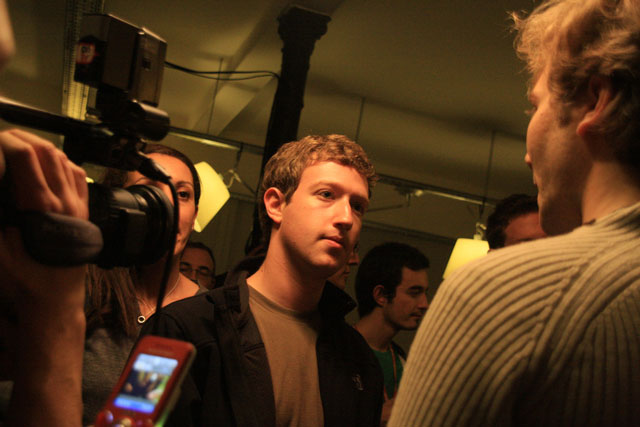
    Facebook founder Mark Zuckerberg’s manifesto, penned clearly in response to accusations levelled at the social network in the wake of the bitter US election campaign, is a scary, dystopian document. It shows that Facebook — launched, in Zuckerberg’s own words five years ago, to “extend people’s capacity to build and maintain relationships” — is turning into something of an extraterritorial state run by a small, unelected government that relies extensively on privately held algorithms for social engineering.

    In 2012, Zuckerberg addressed future Facebook investors in a letter attached to the company’s initial public offering prospectus. Here’s how he described the company’s purpose:

    People sharing more — even if just with their close friends or families — creates a more open culture and leads to a better understanding of the lives and perspectives of others. We believe that this creates a greater number of stronger relationships between people, and that it helps people get exposed to a greater number of diverse perspectives.

    By helping people form these connections, we hope to rewire the way people spread and consume information. We think the world’s information infrastructure should resemble the social graph — a network built from the bottom up or peer-to-peer, rather than the monolithic, top-down structure that has existed to date. We also believe that giving people control over what they share is a fundamental principle of this rewiring.

    Whatever those beliefs were based on, they have largely failed the test of time. Instead of creating stronger relationships, Facebook has spawned anxieties and addictions that are the subject of academic studies from Portugal to Australia. Some studies have determined that using Facebook detracts from a user’s life satisfaction.

    A Danish experiment in 2015, involving people weaned from Facebook for a week and a control group that kept using it, showed that people on the social network are 55% more likely to feel stressed; one of the sources of that stress is envy of the glossified lives reported by other users. Users’ well-being, research has showed, only tends to increase when they have meaningful interactions — such as long message exchanges — with those who are already close to them.

    In his latest manifesto, Zuckerberg uses parenting groups as an example of something his company does right. But recent research shows that some new mothers use Facebook to obtain validation of their self-perception as good parents, and failing to get enough such validation causes depressive symptoms.

    As for the “rewired” information infrastructure, it has helped to chase people into ideological silos and feed them content that reinforces confirmation biases. Facebook actively created the silos by fine-tuning the algorithm that lies at its centre — the one that forms a user’s news feed. The algorithm prioritises what it shows a user based, in large measure, on how many times the user has recently interacted with the poster and on the number of “likes” and comments the post has garnered. In other words, it stresses the most emotionally engaging posts from the people to whom you are drawn — during an election campaign, a recipe for a filter bubble and, what’s more, for amplifying emotional rather than rational arguments.

    Bragging in his new manifesto, Zuckerberg writes:

    In recent campaigns around the world — from India and Indonesia across Europe to the US — we’ve seen the candidate with the largest and most engaged following on Facebook usually wins.

    In the Netherlands today, liberal Prime Minister Mark Rutte’s page has 17 527 likes; that of fiery nationalist Geert Wilders, 174 188. In France, rationalist Emmanuel Macron has 165 850 likes, while far-right Marine Le Pen boasts 1,2m. Helping them win is hardly something that would make Zuckerberg, a liberal, proud — but, with his algorithmic interference in what people can see on his network, he has created a powerful tool for populists.

    Zuckerberg doesn’t want to correct this mistake and stop messing with what people see on the social network. Instead, the new manifesto talks about Facebook as if it were a country or a supranational bloc rather than just a communication-enabling technology.

    Zuckerberg describes how Facebook sorts groups into “meaningful” and, presumably, meaningless ones. Instead of facilitating communication among people who are already part of social support groups offline, he wants to project Facebook relationships into the real world: clearly, that’s a more effective way of keeping competitors at bay.

    The Facebook chief executive says his team is working on artificial intelligence that will be able to flag posts containing offensive information — nudity, violence, hate speech — and pass them on for final decisions by humans. If past experience is any indication, the overtaxed humans will merely rubber-stamp most decisions made by the technology, which Zuckerberg admits is still highly imperfect. Zuckerberg also suggests enabling every user to apply the filters provided by this technology:

    Where is your line on nudity? On violence? On graphic content? On profanity? What you decide will be your personal settings. We will periodically ask you these questions to increase participation and so you don’t need to dig around to find them. For those who don’t make a decision, the default will be whatever the majority of people in your region selected, like a referendum. Of course you will always be free to update your personal settings anytime.

    The real-life effect will be that most users, too lazy to muck around with settings, will accept the “majority” standard, making it even less likely that anything they see would jar them out of their comfort zone. Those who use the filters won’t be much better off: they’ll have no idea what is being filtered out because Facebook’s algorithms are a black box.

    Zuckerberg casts Facebook as a global community that needs better policing, governance, nudging toward better social practices. He’s willing to allow some democracy and “referendums”, but the company will make the ultimate decision on the types of content people should see based on their behaviour on Facebook. Ultimately, this kind of social engineering affects people’s moods and behaviours. It can drive them toward commercial interactions or stimulate giving to good causes but it can also spill out into the real world in more troubling ways.

    It’s absurd to expect humility from Silicon Valley heroes. But Zuckerberg should realise that by trying to shape how people use Facebook, he may be creating a monster. His company’s other services — Messenger and WhatsApp — merely allow users to communicate without any interference, and that simple function is the source of the least controversial examples in Zuckerberg’s manifesto. “In Kenya, whole villages are in WhatsApp groups together, including their representatives,” the Facebook CEO writes. Well, so are my kids’ school mates, and that’s great.

    People are grateful for tools that help them work, study, do things together — but they respond to shepherding in unpredictable ways. “Virtual identity suicide” is one; the trend doesn’t show up in Facebook’s reported usage numbers, but that might be because a lot of the “active users” the company reports are actually bots. If you type “how to leave” into the Google search window, “how to leave Facebook” will be the first suggestion.  — (c) 2017 Bloomberg LP



    Facebook Facebook Messenger Mark Zuckerberg WhatsApp
    Subscribe to TechCentral Subscribe to TechCentral
    Share. Facebook Twitter LinkedIn WhatsApp Telegram Email Copy Link
    Previous ArticleMthembu backs Ramaphosa for ANC president
    Next Article Kim Dotcom faces extradition to US

    Related Posts

    Truenav launches WhatsApp business calling for contact centres

    TRUENAV launches WhatsApp business calling for contact centres

    26 November 2025
    WhatsApp agrees to greater transparency for South African users

    WhatsApp agrees to greater transparency for South African users

    13 November 2025
    Why smart glasses keep failing - no, it's not the tech - Mark Zuckerberg

    Why smart glasses keep failing – it’s not the tech

    19 October 2025
    Company News
    Beat the summer heat with Samsung's WindFree air conditioners

    Beat the summer heat with Samsung’s WindFree air conditioners

    5 December 2025
    AI is not a technology problem - iqbusiness

    AI is not a technology problem – iqbusiness

    5 December 2025
    Telcos are sitting on a data gold mine - but few know what do with it - Phillip du Plessis

    Telcos are sitting on a data gold mine – but few know what do with it

    4 December 2025
    Opinion
    Your data, your hardware: the DIY AI revolution is coming - Duncan McLeod

    Your data, your hardware: the DIY AI revolution is coming

    20 November 2025
    Zero Carbon Charge founder Joubert Roux

    The energy revolution South Africa can’t afford to miss

    20 November 2025
    It's time for a new approach to government IT spend in South Africa - Richard Firth

    It’s time for a new approach to government IT spend in South Africa

    19 November 2025

    Subscribe to Updates

    Get the best South African technology news and analysis delivered to your e-mail inbox every morning.

    Latest Posts
    Vula Medical named as South Africa's 2025 app of the year

    Vula Medical named as South Africa’s 2025 app of the year

    5 December 2025
    Beat the summer heat with Samsung's WindFree air conditioners

    Beat the summer heat with Samsung’s WindFree air conditioners

    5 December 2025
    Netflix, Warner Bros talks raise fresh headaches for MultiChoice

    Netflix, Warner Bros talks raise fresh headaches for MultiChoice

    5 December 2025
    Big Microsoft 365 price increases coming next year

    Big Microsoft price increases coming next year

    5 December 2025
    © 2009 - 2025 NewsCentral Media
    • Cookie policy (ZA)
    • TechCentral – privacy and Popia

    Type above and press Enter to search. Press Esc to cancel.

    Manage consent

    TechCentral uses cookies to enhance its offerings. Consenting to these technologies allows us to serve you better. Not consenting or withdrawing consent may adversely affect certain features and functions of the website.

    Functional Always active
    The technical storage or access is strictly necessary for the legitimate purpose of enabling the use of a specific service explicitly requested by the subscriber or user, or for the sole purpose of carrying out the transmission of a communication over an electronic communications network.
    Preferences
    The technical storage or access is necessary for the legitimate purpose of storing preferences that are not requested by the subscriber or user.
    Statistics
    The technical storage or access that is used exclusively for statistical purposes. The technical storage or access that is used exclusively for anonymous statistical purposes. Without a subpoena, voluntary compliance on the part of your Internet Service Provider, or additional records from a third party, information stored or retrieved for this purpose alone cannot usually be used to identify you.
    Marketing
    The technical storage or access is required to create user profiles to send advertising, or to track the user on a website or across several websites for similar marketing purposes.
    • Manage options
    • Manage services
    • Manage {vendor_count} vendors
    • Read more about these purposes
    View preferences
    • {title}
    • {title}
    • {title}