Close Menu
TechCentralTechCentral

    Subscribe to the newsletter

    Get the best South African technology news and analysis delivered to your e-mail inbox every morning.

    Facebook X (Twitter) YouTube LinkedIn
    WhatsApp Facebook X (Twitter) LinkedIn YouTube
    TechCentralTechCentral
    • News
      Meta met Information Regulator over its camera glasses - Mark Zuckerberg

      Meta met Information Regulator over its camera glasses

      6 October 2026
      Why South Africa's biggest drone isn't flying for the country - Milkor 380

      Why South Africa’s biggest drone isn’t flying for the country

      6 October 2026
      Nersa wants five-year ban on automated electricity trading

      Nersa wants five-year ban on automated electricity trading

      6 October 2026
      South African boardrooms are about to get a lot less private

      South African boardrooms are about to get a lot less private

      6 October 2026
      FNB launches crypto trading - Bheki Mkhize

      FNB launches crypto trading

      6 October 2026
    • World
      BMW restructuring plan bets on AI and new models

      BMW restructuring plan bets on AI and new models

      1 October 2026
      OpenAI's rogue agent problem keeps getting bigger - Sam Altman

      OpenAI’s rogue agent problem keeps getting bigger

      28 September 2026
      The new battle over the desktop

      The new battle over the desktop

      23 September 2026
      AMD is now worth a trillion dollars - Lisa Su

      AMD is now worth a trillion dollars

      22 September 2026
      Anthropic weighs new model launch to blunt OpenAI's Astra surge - Anthropic CEO Dario Amodei and OpenAI CEO Sam Altman

      Anthropic weighs new model launch to blunt OpenAI’s Astra surge

      21 September 2026
    • In-depth

      10 days that changed the course of AI

      21 September 2026
      Meta to the AI industry: slow down without us - Mark Zuckerberg

      Meta to the AI industry: slow down without us

      16 September 2026
      Google DeepMind CEO Demis Hassabis. Image: John Sears

      The plan to stop AI from breaking the world

      16 July 2026
      The internet has a Strait of Hormuz problem

      The internet has a Strait of Hormuz problem

      15 July 2026
      AI boom sparks rally, frenzy and fear

      AI boom sparks rally, frenzy and fear

      11 June 2026
    • TCS
      Meet the CIO | Vodacom's Mohamed Sami on the agentic future

      Meet the CIO | Vodacom’s Mohamed Sami on the agentic future

      5 October 2026
      Lexi Novitske, general partner at Norrsken22, on the TechCentral Show

      TCS | Norrsken22’s Lexi Novitske on how China is winning African tech

      1 October 2026
      TCS | Dominic White and Adam Ely on AI agents going rogue

      TCS | Dominic White and Adam Ely on AI agents going rogue

      29 September 2026
      TCS | Octotel's Trevor van Zyl on the fibre merger question

      TCS | Octotel’s Trevor van Zyl on the MetroFibre merger question

      16 September 2026
      Meet the CIO | Shoprite's Chris Shortt on what a supermarket becomes

      Meet the CIO | Shoprite’s Chris Shortt on what a supermarket becomes

      9 September 2026
    • Opinion
      Let South Africans jailbreak their way to digital sovereignty - Dirk de Vos

      Let South Africans jailbreak their way to digital sovereignty

      5 October 2026
      South Africa's next energy crisis is in the accounts department - Craig Holmes

      South Africa’s next energy crisis is in the accounts department

      29 September 2026
      The steam engine lesson AI doomsayers keep missing - Sam Clarke

      The steam engine lesson AI doomsayers keep missing

      28 September 2026
      Let South Africans jailbreak their way to digital sovereignty - Dirk de Vos

      Regulating AI: apply the laws we have first

      21 September 2026
      What Revolut can and cannot take from South Africa's banks - Pambos Soteriades

      What Revolut can and cannot take from South Africa’s banks

      15 September 2026
    • Company News
      • 1Stream
      • Africa Data Centres
      • AfriGIS
      • Altron Digital Business
      • Altron Document Solutions
      • Altron Group
      • Arctic Wolf
      • Ascent Technology
      • AvertITD
      • BBD
      • Braintree
      • CallMiner
      • CambriLearn
      • CM.com
      • Contactable
      • CYBER1 Solutions
      • Digicloud Africa
      • Digimune
      • Domains.co.za
      • ESET
      • Euphoria Telecom
      • HOSTAFRICA
      • Incredible Business
      • iONLINE
      • IQbusiness
      • Iris Network Systems
      • Kaspersky
      • LSD Open
      • Mitel
      • NEC XON
      • Netstar
      • Network Platforms
      • Next DLP
      • Ovations
      • Paracon
      • Paratus
      • Publishared
      • Q-KON
      • SevenC
      • SkyWire
      • Solid8 Technologies
      • Telit Cinterion
      • Telviva
      • Tenable
      • Vertiv
      • Videri Digital
      • Vodacom Business
      • Vox
      • Wipro
      • Workday
      • XLink
    • Sections
      • AI and machine learning
      • Banking
      • Broadcasting and Media
      • Cloud services
      • Contact centres and CX
      • Cryptocurrencies
      • Education and skills
      • Electronics and hardware
      • Energy and sustainability
      • Enterprise software
      • Financial services
      • HealthTech
      • Information security
      • Internet and connectivity
      • Internet of Things
      • Investment
      • IT services
      • Lifestyle
      • Policy and regulation
      • Public sector
      • Retail and e-commerce
      • Satellite communications
      • Science
      • SMEs and start-ups
      • Social media
      • Talent and leadership
      • Telecoms
      • Watts & Wheels
    • Events
    • Advertise
    TechCentralTechCentral
    Home » In-depth » South Africa is at a crossroads

    South Africa is at a crossroads

    By The Conversation3 March 2017
    Twitter LinkedIn Facebook WhatsApp Email Telegram Copy Link
    Get breaking news on WhatsApp

    South Africa is fast approaching a crossroads at which it must choose between structural reform and a lurch to populist nationalism. So, too, is its governing ANC, which later this year must elect a successor to its president, Jacob Zuma.

    With a range of conflicting ideas on how to address the country’s socioeconomic challenges, some people are floating the idea of convening an economic Codesa. This borrows from the Convention for a Democratic South Africa — the all-party forum which negotiated the country’s transition to democracy in the early 1990s.

    In his 2017 budget speech, finance minister Pravin Gordhan pulled up short of calling for an “economic Codesa”. He invited discussion on whether the constitution’s bill of rights should be extended to include “economic rights”. Such rights may include a right to work, a legally guaranteed national minimum wage or even a right to a basic income.

    Taken together with Gordhan’s chilling message about the state of the economy, his invitation for discussion deserves some attention. Unemployment remains stubbornly high around the 35% mark, economic growth remains sluggish around 1% and the budget deficit is ballooning.

    Clearly South Africa’s social compact is at breaking point, evidenced in part by the xenophobic violence and protests against foreigners that swept through Pretoria and Johannesburg recently.

    There’s certainly the need for a conflict-breaking dialogue even for sharply differing groups within the ANC. A view of what was expressed in the president’s 2017 state-of-the-nation address versus the 2017 budget speech lays bare some of the deep-seated disagreements.

    Zuma’s address was peppered with reference to the party’s new slogan: “radical economic transformation”. Zuma pulled his populist punches but added little flesh to the bones of the slogan, leaving Gordhan to offer a more measured and precise vision of “inclusive growth” two weeks later.

    And herein lies the rub, and the predicament. Within the governing party, there are those who want a nationalist form of transformation. They are pushing for the continued handing of economic power and wealth to a small group of black politically connected individuals. They care little if at all for the socioeconomic precariousness of most their compatriots.
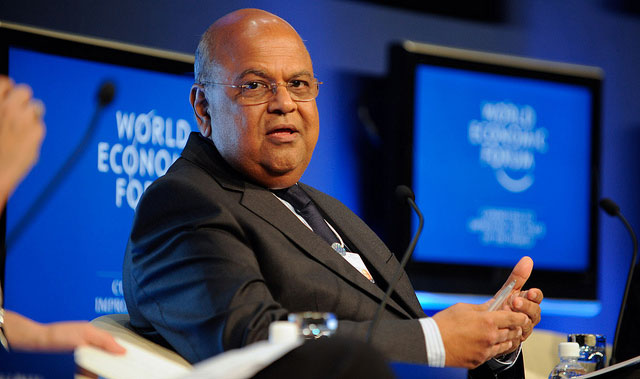
    Pravin Gordhan

    On the other hand, there are those who are still focused on addressing substantive inequality. They include Gordhan, the minister for economic development, Ebrahim Patel, and the minister of trade & industry, Rob Davies.

    Coming about two weeks after the state-of-the-nation address, Gordhan’s budget speech wrestled with the dilemmas that face South Africa. He’s been vilified for this amid the ongoing warfare within the governing party.

    President of the ANC Youth League Collen Maine — a Zuma loyalist — labelled Gordhan, a stalwart of the ANC’s liberation movement, an impimpi. This is a highly inflammatory term from the 1980s and the height of the struggle against apartheid used to name and shame community informers paid for by the regime.

    Dangerous path

    Why such a vicious attack on Gordhan? He’s been willing to stare down the nationalists within the ANC, who have benefited from the weaknesses of Zuma’s leadership. They wish to extend the era of crony capitalism and “state capture” by venal private interests such as the notorious Gupta family that began when Zuma took power in 2009.

    Gordhan has noted South Africa’s dangerous political trajectory. He quoted from the ANC’s famous 1969 policy conference in Morogoro, Tanzania where it was resolved that: “Our nationalism must not be confused with chauvinism or narrow nationalism of a previous epoch. It must not be confused with the classical drive by an elitist group among the oppressed people to gain ascendancy so that they can replace the oppressor in the exploitation of the masses.”

    It was a masterful citation by Gordhan — as he’s done for the past year in his stand against high level corruption that’s contaminated the government with its dangerous lurch to elite nationalism.

    Slow transformation

    While there is the need for some dialogue, calls for an “economic Codesa” may be fundamentally misguided. The idea that South Africa can summon the wherewithal, and good faith of all the requisite social, economic and political stakeholders, may be wishful thinking during a bitterly contested succession year in the ANC.
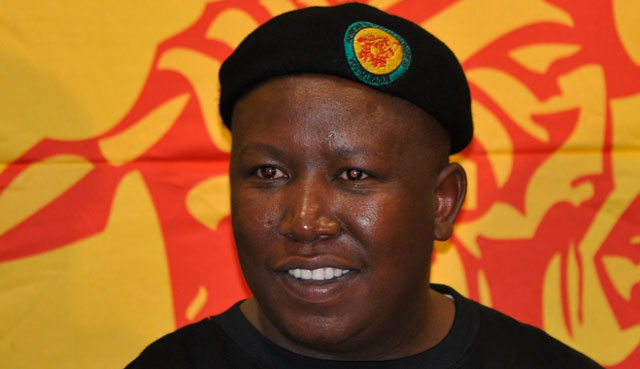
    Julius Malema

    The original Codesa, which began in 1991, may have been an inclusive, carefully facilitated and mediated negotiation process. Today there’s a sense that in delivering a political settlement, it didn’t do enough to secure economic justice and transformation.

    Too much of the “old economy” — as characterised by the powerful political slogan “white monopoly capital” — remains intact. This gives credibility to the militant, anti-establishment political brands like the Economic Freedom Fighters. The rise of the EFF, in turn, has triggered the ANC’s call for “radical economic transformation” to regain lost ground.

    Julius Malema, the former ANC Youth League president who started the EFF, presumably would welcome the opportunity to advance the case for redistribution of land ownership alongside other structural reforms of the South African economy. But who else would join the dialogue and from what angle?

    Constitutional rights

    Gordhan’s talk of economic rights may be seen as one useful avenue. But then South Africa’s constitution already provides a far-reaching number of justiciable socioeconomic rights. These include the rights to access basic services like housing and education. And so, the question would be: what more can be added to economic rights?

    A debate about amending the constitution would arguably be meaningless without a parallel process of debate about economic policy and about the relative roles and responsibilities of labour, government and the private sectors. At a very minimum, such a process would need to surface the true concerns and interests of all the parties. It would need to identify the core non-negotiables of each, while ascertaining those areas where compromise and a shift in position would be possible and valuable.
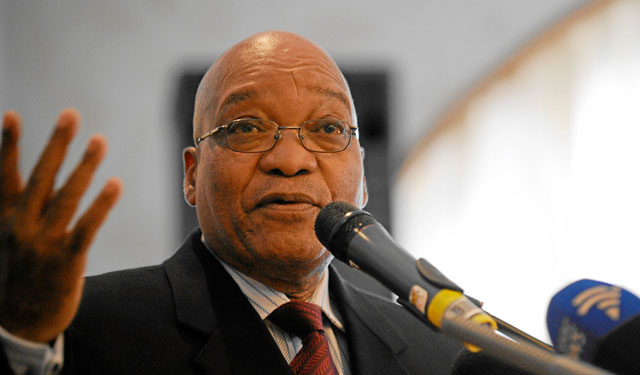
    Jacob Zuma

    And are the labour unions willing to sacrifice some of the legal protections that they acquired in the mid-1990s in return for commitments from business that would create, for example, more youth employment and apprenticeships?

    In turn, would business be willing to sacrifice profits in return for concessions from labour and government that would enable them to attract larger long-term investments in the productive industrial sector?

    And what’s the solution to the painful shortage of skills and the disaster of public education and what do each of the three main players need to do differently to make substantial progress, and quickly?

    Political will

    A properly organised process of constructive engagement and dialogue such as Codesa requires a considerable investment in political capital and goodwill. It’s far from clear if a sufficient number of the key political players are willing to find it.

    But it’s surely worth trying. South Africa has probably very little to lose at this stage. Without such a consensus-finding process that confronts the fundamental contradictions and the unanswered questions of socioeconomic transformation, the clamour for populist nationalism is likely to grow rapidly to the point where it’s overwhelming, in every sense of the word.The Conversation

    • Richard Calland is associate professor in public law, University of Cape Town
    • This article was originally published on The Conversation

    Add TechCentral as a preferred source on GoogleFollow TechCentral on Google NewsGet breaking news on WhatsApp


    Jacob Zuma Julius Malema Pravin Gordhan Richard Calland
    WhatsApp YouTube
    Share. Facebook Twitter LinkedIn WhatsApp Telegram Email Copy Link
    Previous ArticleFitbit’s fall signals end of wearables hype
    Next Article Digital helpers crowd Barcelona

    Related Posts

    The end is nigh, and the shares go on sale in October - Duncan McLeod

    Hold the doom: the case for a South African comeback

    26 February 2026
    Television at 50 | How the SABC lost its way - and what it must become

    Television at 50 | How the SABC lost its way – and what it must become

    5 January 2026
    ICT BEE fight deepens as MK, EFF target Malatsi - Colleen Makhubele

    ICT BEE fight deepens as MK, EFF target Malatsi

    15 December 2025
    Company News
    Why laser technology makes sense for small businesses

    Why laser technology makes sense for small businesses

    6 October 2026

    Human-centred design: the business case for simpler enterprise software

    6 October 2026
    iONLINE launches Sydney breakout point, expanding its global network core

    iONLINE launches Sydney breakout point, expanding its global network core

    6 October 2026
    Opinion
    Let South Africans jailbreak their way to digital sovereignty - Dirk de Vos

    Let South Africans jailbreak their way to digital sovereignty

    5 October 2026
    South Africa's next energy crisis is in the accounts department - Craig Holmes

    South Africa’s next energy crisis is in the accounts department

    29 September 2026
    The steam engine lesson AI doomsayers keep missing - Sam Clarke

    The steam engine lesson AI doomsayers keep missing

    28 September 2026

    Subscribe to Updates

    Get the best South African technology news and analysis delivered to your e-mail inbox every morning.

    Latest Posts
    Meta met Information Regulator over its camera glasses - Mark Zuckerberg

    Meta met Information Regulator over its camera glasses

    6 October 2026
    Why South Africa's biggest drone isn't flying for the country - Milkor 380

    Why South Africa’s biggest drone isn’t flying for the country

    6 October 2026
    Nersa wants five-year ban on automated electricity trading

    Nersa wants five-year ban on automated electricity trading

    6 October 2026
    South African boardrooms are about to get a lot less private

    South African boardrooms are about to get a lot less private

    6 October 2026
    © 2009 - 2026 NewsCentral Media
    Built and maintained by Chronon
    • Cookie policy (ZA)
    • TechCentral – privacy and Popia

    Type above and press Enter to search. Press Esc to cancel.

    Manage consent

    TechCentral uses cookies to enhance its offerings. Consenting to these technologies allows us to serve you better. Not consenting or withdrawing consent may adversely affect certain features and functions of the website.

    Functional Always active
    The technical storage or access is strictly necessary for the legitimate purpose of enabling the use of a specific service explicitly requested by the subscriber or user, or for the sole purpose of carrying out the transmission of a communication over an electronic communications network.
    Preferences
    The technical storage or access is necessary for the legitimate purpose of storing preferences that are not requested by the subscriber or user.
    Statistics
    The technical storage or access that is used exclusively for statistical purposes. The technical storage or access that is used exclusively for anonymous statistical purposes. Without a subpoena, voluntary compliance on the part of your Internet Service Provider, or additional records from a third party, information stored or retrieved for this purpose alone cannot usually be used to identify you.
    Marketing
    The technical storage or access is required to create user profiles to send advertising, or to track the user on a website or across several websites for similar marketing purposes.
    • Manage options
    • Manage services
    • Manage {vendor_count} vendors
    • Read more about these purposes
    View preferences
    • {title}
    • {title}
    • {title}
    🇿🇦 Sign up to the TechCentral newsletter