Close Menu
TechCentralTechCentral

    Subscribe to the newsletter

    Get the best South African technology news and analysis delivered to your e-mail inbox every morning.

    Facebook X (Twitter) YouTube LinkedIn
    WhatsApp Facebook X (Twitter) LinkedIn YouTube
    TechCentralTechCentral
    • News
      Malatsi withdraws AI policy after fictitious sources scandal - Solly Malatsi

      Malatsi withdraws AI policy after fictitious sources scandal

      26 April 2026
      How AI could quietly hollow out South Africa's job market

      How AI could quietly hollow out South Africa’s job market

      26 April 2026
      SpaceX bets the rocket farm on AI

      SpaceX bets the rocket farm on AI

      26 April 2026
      Withdraw AI policy, Malatsi told as fake citations row grows - Solly Malatsi

      Withdraw AI policy, Malatsi told, as fake citations row grows

      26 April 2026
      The remarkable turnaround at Intel

      The remarkable turnaround at Intel

      26 April 2026
    • World
      More organic compounds detected on Mars - Nasa Curiosity rover

      More organic compounds detected on Mars

      21 April 2026
      Adobe bets on AI agents to fend off cheaper rivals

      Adobe bets on AI agents to fend off cheaper rivals

      16 April 2026
      Google poised to lose ad crown to Meta

      Google poised to lose ad crown to Meta

      14 April 2026
      Grand Theft Data - hackers hit Rockstar Games - Grand Theft Auto

      Grand Theft Data – hackers hit Rockstar Games

      14 April 2026
      UK PM Keir Starmer declares war on doomscrolling

      UK PM Keir Starmer declares war on doomscrolling

      13 April 2026
    • In-depth
      Africa switches on as Europe dims the lights

      Africa switches on as Europe dims the lights

      9 April 2026
      The biggest untapped EV market on Earth is hiding in plain sight

      The biggest untapped EV market on Earth is hiding in plain sight

      1 April 2026
      The R18-billion tech giant hiding in plain sight - Jens Montanana

      The R16-billion tech giant hiding in plain sight

      26 March 2026
      The last generation of coders

      The last generation of coders

      18 February 2026
      Sentech is in dire straits

      Sentech is in dire straits

      10 February 2026
    • TCS

      TCS+ | ‘The ISP for ISPs’: Vox’s shift to wholesale aggregator

      20 April 2026
      TCS | Werner Lindemann on how AI is rewriting the infosec rulebook

      TCS | Werner Lindemann on how AI is rewriting the infosec rulebook

      15 April 2026
      TCS | Donovan Marsh on AI and the future of filmmaking

      TCS | Donovan Marsh on AI and the future of filmmaking

      7 April 2026
      TCS+ | Vodacom Business moves to crack the SME tech gap - Andrew Fulton, Sannesh Beharie

      TCS+ | Vodacom Business moves to crack the SME tech gap

      7 April 2026
      TCS | MTN's Divysh Joshi on the strategy behind Pi - Divyesh Joshi

      TCS | MTN’s Divyesh Joshi on the strategy behind Pi

      1 April 2026
    • Opinion
      The conflict of interest at the heart of PayShap's slow adoption - Cheslyn Jacobs

      The conflict of interest at the heart of PayShap’s slow adoption

      26 March 2026
      South Africa's energy future hinges on getting wheeling right - Aishah Gire

      South Africa’s energy future hinges on getting wheeling right

      10 March 2026
      Hold the doom: the case for a South African comeback - Duncan McLeod

      Apple just dropped a bomb on the Windows world

      5 March 2026
      R230-million in the bag for Endeavor's third Harvest Fund - Alison Collier

      VC’s centre of gravity is shifting – and South Africa is in the frame

      3 March 2026
      Hold the doom: the case for a South African comeback - Duncan McLeod

      Hold the doom: the case for a South African comeback

      26 February 2026
    • Company Hubs
      • 1Stream
      • Africa Data Centres
      • AfriGIS
      • Altron Digital Business
      • Altron Document Solutions
      • Altron Group
      • Arctic Wolf
      • Ascent Technology
      • AvertITD
      • BBD
      • Braintree
      • CallMiner
      • CambriLearn
      • CYBER1 Solutions
      • Digicloud Africa
      • Digimune
      • Domains.co.za
      • ESET
      • Euphoria Telecom
      • HOSTAFRICA
      • Incredible Business
      • iONLINE
      • IQbusiness
      • Iris Network Systems
      • Kaspersky
      • LSD Open
      • Mitel
      • NEC XON
      • Netstar
      • Network Platforms
      • Next DLP
      • Ovations
      • Paracon
      • Paratus
      • Q-KON
      • SevenC
      • SkyWire
      • Solid8 Technologies
      • Telit Cinterion
      • Telviva
      • Tenable
      • Vertiv
      • Videri Digital
      • Vodacom Business
      • Wipro
      • Workday
      • XLink
    • Sections
      • AI and machine learning
      • Banking
      • Broadcasting and Media
      • Cloud services
      • Contact centres and CX
      • Cryptocurrencies
      • Education and skills
      • Electronics and hardware
      • Energy and sustainability
      • Enterprise software
      • Financial services
      • HealthTech
      • Information security
      • Internet and connectivity
      • Internet of Things
      • Investment
      • IT services
      • Lifestyle
      • Motoring
      • Policy and regulation
      • Public sector
      • Retail and e-commerce
      • Satellite communications
      • Science
      • SMEs and start-ups
      • Social media
      • Talent and leadership
      • Telecoms
    • Events
    • Advertise
    TechCentralTechCentral
    Home » Opinion » David Glance » Fitbit’s fall signals end of wearables hype

    Fitbit’s fall signals end of wearables hype

    By David Glance3 March 2017
    Twitter LinkedIn Facebook WhatsApp Email Telegram Copy Link
    News Alerts
    WhatsApp

    As the market leader, Fitbit has always been regarded as being synonymous with wearables in general. Its launch as a public company was at a point when the hype of wearables was at a peak with claims of the technology bring about a revolution in healthcare.

    Unfortunately, the revolution never happened and Fitbit itself has now hit a wall. Sales are down, and last week Fitbit reported a financial loss and announced it would be laying off 6% of its staff. Its share price is around 90% down on its peak of US$51 in 2015.

    Fitbit doesn’t see its fortunes changing much in 2016 as it competes in a wearables market that is seeing little to no growth. Even this statistic may be misleading, however, because it combines pure fitness trackers such as the models made by Fitbit, with smartwatches like the Apple Watch which customers may buy for its non-fitness features.

    The fact that Fitbit is seeing sales decline is not surprising. It has not been able to introduce any new advances in its technology beyond the features of counting steps and measuring heart rate. It also hasn’t been able to solve the problem of customers giving up on wearing their devices within a short period.

    At the same time, there has been a general concern about the security and privacy of data collected by these devices. Programmes introduced by employers and insurance companies to incentivise the wearing of devices in return for reduced premiums have been met with suspicion about the potential abuse of this data.

    There has also been continued criticism about the supposed health benefits that have been advanced by Fitbit and others resulting from wearables.

    Fitbit was always going to struggle. It is hard to make huge profits when making commodity hardware. Moving out of the consumer market and into medical devices also carries enormous overheads. The devices must be tested and certified and it is not at all clear that even the heart rate monitoring functions on Fitbit devices would be reliable or accurate enough to be able to achieve that level of certification. Another consumer wearables company, Jawbone, has thrown in the towel and is allegedly going to be trying its hand at clinical devices.

    Those waiting for the major technological leaps that will give us science fiction-type functionality such as Star Trek’s tricorder are likely to be disappointed. A competition run by Qualcomm with a $6m first-place prize to find a “tricorder-like” device, required only 70% accuracy of 15 different measurements. The finalists produced kits that combined existing technologies such as glucometers, spirometers and heart-rate monitors and packaged them in one box. While this brought these devices together to function with a single app, it did not fundamentally advance any of the individual components.

    Theranos, another company that claimed to have invented technology that would allow hundreds of tests to be conducted on a single drop of blood, has failed to bring this to market.

    Fitbit is a classic example of a company that would have been better remaining private. It is only because it is a publicly listed company that there are expectations that it should be showing high rates of growth. As it stands, it is unlikely to show the type of growth that will satisfy the market. Its immediate problem is to find a way to be profitable with a smaller level of sales. Failing that, its only option is, like Twitter and other companies with no business model, to find a buyer. Given the large number of competitors in this market, the technology would not be the reason for another company buying Fitbit, but its client base might well be.

    There will always be a market for fitness trackers but they will continue to appeal to those people for whom fitness and activity is part of their everyday lives. It is hard to see how they will ever extend significantly and in a lasting way to a wider audience.The Conversation

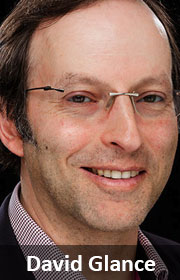
    • David Glance is director of the UWA Centre for Software Practice, University of Western Australia
    • This article was originally published on The Conversation

    Follow TechCentral on Google News Add TechCentral as your preferred source on Google


    Apple David Glance Fitbit
    WhatsApp YouTube
    Share. Facebook Twitter LinkedIn WhatsApp Telegram Email Copy Link
    Previous ArticleSpotify surpasses 50m paid subscribers
    Next Article South Africa is at a crossroads

    Related Posts

    John Ternus and the battle for Apple's soul

    John Ternus and the battle for Apple’s soul

    21 April 2026
    Amazon ramps up satellite war with $11.6-billion Globalstar buy

    Amazon ramps up satellite war with $11.6-billion Globalstar buy

    15 April 2026
    Microsoft is sacrificing Edge on the altar of Copilot

    Microsoft is sacrificing Edge on the altar of Copilot

    10 April 2026
    Company News
    Cybersecurity in the age of AI: why speed and trust now define resilience - iqbusiness

    Cybersecurity in the AI age: speed and trust define resilience

    24 April 2026
    Security by design is the channel's strongest pitch - Othelo Vieira

    Security by design is the channel’s strongest pitch

    23 April 2026
    Your brand is invisible to the AI that's choosing your competitor - Michelle Losco

    Your brand is invisible to the AI that’s choosing your competitor

    23 April 2026
    Opinion
    The conflict of interest at the heart of PayShap's slow adoption - Cheslyn Jacobs

    The conflict of interest at the heart of PayShap’s slow adoption

    26 March 2026
    South Africa's energy future hinges on getting wheeling right - Aishah Gire

    South Africa’s energy future hinges on getting wheeling right

    10 March 2026
    Hold the doom: the case for a South African comeback - Duncan McLeod

    Apple just dropped a bomb on the Windows world

    5 March 2026

    Subscribe to Updates

    Get the best South African technology news and analysis delivered to your e-mail inbox every morning.

    Latest Posts
    Malatsi withdraws AI policy after fictitious sources scandal - Solly Malatsi

    Malatsi withdraws AI policy after fictitious sources scandal

    26 April 2026
    How AI could quietly hollow out South Africa's job market

    How AI could quietly hollow out South Africa’s job market

    26 April 2026
    SpaceX bets the rocket farm on AI

    SpaceX bets the rocket farm on AI

    26 April 2026
    Withdraw AI policy, Malatsi told as fake citations row grows - Solly Malatsi

    Withdraw AI policy, Malatsi told, as fake citations row grows

    26 April 2026
    © 2009 - 2026 NewsCentral Media
    • Cookie policy (ZA)
    • TechCentral – privacy and Popia

    Type above and press Enter to search. Press Esc to cancel.

    Manage consent

    TechCentral uses cookies to enhance its offerings. Consenting to these technologies allows us to serve you better. Not consenting or withdrawing consent may adversely affect certain features and functions of the website.

    Functional Always active
    The technical storage or access is strictly necessary for the legitimate purpose of enabling the use of a specific service explicitly requested by the subscriber or user, or for the sole purpose of carrying out the transmission of a communication over an electronic communications network.
    Preferences
    The technical storage or access is necessary for the legitimate purpose of storing preferences that are not requested by the subscriber or user.
    Statistics
    The technical storage or access that is used exclusively for statistical purposes. The technical storage or access that is used exclusively for anonymous statistical purposes. Without a subpoena, voluntary compliance on the part of your Internet Service Provider, or additional records from a third party, information stored or retrieved for this purpose alone cannot usually be used to identify you.
    Marketing
    The technical storage or access is required to create user profiles to send advertising, or to track the user on a website or across several websites for similar marketing purposes.
    • Manage options
    • Manage services
    • Manage {vendor_count} vendors
    • Read more about these purposes
    View preferences
    • {title}
    • {title}
    • {title}