
Close Menu
TechCentralTechCentral

    Subscribe to the newsletter

    Get the best South African technology news and analysis delivered to your e-mail inbox every morning.

    Facebook X (Twitter) YouTube LinkedIn
    WhatsApp Facebook X (Twitter) LinkedIn YouTube
    TechCentralTechCentral
    • News
      Mythos forces South African banks onto high alert - Graham Lee

      Mythos forces South African banks onto high alert

      23 April 2026
      Free calls, dead voice and Shameel Joosub's Spanish ghost

      Free calls, dead voice and Shameel Joosub’s Spanish ghost

      22 April 2026
      Capitec CEO Graham Lee

      Capitec blows up MVNO pricing with free on-net calls

      22 April 2026
      Eskom developing bitcoin mining plan but needs Nersa's nod - Agnes Mlambo

      Eskom developing bitcoin mining plan but needs Nersa’s nod

      22 April 2026
      Capitec bets big on AI - and keeps hiring

      Capitec bets big on AI – and keeps hiring

      22 April 2026
    • World
      More organic compounds detected on Mars - Nasa Curiosity rover

      More organic compounds detected on Mars

      21 April 2026
      Adobe bets on AI agents to fend off cheaper rivals

      Adobe bets on AI agents to fend off cheaper rivals

      16 April 2026
      Google poised to lose ad crown to Meta

      Google poised to lose ad crown to Meta

      14 April 2026
      Grand Theft Data - hackers hit Rockstar Games - Grand Theft Auto

      Grand Theft Data – hackers hit Rockstar Games

      14 April 2026
      UK PM Keir Starmer declares war on doomscrolling

      UK PM Keir Starmer declares war on doomscrolling

      13 April 2026
    • In-depth
      Africa switches on as Europe dims the lights

      Africa switches on as Europe dims the lights

      9 April 2026
      The biggest untapped EV market on Earth is hiding in plain sight

      The biggest untapped EV market on Earth is hiding in plain sight

      1 April 2026
      The R18-billion tech giant hiding in plain sight - Jens Montanana

      The R16-billion tech giant hiding in plain sight

      26 March 2026
      The last generation of coders

      The last generation of coders

      18 February 2026
      Sentech is in dire straits

      Sentech is in dire straits

      10 February 2026
    • TCS

      TCS+ | ‘The ISP for ISPs’: Vox’s shift to wholesale aggregator

      20 April 2026
      TCS | Werner Lindemann on how AI is rewriting the infosec rulebook

      TCS | Werner Lindemann on how AI is rewriting the infosec rulebook

      15 April 2026
      TCS | Donovan Marsh on AI and the future of filmmaking

      TCS | Donovan Marsh on AI and the future of filmmaking

      7 April 2026
      TCS+ | Vodacom Business moves to crack the SME tech gap - Andrew Fulton, Sannesh Beharie

      TCS+ | Vodacom Business moves to crack the SME tech gap

      7 April 2026
      TCS | MTN's Divysh Joshi on the strategy behind Pi - Divyesh Joshi

      TCS | MTN’s Divyesh Joshi on the strategy behind Pi

      1 April 2026
    • Opinion
      The conflict of interest at the heart of PayShap's slow adoption - Cheslyn Jacobs

      The conflict of interest at the heart of PayShap’s slow adoption

      26 March 2026
      South Africa's energy future hinges on getting wheeling right - Aishah Gire

      South Africa’s energy future hinges on getting wheeling right

      10 March 2026
      Hold the doom: the case for a South African comeback - Duncan McLeod

      Apple just dropped a bomb on the Windows world

      5 March 2026
      R230-million in the bag for Endeavor's third Harvest Fund - Alison Collier

      VC’s centre of gravity is shifting – and South Africa is in the frame

      3 March 2026
      Hold the doom: the case for a South African comeback - Duncan McLeod

      Hold the doom: the case for a South African comeback

      26 February 2026
    • Company Hubs
      • 1Stream
      • Africa Data Centres
      • AfriGIS
      • Altron Digital Business
      • Altron Document Solutions
      • Altron Group
      • Arctic Wolf
      • Ascent Technology
      • AvertITD
      • BBD
      • Braintree
      • CallMiner
      • CambriLearn
      • CYBER1 Solutions
      • Digicloud Africa
      • Digimune
      • Domains.co.za
      • ESET
      • Euphoria Telecom
      • HOSTAFRICA
      • Incredible Business
      • iONLINE
      • IQbusiness
      • Iris Network Systems
      • Kaspersky
      • LSD Open
      • Mitel
      • NEC XON
      • Netstar
      • Network Platforms
      • Next DLP
      • Ovations
      • Paracon
      • Paratus
      • Q-KON
      • SevenC
      • SkyWire
      • Solid8 Technologies
      • Telit Cinterion
      • Telviva
      • Tenable
      • Vertiv
      • Videri Digital
      • Vodacom Business
      • Wipro
      • Workday
      • XLink
    • Sections
      • AI and machine learning
      • Banking
      • Broadcasting and Media
      • Cloud services
      • Contact centres and CX
      • Cryptocurrencies
      • Education and skills
      • Electronics and hardware
      • Energy and sustainability
      • Enterprise software
      • Financial services
      • HealthTech
      • Information security
      • Internet and connectivity
      • Internet of Things
      • Investment
      • IT services
      • Lifestyle
      • Motoring
      • Policy and regulation
      • Public sector
      • Retail and e-commerce
      • Satellite communications
      • Science
      • SMEs and start-ups
      • Social media
      • Talent and leadership
      • Telecoms
    • Events
    • Advertise
    TechCentralTechCentral
    Home » Sections » Electronics and hardware » South Africa pioneered drone laws a decade ago – now it must catch up

    South Africa pioneered drone laws a decade ago – now it must catch up

    South Africa was an early pioneer in drone regulation. But the future is not built on yesterday’s rules.
    By Filippo Tomasello17 June 2025
    Twitter LinkedIn Facebook WhatsApp Email Telegram Copy Link
    News Alerts
    WhatsApp

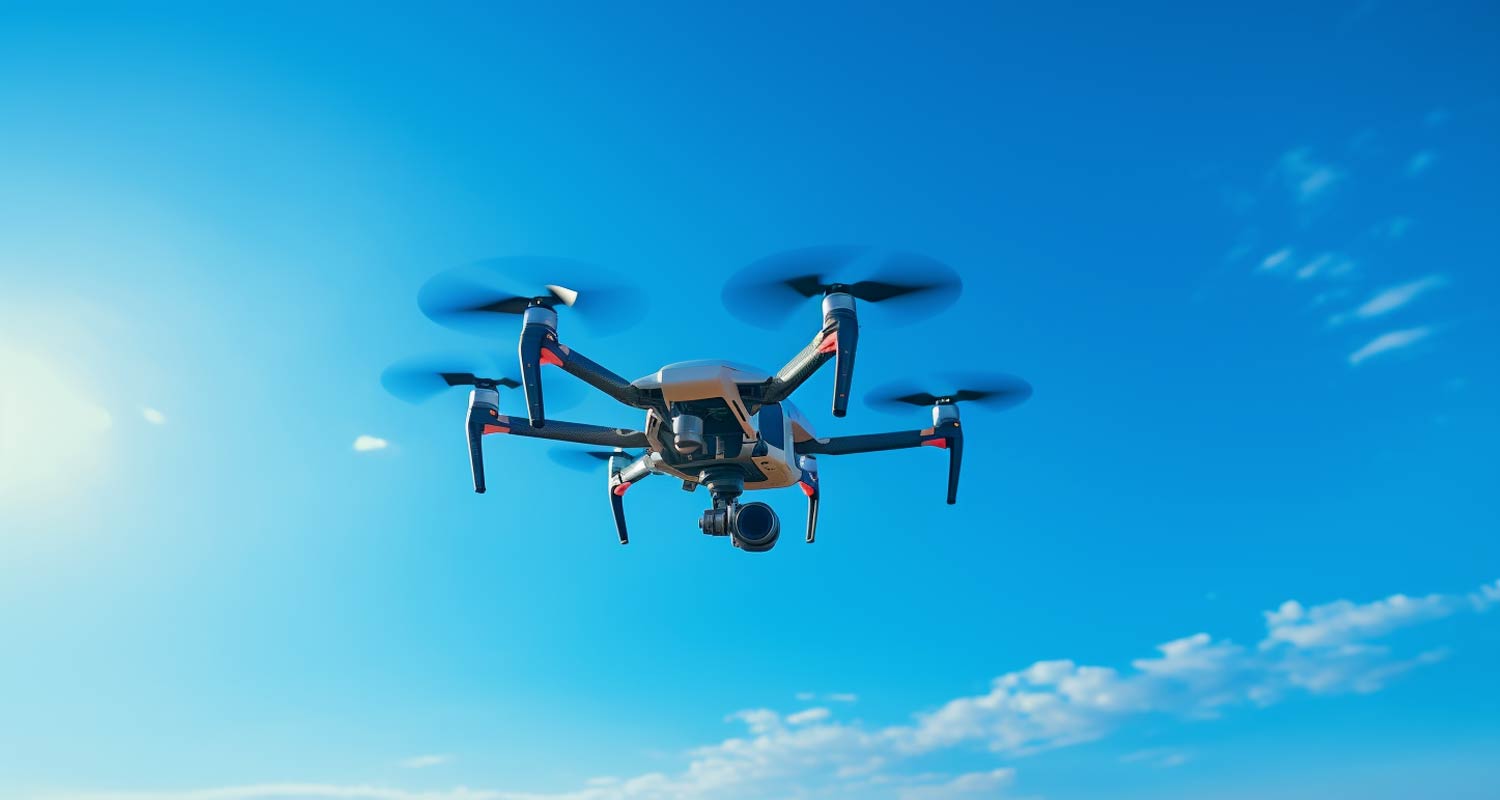
    South Africa pioneered drone laws a decade ago - now it must catch upBy 2050 the global market for non-military drones is expected to have transformed how goods and people move across cities and rural landscapes.

    In South Africa, where road access remains limited in many regions and urban congestion chokes daily logistics, drones present an opportunity to leapfrog legacy infrastructure and reimagine mobility from the sky down in both scenarios.

    Today we use motorcycles and bakkies for last-mile deliveries. Tomorrow drones will take over many of these roles, especially where road infrastructure is poor or congested.

    Instead of focusing on a drone’s weight, modern regulations consider the risk to people on the ground

    South Africa made headlines in 2015 when it became one of the first countries to regulate non-military drones, enacting the eighth amendment to the civil aviation regulations. This made South Africa a leader in comprehensive drone law.

    The regulations, managed by the South African Civil Aviation Authority, aim to balance innovation with safety and privacy concerns. But rules made 10 years ago do not keep pace with today’s state of the art in drone technology. We’ve seen a Copernican revolution in regulation – moving from mass-based to risk-based categories.

    Instead of focusing on a drone’s weight, modern regulations consider the risk to people on the ground. A small drone crashing in a rural field is far less dangerous than one falling in a busy urban square. Mass is not the primary factor anymore. From July 2024, this is the official International Civil Aviation Organisation policy, promoted around the globe and applied as well in the EU.

    Logistical gaps

    To stay competitive, South Africa should adopt the internationally emerging classes of small, unmanned aircraft systems (UASes). Europe is using drone classes from C0 to C6, based on EU drone regulations. Chinese manufacturers already produce drones in the same classes. If South Africa wants to manufacture and export drones, adopting these classes is essential.

    Drones can do more than just speed up e-commerce. In Africa, they could fill deep logistical gaps in healthcare, agriculture and emergency response. The need to transport medical samples from rural areas to analysis labs is urgent. Small drones can safely handle these deliveries and micro-vertiports, based on ISO 5491, could be built on hospital rooftops.

    TCS | How South Africa’s Milkor became a global player in drone innovation

    Unlike helicopters, electric drones are quieter and emit no carbon. But powering them is another challenge. Passenger-carrying drones, much heavier than logistics drones, need massive amounts of energy to recharge quickly – often up to 1MW. In areas without stable electricity grids, renewables like solar or wind could be a solution. In other words, drones should be part of a strategy encompassing not only aviation.

    The author, Filippo Tomasello
    The author, Filippo Tomasello

    Integrating aerial mobility into daily life isn’t just about aircraft. It demands urban planning, community engagement and regulatory foresight. Accordingly, the successful integration of drones into urban mobility hinges on three urgent and practical considerations:

    • The first is the definition and categorisation of vertiports. We must categorise them – micro, medium and large – based on ISO 5015-2. Passenger vertiports are much closer in complexity and infrastructure to traditional heliports. However, for last-mile delivery of small parcels, the requirements are far less demanding. For cargo, rooftops of shopping centres or hospitals could suffice to host the micro-vertiport. Urban real estate could be repurposed to support aerial logistics.
    • Secondly, placement and access are critical. An air taxi flight is expected to cost a great deal more than a ground taxi. People prepared to pay more (say, from a vertiport at OR Tambo to a vertiport in Sandton) want a much quicker service. The air taxi must therefore provide a real door-to-door service (neither a long bus ride at OR Tambo to reach the vertiport nor a long ground taxi ride at the destination), which requires careful planning of the vertiport locations. Indeed, location is everything: vertiports must be integrated into the daily flow of life. They must be located where people live and work given the need to prioritise convenience and accessibility over existing aviation infrastructure. They need to land directly at the luxury resort or congress centre, or wherever the passenger may want to go.
    • Lastly, there is a critical concern about security protocols for drone passengers. Replicating commercial aviation’s extensive airport-style security checks would be both impractical and economically unviable. We can’t treat every drone passenger like a commercial flight traveller – a more streamlined solution is needed. One option could be background checks at the time of registration, verified through facial recognition – a technology already available.

    Together, these three priorities – defining vertiports, ensuring practical access and rethinking security – form a foundation for the safe and scalable deployment of aerial mobility in South Africa and beyond.

    Regulation, yes. Red tape, no

    To balance innovation and oversight, streamlined rules are needed. South Africa should focus its limited regulatory resources where the risks are highest – like “beyond visual line of sight” (BVLOS) flights or passenger drones – and use industry assessments for low-risk operations.

    It should adopt international norms such as ISO 23629-12 for UAS traffic management and the Jarus Specific Operations Risk Assessment (SORA) framework. Letting the industry lead the way on conformity, with oversight, is the best way to scale safely.

    There’s also strong potential for EU-Africa cooperation. The EU is open to recognising African pilot licences and supporting the conformity of drones produced in Africa for sale in the EU. Local universities and governments can help by establishing testing labs, becoming “qualified entities” and participating in bodies regulating international standards.
    Currently, no African state is a member of ISO TC20/SC16, the global standards committee for drones. That must change. African voices are needed at the table.

    By 2030, the use of drones will be widespread in agriculture, surveying and logistics. And by 2050? Fleet-managed, AI-powered drones delivering parcels across African cities and remote villages will be normal. But the starting point must be societal need – not technology for its own sake.

    South Africa was a pioneer in 2015. But the future is not built on yesterday’s rules. It’s time to modernise – and lead again.

    Get breaking news from TechCentral on WhatsApp. Sign up here.

    • The author, Prof Filippo Tomasello, is a global expert on drone regulation and safety, who will deliver a plenary address at the upcoming Annual Southern African Transport Conference

    Don’t miss:

    Night-vision drones to patrol South Africa’s borders

    Follow TechCentral on Google News Add TechCentral as your preferred source on Google


    Filippo Tomasello
    WhatsApp YouTube
    Share. Facebook Twitter LinkedIn WhatsApp Telegram Email Copy Link
    Previous ArticleSouth African AI energy start-up in R32m funding round
    Next Article Major rift opens between Microsoft and OpenAI
    Company News
    Security by design is the channel's strongest pitch - Othelo Vieira

    Security by design is the channel’s strongest pitch

    23 April 2026
    Your brand is invisible to the AI that's choosing your competitor - Michelle Losco

    Your brand is invisible to the AI that’s choosing your competitor

    23 April 2026
    How AnyDesk is redefining remote access for African enterprises

    How AnyDesk is redefining remote access for African enterprises

    22 April 2026
    Opinion
    The conflict of interest at the heart of PayShap's slow adoption - Cheslyn Jacobs

    The conflict of interest at the heart of PayShap’s slow adoption

    26 March 2026
    South Africa's energy future hinges on getting wheeling right - Aishah Gire

    South Africa’s energy future hinges on getting wheeling right

    10 March 2026
    Hold the doom: the case for a South African comeback - Duncan McLeod

    Apple just dropped a bomb on the Windows world

    5 March 2026

    Subscribe to Updates

    Get the best South African technology news and analysis delivered to your e-mail inbox every morning.

    Latest Posts
    Security by design is the channel's strongest pitch - Othelo Vieira

    Security by design is the channel’s strongest pitch

    23 April 2026
    Your brand is invisible to the AI that's choosing your competitor - Michelle Losco

    Your brand is invisible to the AI that’s choosing your competitor

    23 April 2026
    Mythos forces South African banks onto high alert - Graham Lee

    Mythos forces South African banks onto high alert

    23 April 2026
    Free calls, dead voice and Shameel Joosub's Spanish ghost

    Free calls, dead voice and Shameel Joosub’s Spanish ghost

    22 April 2026
    © 2009 - 2026 NewsCentral Media
    • Cookie policy (ZA)
    • TechCentral – privacy and Popia

    Type above and press Enter to search. Press Esc to cancel.

    Manage consent

    TechCentral uses cookies to enhance its offerings. Consenting to these technologies allows us to serve you better. Not consenting or withdrawing consent may adversely affect certain features and functions of the website.

    Functional Always active
    The technical storage or access is strictly necessary for the legitimate purpose of enabling the use of a specific service explicitly requested by the subscriber or user, or for the sole purpose of carrying out the transmission of a communication over an electronic communications network.
    Preferences
    The technical storage or access is necessary for the legitimate purpose of storing preferences that are not requested by the subscriber or user.
    Statistics
    The technical storage or access that is used exclusively for statistical purposes. The technical storage or access that is used exclusively for anonymous statistical purposes. Without a subpoena, voluntary compliance on the part of your Internet Service Provider, or additional records from a third party, information stored or retrieved for this purpose alone cannot usually be used to identify you.
    Marketing
    The technical storage or access is required to create user profiles to send advertising, or to track the user on a website or across several websites for similar marketing purposes.
    • Manage options
    • Manage services
    • Manage {vendor_count} vendors
    • Read more about these purposes
    View preferences
    • {title}
    • {title}
    • {title}

