
SpaceX plans to build ground-based network infrastructure and turn Starlink into a full mobile service, president Gwynne Shotwell said on Tuesday — a shift that knocked shares in the largest US wireless carriers and puts the satellite operator on a collision course with terrestrial mobile networks.
The company bought 65MHz of wireless spectrum licences from EchoStar for a combined US$19.6-billion across two deals announced last year. Those licences carry terrestrial rights, and SpaceX now intends to use them.
“The spectrum that we purchased from EchoStar does have terrestrial components, so we definitely intend to build out terrestrial,” Shotwell said on a post-earnings call. She said the company would build whatever infrastructure was needed to make Starlink “a true mobile service”, and expected to win “quite a few” customers away from the three biggest US carriers.
It is the clearest signal yet that SpaceX means to pair its satellite constellation with ground infrastructure and sell a complete mobile product, rather than the direct-to-device service it currently offers in places terrestrial networks don’t reach. Shares in US telecoms operators Verizon, AT&T and T-Mobile fell between 2.2% and 4% in after-hours trading.
Starlink and SpaceX’s wider connectivity operations remain the group’s financial engine, underwriting Elon Musk’s spending on AI, data centres and next-generation rockets.
Analysts not convinced
Building a national mobile business would take years of capital and execution, analysts cautioned. The incumbent US carriers have spent hundreds of billions of dollars over three decades buying spectrum, building and upgrading networks, and acquiring subscribers — advantages that are not easily replicated.
“Unless Starlink can secure an MVNO agreement from one of the carriers, which would provide a baseline of coverage, it’s extraordinarily challenging to imagine a direct-to-consumer service from Starlink that could be competitive with carrier services in the next five years,” said Craig Moffett of MoffettNathanson. An MVNO sells mobile service under its own brand while leasing capacity from an operator that owns the network.
David Barden of New Street Research put the arithmetic more bluntly: it makes no sense, he said, for SpaceX to try to replicate with 65MHz what terrestrial operators have built over 30 years with roughly 1GHz between them.
Read: Starlink to kick off direct-to-phone satellite pilot
Shotwell declined to say what the build-out would cost, saying only that SpaceX had “great and new ideas” about how to do it and that the approach would be capital efficient.
Not everyone is sceptical. David Wagner, portfolio manager at Aptus Capital Advisors, said the market may be underestimating the disruption, agreeing with Musk that investors undervalue that part of the business and arguing that incumbent carriers risk being outpaced by SpaceX’s appetite for innovation.
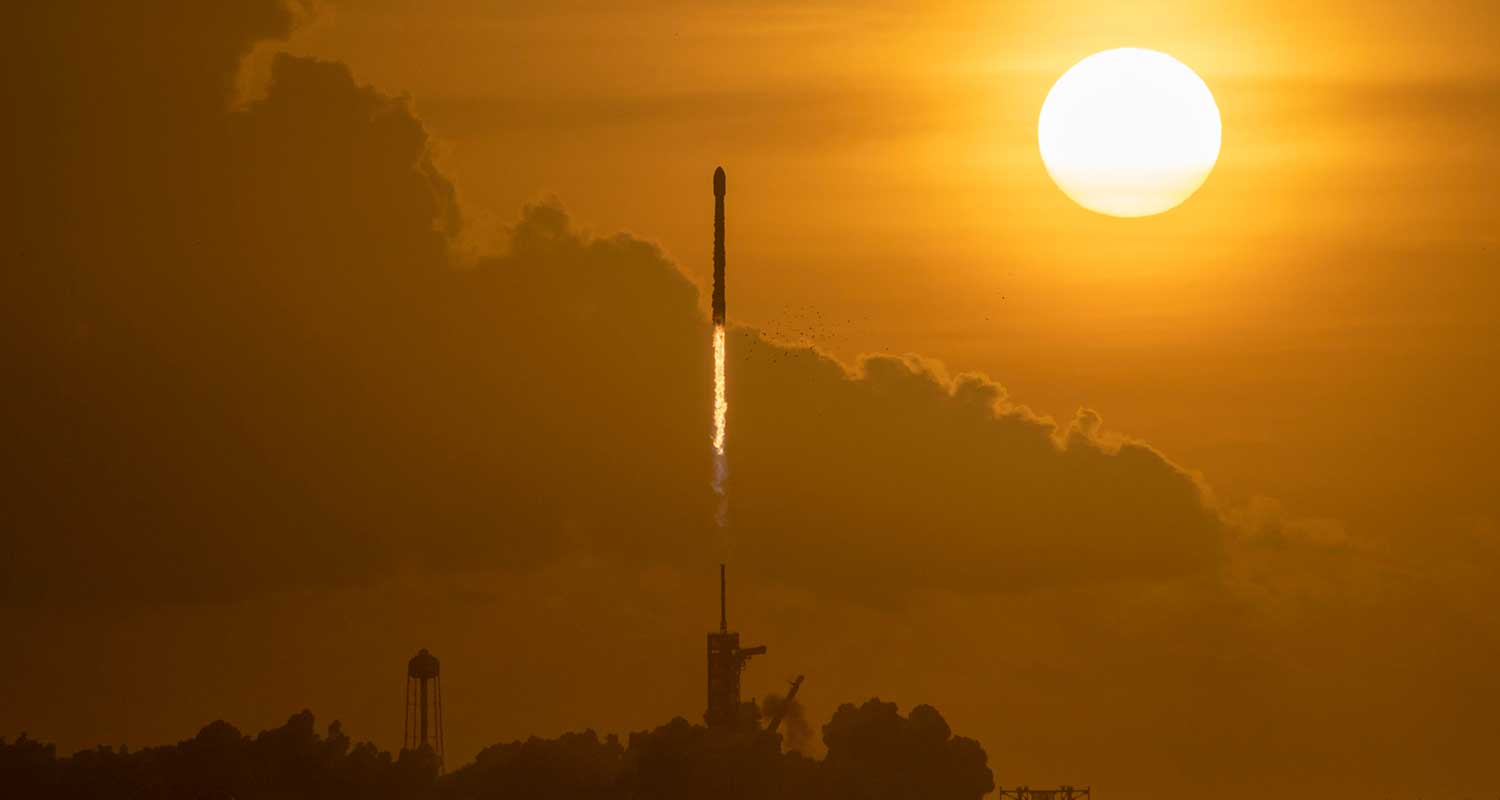
Under its existing partnership with T-Mobile, SpaceX uses Starlink satellites to provide direct-to-cell connectivity for compatible handsets outside normal coverage — complementing the carrier’s network rather than competing with it. Shotwell is now describing a business that would do both.
South African mobile operators are unlikely to face any sort of challenge in mobile from Starlink any time soon. Indeed, Starlink still isn’t licensed to sell anything at all in the country.
SpaceX has still never submitted a licence application to Icasa. The obstacle is the Electronic Communications Act’s requirement that individual licence holders be 30% owned by historically disadvantaged groups, a condition SpaceX says it cannot meet. Communications minister Solly Malatsi gazetted a policy direction in December 2025 instructing communications regulator Icasa to recognise equity-equivalent investment programmes (EEIPs) as an alternative, with SpaceX signalling around R2-billion in local commitments if it went ahead.
Icasa closed that route in May, arguing that it cannot give effect to EEIPs without parliament first amending the ECA. Government has since confirmed it will pursue the legislative route — a process measured in years, not months. Icasa has not issued a new national licence in 15 years.
So while Verizon, AT&T and T-Mobile weigh up a competitor with 65MHz of spectrum and a terrestrial build-out, Vodacom and MTN face a rival that cannot legally operate here — and which both have partnered with anyway.
MTN has run direct-to-cell trials with Starlink, AST SpaceMobile and Lynk Global, and claimed South Africa’s first satellite direct-to-mobile call in October last year. Vodacom’s parent, Vodafone Group, holds 5% of AST SpaceMobile — Starlink’s closest direct-to-cell rival — while Vodacom has partnered with Amazon Leo for backhaul.
Read: MTN claims first satellite direct-to-mobile call in South Africa
MTN Group CEO Ralph Mupita has argued for years that satellite operators should carry the same regulatory obligations as terrestrial ones — spectrum, data localisation, privacy — asking for what he called “a level playing ground”.
Shotwell’s confirmation that SpaceX intends to build terrestrial infrastructure may make that argument considerably harder to dismiss. — Harshita Mary Varghese and Akash Sriram, © 2026 Reuters, and Duncan McLeod, (c) 2026 NewsCentral Media
- Subscribe to TechCentral’s daily newsletter
- Get breaking news alerts on WhatsApp