


Close Menu
TechCentralTechCentral

    Subscribe to the newsletter

    Get the best South African technology news and analysis delivered to your e-mail inbox every morning.

    Facebook X (Twitter) YouTube LinkedIn
    WhatsApp Facebook X (Twitter) LinkedIn YouTube
    TechCentralTechCentral
    • News
      Telkom tops 25 million mobile subscribers as data growth surges - Serame Taukobong

      Telkom tops 25 million mobile subscribers as data growth surges

      16 February 2026
      Andrew Baker is new CIO of Capitec

      Andrew Baker is new CIO of Capitec

      16 February 2026
      BCX CEO Jonas Bogoshi to retire after seven years at the helm

      BCX CEO Jonas Bogoshi to retire after seven years at the helm

      16 February 2026
      South African CISOs are facing a burnout epidemic

      South African CISOs are facing a burnout epidemic

      16 February 2026
      The biggest thing missing from the state of the nation address - Cyril Ramaphosa

      The biggest thing missing from the state of the nation address

      16 February 2026
    • World
      Russia bans WhatsApp

      Russia bans WhatsApp

      12 February 2026
      EU regulators take aim at WhatsApp

      EU regulators take aim at WhatsApp

      9 February 2026
      Musk hits brakes on Mars mission

      Musk hits brakes on Mars mission

      9 February 2026
      Crypto firm accidentally sends R700-billion in bitcoin to its users

      Crypto firm accidentally sends R700-billion in bitcoin to its users

      8 February 2026
      AI won't replace software, says Nvidia CEO amid market rout - Jensen Huang

      AI won’t replace software, says Nvidia CEO amid market rout

      4 February 2026
    • In-depth
      How liberalisation is rewiring South Africa's power sector

      How liberalisation is rewiring South Africa’s power sector

      21 January 2026
      The top-performing South African tech shares of 2025

      The top-performing South African tech shares of 2025

      12 January 2026
      Digital authoritarianism grows as African states normalise internet blackouts

      Digital authoritarianism grows as African states normalise internet blackouts

      19 December 2025
      TechCentral's South African Newsmakers of 2025

      TechCentral’s South African Newsmakers of 2025

      18 December 2025
      Black Friday goes digital in South Africa as online spending surges to record high

      Black Friday goes digital in South Africa as online spending surges to record high

      4 December 2025
    • TCS
      Watts & Wheels S1E4: 'We drive an electric Uber'

      Watts & Wheels S1E4: ‘We drive an electric Uber’

      10 February 2026
      TCS+ | How Cloud On Demand is helping SA businesses succeed in the cloud - Xhenia Rhode, Dion Kalicharan

      TCS+ | Cloud On Demand and Consnet: inside a real-world AWS partner success story

      30 January 2026
      Watts & Wheels S1E4: 'We drive an electric Uber'

      Watts & Wheels S1E3: ‘BYD’s Corolla Cross challenger’

      30 January 2026
      Watts & Wheels S1E4: 'We drive an electric Uber'

      Watts & Wheels S1E2: ‘China attacks, BMW digs in, Toyota’s sublime supercar’

      23 January 2026

      TCS+ | Why cybersecurity is becoming a competitive advantage for SA businesses

      20 January 2026
    • Opinion
      A million reasons monopolies don't work - Duncan McLeod

      A million reasons monopolies don’t work

      10 February 2026
      The author, Business Leadership South Africa CEO Busi Mavuso

      Eskom unbundling U-turn threatens to undo hard-won electricity gains

      9 February 2026
      South Africa's skills advantage is being overlooked at home - Richard Firth

      South Africa’s skills advantage is being overlooked at home

      29 January 2026
      Why Elon Musk's Starlink is a 'hard no' for me - Songezo Zibi

      Why Elon Musk’s Starlink is a ‘hard no’ for me

      26 January 2026
      A million reasons monopolies don't work - Duncan McLeod

      South Africa’s new fibre broadband battle

      20 January 2026
    • Company Hubs
      • Africa Data Centres
      • AfriGIS
      • Altron Digital Business
      • Altron Document Solutions
      • Altron Group
      • Arctic Wolf
      • AvertITD
      • Braintree
      • CallMiner
      • CambriLearn
      • CYBER1 Solutions
      • Digicloud Africa
      • Digimune
      • Domains.co.za
      • ESET
      • Euphoria Telecom
      • Incredible Business
      • iONLINE
      • IQbusiness
      • Iris Network Systems
      • LSD Open
      • Mitel
      • NEC XON
      • Netstar
      • Network Platforms
      • Next DLP
      • Ovations
      • Paracon
      • Paratus
      • Q-KON
      • SevenC
      • SkyWire
      • Solid8 Technologies
      • Telit Cinterion
      • Tenable
      • Vertiv
      • Videri Digital
      • Vodacom Business
      • Wipro
      • Workday
      • XLink
    • Sections
      • AI and machine learning
      • Banking
      • Broadcasting and Media
      • Cloud services
      • Contact centres and CX
      • Cryptocurrencies
      • Education and skills
      • Electronics and hardware
      • Energy and sustainability
      • Enterprise software
      • Financial services
      • Information security
      • Internet and connectivity
      • Internet of Things
      • Investment
      • IT services
      • Lifestyle
      • Motoring
      • Public sector
      • Retail and e-commerce
      • Satellite communications
      • Science
      • SMEs and start-ups
      • Social media
      • Talent and leadership
      • Telecoms
    • Events
    • Advertise
    TechCentralTechCentral
    Home » World » Tencent in Chinese battle royale over videogame censorship

    Tencent in Chinese battle royale over videogame censorship

    By Agency Staff24 August 2018
    Twitter LinkedIn Facebook WhatsApp Email Telegram Copy Link
    News Alerts
    WhatsApp
    A screenshot from the battle royale game Fortnite

    Tencent, the world’s biggest games company, needs some help from Fortnite, the world’s hottest game.

    Just a few months ago, Tencent reigned as the most valuable company in Asia, but it has since suffered a record stock plunge that has wiped more than US$140-billion off its market value. The primary reason: the Chinese government unexpectedly froze the approval of new games, including Fortnite, stunning investors and even Tencent’s management.

    The move was a shock because no other major market operates with such unpredictable, opaque oversight — the US and Japan don’t require any government sign-off for games. Yet China has grown into the largest games market in the world with $38-billion in estimated revenue. The industry is watching Tencent and its Fortnite dilemma to understand what comes next in a market central to everyone’s fate.

    Among the biggest gaming markets, China is the most difficult market to do business in from a regulatory perspective

    “China is by far the strictest in the world,” says Serkan Toto, founder of the Tokyo-based game consultancy Kantan Games. “Among the biggest gaming markets, China is the most difficult market to do business in from a regulatory perspective.”

    China’s regulators haven’t given any explanation for the freeze. That’s set off heated debate over whether this is a temporary halt due to a regulatory reshuffling or whether the government is preparing a broader crackdown on games, which have been widely criticised in state-owned media.

    Tencent shares fell 1.5% on Friday and are off about 13% this year.

    Tencent and founder Pony Ma long benefited from their ability to navigate this regulatory maze. The company, based in the manufacturing hub of Shenzhen, operates the ubiquitous messaging service WeChat and uses the platform to promote games and other products. Tencent develops games and also licenses titles — like Fortnite — from developers for the Chinese market.

    Foreign companies need a politically savvy partner. All games go through a two-step approval process in China. First, they need to be registered with the ministry of culture & tourism and checked for sensitive content. Then a second agency — the one going through a restructuring and name change — decides whether to grant a licence and allow commercialisation. The agencies bar content they deem too violent, sexual or otherwise inappropriate. The US and Japanese governments, by contrast, let game makers introduce titles on their own, and industry-backed trade groups bestow ratings based on language or violence.

    No chicken dinners

    Tencent got stuck with one game, PlayerUnknown’s Battlegrounds, part way through this process. It had the first approval so it let millions of customers download the mobile version of PUBG, but then it couldn’t charge any money because it didn’t have the second approval. In a conference call with investors last week, president Martin Lau blamed Tencent’s profit shortfall on such snafus.

    “If there are certain games that are popular but can’t be monetised, then the revenue is gone,” said Victoria Mio, co-head of Asia Pacific Equities at Robeco, which manages $195-billion in assets.

    Tencent is trying to avoid a similar fate with Fortnite. The title, a Hunger Games-style competition where 100 players fight to the death, has become the most popular in the world with an estimated $2-billion in revenue this year. Its reputation overseas stoked demand in China, where 10 million people have pre-registered to get it.

    “I would spend money on this game, 100%,” said Chen Feng, a 17-year-old gamer in Guangdong province.
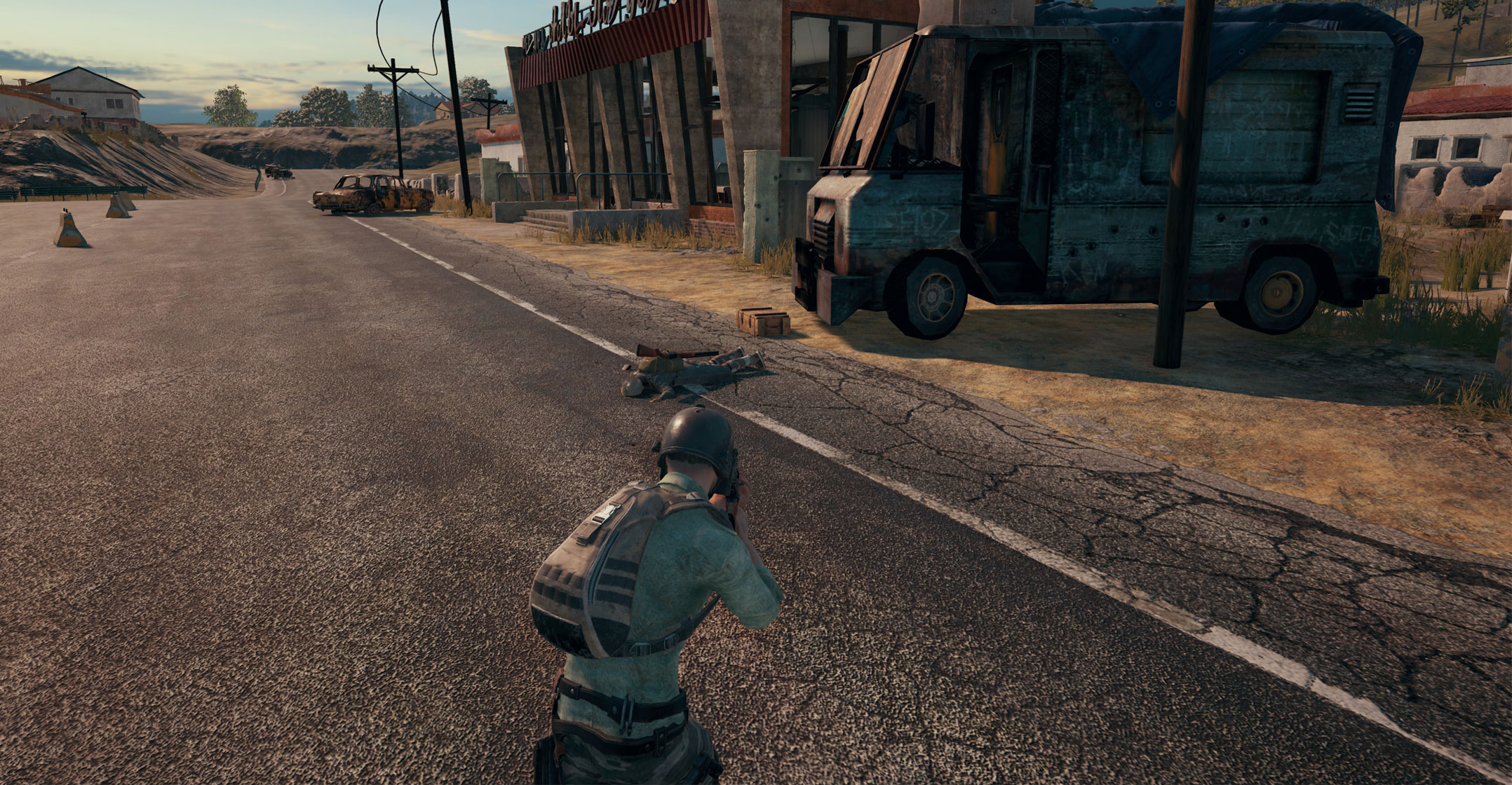
    In-game footage from the desktop version of PUBG

    Tencent’s position is tricky though. It has approval to run trials with the desktop version of Fortnite, but is still waiting for the right to monetise it. The agency in charge hasn’t issued any licences since March, but this month introduced a so-called “green channel” which allows publishers to run a one-month monetisation trial for certain games. Tencent’s Lau said last week that it’s applying through the new process to start charging for Fortnite desktop.

    It’s not clear how the new process will work. Some analysts believe game makers will be able to keep cashing in after the one-month trial. Others urge caution.

    “It’s unclear how many games are going through this channel and how many will come out,” said Daniel Ahmad, an analyst at Chinese game researcher Niko Partners. “It’s not wise to speculate because it’s the Chinese government and anything can change.”

    It’s unclear how many games are going through this channel and how many will come out. It’s not wise to speculate because it’s the Chinese government and anything can change

    Tencent is still at square one with the mobile version of Fortnite, the most popular version globally. Lau has said the government is aware its halt on game approvals is affecting business. But he doesn’t know when things will return to normal.

    Greg Pilarowski, former general counsel for a Chinese games company, says the big question on everyone’s mind is whether the Communist Party will take over game approvals given their growing popularity. The State Administration of Press, Publication, Radio, Films and Television that had been in charge of licences and commercialisation was split into three agencies earlier this year, with the Party taking away from the state oversight of the press, publications and films.

    That left videogames — which don’t cleanly fall into any of the named categories — in limbo. No approvals have been granted for months, with no public indication of who’s in charge of game. If the Party takes charge, it may well tighten its grip over games like it has with the Internet and other media.

    “The Party has been very, very focused on maintaining control over the Internet, and all the regulations for the Internet happen to catch games,” said Pilarowski, who now runs the San Francisco law firm Pillar Legal. “Even though games are arguably not as risky or controversial from a party security perspective as, say, books, movies or news, it falls into the same exact regulatory framework.”

    Some analysts are optimistic the freeze is temporary. Nomura analyst Jialong Shi, for example, said regulators are likely to start approving games as soon as September. Tencent shares have rallied in recent days on hopes of such a recovery.

    Still, Tencent or any other games company have a limited ability to push the government. “There’s no question about where authority lies; the party has an iron grip,” said Pilarowski. ‘‘It’s not the kind of relationship a Google or an Apple has with Washington. Tencent needs to lay low and encourage a resolution behind the scenes.”

    Tencent doesn’t have forever. The games industry is notoriously cyclical and titles like Fortnite inevitably give way to the next big hit.

    “Tencent needs to monetise Fortnite as soon as possible,” said Toto. “Who knows what’s going to be hot six months down the road?”  — Reported by Lulu Yilun Chen and Yuji Nakamura, with assistance from Edwin Chan, (c) 2018 Bloomberg LP



    Fortnite PUBG Tencent top
    WhatsApp YouTube Follow on Google News Add as preferred source on Google
    Share. Facebook Twitter LinkedIn WhatsApp Telegram Email Copy Link
    Previous ArticleJapan in big push to develop flying cars
    Next Article Cars & Gadgets podcast | Jabra’s Elite 65t earpods

    Related Posts

    M-Net pioneer Cobus Stofberg steps down from Naspers, Prosus boards

    M-Net pioneer Cobus Stofberg steps down from Naspers, Prosus boards

    20 August 2025
    China is behind in AI chips - but for how much longer?

    China is behind in AI chips – but for how much longer?

    13 June 2025
    Nvidia CEO says China is catching up fast in AI chip race - Jensen Huang

    Nvidia CEO says China is catching up fast in AI chip race

    29 May 2025
    Company News
    Vox Weather viewer numbers continue to climb across multiple technology platforms

    Vox Weather viewer numbers continue to climb across tech platforms

    16 February 2026
    Vivo launches X300 flagship series in SA with 200MP Zeiss cameras

    Vivo launches X300 flagship series in SA with 200MP Zeiss cameras

    16 February 2026
    Cell C delivers maiden results with growth momentum, financial flexibility - Jorges Mendes

    Cell C delivers maiden results with growth momentum, financial flexibility

    13 February 2026
    Opinion
    A million reasons monopolies don't work - Duncan McLeod

    A million reasons monopolies don’t work

    10 February 2026
    The author, Business Leadership South Africa CEO Busi Mavuso

    Eskom unbundling U-turn threatens to undo hard-won electricity gains

    9 February 2026
    South Africa's skills advantage is being overlooked at home - Richard Firth

    South Africa’s skills advantage is being overlooked at home

    29 January 2026

    Subscribe to Updates

    Get the best South African technology news and analysis delivered to your e-mail inbox every morning.

    Latest Posts
    Telkom tops 25 million mobile subscribers as data growth surges - Serame Taukobong

    Telkom tops 25 million mobile subscribers as data growth surges

    16 February 2026
    Andrew Baker is new CIO of Capitec

    Andrew Baker is new CIO of Capitec

    16 February 2026
    BCX CEO Jonas Bogoshi to retire after seven years at the helm

    BCX CEO Jonas Bogoshi to retire after seven years at the helm

    16 February 2026
    South African CISOs are facing a burnout epidemic

    South African CISOs are facing a burnout epidemic

    16 February 2026
    © 2009 - 2026 NewsCentral Media
    • Cookie policy (ZA)
    • TechCentral – privacy and Popia

    Type above and press Enter to search. Press Esc to cancel.

    Manage consent

    TechCentral uses cookies to enhance its offerings. Consenting to these technologies allows us to serve you better. Not consenting or withdrawing consent may adversely affect certain features and functions of the website.

    Functional Always active
    The technical storage or access is strictly necessary for the legitimate purpose of enabling the use of a specific service explicitly requested by the subscriber or user, or for the sole purpose of carrying out the transmission of a communication over an electronic communications network.
    Preferences
    The technical storage or access is necessary for the legitimate purpose of storing preferences that are not requested by the subscriber or user.
    Statistics
    The technical storage or access that is used exclusively for statistical purposes. The technical storage or access that is used exclusively for anonymous statistical purposes. Without a subpoena, voluntary compliance on the part of your Internet Service Provider, or additional records from a third party, information stored or retrieved for this purpose alone cannot usually be used to identify you.
    Marketing
    The technical storage or access is required to create user profiles to send advertising, or to track the user on a website or across several websites for similar marketing purposes.
    • Manage options
    • Manage services
    • Manage {vendor_count} vendors
    • Read more about these purposes
    View preferences
    • {title}
    • {title}
    • {title}