
Close Menu
TechCentralTechCentral

    Subscribe to the newsletter

    Get the best South African technology news and analysis delivered to your e-mail inbox every morning.

    Facebook X (Twitter) YouTube LinkedIn
    WhatsApp Facebook X (Twitter) LinkedIn YouTube
    TechCentralTechCentral
    • News
      Nedbank hires MTN's former tech chief as group CIO - Nikos Angelopoulos

      Nedbank hires MTN’s former tech chief as group CIO

      31 July 2026
      Eskom's diesel bill falls 86% as breakdowns hit eight-year low

      Eskom’s diesel bill falls 86% as breakdowns hit eight-year low

      31 July 2026
      Ramaphosa signs off on taking the grid away from Eskom

      Ramaphosa signs off on taking the grid away from Eskom

      31 July 2026
      Microsoft just had the biggest day in stock market history

      Microsoft just had the biggest day in stock market history

      31 July 2026
      MTN Nigeria's growth engine stalled in second quarter - Karl Toriola

      MTN Nigeria’s growth engine stalled in second quarter

      31 July 2026
    • World
      Meta AI will now tell parents if their teen is in crisis

      Meta AI will now tell parents if their teen is in crisis

      17 July 2026
      IBM shares crash 25% as AI upends software spending - Arvind Krishna

      IBM shares crash 25% as AI upends software spending

      15 July 2026
      Jony Ive's first OpenAI device: an AI smart speaker - Jony Ive and Sam Altman

      Jony Ive’s first OpenAI device: an AI smart speaker

      15 July 2026
      Stripe, Advent in talks to buy PayPal for $53-billion

      Stripe, Advent in talks to buy PayPal for $53-billion

      15 July 2026
      Memory crisis sends smartphone market into steep decline

      Memory crisis sends smartphone market into steep decline

      13 July 2026
    • In-depth
      The plan to stop AI from breaking the world - Google DeepMind CEO Demis Hassabis. Image: John Sears

      The plan to stop AI from breaking the world

      16 July 2026
      The internet has a Strait of Hormuz problem

      The internet has a Strait of Hormuz problem

      15 July 2026
      AI boom sparks rally, frenzy and fear

      AI boom sparks rally, frenzy and fear

      11 June 2026
      Every plug-in hybrid on sale in South Africa, ranked by price - Lamborghini Temerario

      Every plug-in hybrid on sale in South Africa, ranked by price

      7 June 2026
      What Wi-Fi 8 will mean for wireless networks

      What Wi-Fi 8 will mean for wireless networks

      1 June 2026
    • TCS
      TCS+ | Why South African workers must become supervisors of digital labour - Accelera Digital Group Cliff de Wit

      TCS+ | Why South African workers must become supervisors of digital labour

      31 July 2026
      TCS | Rapid deployment rules can't work without municipalities: ACT - Nomvuyiso Batyi

      TCS | Icasa’s rules skip the real bottleneck: ACT

      30 July 2026
      TCS+ | iStore Business on why Apple makes sense for SMEs - Sudesh Pillay and Tamia Nontsikelelo

      TCS+ | iStore Business on why Apple makes sense for SMEs

      30 July 2026
      TCS+ | A smarter approach to cloud for South African businesses - Joel Chacko and Jonathan Oaker

      TCS+ | A smarter approach to cloud for South African businesses

      28 July 2026
      TCS | How Optasia lends billions to people banks can't see - Salvador Anglada

      TCS | How Optasia lends billions to people banks can’t see

      23 July 2026
    • Opinion
      The author, Jannie van Zyl

      Selling vapour is corporate suicide in slow motion

      16 July 2026
      Brazil's online gambling crackdown is a lesson for South Africa

      How Amazon outmanoeuvred Starlink in South Africa

      15 July 2026
      The Popia problem with agentic AI - Herman Haasbroek

      The Popia problem with agentic AI

      14 July 2026
      The author, Fanie van Rooyen

      South Africa can still catch the AI wave – here’s how

      7 July 2026
      The author, Fanie van Rooyen

      The AI utopia South Africa can’t afford

      1 July 2026
    • Company Hubs
      • 1Stream
      • Africa Data Centres
      • AfriGIS
      • Altron Digital Business
      • Altron Document Solutions
      • Altron Group
      • Arctic Wolf
      • Ascent Technology
      • AvertITD
      • BBD
      • Braintree
      • CallMiner
      • CambriLearn
      • CM Telecom
      • Contactable
      • CYBER1 Solutions
      • Digicloud Africa
      • Digimune
      • Domains.co.za
      • ESET
      • Euphoria Telecom
      • HOSTAFRICA
      • Incredible Business
      • iONLINE
      • IQbusiness
      • Iris Network Systems
      • Kaspersky
      • LSD Open
      • Mitel
      • NEC XON
      • Netstar
      • Network Platforms
      • Next DLP
      • Ovations
      • Paracon
      • Paratus
      • Q-KON
      • SevenC
      • SkyWire
      • Solid8 Technologies
      • Telit Cinterion
      • Telviva
      • Tenable
      • Vertiv
      • Videri Digital
      • Vodacom Business
      • Vox
      • Wipro
      • Workday
      • XLink
    • Sections
      • AI and machine learning
      • Banking
      • Broadcasting and Media
      • Cloud services
      • Contact centres and CX
      • Cryptocurrencies
      • Education and skills
      • Electronics and hardware
      • Energy and sustainability
      • Enterprise software
      • Financial services
      • HealthTech
      • Information security
      • Internet and connectivity
      • Internet of Things
      • Investment
      • IT services
      • Lifestyle
      • Policy and regulation
      • Public sector
      • Retail and e-commerce
      • Satellite communications
      • Science
      • SMEs and start-ups
      • Social media
      • Talent and leadership
      • Telecoms
      • Watts & Wheels
    • Events
    • Advertise
    TechCentralTechCentral
    Home » Sections » Information security » The biggest prime number ever found
    The biggest prime number ever found

    The biggest prime number ever found

    By The Conversation24 November 2024

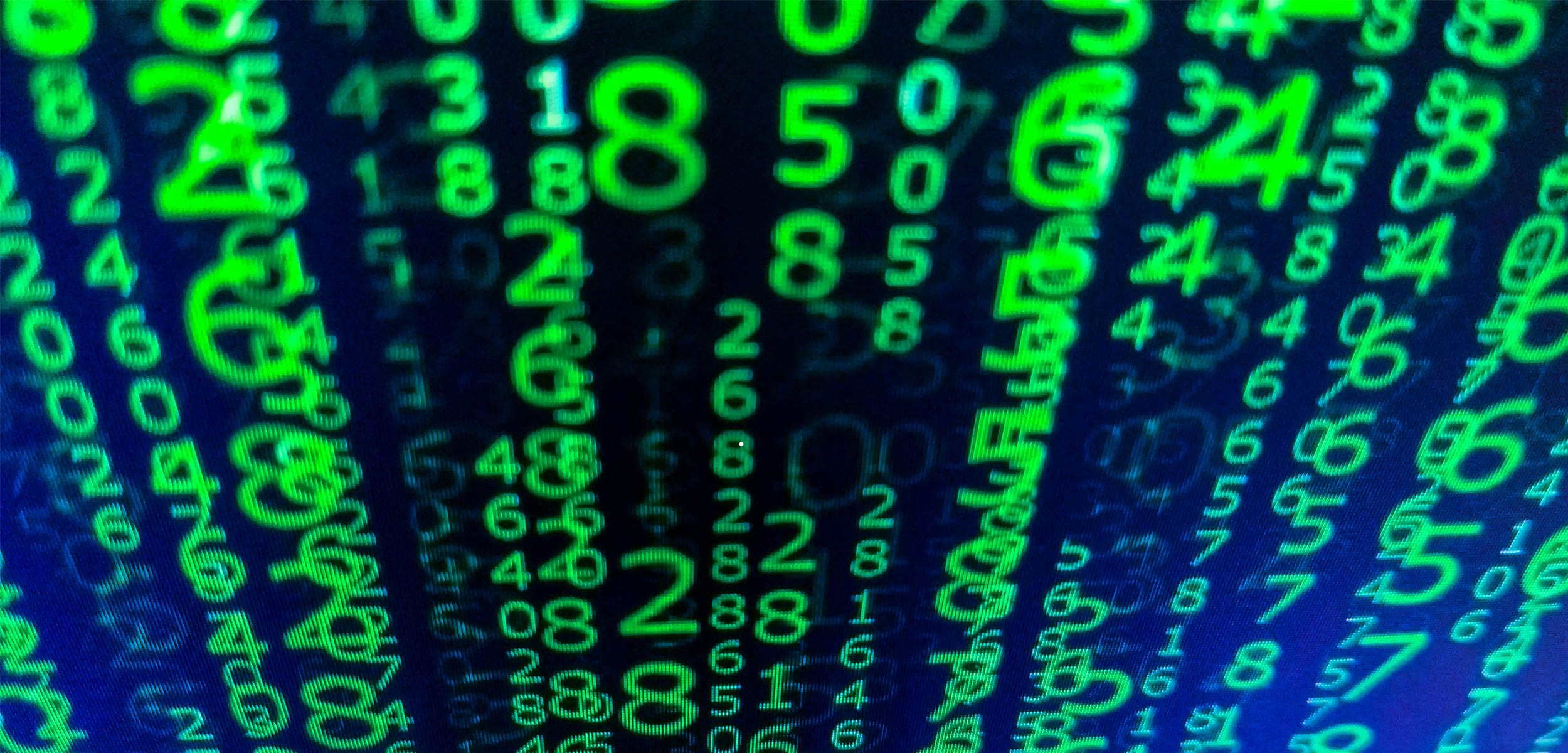
    Imagine a number made up of a vast string of ones: 1111111…111. Specifically, 136 279 841 ones in a row. If we stacked up that many sheets of paper, the resulting tower would stretch into the stratosphere.

    If we write this number in a computer in binary form (using only ones and zeroes), it would fill up only about 16MB, no more than a short video clip. Converting to the more familiar way of writing numbers in decimal, this number – it starts out 8 816 943 275… and ends …076 706 219 486 871 551 – would have more than 41 million digits. It would fill 20 000 pages in a book.

    Another way to write this number is 2136 279 841 – 1. There are a few special things about it.

    First, it’s a prime number (meaning it is only divisible by itself and one). Second, it’s what is called a Mersenne prime (we’ll get to what that means). And third, it is to date the largest prime number ever discovered in a mathematical quest with a history going back more than 2 000 years.

    The discovery

    The discovery that this number (known as M136279841 for short) is a prime was made on 12 October by Luke Durant, a 36-year-old researcher from San Jose, California. Durant is one of thousands of people working as part of a long-running volunteer prime-hunting effort called the Great Internet Mersenne Prime Search, or Gimps.

    A prime number that is one less than some power of two (or what mathematicians write as 2 p – 1) is called a Mersenne prime, after the French monk Marin Mersenne, who investigated them more than 350 years ago. The first few Mersenne primes are 3, 7, 31 and 127.

    Durant made his discovery through a combination of mathematical algorithms, practical engineering and massive computational power. Where large primes have previously been found using traditional computer processors (CPUs), this discovery is the first to use a different kind of processor called a GPU.

    GPUs were originally designed to speed up the rendering of graphics and video, and more recently have been repurposed to mine cryptocurrency and to power AI.

    Durant, a former employee of leading GPU maker Nvidia, used powerful GPUs in the cloud to create a kind of “cloud supercomputer” spanning 17 countries. The lucky GPU was an Nvidia A100 processor.

    Primes and perfect numbers

    Beyond the thrill of discovery, this advance continues a storyline that goes back millennia. One reason mathematicians are fascinated by Mersenne primes is that they are linked to so-called “perfect” numbers.

    A number is perfect if, when you add together all the numbers that properly divide it, they add up to the number itself. For example, six is a perfect number because 6 = 2 × 3 = 1 + 2 + 3. Likewise, 28 = 4 × 7 = 1 + 2 + 4 + 7 + 14.

    For every Mersenne prime, there is also an even perfect number. (In one of the oldest unfinished problems in mathematics, it is not known whether there are any odd perfect numbers.)

    Perfect numbers have fascinated humans throughout history. For example, the early Hebrews as well as Saint Augustine considered six to be a truly perfect number, as God fashioned the Earth in precisely six days (resting on the seventh).

    Practical primes

    The study of prime numbers is not just a historical curiosity. Number theory is also essential to modern cryptography. For example, the security of many websites relies upon the inherent difficulty in finding the prime factors of large numbers.

    The numbers used in public-key cryptography (of the kind that secures most online activity, for example) are generally only a few hundred decimal digits, which is tiny compared to M136279841.

    Nevertheless, the benefits of basic research in number theory – studying the distribution of prime numbers, developing algorithms for testing whether numbers are prime, and finding factors of composite numbers – often have downstream implications in helping to maintain privacy and security in our digital communication.

    An endless search

    Mersenne primes are rare indeed: the new record is more than 16 million digits larger than the previous one, and is only the 52nd ever discovered.

    We know there are infinitely many prime numbers. This was proven by the Greek mathematician Euclid more than 2 000 years ago: if there were only a finite number of primes, we could multiply them all together and add one. The result would not be divisible by any of the primes we have already found, so there must always be at least one more out there.

    But we don’t know whether there are infinitely many Mersenne primes – though it has been conjectured that there are. Unfortunately, they are too scarce for our techniques to detect.

    Read: First quantum cyberattack expected by 2030s – IBM

    For now, the new prime serves as a milestone in human curiosity and a reminder that even in an age dominated by technology, some of the deeper, tantalising secrets in the mathematical universe remain out of reach. The challenge remains, inviting mathematicians and enthusiasts alike to find the hidden patterns in the infinite tapestry of numbers.

    And, so, the (mathematical) search for perfection will continue.The Conversation

    • The author, John Voight, is professor of mathematics, University of Sydney
    • This article is republished from The Conversation under a Creative Commons licence. Read the original article

    Don’t miss:

    Rise in telco fraud threatens digital trust in South Africa

    Follow TechCentral on Google News Add TechCentral as your preferred source on Google


    biggest prime number biggest prime number ever found prime number
    WhatsApp YouTube
    Share. Facebook Twitter LinkedIn WhatsApp Telegram Email Copy Link
    Previous ArticleMultiChoice South Africa CEO Marc Jury resigns
    Next Article Who let the doge out?
    Company News
    Domains.co.za launches self-hosted n8n VPS hosting

    Domains.co.za launches self-hosted n8n VPS hosting

    31 July 2026
    Smarter.tech '26 shows why smarter technology begins with context - Obsidian Systems

    Context is the missing piece in enterprise AI: Obsidian

    31 July 2026
    Huawei launches 12 intelligent transport solutions in South Africa - Sam Tang

    Huawei launches 12 intelligent transport solutions in South Africa

    30 July 2026
    Opinion
    The author, Jannie van Zyl

    Selling vapour is corporate suicide in slow motion

    16 July 2026
    Brazil's online gambling crackdown is a lesson for South Africa

    How Amazon outmanoeuvred Starlink in South Africa

    15 July 2026
    The Popia problem with agentic AI - Herman Haasbroek

    The Popia problem with agentic AI

    14 July 2026

    Subscribe to Updates

    Get the best South African technology news and analysis delivered to your e-mail inbox every morning.

    Latest Posts
    Nedbank hires MTN's former tech chief as group CIO - Nikos Angelopoulos

    Nedbank hires MTN’s former tech chief as group CIO

    31 July 2026
    Eskom's diesel bill falls 86% as breakdowns hit eight-year low

    Eskom’s diesel bill falls 86% as breakdowns hit eight-year low

    31 July 2026
    Ramaphosa signs off on taking the grid away from Eskom

    Ramaphosa signs off on taking the grid away from Eskom

    31 July 2026
    TCS+ | Why South African workers must become supervisors of digital labour - Accelera Digital Group Cliff de Wit

    TCS+ | Why South African workers must become supervisors of digital labour

    31 July 2026
    © 2009 - 2026 NewsCentral Media
    Built and maintained by Chronon
    • Cookie policy (ZA)
    • TechCentral – privacy and Popia

    Type above and press Enter to search. Press Esc to cancel.

    Manage consent

    TechCentral uses cookies to enhance its offerings. Consenting to these technologies allows us to serve you better. Not consenting or withdrawing consent may adversely affect certain features and functions of the website.

    Functional Always active
    The technical storage or access is strictly necessary for the legitimate purpose of enabling the use of a specific service explicitly requested by the subscriber or user, or for the sole purpose of carrying out the transmission of a communication over an electronic communications network.
    Preferences
    The technical storage or access is necessary for the legitimate purpose of storing preferences that are not requested by the subscriber or user.
    Statistics
    The technical storage or access that is used exclusively for statistical purposes. The technical storage or access that is used exclusively for anonymous statistical purposes. Without a subpoena, voluntary compliance on the part of your Internet Service Provider, or additional records from a third party, information stored or retrieved for this purpose alone cannot usually be used to identify you.
    Marketing
    The technical storage or access is required to create user profiles to send advertising, or to track the user on a website or across several websites for similar marketing purposes.
    • Manage options
    • Manage services
    • Manage {vendor_count} vendors
    • Read more about these purposes
    View preferences
    • {title}
    • {title}
    • {title}

