Close Menu
TechCentralTechCentral

    Subscribe to the newsletter

    Get the best South African technology news and analysis delivered to your e-mail inbox every morning.

    Facebook X (Twitter) YouTube LinkedIn
    WhatsApp Facebook X (Twitter) LinkedIn YouTube
    TechCentralTechCentral
    • News
      Vodacom to take control of Safaricom in R36-billion deal - Shameel Joosub

      Vodacom to take control of Safaricom in R36-billion deal

      4 December 2025
      Black Friday goes digital in South Africa as online spending surges to record high

      Black Friday goes digital in South Africa as online spending surges to record high

      4 December 2025
      BYD takes direct aim at Toyota with launch of sub-R500 000 Sealion 5 PHEV

      BYD takes direct aim at Toyota with launch of sub-R500 000 Sealion 5 PHEV

      4 December 2025
      'Get it now': Takealot in new instant deliveries pilot

      ‘Get it now’: Takealot in new instant deliveries pilot

      4 December 2025
      What South Africans searched for most in 2025

      What South Africans searched for most in 2025, according to Google

      4 December 2025
    • World
      Amazon and Google launch multi-cloud service for faster connectivity

      Amazon and Google launch multi-cloud service for faster connectivity

      1 December 2025
      Google makes final court plea to stop US breakup

      Google makes final court plea to stop US breakup

      21 November 2025
      Bezos unveils monster rocket: New Glenn 9x4 set to dwarf Saturn V

      Bezos unveils monster rocket: New Glenn 9×4 set to dwarf Saturn V

      21 November 2025
      Tech shares turbocharged by Nvidia's stellar earnings

      Tech shares turbocharged by stellar Nvidia earnings

      20 November 2025
      Config file blamed for Cloudflare meltdown that disrupted the web

      Config file blamed for Cloudflare meltdown that disrupted the web

      19 November 2025
    • In-depth
      Jensen Huang Nvidia

      So, will China really win the AI race?

      14 November 2025
      Valve's Linux console takes aim at Microsoft's gaming empire

      Valve’s Linux console takes aim at Microsoft’s gaming empire

      13 November 2025
      iOCO's extraordinary comeback plan - Rhys Summerton

      iOCO’s extraordinary comeback plan

      28 October 2025
      Why smart glasses keep failing - no, it's not the tech - Mark Zuckerberg

      Why smart glasses keep failing – it’s not the tech

      19 October 2025
      BYD to blanket South Africa with megawatt-scale EV charging network - Stella Li

      BYD to blanket South Africa with megawatt-scale EV charging network

      16 October 2025
    • TCS
      TCS+ | How Cloud on Demand helps partners thrive in the AWS ecosystem - Odwa Ndyaluvane and Xenia Rhode

      TCS+ | How Cloud On Demand helps partners thrive in the AWS ecosystem

      4 December 2025
      TCS | MTN Group CEO Ralph Mupita on competition, AI and the future of mobile

      TCS | Ralph Mupita on competition, AI and the future of mobile

      28 November 2025
      TCS | Dominic Cull on fixing South Africa's ICT policy bottlenecks

      TCS | Dominic Cull on fixing South Africa’s ICT policy bottlenecks

      21 November 2025
      TCS | BMW CEO Peter van Binsbergen on the future of South Africa's automotive industry

      TCS | BMW CEO Peter van Binsbergen on the future of South Africa’s automotive industry

      6 November 2025
      TCS | Why Altron is building an AI factory - Bongani Andy Mabaso

      TCS | Why Altron is building an AI factory in Johannesburg

      28 October 2025
    • Opinion
      Your data, your hardware: the DIY AI revolution is coming - Duncan McLeod

      Your data, your hardware: the DIY AI revolution is coming

      20 November 2025
      Zero Carbon Charge founder Joubert Roux

      The energy revolution South Africa can’t afford to miss

      20 November 2025
      It's time for a new approach to government IT spend in South Africa - Richard Firth

      It’s time for a new approach to government IT spend in South Africa

      19 November 2025
      How South Africa's broken Rica system fuels murder and mayhem - Farhad Khan

      How South Africa’s broken Rica system fuels murder and mayhem

      10 November 2025
      South Africa's AI data centre boom risks overloading a fragile grid - Paul Colmer

      South Africa’s AI data centre boom risks overloading a fragile grid

      30 October 2025
    • Company Hubs
      • Africa Data Centres
      • AfriGIS
      • Altron Digital Business
      • Altron Document Solutions
      • Altron Group
      • Arctic Wolf
      • AvertITD
      • Braintree
      • CallMiner
      • CambriLearn
      • CYBER1 Solutions
      • Digicloud Africa
      • Digimune
      • Domains.co.za
      • ESET
      • Euphoria Telecom
      • Incredible Business
      • iONLINE
      • IQbusiness
      • Iris Network Systems
      • LSD Open
      • NEC XON
      • Netstar
      • Network Platforms
      • Next DLP
      • Ovations
      • Paracon
      • Paratus
      • Q-KON
      • SevenC
      • SkyWire
      • Solid8 Technologies
      • Telit Cinterion
      • Tenable
      • Vertiv
      • Videri Digital
      • Vodacom Business
      • Wipro
      • Workday
      • XLink
    • Sections
      • AI and machine learning
      • Banking
      • Broadcasting and Media
      • Cloud services
      • Contact centres and CX
      • Cryptocurrencies
      • Education and skills
      • Electronics and hardware
      • Energy and sustainability
      • Enterprise software
      • Financial services
      • Information security
      • Internet and connectivity
      • Internet of Things
      • Investment
      • IT services
      • Lifestyle
      • Motoring
      • Public sector
      • Retail and e-commerce
      • Satellite communications
      • Science
      • SMEs and start-ups
      • Social media
      • Talent and leadership
      • Telecoms
    • Events
    • Advertise
    TechCentralTechCentral
    Home » News » The colossal carbon capture con
    The colossal carbon capture con

    The colossal carbon capture con

    By Ivo Vegter24 August 2025

    If you follow green technology news, you may have seen images of futuristic urban furniture installations that combine advertising boards, or pedestrian benches, with a wall of compact greenery.

    Here’s an example from Glasgow, in the UK:

    Green City Solutions builds these nifty pavement furniture pieces that add a bench to a moss-based air scrubber. Credit: Green City Solutions
    Green City Solutions builds these nifty pavement furniture pieces that add a bench to a moss-based air scrubber. Credit: Green City Solutions

    The upright section contains a trellis filled with a type of moss, watered by an automated pump system filled from rainwater or municipal water.

    Known as a CityTree, Green City Solutions, its creators told the media one such installation would do the equivalent of 275 trees worth of cleaning of the atmosphere in only 1% of the space and at only 5% of the cost.

    The notion that plants, through photosynthesis, consume carbon dioxide and produce oxygen is not controversial. This moss, its promoters say, also filters nitrogen oxides and small particulates from the atmosphere, thereby dealing with the dual problems of carbon emissions and smog.

    Active filters

    Newer models add active filtering to the passive filter function of the moss, since passive filtering proved to be insufficient. That came at the cost of using 125W worth of electricity, which is about twice as much as a typical laptop computer consumes.

    The contraptions come in different designs, and can be installed indoors or outdoors. These stylish units are installed in shopping malls in Germany:

    CityTrees installed inside shopping malls in Berlin and Stuttgart, Germany, respectively. Credit: Green City Solutions
    CityTrees installed inside shopping malls in Berlin and Stuttgart, Germany, respectively. Credit: Green City Solutions

    If you like the designs, they’re certainly pretty additions to the typical cityscape. A bit of greenery is easy on the eyes, and must be good for the environment, not so?

    The City of Cork in Ireland installed five of these things for the not insubstantial price of €350 000. That’s €70 000 (R1.4-million) per unit. For that kind of money, the bench or planter had better be super-effective at cleaning or cooling the surrounding air.
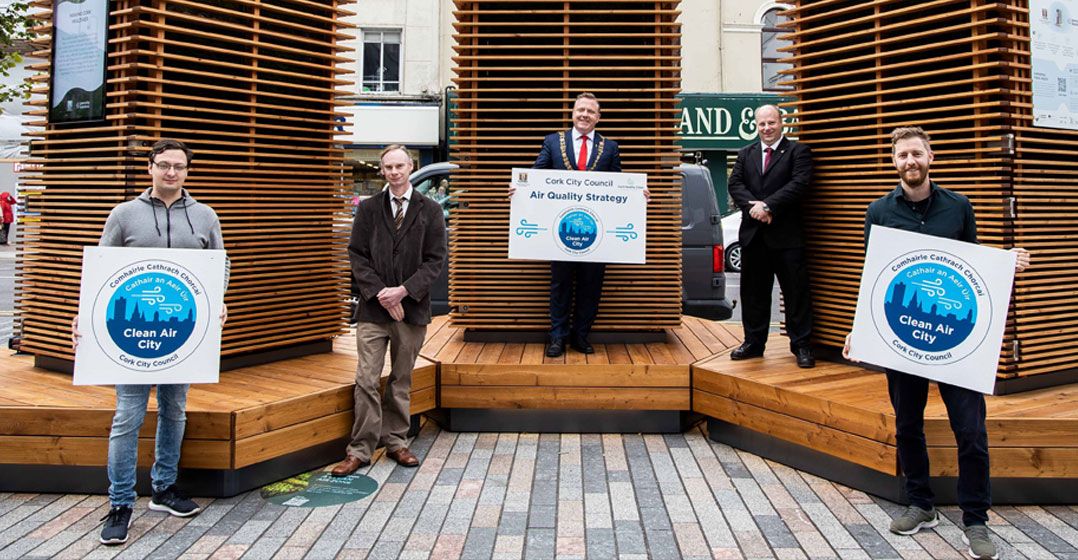
    The worthies of Cork City, Ireland were very proud of their brand new CityTree installations in 2021. Credit: Cork City Council
    The worthies of Cork City, Ireland were very proud of their brand new CityTree installations in 2021. Credit: Cork City Council

    But they aren’t, and even their makers are backtracking on their original claims.

    In an interview with the marvellously named Cork City local newspaper, Tripe & Drisheen, the marketing lead for Green City Solutions, Simon Dierks, said: “This number of 275 trees is four or five years old, but the internet never forgets. That number is not true, and it’s not smart to say, because we don’t want to compete with trees. Before we realise projects, we want to ensure that actual tree-planting is part of the strategy. They turn CO2 into oxygen, they have shadowing effects and are home to birds and animals. The CityTree can’t do the same things, but it can measure data, cool the air up to four degrees and we bind fine dust with immediate effect.”

    Scientific study

    The announcement by the Cork City Council claims: “Scientific studies conducted by the Institute of Air Handling and Refrigeration in Dresden show that the moss cleans about 80% of fine dust from the air.”

    As it turns out, that was a “study”, not “studies”, and it was commissioned and paid for by Green City Solutions, the manufacturer. Even if the 80% figure is nominally correct, that would apply only to the air that actually goes through the filter, which the vast majority of the air surrounding these expensive robot trees does not do.

    Besides electricity, these smart trees also require maintenance. The North Macedonian cities of Skopje and Tetovo installed CityTrees in 2017. According to locals, they didn’t survive the first summer. By 2019, this is what they looked like:

    The CityTrees purchased by the cities of Skopje and Tetovo in North Macedonia didn’t survive their first summer, according to locals. Credit: Wikimedia Commons
    The CityTrees purchased by the cities of Skopje and Tetovo in North Macedonia didn’t survive their first summer, according to locals. Credit: Wikimedia Commons

    In Amsterdam, where Green City Solutions claimed €2-million worth of CityTrees would remove 20% of particulates and 5% of nitrogen oxides from the air, experts concluded that their effect was rather more modest. They removed only 1% of particulates, and produced more nitrogen oxides. In a quarter of the studied CityTrees, the moss had died.

    The results did not surprise any of the experts, and shouldn’t surprise us, either. Even very effective air filters would make a negligible impact if they’re so small you’d struggle to see them from a tall office building. The power needed to drive such filters would be entirely wasted, and probably create more emissions than they mitigate.

    Lifecycle analysis

    No lifecycle carbon footprint analysis of CityTrees been ever been done, which seems strange if you’re going to spend a bag of taxpayers’ money on an air-quality solution, but the makers say “it’s very important to us to be CO2 neutral in the end”.

    Carbon neutral? You mean, after all that money, this thing might make no difference to net emissions at all? It might even increase emissions, due to the sourcing of materials, the manufacturing process, the installation, and the ongoing maintenance and electricity consumption?

    €2-million of taxpayers’ money buys a lot of actual trees, but Green City Solutions says that this is an unfair comparison, because trees don’t come with handy sensors included.

    No, they don’t. But they are cheap, they do work, and we know for sure their carbon emissions are net negative.

    A matter of scale?

    Perhaps the problem with carbon capture is just a matter of scale. Surely larger plants, that use chemical reactions rather than plants to remove carbon dioxide from the air, would be more effective?
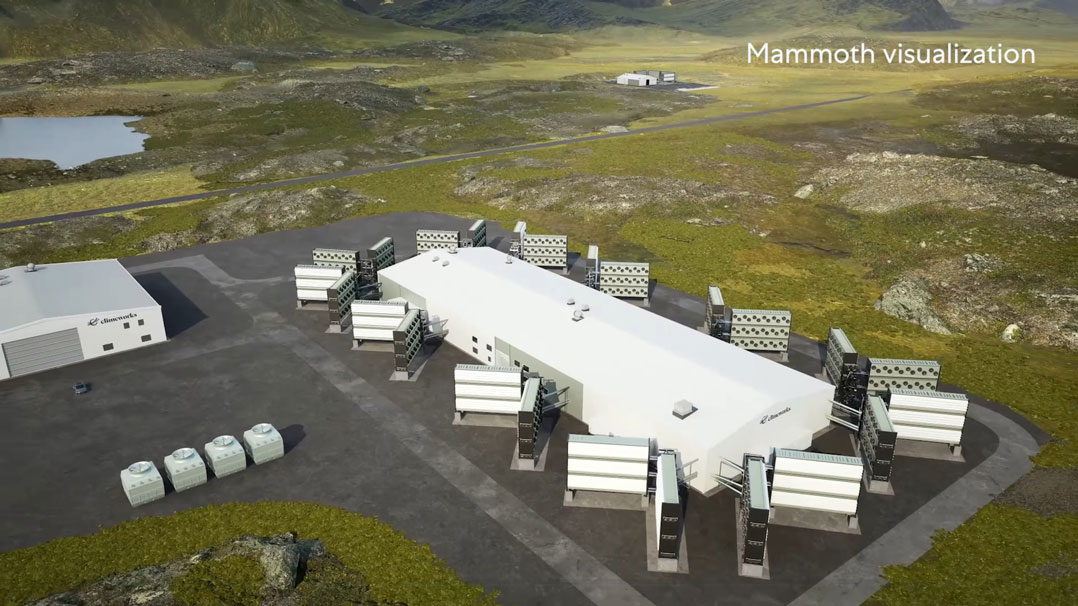
    Climeworks is building a massive direct air capture plant in Iceland to remove carbon dioxide from the atmosphere. Credit: Climeworks
    Climeworks is building a massive direct air capture plant in Iceland to remove carbon dioxide from the atmosphere. Credit: Climeworks

    The largest “direct air capture” plant in the world is under construction in Iceland. Built by Climeworks, which claims to offer “best-in-class carbon removal strategies”, the plant – nicknamed Mammoth – has a nameplate capacity of up to 36 000t of carbon dioxide per year. The company notes that actual performance will be lower.

    It has a cute chart to show how the losses occur:

    A chart deceptively illustrating effective carbon dioxide reduction compared with direct air capture’s nameplate capacity. Credit: Climeworks
    A chart deceptively illustrating effective carbon dioxide reduction compared with direct air capture’s nameplate capacity. Credit: Climeworks

    Visually, that suggests that perhaps 25% of the carbon dioxide captured is lost along the way. If you add up the percentages, however, the losses could amount to up to 60%, which would make its effective capacity 14 400t of carbon dioxide removed.

    Perspective

    Let’s give it the benefit of the doubt, and assume that it will be only half as bad, and the plant removes 25 200t of carbon dioxide per year from the atmosphere. Estimates are that the plant will sequester this carbon dioxide at a cost of about €450 (R9 200) per ton by 2030.

    Let’s put that in perspective.

    Global carbon dioxide emissions in 2024 amounted to 37.4 billion tons. Mammoth, therefore, would sequester 0.000067% of the world’s man-made CO2 emissions, at a cost of €11.3-million (R232-million) per year.

    Read: The train that never came – how maglev technology was derailed

    Now, the target to keep warming under 1.5°C is net zero by 2050. Let’s assume that global emissions stop rising tomorrow. Then, it would require 1.5 million plants like Mammoth, and cost €16.8-trillion, per year, every year, to achieve net zero. That just about equals the entire nominal GDP of China, the second largest economy in the world.

    And that’s using the hoped-for cost of €450 by 2030. At the moment, it costs €1 000/ton, which would make the total net zero cost larger than the nominal GDP of the US. But every bit helps, right? Well…

    Every bit helps?

    Climeworks began operating in Iceland in 2021. It sells carbon offsets to clients who need them in order to obtain emission permits under their countries’ carbon trading schemes. Though it has sold such offsets, it has delivered absolutely no carbon reductions to its customers. In fact, it hasn’t even been able to offset its own emissions.

    One of its customers, British physicist Michael de Podesta, alleges that the scheme has “all the hallmarks of a scam”. Podesta is not wrong. Carbon capture direct from the atmosphere is far too expensive to do, and far too hard to do at any significant scale. It is a great way to relieve gullible governments of subsidies and polluting corporations out of payments to absolve their carbon guilt, however.

    Scaling up

    So, it doesn’t work at small scale, and it doesn’t work at large scale. To anyone with a vague concept of scale, that should not be surprising.

    The total mass of the atmosphere is about 5.2×10¹⁸kg, or 5.2 quintillion tons. (It’s surprisingly easy to calculate that, by the way.)

    Of that, 0.0425% is carbon dioxide. Adjusting for the fact that it is heavier than air, we find that there is about 3.35 quadrillion tons of carbon dioxide in the atmosphere.

    To filter that amount of air, only to remove mere thousands of tons of carbon dioxide, is not feasible using filters that can hardly be seen from 30 000ft. Climeworks says it wants to scale up to millions of tons and eventually billions of tons, but that means scaling up their technology by six or seven orders of magnitude, which is, frankly, insane.

    Point source

    What about point sources, then? Carbon capture and storage (CCS) is derived from very old technology.

    Since natural gas drilling companies learnt to separate carbon dioxide from methane in the 1930s, it was simply vented into the atmosphere. In the early 1970s, however, they discovered a way to use it for enhanced oil recovery. By pumping it into depleted reservoirs, they could squeeze more oil out of them. Natural gas companies started to sell their captured carbon dioxide to oil companies to pump down their wells.

    In 1977, a bright spark in Italy hypothesised a technique for capturing carbon dioxide at various points in the lifecycle of fossil fuels, and injecting it into deep oceanic currents. “The Mediterranean undercurrent entering the Atlantic at Gibraltar has been identified as one such current; it would have sufficient capacity to deal with all CO2 produced in Europe even in the year 2100,” he wrote, optimistically.

    Fossil fuel companies jumped on the idea and promoted carbon capture and storage as a means to offset the carbon emissions from burning coal, oil and gas. The first plant to capture carbon and sequester it became operational in Norway in 1996.
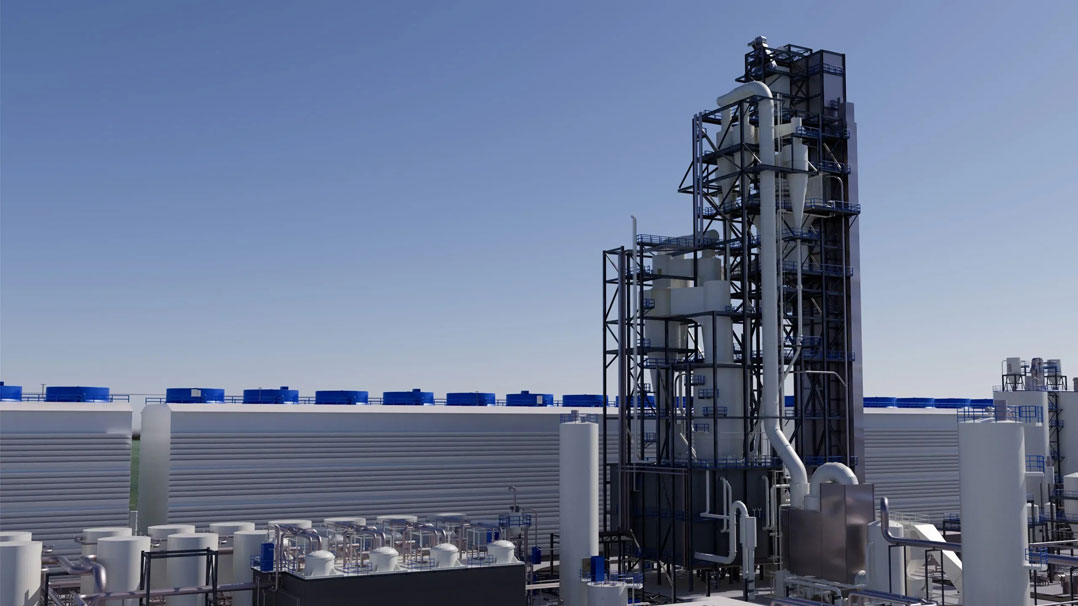
    A calciner, which performs one step in the process of extracting carbon dioxide from the atmosphere to prepare it for storage, in a plant built by carbon capture development company, 1PointFive
    A calciner, which performs one step in the process of extracting carbon dioxide from the atmosphere to prepare it for storage, in a plant built by carbon capture development company, 1PointFive

    Once the Intergovernmental Panel on Climate Change latched onto the possibility of CCS to reduce net carbon emissions, the floodgates opened. Governments, led by the US, pumped billions of dollars into subsidies and direct payments to develop CCS technology.

    Yet a 2024 status report by the Global CCS Institute notes that CCS is in operation at 50 plants worldwide, with 44 under construction, and an astonishing 534 projects are in development. It gushes: “Global CO2 capture capacity on track to double to over 100 million tonnes per year of CO2, once facilities currently under construction commence operation.”

    Note, that’s not the current capacity. That includes what is under construction. A hundred million tonnes per year equals 0.27% of the world’s current carbon emissions. A quarter of a percent!

    This is what the institute, which represents the interests of CCS companies, considers “significant year-on-year momentum” and “strong growth”. A quarter of a percent, once they’ve completed projects under construction and spent all those taxpayer billions.

    Failed

    It shouldn’t surprise anyone to learn that most major CCS projects “have either failed entirely or captured much less CO2 than expected”.

    It is “too simple”, says one scientist, to claim that CSS doesn’t work. It does work, but only in very limited circumstances, in locations with very intense point sources of carbon dioxide.

    Yet the largest point-source CCS operation, at the Gorgon liquid natural gas plant on Barrow Island, off Australia’s north-western coast, is one of the cautionary tales.
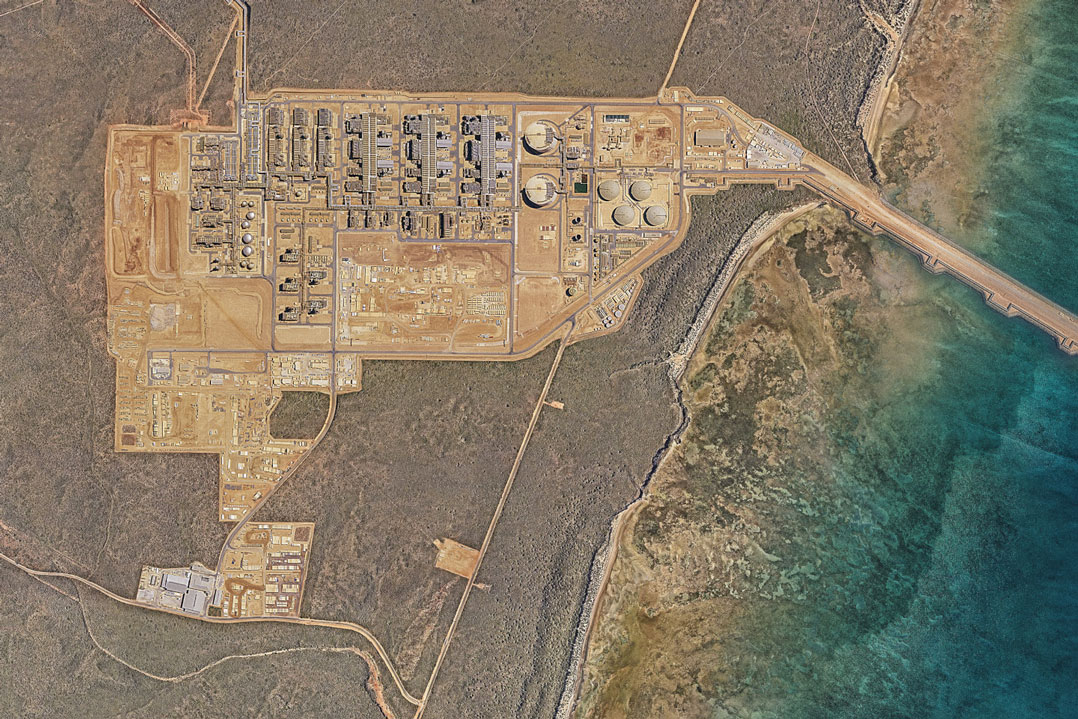
    The world’s largest carbon capture and storage plant, at the Gorgon liquid natural gas field on Barrow Island, off Australia’s north-western coast. Credit: Chevron
    The world’s largest carbon capture and storage plant, at the Gorgon liquid natural gas field on Barrow Island, off Australia’s north-western coast. Credit: Chevron

    The problem is that such a plant captures only some fraction of the carbon dioxide separated from the natural gas, and does not account for methane losses in transport, or carbon dioxide produced when the methane is burnt.

    As a result, it captures only about 1% of the total carbon emissions associated with the production, transport and use of natural gas.

    Even at point sources, then, the government subsidies and carbon offset purchases are hardly worth the paper they’re printed on.

    Scam

    About 90% of the world’s CCS plants are operated by fossil fuel companies. The remainder are built by green technology start-ups, often worth billions of dollars.

    Both are heavily dependent on government subsidies, and on regulations that create an artificial market for carbon dioxide. The intent of these carbon markets and subsidies is to substantially reduce the world’s carbon emissions. In practice, however, they’re blowing into the wind.

    Whether you consider CCS to be a scam perpetrated by fossil fuel companies to evade responsibility for the carbon emissions created by their products, or by green technology firms hoping to capitalise on taxpayer-funded boondoggles, or both, the fact is that the technology hasn’t changed the world, and almost certainly never will.

    Read: The great blockchain letdown

    The overwhelming majority of the hundreds of projects that are in development are certain to underperform expectations, or fail entirely, and they will not make an appreciable dent in the world’s net carbon emissions.

    You might as well try to remove the salt in the ocean by building a few billion-dollar water desalination plants. No matter how big your plant, it won’t make a measurable difference.  – © 2025 NewsCentral Media

    Get breaking news from TechCentral on WhatsApp. Sign up here.

    • The author, Ivo Vegter, is a columnist for The Daily Friend and former technology journalist
    • This article is part of a series about amazing technologies that promised to change the world, but did no such thing

    Don’t miss:

    The train that never came – how maglev technology was derailed



    Ivo Vegter
    Subscribe to TechCentral Subscribe to TechCentral
    Share. Facebook Twitter LinkedIn WhatsApp Telegram Email Copy Link
    Previous ArticleJonas hits back at ‘dirty tricks’ as MTN storm gathers
    Next Article Why healthcare technology continues to treat patients like paperwork

    Related Posts

    How 3D wowed the world, then flopped again and again

    How 3D wowed the world, then flopped again and again

    26 September 2025
    The most overhyped but underwhelming product in history - Segway Personal Transporter

    The most overhyped but underwhelming product in history

    31 August 2025
    The great blockchain letdown

    The great blockchain letdown

    14 August 2025
    Company News
    Telcos are sitting on a data gold mine - but few know what do with it - Phillip du Plessis

    Telcos are sitting on a data gold mine – but few know what do with it

    4 December 2025
    Unlock smarter computing with your surface Copilot+ PC

    Unlock smarter computing with your Surface Copilot+ PC

    4 December 2025
    Building trust in a digital world: Vodacom Business's approach to security

    Building trust in a digital world – the Vodacom Business approach to security

    4 December 2025
    Opinion
    Your data, your hardware: the DIY AI revolution is coming - Duncan McLeod

    Your data, your hardware: the DIY AI revolution is coming

    20 November 2025
    Zero Carbon Charge founder Joubert Roux

    The energy revolution South Africa can’t afford to miss

    20 November 2025
    It's time for a new approach to government IT spend in South Africa - Richard Firth

    It’s time for a new approach to government IT spend in South Africa

    19 November 2025

    Subscribe to Updates

    Get the best South African technology news and analysis delivered to your e-mail inbox every morning.

    Latest Posts
    Vodacom to take control of Safaricom in R36-billion deal - Shameel Joosub

    Vodacom to take control of Safaricom in R36-billion deal

    4 December 2025
    Black Friday goes digital in South Africa as online spending surges to record high

    Black Friday goes digital in South Africa as online spending surges to record high

    4 December 2025
    BYD takes direct aim at Toyota with launch of sub-R500 000 Sealion 5 PHEV

    BYD takes direct aim at Toyota with launch of sub-R500 000 Sealion 5 PHEV

    4 December 2025
    'Get it now': Takealot in new instant deliveries pilot

    ‘Get it now’: Takealot in new instant deliveries pilot

    4 December 2025
    © 2009 - 2025 NewsCentral Media
    • Cookie policy (ZA)
    • TechCentral – privacy and Popia

    Type above and press Enter to search. Press Esc to cancel.

    Manage consent

    TechCentral uses cookies to enhance its offerings. Consenting to these technologies allows us to serve you better. Not consenting or withdrawing consent may adversely affect certain features and functions of the website.

    Functional Always active
    The technical storage or access is strictly necessary for the legitimate purpose of enabling the use of a specific service explicitly requested by the subscriber or user, or for the sole purpose of carrying out the transmission of a communication over an electronic communications network.
    Preferences
    The technical storage or access is necessary for the legitimate purpose of storing preferences that are not requested by the subscriber or user.
    Statistics
    The technical storage or access that is used exclusively for statistical purposes. The technical storage or access that is used exclusively for anonymous statistical purposes. Without a subpoena, voluntary compliance on the part of your Internet Service Provider, or additional records from a third party, information stored or retrieved for this purpose alone cannot usually be used to identify you.
    Marketing
    The technical storage or access is required to create user profiles to send advertising, or to track the user on a website or across several websites for similar marketing purposes.
    • Manage options
    • Manage services
    • Manage {vendor_count} vendors
    • Read more about these purposes
    View preferences
    • {title}
    • {title}
    • {title}