


Close Menu
TechCentralTechCentral

    Subscribe to the newsletter

    Get the best South African technology news and analysis delivered to your e-mail inbox every morning.

    Facebook X (Twitter) YouTube LinkedIn
    WhatsApp Facebook X (Twitter) LinkedIn YouTube
    TechCentralTechCentral
    • News
      Big Microsoft 365 price increases coming next year

      Big Microsoft price increases coming next year

      5 December 2025
      Vodacom to take control of Safaricom in R36-billion deal - Shameel Joosub

      Vodacom to take control of Safaricom in R36-billion deal

      4 December 2025
      Black Friday goes digital in South Africa as online spending surges to record high

      Black Friday goes digital in South Africa as online spending surges to record high

      4 December 2025
      BYD takes direct aim at Toyota with launch of sub-R500 000 Sealion 5 PHEV

      BYD takes direct aim at Toyota with launch of sub-R500 000 Sealion 5 PHEV

      4 December 2025
      'Get it now': Takealot in new instant deliveries pilot

      ‘Get it now’: Takealot in new instant deliveries pilot

      4 December 2025
    • World
      Amazon and Google launch multi-cloud service for faster connectivity

      Amazon and Google launch multi-cloud service for faster connectivity

      1 December 2025
      Google makes final court plea to stop US breakup

      Google makes final court plea to stop US breakup

      21 November 2025
      Bezos unveils monster rocket: New Glenn 9x4 set to dwarf Saturn V

      Bezos unveils monster rocket: New Glenn 9×4 set to dwarf Saturn V

      21 November 2025
      Tech shares turbocharged by Nvidia's stellar earnings

      Tech shares turbocharged by stellar Nvidia earnings

      20 November 2025
      Config file blamed for Cloudflare meltdown that disrupted the web

      Config file blamed for Cloudflare meltdown that disrupted the web

      19 November 2025
    • In-depth
      Jensen Huang Nvidia

      So, will China really win the AI race?

      14 November 2025
      Valve's Linux console takes aim at Microsoft's gaming empire

      Valve’s Linux console takes aim at Microsoft’s gaming empire

      13 November 2025
      iOCO's extraordinary comeback plan - Rhys Summerton

      iOCO’s extraordinary comeback plan

      28 October 2025
      Why smart glasses keep failing - no, it's not the tech - Mark Zuckerberg

      Why smart glasses keep failing – it’s not the tech

      19 October 2025
      BYD to blanket South Africa with megawatt-scale EV charging network - Stella Li

      BYD to blanket South Africa with megawatt-scale EV charging network

      16 October 2025
    • TCS
      TCS+ | How Cloud on Demand helps partners thrive in the AWS ecosystem - Odwa Ndyaluvane and Xenia Rhode

      TCS+ | How Cloud On Demand helps partners thrive in the AWS ecosystem

      4 December 2025
      TCS | MTN Group CEO Ralph Mupita on competition, AI and the future of mobile

      TCS | Ralph Mupita on competition, AI and the future of mobile

      28 November 2025
      TCS | Dominic Cull on fixing South Africa's ICT policy bottlenecks

      TCS | Dominic Cull on fixing South Africa’s ICT policy bottlenecks

      21 November 2025
      TCS | BMW CEO Peter van Binsbergen on the future of South Africa's automotive industry

      TCS | BMW CEO Peter van Binsbergen on the future of South Africa’s automotive industry

      6 November 2025
      TCS | Why Altron is building an AI factory - Bongani Andy Mabaso

      TCS | Why Altron is building an AI factory in Johannesburg

      28 October 2025
    • Opinion
      Your data, your hardware: the DIY AI revolution is coming - Duncan McLeod

      Your data, your hardware: the DIY AI revolution is coming

      20 November 2025
      Zero Carbon Charge founder Joubert Roux

      The energy revolution South Africa can’t afford to miss

      20 November 2025
      It's time for a new approach to government IT spend in South Africa - Richard Firth

      It’s time for a new approach to government IT spend in South Africa

      19 November 2025
      How South Africa's broken Rica system fuels murder and mayhem - Farhad Khan

      How South Africa’s broken Rica system fuels murder and mayhem

      10 November 2025
      South Africa's AI data centre boom risks overloading a fragile grid - Paul Colmer

      South Africa’s AI data centre boom risks overloading a fragile grid

      30 October 2025
    • Company Hubs
      • Africa Data Centres
      • AfriGIS
      • Altron Digital Business
      • Altron Document Solutions
      • Altron Group
      • Arctic Wolf
      • AvertITD
      • Braintree
      • CallMiner
      • CambriLearn
      • CYBER1 Solutions
      • Digicloud Africa
      • Digimune
      • Domains.co.za
      • ESET
      • Euphoria Telecom
      • Incredible Business
      • iONLINE
      • IQbusiness
      • Iris Network Systems
      • LSD Open
      • NEC XON
      • Netstar
      • Network Platforms
      • Next DLP
      • Ovations
      • Paracon
      • Paratus
      • Q-KON
      • SevenC
      • SkyWire
      • Solid8 Technologies
      • Telit Cinterion
      • Tenable
      • Vertiv
      • Videri Digital
      • Vodacom Business
      • Wipro
      • Workday
      • XLink
    • Sections
      • AI and machine learning
      • Banking
      • Broadcasting and Media
      • Cloud services
      • Contact centres and CX
      • Cryptocurrencies
      • Education and skills
      • Electronics and hardware
      • Energy and sustainability
      • Enterprise software
      • Financial services
      • Information security
      • Internet and connectivity
      • Internet of Things
      • Investment
      • IT services
      • Lifestyle
      • Motoring
      • Public sector
      • Retail and e-commerce
      • Satellite communications
      • Science
      • SMEs and start-ups
      • Social media
      • Talent and leadership
      • Telecoms
    • Events
    • Advertise
    TechCentralTechCentral
    Home » Opinion » Alistair Fairweather » The hardware that could change the Internet

    The hardware that could change the Internet

    By Alistair Fairweather16 February 2015
    Twitter LinkedIn Facebook WhatsApp Email Telegram Copy Link
    News Alerts
    WhatsApp

    Alistair-Fairweather-180-profileOne of the most exciting developments in hardware in the last five years has just been announced … by Facebook. No, it’s not yet another smartphone or any kind of personal electronic gadget. It’s something much more important, something with the potential to change the very bedrock of the Internet.

    This revolutionary hardware doesn’t sound very impressive — an “open-source modular switch platform” — but what it could do for the Internet is extremely impressive. If it works as Facebook expects it to, it will make the Internet faster, cheaper, cleaner and more reliable.

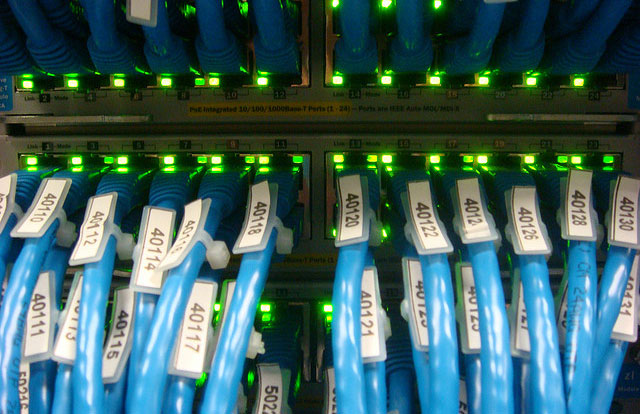
    How could something as boring as a switch change the world? It helps to remember that the Internet is really just a giant computer network, billions of computers all connected to one another by lengths of wire and strands of glass fibre. And wherever these wires and fibres meet, there are switches.

    Like electronic traffic lights, switches direct the flow of data across the Internet. They make sure that the photo you’re downloading reaches your computer (or phone) and doesn’t just disappear into the aether or appear on someone else’s computer instead.

    Compared to the computers they connect, switches have always been fairly dumb. Little more than glorified plumbing, they are necessary but not very sexy — until now. Facebook’s new platform transforms switches from traffic lights into traffic cops, making them nearly as intelligent as the computers.

    This intelligence is incredibly useful because it allows those computers to concentrate on their core functions rather than spending energy directing traffic. This makes the entire network more robust and efficient, because the switches can automatically and intelligently react to changes on the network — a large spike in traffic, for instance — rather than relying on the computers to do so.

    True to its frat boy roots Facebook has named the project “6-pack”. Other hardware projects are named things like “Group Hug”. And switches are only part of the equation — Facebook has also designed its own servers, racks and power supplies.

    But why would Facebook go to all this trouble to mess around with the plumbing of the Internet? Simple: commercially available switches are not good enough. When more than a billion users log on to your service every day, your data centre geeks quickly learn more about networking than virtually anyone else on the planet, including the people who normally design switches.

    Commercial switches have another huge drawback for Facebook: they are closed-source. In other words, the companies that build them own the software that runs them, and they don’t want anyone to mess with it. This reduces Facebook’s ability to customise and control their behaviour, and it explains why Facebook has opted for an open-source model.

    Facebook isn’t the only (or even the first) Internet company to build their own hardware. Google has been doing so right from the start in the 1990s, as has Amazon. The size and scale of their needs is not something the traditional hardware makers have ever been able to comprehend or design for.

    As a result, both Google and Amazon have hundreds of patents on the custom designed hardware they use in their massive server farms. But Facebook has taken a different route — instead of jealously guarding its innovations, it is giving them away for free.

    In 2011, Facebook founded the Open Compute Project, with the aim of sharing its knowledge about running huge data centres with other companies and thus “maximising innovation and reducing operational complexity in the scalable computing space”.

    You might question Facebook’s altruism here. It wants data centres that are cheaper to run because it has so many servers that even a 1% saving amounts to millions of dollars. For instance, the data centre it uses to test these innovations already uses 38% less energy than its other facilities. Facebook knows that by sharing the information with other engineers it is more likely to improve its designs faster.
    data-centre-640

    But whatever Facebook’s underlying motives, the Open Compute Project can only be good for the whole planet in the long run. By some estimates, the Internet already consumes more than 2% of the world’s electricity. Within a couple of decades it could be more like 10%. When you’re dealing with tens of billions of switches and computers, every tiny efficiency has huge ramifications.

    There’s only one group of people who will not benefit from this burst of innovation — traditional switch manufacturers. Innovations like 6-pack make their products obsolete. Because Facebook does not actually care about the networking market — it’s merely a means to an end — it drives down the prices while ramping up innovation.

    As such Facebook joins a long line of corporate giants which, almost accidentally, improved the world on the way to their main goals. Henry Ford invented the moving assembly line, and ushered in the age of mass production while simultaneously doubling his workers’ wages and creating a new middle class.

    Ford was not a nice guy — in fact, he was a bigot and a tyrant. All he really wanted was to make his cars better and faster, even if it meant paying people more. The good things that came of that urge were happy accidents, not intentional acts of largesse.

    Like Ford Motor Corporation, companies like Facebook, Google and Apple are now so large that they end up changing the industries around them — often by accident. But while some of these changes are painful or even harmful, many are positive. In a couple of decades Facebook may be a distant memory, but its switches will still be powering the Internet.



    6-pack Alistair Fairweather Apple Facebook Ford Google Open Compute Project
    Subscribe to TechCentral Subscribe to TechCentral
    Share. Facebook Twitter LinkedIn WhatsApp Telegram Email Copy Link
    Previous ArticleSignal jamming: Icasa ‘obliged’ to investigate
    Next Article Kingsman: licence to mock

    Related Posts

    What South Africans searched for most in 2025

    What South Africans searched for most in 2025, according to Google

    4 December 2025
    Samsung goes trifold while Apple folds its arms

    Samsung goes trifold while Apple folds its arms

    2 December 2025
    Samsung's first trifold smartphone is here

    Samsung’s first trifold smartphone is here

    2 December 2025
    Company News
    AI is not a technology problem - iqbusiness

    AI is not a technology problem – iqbusiness

    5 December 2025
    Telcos are sitting on a data gold mine - but few know what do with it - Phillip du Plessis

    Telcos are sitting on a data gold mine – but few know what do with it

    4 December 2025
    Unlock smarter computing with your surface Copilot+ PC

    Unlock smarter computing with your Surface Copilot+ PC

    4 December 2025
    Opinion
    Your data, your hardware: the DIY AI revolution is coming - Duncan McLeod

    Your data, your hardware: the DIY AI revolution is coming

    20 November 2025
    Zero Carbon Charge founder Joubert Roux

    The energy revolution South Africa can’t afford to miss

    20 November 2025
    It's time for a new approach to government IT spend in South Africa - Richard Firth

    It’s time for a new approach to government IT spend in South Africa

    19 November 2025

    Subscribe to Updates

    Get the best South African technology news and analysis delivered to your e-mail inbox every morning.

    Latest Posts
    Big Microsoft 365 price increases coming next year

    Big Microsoft price increases coming next year

    5 December 2025
    AI is not a technology problem - iqbusiness

    AI is not a technology problem – iqbusiness

    5 December 2025
    Vodacom to take control of Safaricom in R36-billion deal - Shameel Joosub

    Vodacom to take control of Safaricom in R36-billion deal

    4 December 2025
    Black Friday goes digital in South Africa as online spending surges to record high

    Black Friday goes digital in South Africa as online spending surges to record high

    4 December 2025
    © 2009 - 2025 NewsCentral Media
    • Cookie policy (ZA)
    • TechCentral – privacy and Popia

    Type above and press Enter to search. Press Esc to cancel.

    Manage consent

    TechCentral uses cookies to enhance its offerings. Consenting to these technologies allows us to serve you better. Not consenting or withdrawing consent may adversely affect certain features and functions of the website.

    Functional Always active
    The technical storage or access is strictly necessary for the legitimate purpose of enabling the use of a specific service explicitly requested by the subscriber or user, or for the sole purpose of carrying out the transmission of a communication over an electronic communications network.
    Preferences
    The technical storage or access is necessary for the legitimate purpose of storing preferences that are not requested by the subscriber or user.
    Statistics
    The technical storage or access that is used exclusively for statistical purposes. The technical storage or access that is used exclusively for anonymous statistical purposes. Without a subpoena, voluntary compliance on the part of your Internet Service Provider, or additional records from a third party, information stored or retrieved for this purpose alone cannot usually be used to identify you.
    Marketing
    The technical storage or access is required to create user profiles to send advertising, or to track the user on a website or across several websites for similar marketing purposes.
    • Manage options
    • Manage services
    • Manage {vendor_count} vendors
    • Read more about these purposes
    View preferences
    • {title}
    • {title}
    • {title}