

Close Menu
TechCentralTechCentral

    Subscribe to the newsletter

    Get the best South African technology news and analysis delivered to your e-mail inbox every morning.

    Facebook X (Twitter) YouTube LinkedIn
    WhatsApp Facebook X (Twitter) LinkedIn YouTube
    TechCentralTechCentral
    • News
      Telkom to hike mobile and fixed tariffs from 1 April - Lunga Siyo

      Telkom to hike mobile and fixed tariffs from 1 April

      6 March 2026
      GSMA warns geopolitics could split global mobile standards - Ralph Mupita

      GSMA warns geopolitics could split global mobile standards

      6 March 2026
      iStore prices MacBook Neo at R11 999 in South Africa

      iStore prices MacBook Neo at R11 999 in South Africa

      6 March 2026
      Meta to allow rival AI chatbots on WhatsApp amid EU pressure

      Meta to allow rival AI chatbots on WhatsApp amid EU pressure

      6 March 2026
      MultiChoice pulls the plug on Showmax

      MultiChoice pulls the plug on Showmax

      5 March 2026
    • World
      OpenAI secures $840-billion valuation in latest funding round

      OpenAI secures $840-billion valuation in latest funding round

      1 March 2026

      Stripe mulling bid for PayPal: report

      25 February 2026
      Xbox chief Phil Spencer retires from Microsoft

      Xbox chief Phil Spencer retires from Microsoft

      22 February 2026
      Prominent Southern African journalist targeted with Predator spyware

      Prominent Southern African journalist targeted with Predator spyware

      18 February 2026
      More drama in Warner Bros tug of war

      More drama in Warner Bros tug of war

      17 February 2026
    • In-depth
      The last generation of coders

      The last generation of coders

      18 February 2026
      Sentech is in dire straits

      Sentech is in dire straits

      10 February 2026
      How liberalisation is rewiring South Africa's power sector

      How liberalisation is rewiring South Africa’s power sector

      21 January 2026
      The top-performing South African tech shares of 2025

      The top-performing South African tech shares of 2025

      12 January 2026
      Digital authoritarianism grows as African states normalise internet blackouts

      Digital authoritarianism grows as African states normalise internet blackouts

      19 December 2025
    • TCS
      TCS+ | Bolt ups the ante on platform safety - Simo Kalajdzic

      TCS+ | Bolt ups the ante on platform safety

      4 March 2026
      Watts & Wheels S1E4: 'We drive an electric Uber'

      Watts & Wheels S1E4: ‘We drive an electric Uber’

      10 February 2026
      TCS+ | How Cloud On Demand is helping SA businesses succeed in the cloud - Xhenia Rhode, Dion Kalicharan

      TCS+ | Cloud On Demand and Consnet: inside a real-world AWS partner success story

      30 January 2026
      Watts & Wheels S1E4: 'We drive an electric Uber'

      Watts & Wheels S1E3: ‘BYD’s Corolla Cross challenger’

      30 January 2026
      Watts & Wheels S1E4: 'We drive an electric Uber'

      Watts & Wheels S1E2: ‘China attacks, BMW digs in, Toyota’s sublime supercar’

      23 January 2026
    • Opinion
      The AI fraud crisis your bank is not ready for - Andries Maritz

      The AI fraud crisis your bank is not ready for

      18 February 2026
      A million reasons monopolies don't work - Duncan McLeod

      A million reasons monopolies don’t work

      10 February 2026
      The author, Business Leadership South Africa CEO Busi Mavuso

      Eskom unbundling U-turn threatens to undo hard-won electricity gains

      9 February 2026
      South Africa's skills advantage is being overlooked at home - Richard Firth

      South Africa’s skills advantage is being overlooked at home

      29 January 2026
      Why Elon Musk's Starlink is a 'hard no' for me - Songezo Zibi

      Why Elon Musk’s Starlink is a ‘hard no’ for me

      26 January 2026
    • Company Hubs
      • 1Stream
      • Africa Data Centres
      • AfriGIS
      • Altron Digital Business
      • Altron Document Solutions
      • Altron Group
      • Arctic Wolf
      • AvertITD
      • Braintree
      • CallMiner
      • CambriLearn
      • CYBER1 Solutions
      • Digicloud Africa
      • Digimune
      • Domains.co.za
      • ESET
      • Euphoria Telecom
      • Incredible Business
      • iONLINE
      • IQbusiness
      • Iris Network Systems
      • LSD Open
      • Mitel
      • NEC XON
      • Netstar
      • Network Platforms
      • Next DLP
      • Ovations
      • Paracon
      • Paratus
      • Q-KON
      • SevenC
      • SkyWire
      • Solid8 Technologies
      • Telit Cinterion
      • Tenable
      • Vertiv
      • Videri Digital
      • Vodacom Business
      • Wipro
      • Workday
      • XLink
    • Sections
      • AI and machine learning
      • Banking
      • Broadcasting and Media
      • Cloud services
      • Contact centres and CX
      • Cryptocurrencies
      • Education and skills
      • Electronics and hardware
      • Energy and sustainability
      • Enterprise software
      • Financial services
      • HealthTech
      • Information security
      • Internet and connectivity
      • Internet of Things
      • Investment
      • IT services
      • Lifestyle
      • Motoring
      • Policy and regulation
      • Public sector
      • Retail and e-commerce
      • Satellite communications
      • Science
      • SMEs and start-ups
      • Social media
      • Talent and leadership
      • Telecoms
    • Events
    • Advertise
    TechCentralTechCentral
    Home » Sections » Energy and sustainability » The huge promise of floating solar plants

    The huge promise of floating solar plants

    Floating solar systems produce more electricity than land-based solar panels and may last longer, too.
    By The Conversation22 June 2024
    Twitter LinkedIn Facebook WhatsApp Email Telegram Copy Link
    News Alerts
    WhatsApp

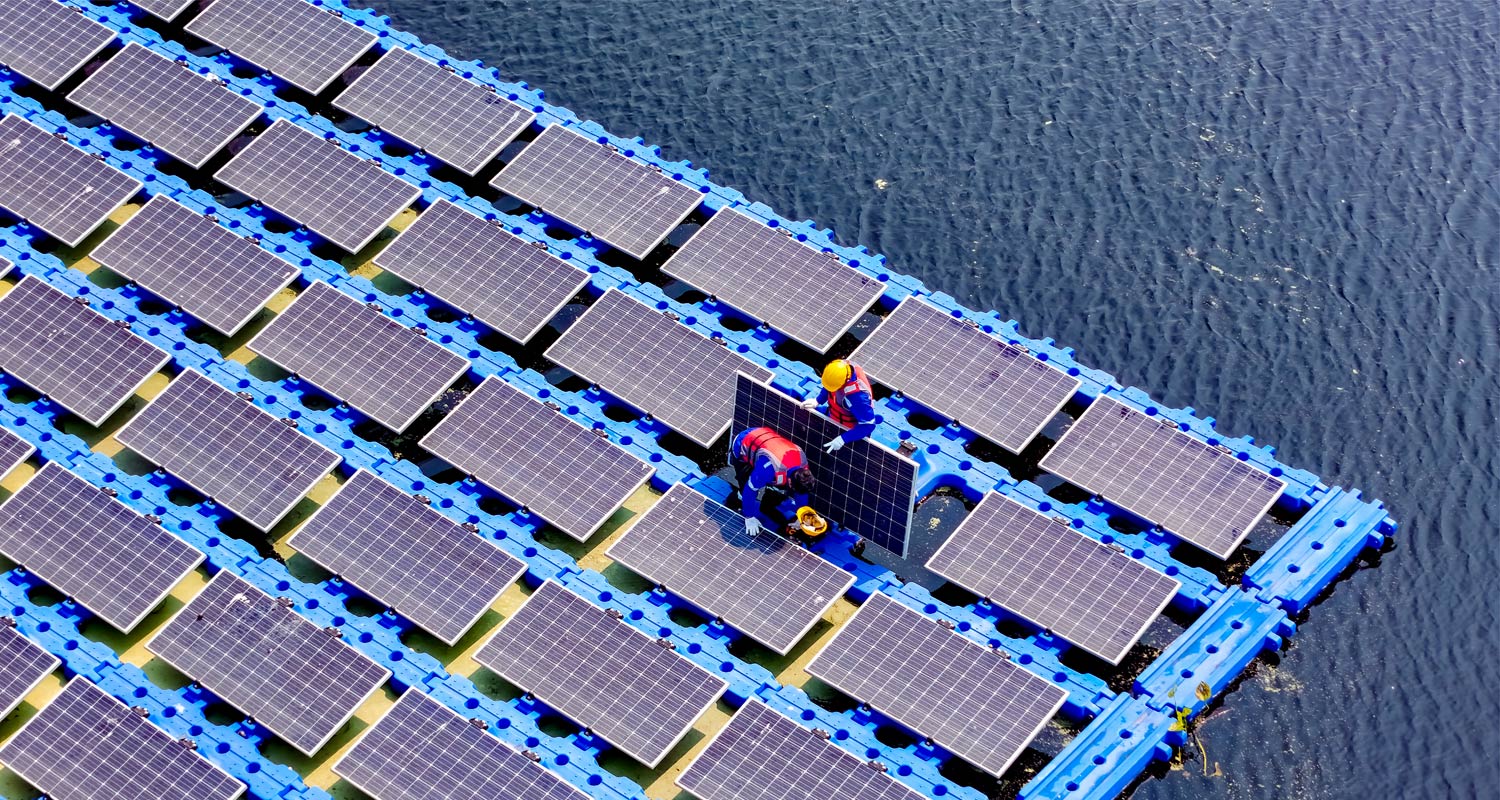
    The huge promise of floating solar plantsNew research has found that several countries could meet all their energy needs from solar panel systems floating on lakes and dams. Climate, water and energy environmental scientists R Iestyn Woolway and Alona Armstrong analysed how much energy could be produced by floating solar panels on just 10% of the water surface of one million bodies of water globally. They found that Ethiopia and Rwanda could generate more energy than their current national energy need from the floating energy systems alone.

    How do floating solar panels work?

    Also known as floating photovoltaic systems, these are solar panels mounted on structures that float on water bodies like lakes, reservoirs and ponds.

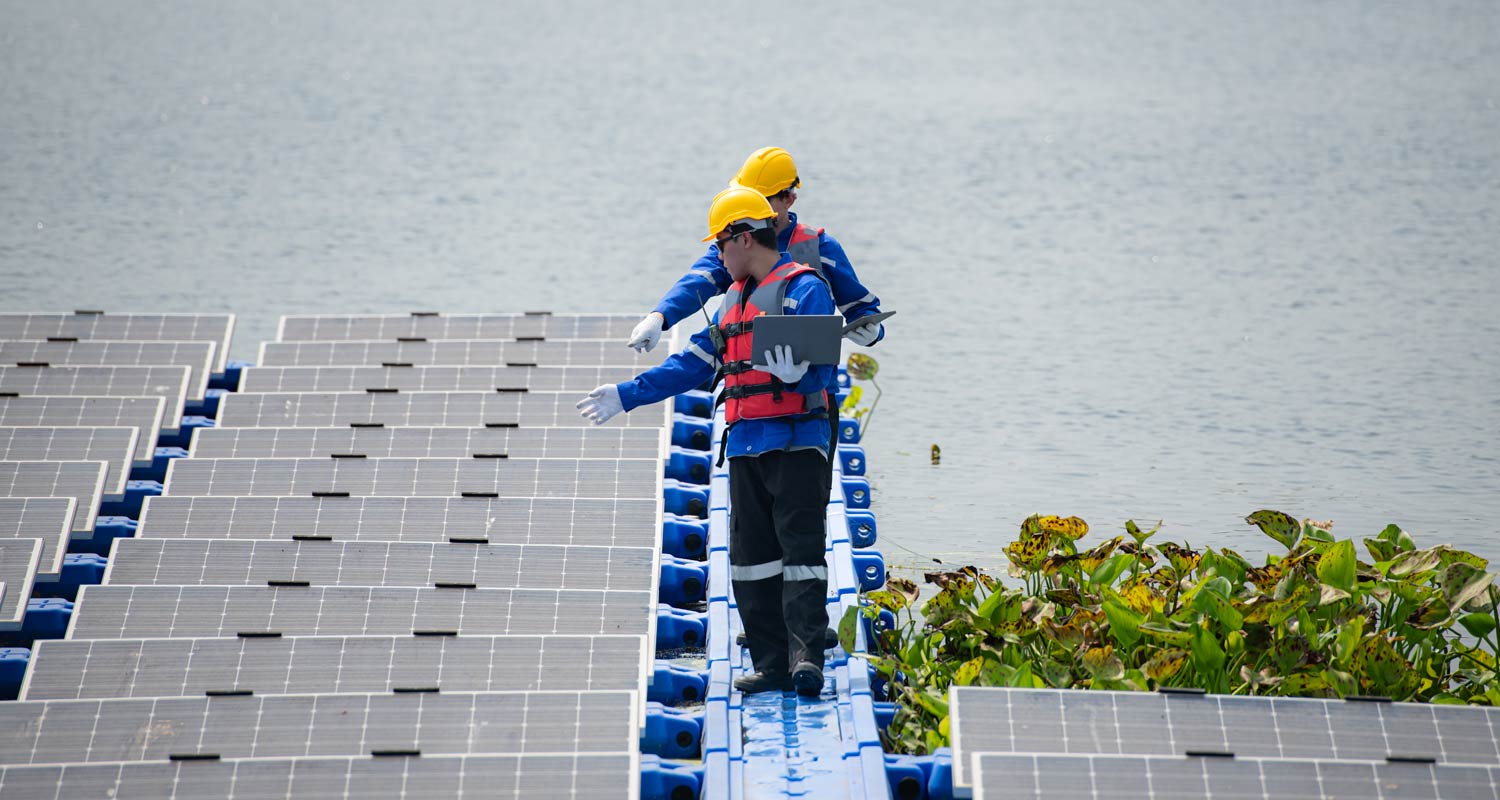
    Floating solar panel systems use pontoons or rafts to keep the solar panels afloat. These floating structures are anchored or tethered to the edges of the water bodies to ensure stability. The systems can be designed to withstand varying water levels and weather conditions, including storms.

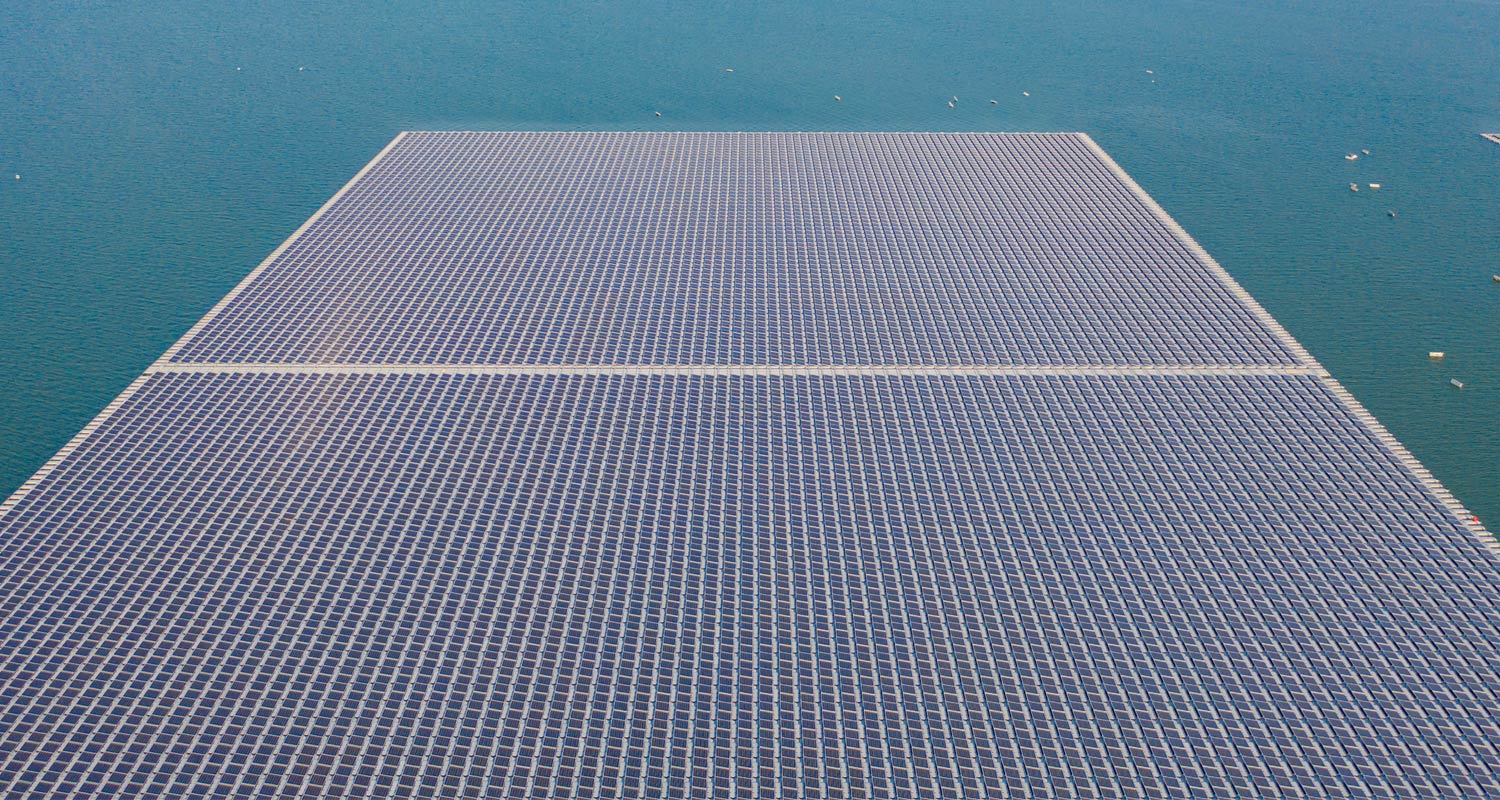
    About five million square kilometres of Earth’s surface area (or 3.7% of the Earth’s surface that isn’t covered with ice) is taken up by lakes and reservoirs. Solar panel systems could be floated on many of these surfaces.

    Ghana recently installed the largest floating solar panel system in Africa on one of its reservoirs

    Just like solar panels mounted on buildings or the ground, the floating systems convert sunlight into electricity using photovoltaic cells. The generated electricity is then transmitted to the grid or used locally. Being on water helps keep the floating solar panels cool, and they produce more electricity than land-based solar panels and may last longer.

    Floating solar panel systems are used by countries that do not have a lot of land available but do have large and numerous water bodies. Ghana recently installed the largest floating solar panel system in Africa on one of its reservoirs.

    We used a tool called the Global Solar Energy Estimator to help us calculate how much energy solar panels could generate in over a million water bodies around the world. We gathered data about sunlight and air temperature and specific details about the solar panels. Using satellite images of the water bodies, we worked out which parts of the water could be covered by solar panels.
    We did not include water bodies that dry up, freeze over for more than six months a year, are situated within a protected area, and are more than 10km from a population centre. We also limited the size of the floating solar systems, taking potential technical and environmental constraints into account.

    What are the advantages of floating solar systems for African countries?

    Our research found that Rwanda and Ethiopia could generate far more energy from these systems than they currently use. Rwanda could generate 237% of its current total energy needs, and Ethiopia 129%. Chad could generate 73% of its current energy need from floating solar systems alone. Mali, Madagascar, Malawi, Uganda, the Democratic Republic of Congo and Togo could generate between 15% and 58% of their total energy demand from floating solar panels.

    We also found that there are 1 977 water bodies across Africa that could be used to float solar panel systems. This would spare the land that would otherwise be needed for land-based solar panels.

    Floating solar panel systems can be set up in remote areas that have never had a supply of electricity before

    Floating solar panels can also help reduce water evaporation from lakes and reservoirs. This would benefit water scarce countries in Africa.

    Another benefit is that the panels shade the water, and this can reduce harmful algae blooms – mats of toxic bacteria – growing on the surface of the water, destroying water quality and aquatic life. This can improve the health of water bodies and reduce water treatment costs.

    Floating solar panel systems can also be set up in rural, remote or off-grid areas that have never had a regular supply of electricity before.

    What are the hurdles?

    African countries will need to address these problems if they want to make full use of floating solar panel systems:

    • Grid connectivity and infrastructure: Many regions in sub-Saharan Africa have limited or unreliable grid connections. The grids need to be improved if these countries are to make full use of the electricity generated by floating solar panel systems. If expanding the centralised grid is too expensive, off-grid solutions such as mini-grids near the water bodies need to be developed.
    • Regulatory and policy support: Governments will need to encourage the development of floating solar panel projects, including incentives, subsidies and streamlined permitting processes. They’ll also need to set up strict regulations, including environmental and safety standards.
    • Environmental considerations: Thorough environmental impact assessments will need to be carried out to avoid any potential negative effects on aquatic ecosystems and water quality.
    • Social considerations: Engaging with local communities to gain their support is very important. It is critical to take into account how communities use the water body. The aim should be to ensure that everyone benefits from the energy generated in an equitable way, and that “green grabbing” – where nature is sold to set up green energy systems, disadvantaging indigenous people – is avoided.

    What else did you learn from your research?

    Many countries have large water bodies, a lot of sun and serious problems with water evaporation and algae blooms. Floating solar panel systems can address these environmental problems and create low carbon energy at the same time.

    The potential benefits are promising. But more research is needed to understand their environmental impacts and optimise their design and implementation. This includes studying the long-term effects on aquatic ecosystems and water management practices.
    Why is solar so important?

    Solar energy generation produces minimal greenhouse gases compared to conventional energy sources like coal and natural gas. This helps combat climate change and reduce air pollution. By using solar power, countries can reduce their reliance on imported fossil fuels, and enhance energy security and economic stability.

    Solar energy has also become more and more affordable. The world is aiming to achieve Net Zero – an end to all carbon gas emissions – by 2050. Floating solar panel systems can contribute to reaching this goal.The Conversation

    • The authors are: R Iestyn Woolway, reader and NERC independent research fellow, Bangor University, and Alona Armstrong, professor of energy & environmental sciences, Lancaster University
    • This article is republished from The Conversation under a Creative Commons licence

    Read next: Lake Kariba floating solar project to kick off

    Follow TechCentral on Google News Add TechCentral as your preferred source on Google


    Alona Armstrong R Iestyn Woolway
    WhatsApp YouTube
    Share. Facebook Twitter LinkedIn WhatsApp Telegram Email Copy Link
    Previous ArticleEU users won’t get Apple Intelligence features – for now
    Next Article The virus Elon Musk is exporting back to South Africa
    Company News
    'You'll want a piece of it': Citroën teases Basalt SUV Coupé

    ‘You’ll want a piece of it’: Citroën teases Basalt SUV Coupé

    6 March 2026
    From Linux chaos to AI precision: the maturation of LSD Open - Neil White

    From Linux chaos to AI precision: the maturation of LSD Open

    5 March 2026
    The voice gap holding back South Africa's Microsoft Teams users - Rob Lith Telviva

    The voice gap holding back South Africa’s Microsoft Teams users

    5 March 2026
    Opinion
    The AI fraud crisis your bank is not ready for - Andries Maritz

    The AI fraud crisis your bank is not ready for

    18 February 2026
    A million reasons monopolies don't work - Duncan McLeod

    A million reasons monopolies don’t work

    10 February 2026
    The author, Business Leadership South Africa CEO Busi Mavuso

    Eskom unbundling U-turn threatens to undo hard-won electricity gains

    9 February 2026

    Subscribe to Updates

    Get the best South African technology news and analysis delivered to your e-mail inbox every morning.

    Latest Posts
    Telkom to hike mobile and fixed tariffs from 1 April - Lunga Siyo

    Telkom to hike mobile and fixed tariffs from 1 April

    6 March 2026
    GSMA warns geopolitics could split global mobile standards - Ralph Mupita

    GSMA warns geopolitics could split global mobile standards

    6 March 2026
    iStore prices MacBook Neo at R11 999 in South Africa

    iStore prices MacBook Neo at R11 999 in South Africa

    6 March 2026
    'You'll want a piece of it': Citroën teases Basalt SUV Coupé

    ‘You’ll want a piece of it’: Citroën teases Basalt SUV Coupé

    6 March 2026
    © 2009 - 2026 NewsCentral Media
    • Cookie policy (ZA)
    • TechCentral – privacy and Popia

    Type above and press Enter to search. Press Esc to cancel.

    Manage consent

    TechCentral uses cookies to enhance its offerings. Consenting to these technologies allows us to serve you better. Not consenting or withdrawing consent may adversely affect certain features and functions of the website.

    Functional Always active
    The technical storage or access is strictly necessary for the legitimate purpose of enabling the use of a specific service explicitly requested by the subscriber or user, or for the sole purpose of carrying out the transmission of a communication over an electronic communications network.
    Preferences
    The technical storage or access is necessary for the legitimate purpose of storing preferences that are not requested by the subscriber or user.
    Statistics
    The technical storage or access that is used exclusively for statistical purposes. The technical storage or access that is used exclusively for anonymous statistical purposes. Without a subpoena, voluntary compliance on the part of your Internet Service Provider, or additional records from a third party, information stored or retrieved for this purpose alone cannot usually be used to identify you.
    Marketing
    The technical storage or access is required to create user profiles to send advertising, or to track the user on a website or across several websites for similar marketing purposes.
    • Manage options
    • Manage services
    • Manage {vendor_count} vendors
    • Read more about these purposes
    View preferences
    • {title}
    • {title}
    • {title}