


Close Menu
TechCentralTechCentral

    Subscribe to the newsletter

    Get the best South African technology news and analysis delivered to your e-mail inbox every morning.

    Facebook X (Twitter) YouTube LinkedIn
    WhatsApp Facebook X (Twitter) LinkedIn YouTube
    TechCentralTechCentral
    • News
      Vuyani Jarana: Mobile coverage masks a deeper broadband failure

      Vuyani Jarana: Mobile coverage masks a deeper broadband failure

      30 January 2026
      SABC Plus to flight Microsoft AI training videos

      SABC Plus to flight Microsoft AI training videos

      30 January 2026
      Fibre ducts

      Fibre industry consolidation in KZN

      30 January 2026
      Watts & Wheels S1E3: 'BYD's Corolla Cross challenger'

      Watts & Wheels S1E3: ‘BYD’s Corolla Cross challenger’

      30 January 2026
      What ordinary South Africans really think of AI

      What ordinary South Africans really think of AI

      30 January 2026
    • World
      Apple acquires audio AI start-up Q.ai

      Apple acquires audio AI start-up Q.ai

      30 January 2026
      SpaceX IPO may be largest in history

      SpaceX IPO may be largest in history

      28 January 2026
      Nvidia throws AI at the weather

      Nvidia throws AI at weather forecasting

      27 January 2026
      Debate erupts over value of in-flight Wi-Fi

      Debate erupts over value of in-flight Wi-Fi

      26 January 2026
      Intel takes another hit - Intel CEO Lip-Bu Tan. Laure Andrillon/Reuters

      Intel takes another hit

      23 January 2026
    • In-depth
      How liberalisation is rewiring South Africa's power sector

      How liberalisation is rewiring South Africa’s power sector

      21 January 2026
      The top-performing South African tech shares of 2025

      The top-performing South African tech shares of 2025

      12 January 2026
      Digital authoritarianism grows as African states normalise internet blackouts

      Digital authoritarianism grows as African states normalise internet blackouts

      19 December 2025
      TechCentral's South African Newsmakers of 2025

      TechCentral’s South African Newsmakers of 2025

      18 December 2025
      Black Friday goes digital in South Africa as online spending surges to record high

      Black Friday goes digital in South Africa as online spending surges to record high

      4 December 2025
    • TCS
      TCS+ | How Cloud On Demand is helping SA businesses succeed in the cloud - Xhenia Rhode, Dion Kalicharan

      TCS+ | Cloud On Demand and Consnet: inside a real-world AWS partner success story

      30 January 2026
      Watts & Wheels S1E3: 'BYD's Corolla Cross challenger'

      Watts & Wheels S1E2: ‘China attacks, BMW digs in, Toyota’s sublime supercar’

      23 January 2026

      TCS+ | Why cybersecurity is becoming a competitive advantage for SA businesses

      20 January 2026
      Watts & Wheels S1E3: 'BYD's Corolla Cross challenger'

      Watts & Wheels: S1E1 – ‘William, Prince of Wheels’

      8 January 2026
      TCS+ | Africa's digital transformation - unlocking AI through cloud and culture - Cliff de Wit Accelera Digital Group

      TCS+ | Cloud without culture won’t deliver AI: Accelera’s Cliff de Wit

      12 December 2025
    • Opinion
      South Africa's skills advantage is being overlooked at home - Richard Firth

      South Africa’s skills advantage is being overlooked at home

      29 January 2026
      Why Elon Musk's Starlink is a 'hard no' for me - Songezo Zibi

      Why Elon Musk’s Starlink is a ‘hard no’ for me

      26 January 2026
      South Africa's new fibre broadband battle - Duncan McLeod

      South Africa’s new fibre broadband battle

      20 January 2026
      AI moves from pilots to production in South African companies - Nazia Pillay SAP

      AI moves from pilots to production in South African companies

      20 January 2026
      South Africa's new fibre broadband battle - Duncan McLeod

      ANC’s attack on Solly Malatsi shows how BEE dogma trumps economic reality

      14 December 2025
    • Company Hubs
      • Africa Data Centres
      • AfriGIS
      • Altron Digital Business
      • Altron Document Solutions
      • Altron Group
      • Arctic Wolf
      • AvertITD
      • Braintree
      • CallMiner
      • CambriLearn
      • CYBER1 Solutions
      • Digicloud Africa
      • Digimune
      • Domains.co.za
      • ESET
      • Euphoria Telecom
      • Incredible Business
      • iONLINE
      • IQbusiness
      • Iris Network Systems
      • LSD Open
      • NEC XON
      • Netstar
      • Network Platforms
      • Next DLP
      • Ovations
      • Paracon
      • Paratus
      • Q-KON
      • SevenC
      • SkyWire
      • Solid8 Technologies
      • Telit Cinterion
      • Tenable
      • Vertiv
      • Videri Digital
      • Vodacom Business
      • Wipro
      • Workday
      • XLink
    • Sections
      • AI and machine learning
      • Banking
      • Broadcasting and Media
      • Cloud services
      • Contact centres and CX
      • Cryptocurrencies
      • Education and skills
      • Electronics and hardware
      • Energy and sustainability
      • Enterprise software
      • Financial services
      • Information security
      • Internet and connectivity
      • Internet of Things
      • Investment
      • IT services
      • Lifestyle
      • Motoring
      • Public sector
      • Retail and e-commerce
      • Satellite communications
      • Science
      • SMEs and start-ups
      • Social media
      • Talent and leadership
      • Telecoms
    • Events
    • Advertise
    TechCentralTechCentral
    Home » In-depth » Untangling SA’s big open-access debate

    Untangling SA’s big open-access debate

    By Editor24 May 2016
    Twitter LinkedIn Facebook WhatsApp Email Telegram Copy Link
    News Alerts
    WhatsApp

    ryan-hawthorne-180Competition has broken out among telecommunications operators in South Africa as a result of an open-access policy intervention, being the prices which operators pay to access customers on other networks: the call termination rate.

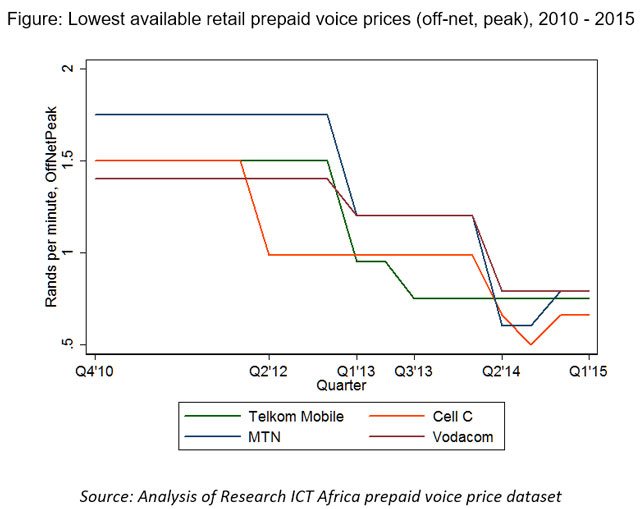
    Prepaid mobile voice prices, for example, have declined from R1,50/minute (and more) in 2010 to between 60c and 80c/minute in 2015, according to Research ICT Africa data (see figure below).

    This is a consequence of communications regulator Icasa’s call termination rate intervention that began in 2010, which saw peak call termination rates drop for incumbents MTN and Vodacom from R1,25/minute in 2009 to 16c/minute in 2015. The question for South Africa is therefore not whether open-access policies work, it is how best to go about implementing them.

    genna-robb-180According to recent Centre for Competition, Regulation and Economic Development (CCRED) research, to be debated this week at a public platform, the call termination open-access intervention by Icasa also played an important role in Cell C’s recent growth and market success.

    It is important to note that Cell C and Telkom Mobile have played an important role in driving down retail prices. Cell C, for example, was the first to lower prices, in the second quarter 2012, followed later and to a lesser extent by MTN and Vodacom. Telkom Mobile’s later price reductions, particularly in 2013, also appear to have had a significant effect.

    In respect of fixed lines, network sharing has also been an important source of success. The same CCRED research provides details on how Dark Fibre Africa’s open-access network has seen considerable growth. Other examples are Vumatel and Fibrehoods’ open-access networks.

    A key question is the extent to which these innovative fibre-optic broadband providers are going to be able to extend their networks beyond high-income communities. An exciting possible development in this area is the use of Telkom’s Openserve wholesale offering, which Vumatel is reportedly in talks about.
    prepaid-tariffs-table-640

    Spectrum open-access network

    The government’s view on open access in the mobile sector seems to be that some sort of wholesale spectrum and infrastructure entity would provide access on a wholesale basis, which MTN has raised concerns about. This seems to be based on similar examples in Rwanda, Mexico and Russia. Leaving aside any criticisms of those policies in those countries, there are few reasons to solve South Africa’s competition problems through a dramatic, untested intervention of this nature. Rather, South Africa should apply tried and tested policy measures to fix South Africa’s competition problems.

    In the first instance, it is unlikely that Telkom Mobile and Cell C will roll out full coverage networks, at least not to the same extent that MTN and Vodacom have. This is because of the significant infrastructure costs involved, and the trend in various countries towards infrastructure sharing and network consolidation.

    Rather than build a fifth network, the government ought to ensure that access to MTN and Vodacom’s networks are provided on reasonable terms. This includes access to site infrastructure, national roaming services and access to mobile virtual network operator providers.

    While the mobile operators (including MTN and Vodacom) already share their sites to some degree, Icasa could do more to ensure that such site sharing is on reasonable terms.

    Rather than build a fifth network, the government ought to ensure that access to MTN and Vodacom’s networks are provided on reasonable terms, the writers argue
    Rather than build a fifth network, the government ought to ensure that access to MTN and Vodacom’s networks are provided on reasonable terms, the writers argue

    Furthermore, while Telkom Mobile roams on the MTN network and Cell C roams on Vodacom’s network, care should be taken to ensure that these roaming arrangements are not impeding the growth of the challenger networks.

    MTN and Vodacom have, historically at least, been reluctant to offer MVNO services on their network. MTN’s recent announcement to allow MVNOs is encouraging. Again, the terms of those arrangements should be assessed, and the government might consider a policy framework that imposes MVNO access on Vodacom.

    Rather than hoarding spectrum in a single government entity, spectrum might be assigned to new entrants through Icasa’s auction process.

    Smile, for example, has indicated that it would like to operate a wireless network in South Africa. A small proportion of valuable frequency division duplex, and all of the time division duplex, in the currently available 2,3GHz and 2,6GHz bands, and the digital dividend bands at 700MHz and 800MHz, might be reserved for such new entrants.

    Similarly, there are a number of small, community-based wireless network operators, particularly in smaller towns and cities, that would benefit from licence-free spectrum, particularly using TV white spaces, which Icasa has been considering making rules for, for some time.

    There are therefore a range of traditional, relatively uncontroversial policies that have been implemented in many countries that would improve competition in the mobile sector, without resorting to an expensive wholesale network, which has little prospect for commercial success.
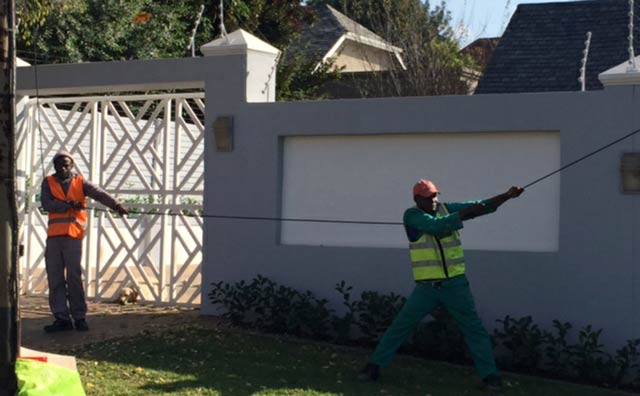
    Workers extending fibre in a Johannesburg suburb
    Workers extending fibre in a Johannesburg suburb

    Open-access fixed-line policies

    While the government has something of a plan for mobile networks, very little is being done in respect of fixed-line networks.
    Although Telkom’s Openserve initiative is welcome, it may not be enough to drive down costs, and ultimately prices, of fixed line networks.

    In more than 30 countries (developed and developing), open-access network policies, in the form of local-loop unbundling (LLU), have been implemented. While the weaknesses of copper are regularly cited as a reason for not implementing LLU in South Africa, there are a variety of other forms of fixed line unbundling that form part of LLU and that are of significant importance to new fibre-optic broadband providers.

    These include access to Telkom’s ducts and poles, at reasonable prices, an idea that has been implemented by Ofcom in the UK, for example. These would significantly lower the costs of fibre optic deployment in South Africa.

    Rapid deployment rules and reducing the costs of approvals

    A further important barrier to entry identified by the CCRED research is in respect of approvals by various government entities required to roll out network infrastructure, both mobile and fixed. Delays in approvals mean delays in the expansion of particularly smaller networks, which entrenches the market power of incumbents.

    The government’s draft policy in this regard, although welcome, ought to be finalised if the benefits of competition are to be realised among operators in South Africa.

    Conclusion

    In summary, open-access policies in South Africa have worked very well for consumers in the past. The call termination rate intervention resulted in dramatically lower voice prices for consumers, and aided the expansion of Cell C into the market.

    The government’s plans for an untested open-access mobile infrastructure-based operator, however, need to be compared with tried and tested open-access policies implemented in many countries, including rules for roaming, MVNO access and site access together with better enforcement powers and greater independence for Icasa.

    Open-access policies should also be considered for Telkom’s Openserve network.

    Finally, the government should prioritise finalising rules that would allow for the rapid deployment of networks, which benefit particularly entry by challenger operators, and therefore consumers through lower prices.

    • Ryan Hawthorne and Genna Robb are both senior research fellows at the Centre for Competition, Regulation and Economic Development at the University of Johannesburg. Robb is also the manager of competition economics at DNA Economics and Hawthorne is an economist at Acacia Economics



    CCRED Cell C Dark Fibre Africa DFA Fibrehoods Genna Robb Icasa MTN Openserve Research ICT Africa Ryan Hawthorne Telkom Vodacom Vumatel
    WhatsApp YouTube Follow on Google News Add as preferred source on Google
    Share. Facebook Twitter LinkedIn WhatsApp Telegram Email Copy Link
    Previous ArticleWindows is crashing on mobile
    Next Article MPs pay tribute to Dene Smuts

    Related Posts

    Vuyani Jarana: Mobile coverage masks a deeper broadband failure

    Vuyani Jarana: Mobile coverage masks a deeper broadband failure

    30 January 2026
    Starlink hype vs reality in South Africa

    Starlink hype vs reality in South Africa

    26 January 2026
    Mobile operators face tougher rules on data and billing

    Mobile operators face tougher rules on data and billing

    26 January 2026
    Company News
    Huawei turns 25 in South Africa, celebrates with major device discounts

    Huawei turns 25 in South Africa, celebrates with major device discounts

    30 January 2026
    Phishing has not disappeared, but it has grown up - KnowBe4

    Phishing has not disappeared, but it has grown up

    30 January 2026
    Smartphone affordability: South Africa's new economic divide - PayJoy

    Smartphone affordability: South Africa’s new economic divide

    29 January 2026
    Opinion
    South Africa's skills advantage is being overlooked at home - Richard Firth

    South Africa’s skills advantage is being overlooked at home

    29 January 2026
    Why Elon Musk's Starlink is a 'hard no' for me - Songezo Zibi

    Why Elon Musk’s Starlink is a ‘hard no’ for me

    26 January 2026
    South Africa's new fibre broadband battle - Duncan McLeod

    South Africa’s new fibre broadband battle

    20 January 2026

    Subscribe to Updates

    Get the best South African technology news and analysis delivered to your e-mail inbox every morning.

    Latest Posts
    Vuyani Jarana: Mobile coverage masks a deeper broadband failure

    Vuyani Jarana: Mobile coverage masks a deeper broadband failure

    30 January 2026
    TCS+ | How Cloud On Demand is helping SA businesses succeed in the cloud - Xhenia Rhode, Dion Kalicharan

    TCS+ | Cloud On Demand and Consnet: inside a real-world AWS partner success story

    30 January 2026
    Huawei turns 25 in South Africa, celebrates with major device discounts

    Huawei turns 25 in South Africa, celebrates with major device discounts

    30 January 2026
    SABC Plus to flight Microsoft AI training videos

    SABC Plus to flight Microsoft AI training videos

    30 January 2026
    © 2009 - 2026 NewsCentral Media
    • Cookie policy (ZA)
    • TechCentral – privacy and Popia

    Type above and press Enter to search. Press Esc to cancel.

    Manage consent

    TechCentral uses cookies to enhance its offerings. Consenting to these technologies allows us to serve you better. Not consenting or withdrawing consent may adversely affect certain features and functions of the website.

    Functional Always active
    The technical storage or access is strictly necessary for the legitimate purpose of enabling the use of a specific service explicitly requested by the subscriber or user, or for the sole purpose of carrying out the transmission of a communication over an electronic communications network.
    Preferences
    The technical storage or access is necessary for the legitimate purpose of storing preferences that are not requested by the subscriber or user.
    Statistics
    The technical storage or access that is used exclusively for statistical purposes. The technical storage or access that is used exclusively for anonymous statistical purposes. Without a subpoena, voluntary compliance on the part of your Internet Service Provider, or additional records from a third party, information stored or retrieved for this purpose alone cannot usually be used to identify you.
    Marketing
    The technical storage or access is required to create user profiles to send advertising, or to track the user on a website or across several websites for similar marketing purposes.
    • Manage options
    • Manage services
    • Manage {vendor_count} vendors
    • Read more about these purposes
    View preferences
    • {title}
    • {title}
    • {title}