Close Menu
TechCentralTechCentral

    Subscribe to the newsletter

    Get the best South African technology news and analysis delivered to your e-mail inbox every morning.

    Facebook X (Twitter) YouTube LinkedIn
    WhatsApp Facebook X (Twitter) LinkedIn YouTube
    TechCentralTechCentral
    • News
      Vumatel tops a million subscribers in South African broadband milestone - Dietlof Mare

      Vumatel tops a million subscribers in South African broadband milestone

      9 February 2026

      Washington takes on Beijing in race for Africa’s critical minerals

      9 February 2026
      Vodacom drops R5.6-billion for spectrum in key market

      Vodacom dropping R5.6-billion for spectrum in key market

      9 February 2026
      Nersa blunder triggers sharper electricity tariff increases

      Nersa blunder triggers sharper electricity tariff increases

      9 February 2026
      Eskom unbundling U-turn threatens to undo hard-won electricity gains

      Eskom unbundling U-turn threatens to undo hard-won electricity gains

      9 February 2026
    • World
      Musk hits brakes on Mars mission

      Musk hits brakes on Mars mission

      9 February 2026
      Crypto firm accidentally sends R700-billion in bitcoin to its users

      Crypto firm accidentally sends R700-billion in bitcoin to its users

      8 February 2026
      AI won't replace software, says Nvidia CEO amid market rout - Jensen Huang

      AI won’t replace software, says Nvidia CEO amid market rout

      4 February 2026
      Apple acquires audio AI start-up Q.ai

      Apple acquires audio AI start-up Q.ai

      30 January 2026
      SpaceX IPO may be largest in history

      SpaceX IPO may be largest in history

      28 January 2026
    • In-depth
      How liberalisation is rewiring South Africa's power sector

      How liberalisation is rewiring South Africa’s power sector

      21 January 2026
      The top-performing South African tech shares of 2025

      The top-performing South African tech shares of 2025

      12 January 2026
      Digital authoritarianism grows as African states normalise internet blackouts

      Digital authoritarianism grows as African states normalise internet blackouts

      19 December 2025
      TechCentral's South African Newsmakers of 2025

      TechCentral’s South African Newsmakers of 2025

      18 December 2025
      Black Friday goes digital in South Africa as online spending surges to record high

      Black Friday goes digital in South Africa as online spending surges to record high

      4 December 2025
    • TCS
      TCS+ | How Cloud On Demand is helping SA businesses succeed in the cloud - Xhenia Rhode, Dion Kalicharan

      TCS+ | Cloud On Demand and Consnet: inside a real-world AWS partner success story

      30 January 2026
      Watts & Wheels S1E3: 'BYD's Corolla Cross challenger'

      Watts & Wheels S1E3: ‘BYD’s Corolla Cross challenger’

      30 January 2026
      Watts & Wheels S1E3: 'BYD's Corolla Cross challenger'

      Watts & Wheels S1E2: ‘China attacks, BMW digs in, Toyota’s sublime supercar’

      23 January 2026

      TCS+ | Why cybersecurity is becoming a competitive advantage for SA businesses

      20 January 2026
      Watts & Wheels S1E3: 'BYD's Corolla Cross challenger'

      Watts & Wheels: S1E1 – ‘William, Prince of Wheels’

      8 January 2026
    • Opinion
      South Africa's skills advantage is being overlooked at home - Richard Firth

      South Africa’s skills advantage is being overlooked at home

      29 January 2026
      Why Elon Musk's Starlink is a 'hard no' for me - Songezo Zibi

      Why Elon Musk’s Starlink is a ‘hard no’ for me

      26 January 2026
      South Africa's new fibre broadband battle - Duncan McLeod

      South Africa’s new fibre broadband battle

      20 January 2026
      AI moves from pilots to production in South African companies - Nazia Pillay SAP

      AI moves from pilots to production in South African companies

      20 January 2026
      South Africa's new fibre broadband battle - Duncan McLeod

      ANC’s attack on Solly Malatsi shows how BEE dogma trumps economic reality

      14 December 2025
    • Company Hubs
      • Africa Data Centres
      • AfriGIS
      • Altron Digital Business
      • Altron Document Solutions
      • Altron Group
      • Arctic Wolf
      • AvertITD
      • Braintree
      • CallMiner
      • CambriLearn
      • CYBER1 Solutions
      • Digicloud Africa
      • Digimune
      • Domains.co.za
      • ESET
      • Euphoria Telecom
      • Incredible Business
      • iONLINE
      • IQbusiness
      • Iris Network Systems
      • LSD Open
      • NEC XON
      • Netstar
      • Network Platforms
      • Next DLP
      • Ovations
      • Paracon
      • Paratus
      • Q-KON
      • SevenC
      • SkyWire
      • Solid8 Technologies
      • Telit Cinterion
      • Tenable
      • Vertiv
      • Videri Digital
      • Vodacom Business
      • Wipro
      • Workday
      • XLink
    • Sections
      • AI and machine learning
      • Banking
      • Broadcasting and Media
      • Cloud services
      • Contact centres and CX
      • Cryptocurrencies
      • Education and skills
      • Electronics and hardware
      • Energy and sustainability
      • Enterprise software
      • Financial services
      • Information security
      • Internet and connectivity
      • Internet of Things
      • Investment
      • IT services
      • Lifestyle
      • Motoring
      • Public sector
      • Retail and e-commerce
      • Satellite communications
      • Science
      • SMEs and start-ups
      • Social media
      • Talent and leadership
      • Telecoms
    • Events
    • Advertise
    TechCentralTechCentral
    Home » Sections » Internet and connectivity » US, China rivalry is threatening to split the Internet in two

    US, China rivalry is threatening to split the Internet in two

    Chinese state-owned telecommunications firms are developing a $500-million undersea fibre-optic Internet cable network to rival a similar US-backed project.
    By Agency Staff6 April 2023
    Twitter LinkedIn Facebook WhatsApp Email Telegram Copy Link
    News Alerts
    WhatsApp

    Chinese state-owned telecommunications firms are developing a US$500-million (R9.1-billion) undersea fibre-optic Internet cable network that would link Asia, the Middle East and Europe to rival a similar US-backed project, four people involved in the deal said. The plan is a sign that an intensifying tech war between Beijing and Washington risks tearing the fabric of the Internet.

    China’s three main carriers – China Telecom, China Mobile and China Unicom – are mapping out one of the world’s most advanced and far-reaching subsea cable networks, according to the four people, who have direct knowledge of the plan.

    Known as EMA (Europe-Middle East-Asia), the proposed cable would link Hong Kong to China’s island province of Hainan, before snaking its way to Singapore, Pakistan, Saudi Arabia, Egypt and France, the four people said. They asked not to be named because they were not allowed to discuss potential trade secrets.

    It seems we are headed down a road where there will be a US-led Internet and a Chinese-led Internet

    The cable, which would cost approximately $500-million to complete, would be manufactured and laid by China’s HMN Technologies, a fast-growing cable firm whose predecessor company was majority-owned by Chinese telecoms giant Huawei Technologies, the people said.

    They said HMN Tech, which is majority-owned by Shanghai-listed Hengtong Optic-Electric, would receive subsidies from the Chinese state to build the cable.

    China Mobile, China Telecom, China Unicom, HMN Tech, Hengtong and China’s foreign ministry did not respond to requests for comment.

    News of the planned cable comes in the wake of a Reuters report last month that revealed how the US government, concerned about Beijing eavesdropping on Internet data, has successfully thwarted a number of Chinese undersea cable projects abroad over the past four years. Washington has also blocked licences for planned private subsea cables that would have connected the US with the Chinese territory of Hong Kong, including projects led by Google, Meta Platform and Amazon.com.

    Weapons of influence

    Undersea cables carry more than 95% of all international Internet traffic. These high-speed conduits for decades have been owned by groups of telecoms and tech companies that pool their resources to build these vast networks so that data can move seamlessly around the world.

    But these cables, which are vulnerable to spying and sabotage, have become weapons of influence in an escalating competition between the US and China. The superpowers are battling to dominate the advanced technologies that could determine economic and military supremacy in the decades ahead.

    The China-led EMA project is intended to directly rival another cable currently being constructed by US firm SubCom, called SeaMeWe-6 (Southeast Asia-Middle East-Western Europe-6), which will also connect Singapore to France, via Pakistan, Saudi Arabia, Egypt and half a dozen other countries along the route.

    Read: China’s military minds fret over Starlink

    The consortium on the SeaMeWe-6 cable – which originally had included China Mobile, China Telecom, China Unicom and telecoms carriers from several other nations – initially picked HMN Tech to build that cable. But a successful US government pressure campaign flipped the contract to SubCom last year.

    The US blitz included giving millions of dollars in training grants to foreign telecoms firms in return for them choosing SubCom over HMN Tech. The US commerce department also slapped sanctions on HMN Tech in December 2021, alleging the company intended to acquire American technology to help modernise China’s People’s Liberation Army. That move undermined the project’s viability by making it impossible for owners of an HMN-built cable to sell bandwidth to US tech firms, usually their biggest customers.

    The Google-backed Equiano cable coming ashore in Nigeria in April 2022. The system is now live, connecting South Africa to Europe via Africa’s west coast. Image: Google

    China Telecom and China Mobile pulled out of the project after SubCom won the contract last year and, along with China Unicom, began planning the EMA cable, the four people involved said. The three state-owned Chinese telecoms firms are expected to own more than half of the new network, but they are also striking deals with foreign partners, the people said.

    The Chinese carriers this year signed separate memoranda of understanding with four telecoms firms, the people said: France’s Orange, Pakistan Telecommunication Company, Telecom Egypt and Zain Saudi Arabia, a unit of the Kuwaiti firm MTC.

    The Chinese companies have also held talks with Singapore Telecommunications, a state-controlled firm commonly known as Singtel, while other countries in Asia, Africa and the Middle East are being approached to join the consortium as well, the people involved said.

    Orange declined to comment. Singtel, Pakistan Telecom, Telecom Egypt and Zain did not respond to requests for comment.

    American cable firm SubCom declined to comment on the rival cable. The US department of justice, which oversees an interagency task force to safeguard US telecoms networks from espionage and cyberattacks, declined to comment about the EMA cable.

    The more the US and Chinese disengage from each other in the IT domain, the more difficult it becomes to carry out global commerce and basic functions

    A US state department spokesman said the US supports a free, open and secure Internet. Countries should prioritise security and privacy by “fully excluding untrustworthy vendors” from wireless networks, terrestrial and undersea cables, satellites, cloud services and data centres, the spokesman said, without mentioning HMN Tech or China. The state department did not respond to questions about whether it would mount a campaign to persuade foreign telecoms firms not to participate in the EMA cable project.

    Large undersea cable projects typically take at least three years to move from conception to delivery. The Chinese firms are hoping to finalise contracts by the end of the year and have the EMA cable online by the end of 2025, the people involved said.

    The cable would give China strategic gains in its tussle with the US, one of the people involved in the deal said.

    Firstly, it would create a super-fast new connection between Hong Kong, China and much of the rest of the world, something Washington wants to avoid. Secondly, it gives China’s state-backed telecoms carriers greater reach and protection in the event they are excluded from US-backed cables in the future.

    “It’s like each side is arming itself with bandwidth,” one telecoms executive working on the deal said.

    Unprecedented

    The construction of parallel US- and Chinese-backed cables between Asia and Europe is unprecedented, the four people involved in the project said. It is an early sign that global Internet infrastructure, including cables, data centres and mobile phone networks, could become divided over the next decade, two security analysts said.

    Countries could also be forced to choose between using Chinese-approved Internet equipment or US-backed networks, entrenching divisions across the world and making tools that fuel the global economy, like online banking and GPS systems, slower and less reliable, said Timothy Heath, a defence researcher at the Rand Corporation, a US-based think-tank.

    “It seems we are headed down a road where there will be a US-led Internet and a Chinese-led Internet ecosystem,” Heath said. “The more the US and Chinese disengage from each other in the IT domain, the more difficult it becomes to carry out global commerce and basic functions.”

    Read: China wants ‘whole nation’ stance on tech as US sanctions bite

    Antonia Hmaidi, an analyst at the Berlin-based Mercator Institute for China Studies, said the Internet works so well because no matter where data needs to travel, it can zip along multiple different routes in the time it takes to read this word.

    Hmaidi said if data has to follow routes that are approved in Washington and Beijing, then it will become easier for the US and China to manipulate and spy on that data; Internet users will suffer a degradation of service; and it will become more difficult to interact or do business with people around the world. “Then suddenly the whole fabric of the Internet doesn’t work as it was intended,” Hmaidi said.

    The tit-for-tat battle over Internet hardware mirrors the conflict taking place over social media apps and search engines created by US and Chinese firms.

    The US and its allies have banned the use of Chinese-owned short video app TikTok from government-owned devices due to national security concerns. Numerous countries have raised fears about the Chinese government gaining access to the data that TikTok collects on its users around the world.

    China, meanwhile, already restricts what websites its citizens can see and blocks the apps and networks of many Western technology giants, including Google, YouTube, Facebook and Twitter.  — Joe Brock, with Brenda Goh, Ryan Woo, Michel Rose, Ariba Shahid, Aziz El Yaakoubi and Silvia Aloisi, (c) 2023 Reuters

    Get TechCentral’s daily newsletter


    China Mobile China Telecom China Unicom HMN Technologies
    WhatsApp YouTube Follow on Google News Add as preferred source on Google
    Share. Facebook Twitter LinkedIn WhatsApp Telegram Email Copy Link
    Previous ArticleMTN launches uncapped wireless home packages – from R249/month
    Next Article Apple Mac shipments plunge 40% year on year

    Related Posts

    MTN, China Telecom, Huawei launch Africa's largest 5G smart mine

    MTN, China Telecom, Huawei launch Africa’s largest 5G smart mine

    22 January 2025
    MTN Cameroon wins court appeal to release seized assets

    MTN cosies up to China Telecom and Huawei

    26 November 2024

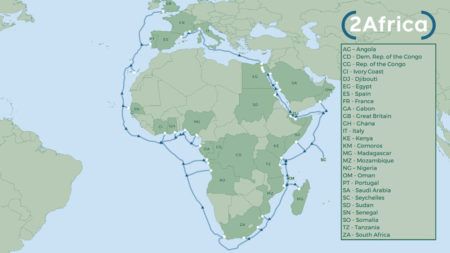
    Facebook, partners expand scope of giant 2Africa cable system

    16 August 2021
    Company News
    Beyond the prompt: Why the future of enterprise AI is hybrid and agentic - LSD Open

    Beyond the prompt: Why the future of enterprise AI is hybrid and agentic

    9 February 2026
    The skills gap is a thinking gap: why South African employers can't find problem solvers

    The skills gap is a thinking gap: why SA employers can’t find problem solvers

    6 February 2026
    Vox Kiwi Wireless: fibre-like broadband for South African homes

    Vox Kiwi Wireless: fibre-like broadband for South African homes

    5 February 2026
    Opinion
    South Africa's skills advantage is being overlooked at home - Richard Firth

    South Africa’s skills advantage is being overlooked at home

    29 January 2026
    Why Elon Musk's Starlink is a 'hard no' for me - Songezo Zibi

    Why Elon Musk’s Starlink is a ‘hard no’ for me

    26 January 2026
    South Africa's new fibre broadband battle - Duncan McLeod

    South Africa’s new fibre broadband battle

    20 January 2026

    Subscribe to Updates

    Get the best South African technology news and analysis delivered to your e-mail inbox every morning.

    Latest Posts
    Vumatel tops a million subscribers in South African broadband milestone - Dietlof Mare

    Vumatel tops a million subscribers in South African broadband milestone

    9 February 2026

    Washington takes on Beijing in race for Africa’s critical minerals

    9 February 2026
    Beyond the prompt: Why the future of enterprise AI is hybrid and agentic - LSD Open

    Beyond the prompt: Why the future of enterprise AI is hybrid and agentic

    9 February 2026
    Vodacom drops R5.6-billion for spectrum in key market

    Vodacom dropping R5.6-billion for spectrum in key market

    9 February 2026
    © 2009 - 2026 NewsCentral Media
    • Cookie policy (ZA)
    • TechCentral – privacy and Popia

    Type above and press Enter to search. Press Esc to cancel.

    Manage consent

    TechCentral uses cookies to enhance its offerings. Consenting to these technologies allows us to serve you better. Not consenting or withdrawing consent may adversely affect certain features and functions of the website.

    Functional Always active
    The technical storage or access is strictly necessary for the legitimate purpose of enabling the use of a specific service explicitly requested by the subscriber or user, or for the sole purpose of carrying out the transmission of a communication over an electronic communications network.
    Preferences
    The technical storage or access is necessary for the legitimate purpose of storing preferences that are not requested by the subscriber or user.
    Statistics
    The technical storage or access that is used exclusively for statistical purposes. The technical storage or access that is used exclusively for anonymous statistical purposes. Without a subpoena, voluntary compliance on the part of your Internet Service Provider, or additional records from a third party, information stored or retrieved for this purpose alone cannot usually be used to identify you.
    Marketing
    The technical storage or access is required to create user profiles to send advertising, or to track the user on a website or across several websites for similar marketing purposes.
    • Manage options
    • Manage services
    • Manage {vendor_count} vendors
    • Read more about these purposes
    View preferences
    • {title}
    • {title}
    • {title}