Close Menu
TechCentralTechCentral

    Subscribe to the newsletter

    Get the best South African technology news and analysis delivered to your e-mail inbox every morning.

    Facebook X (Twitter) YouTube LinkedIn
    WhatsApp Facebook X (Twitter) LinkedIn YouTube
    TechCentralTechCentral
    • News
      Vuyani Jarana: Mobile coverage masks a deeper broadband failure

      Vuyani Jarana: Mobile coverage masks a deeper broadband failure

      30 January 2026
      SABC Plus to flight Microsoft AI training videos

      SABC Plus to flight Microsoft AI training videos

      30 January 2026
      Fibre ducts

      Fibre industry consolidation in KZN

      30 January 2026
      Watts & Wheels S1E3: 'BYD's Corolla Cross challenger'

      Watts & Wheels S1E3: ‘BYD’s Corolla Cross challenger’

      30 January 2026
      What ordinary South Africans really think of AI

      What ordinary South Africans really think of AI

      30 January 2026
    • World
      Apple acquires audio AI start-up Q.ai

      Apple acquires audio AI start-up Q.ai

      30 January 2026
      SpaceX IPO may be largest in history

      SpaceX IPO may be largest in history

      28 January 2026
      Nvidia throws AI at the weather

      Nvidia throws AI at weather forecasting

      27 January 2026
      Debate erupts over value of in-flight Wi-Fi

      Debate erupts over value of in-flight Wi-Fi

      26 January 2026
      Intel takes another hit - Intel CEO Lip-Bu Tan. Laure Andrillon/Reuters

      Intel takes another hit

      23 January 2026
    • In-depth
      How liberalisation is rewiring South Africa's power sector

      How liberalisation is rewiring South Africa’s power sector

      21 January 2026
      The top-performing South African tech shares of 2025

      The top-performing South African tech shares of 2025

      12 January 2026
      Digital authoritarianism grows as African states normalise internet blackouts

      Digital authoritarianism grows as African states normalise internet blackouts

      19 December 2025
      TechCentral's South African Newsmakers of 2025

      TechCentral’s South African Newsmakers of 2025

      18 December 2025
      Black Friday goes digital in South Africa as online spending surges to record high

      Black Friday goes digital in South Africa as online spending surges to record high

      4 December 2025
    • TCS
      TCS+ | How Cloud On Demand is helping SA businesses succeed in the cloud - Xhenia Rhode, Dion Kalicharan

      TCS+ | Cloud On Demand and Consnet: inside a real-world AWS partner success story

      30 January 2026
      Watts & Wheels S1E3: 'BYD's Corolla Cross challenger'

      Watts & Wheels S1E2: ‘China attacks, BMW digs in, Toyota’s sublime supercar’

      23 January 2026

      TCS+ | Why cybersecurity is becoming a competitive advantage for SA businesses

      20 January 2026
      Watts & Wheels S1E3: 'BYD's Corolla Cross challenger'

      Watts & Wheels: S1E1 – ‘William, Prince of Wheels’

      8 January 2026
      TCS+ | Africa's digital transformation - unlocking AI through cloud and culture - Cliff de Wit Accelera Digital Group

      TCS+ | Cloud without culture won’t deliver AI: Accelera’s Cliff de Wit

      12 December 2025
    • Opinion
      South Africa's skills advantage is being overlooked at home - Richard Firth

      South Africa’s skills advantage is being overlooked at home

      29 January 2026
      Why Elon Musk's Starlink is a 'hard no' for me - Songezo Zibi

      Why Elon Musk’s Starlink is a ‘hard no’ for me

      26 January 2026
      South Africa's new fibre broadband battle - Duncan McLeod

      South Africa’s new fibre broadband battle

      20 January 2026
      AI moves from pilots to production in South African companies - Nazia Pillay SAP

      AI moves from pilots to production in South African companies

      20 January 2026
      South Africa's new fibre broadband battle - Duncan McLeod

      ANC’s attack on Solly Malatsi shows how BEE dogma trumps economic reality

      14 December 2025
    • Company Hubs
      • Africa Data Centres
      • AfriGIS
      • Altron Digital Business
      • Altron Document Solutions
      • Altron Group
      • Arctic Wolf
      • AvertITD
      • Braintree
      • CallMiner
      • CambriLearn
      • CYBER1 Solutions
      • Digicloud Africa
      • Digimune
      • Domains.co.za
      • ESET
      • Euphoria Telecom
      • Incredible Business
      • iONLINE
      • IQbusiness
      • Iris Network Systems
      • LSD Open
      • NEC XON
      • Netstar
      • Network Platforms
      • Next DLP
      • Ovations
      • Paracon
      • Paratus
      • Q-KON
      • SevenC
      • SkyWire
      • Solid8 Technologies
      • Telit Cinterion
      • Tenable
      • Vertiv
      • Videri Digital
      • Vodacom Business
      • Wipro
      • Workday
      • XLink
    • Sections
      • AI and machine learning
      • Banking
      • Broadcasting and Media
      • Cloud services
      • Contact centres and CX
      • Cryptocurrencies
      • Education and skills
      • Electronics and hardware
      • Energy and sustainability
      • Enterprise software
      • Financial services
      • Information security
      • Internet and connectivity
      • Internet of Things
      • Investment
      • IT services
      • Lifestyle
      • Motoring
      • Public sector
      • Retail and e-commerce
      • Satellite communications
      • Science
      • SMEs and start-ups
      • Social media
      • Talent and leadership
      • Telecoms
    • Events
    • Advertise
    TechCentralTechCentral
    Home » Sections » Electronics and hardware » US won’t tolerate technology fence-sitters any longer

    US won’t tolerate technology fence-sitters any longer

    By Agency Staff11 May 2020
    Twitter LinkedIn Facebook WhatsApp Email Telegram Copy Link
    News Alerts
    WhatsApp

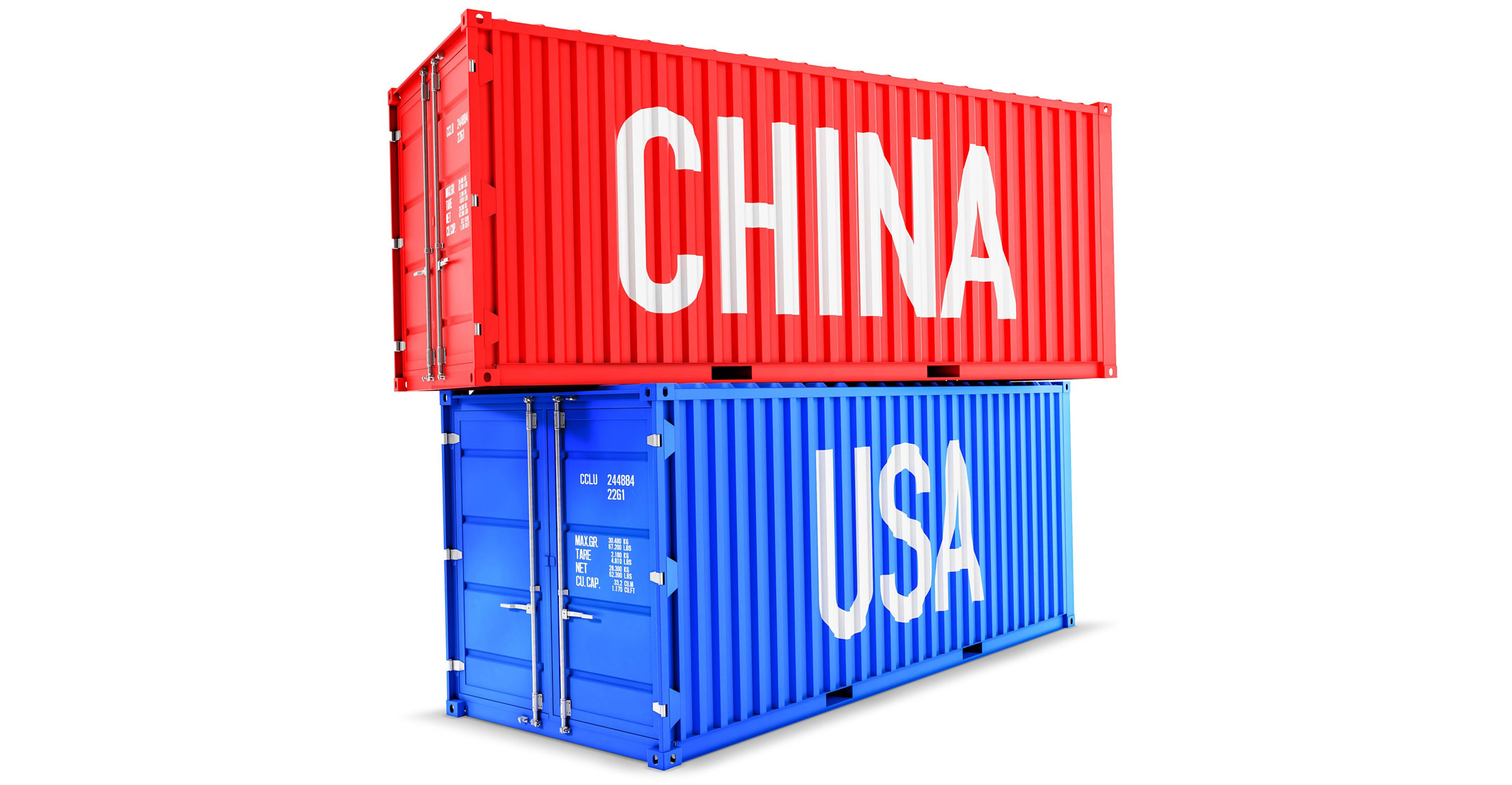
    Ever since Donald Trump fired the first shot in the US trade war with China, one technology company has been sitting in the middle, trying to avoid the crossfire. It’s wonderful to be able to sell weapons to all sides, until one forces you to choose. Taiwan Semiconductor Manufacturing Co is in the enviable position of being a critical supplier to both countries. The company, headquartered in famed Hsinchu Science Park, makes the world’s most advanced chips for the likes of Apple, Qualcomm, Nvidia and Huawei Technologies.

    The US fear, as portrayed by the White House, Pentagon and commerce department, is that allowing China to procure the world’s best semiconductors while America is unable to make them at home is an urgent and critical national security threat. That’s spurred a two-pronged strategy in recent years: limit Chinese access to and development of chip technology, and bolster domestic prowess.

    TSMC’s strategy has been to stay neutral. It has most of its capacity in Taiwan, one new and one not-so-new factory in China, and an old facility in Washington state. A year ago, I wrote that chairman Mark Liu had politely pushed back against pressure to expand in America, citing the steep costs. I concluded: “TSMC won’t be able to sit on the fence forever. While Liu may want to just make chips, he’ll eventually have to make a choice.”

    TSMC won’t be able to sit on the fence forever. While Liu may want to just make chips, he’ll eventually have to make a choice

    That day has come.

    The coronavirus pandemic has highlighted Washington’s need to protect supply chains from disruption, and heightened concerns about reliance on Taiwan, as the Wall Street Journal reported over the weekend. To that end, the administration is pushing hard to get chip makers, including Intel, TSMC and Samsung Electronics, to expand in the US, and to use their best technology, the WSJ wrote.

    Unsurprisingly, Intel is making the case that the US should strengthen its domestic production for “geopolitical” reasons. The company has most of its staff, and more than half its plants and equipment, in the US, including manufacturing in Arizona, New Mexico and Oregon.

    Fallen behind

    While best known for supplying processors used in PCs and servers under its own name, Intel also operates a foundry business that does contract manufacturing using clients’ own designs. Once the world leader in chip production, the Santa Clara, California-based company has fallen behind and now trails TSMC and South Korea’s Samsung.

    Intel clearly sees an opportunity. If it can convince defence and commerce officials that it’s in the national security interest to mandate that at least some chips be made domestically, then it may have a shot at getting back into the foundry game.

    TSMC has been trying to push back, or at least to get a seat in the policy discussions. It recently hired former Intel lobbyist Peter Cleveland to coordinate its efforts in Washington. As the old saying goes, “If you’re not at the table, then you’re on the menu.”

    But the other aspect of American strategy may be harder for the Taiwanese company to negotiate. Beyond expanding domestic capacity, Washington wants to limit Chinese access. To do so, the Trump administration is considering new rules to curb the use of US equipment and materials in making chips for the likes of Huawei, arguing that the Chinese company is a conduit for Beijing’s espionage.

    That’s put TSMC and numerous other companies in a difficult position. The American market accounted for 59% of its sales last year, against 19% for Chinese clients. Yet the growth momentum clearly favours the world’s largest country, which is focused on developing components used in artificial intelligence, 5G communications, surveillance and possibly weaponry.

    TSMC has attempted to play Switzerland. A year ago, the company was sticking with the line that, “We are everybody’s foundry.”

    Today, with China showing increasing belligerence and the US supporting a greater global voice for Taiwan, the mood has shifted

    Washington increasingly wants TSMC to be its foundry alone. Pressure has ramped up significantly over the past year, with the long list of US clients and significant revenue contribution being used as a battering ram to make the point that America is the side to choose. Ten years ago, when Taipei-Beijing relations were friendlier, companies may have leaned toward China. Today, with China showing increasing belligerence and the US supporting a greater global voice for Taiwan, the mood has shifted.

    It’s true that China is an important and growing market — Beijing has used that momentum to bring global companies to its shores — yet it won’t replace the US in terms of size or technology leadership in the next 20 years. To assuage concerns, and win a reprieve on restrictions about supplying to China, TSMC has little choice but to offer something to the Americans.

    After years of delay and resistance, it’s time for TSMC to build a shiny new factory in America. Expect to hear the company announce concrete plans, and large dollar figures for US investment, in the next year or so.  — By Tim Culpan, (c) 2020 Bloomberg LP



    Donald Trump Huawei Intel Mark Liu Samsung top TSMC
    WhatsApp YouTube Follow on Google News Add as preferred source on Google
    Share. Facebook Twitter LinkedIn WhatsApp Telegram Email Copy Link
    Previous ArticleNumber porting may now resume, government says
    Next Article Gautrain expansion may only kick off at the end of 2024

    Related Posts

    Huawei turns 25 in South Africa, celebrates with major device discounts

    Huawei turns 25 in South Africa, celebrates with major device discounts

    30 January 2026
    Chip shortage will get worse, Samsung warns

    Chip shortage will get worse, Samsung warns

    29 January 2026
    Reports of the smartphone's impending death are greatly exaggerated

    Reports of the smartphone’s impending death are greatly exaggerated

    28 January 2026
    Company News
    Huawei turns 25 in South Africa, celebrates with major device discounts

    Huawei turns 25 in South Africa, celebrates with major device discounts

    30 January 2026
    Phishing has not disappeared, but it has grown up - KnowBe4

    Phishing has not disappeared, but it has grown up

    30 January 2026
    Smartphone affordability: South Africa's new economic divide - PayJoy

    Smartphone affordability: South Africa’s new economic divide

    29 January 2026
    Opinion
    South Africa's skills advantage is being overlooked at home - Richard Firth

    South Africa’s skills advantage is being overlooked at home

    29 January 2026
    Why Elon Musk's Starlink is a 'hard no' for me - Songezo Zibi

    Why Elon Musk’s Starlink is a ‘hard no’ for me

    26 January 2026
    South Africa's new fibre broadband battle - Duncan McLeod

    South Africa’s new fibre broadband battle

    20 January 2026

    Subscribe to Updates

    Get the best South African technology news and analysis delivered to your e-mail inbox every morning.

    Latest Posts
    Vuyani Jarana: Mobile coverage masks a deeper broadband failure

    Vuyani Jarana: Mobile coverage masks a deeper broadband failure

    30 January 2026
    TCS+ | How Cloud On Demand is helping SA businesses succeed in the cloud - Xhenia Rhode, Dion Kalicharan

    TCS+ | Cloud On Demand and Consnet: inside a real-world AWS partner success story

    30 January 2026
    Huawei turns 25 in South Africa, celebrates with major device discounts

    Huawei turns 25 in South Africa, celebrates with major device discounts

    30 January 2026
    SABC Plus to flight Microsoft AI training videos

    SABC Plus to flight Microsoft AI training videos

    30 January 2026
    © 2009 - 2026 NewsCentral Media
    • Cookie policy (ZA)
    • TechCentral – privacy and Popia

    Type above and press Enter to search. Press Esc to cancel.

    Manage consent

    TechCentral uses cookies to enhance its offerings. Consenting to these technologies allows us to serve you better. Not consenting or withdrawing consent may adversely affect certain features and functions of the website.

    Functional Always active
    The technical storage or access is strictly necessary for the legitimate purpose of enabling the use of a specific service explicitly requested by the subscriber or user, or for the sole purpose of carrying out the transmission of a communication over an electronic communications network.
    Preferences
    The technical storage or access is necessary for the legitimate purpose of storing preferences that are not requested by the subscriber or user.
    Statistics
    The technical storage or access that is used exclusively for statistical purposes. The technical storage or access that is used exclusively for anonymous statistical purposes. Without a subpoena, voluntary compliance on the part of your Internet Service Provider, or additional records from a third party, information stored or retrieved for this purpose alone cannot usually be used to identify you.
    Marketing
    The technical storage or access is required to create user profiles to send advertising, or to track the user on a website or across several websites for similar marketing purposes.
    • Manage options
    • Manage services
    • Manage {vendor_count} vendors
    • Read more about these purposes
    View preferences
    • {title}
    • {title}
    • {title}