Close Menu
TechCentralTechCentral

    Subscribe to the newsletter

    Get the best South African technology news and analysis delivered to your e-mail inbox every morning.

    Facebook X (Twitter) YouTube LinkedIn
    WhatsApp Facebook X (Twitter) LinkedIn YouTube
    TechCentralTechCentral
    • News
      Nedbank hires MTN's former tech chief as group CIO - Nikos Angelopoulos

      Nedbank hires MTN’s former tech chief as group CIO

      31 July 2026
      Eskom's diesel bill falls 86% as breakdowns hit eight-year low

      Eskom’s diesel bill falls 86% as breakdowns hit eight-year low

      31 July 2026
      Ramaphosa signs off on taking the grid away from Eskom

      Ramaphosa signs off on taking the grid away from Eskom

      31 July 2026
      Microsoft just had the biggest day in stock market history

      Microsoft just had the biggest day in stock market history

      31 July 2026
      MTN Nigeria's growth engine stalled in second quarter - Karl Toriola

      MTN Nigeria’s growth engine stalled in second quarter

      31 July 2026
    • World
      Meta AI will now tell parents if their teen is in crisis

      Meta AI will now tell parents if their teen is in crisis

      17 July 2026
      IBM shares crash 25% as AI upends software spending - Arvind Krishna

      IBM shares crash 25% as AI upends software spending

      15 July 2026
      Jony Ive's first OpenAI device: an AI smart speaker - Jony Ive and Sam Altman

      Jony Ive’s first OpenAI device: an AI smart speaker

      15 July 2026
      Stripe, Advent in talks to buy PayPal for $53-billion

      Stripe, Advent in talks to buy PayPal for $53-billion

      15 July 2026
      Memory crisis sends smartphone market into steep decline

      Memory crisis sends smartphone market into steep decline

      13 July 2026
    • In-depth
      The plan to stop AI from breaking the world - Google DeepMind CEO Demis Hassabis. Image: John Sears

      The plan to stop AI from breaking the world

      16 July 2026
      The internet has a Strait of Hormuz problem

      The internet has a Strait of Hormuz problem

      15 July 2026
      AI boom sparks rally, frenzy and fear

      AI boom sparks rally, frenzy and fear

      11 June 2026
      Every plug-in hybrid on sale in South Africa, ranked by price - Lamborghini Temerario

      Every plug-in hybrid on sale in South Africa, ranked by price

      7 June 2026
      What Wi-Fi 8 will mean for wireless networks

      What Wi-Fi 8 will mean for wireless networks

      1 June 2026
    • TCS
      TCS+ | Why South African workers must become supervisors of digital labour - Accelera Digital Group Cliff de Wit

      TCS+ | Why South African workers must become supervisors of digital labour

      31 July 2026
      TCS | Rapid deployment rules can't work without municipalities: ACT - Nomvuyiso Batyi

      TCS | Icasa’s rules skip the real bottleneck: ACT

      30 July 2026
      TCS+ | iStore Business on why Apple makes sense for SMEs - Sudesh Pillay and Tamia Nontsikelelo

      TCS+ | iStore Business on why Apple makes sense for SMEs

      30 July 2026
      TCS+ | A smarter approach to cloud for South African businesses - Joel Chacko and Jonathan Oaker

      TCS+ | A smarter approach to cloud for South African businesses

      28 July 2026
      TCS | How Optasia lends billions to people banks can't see - Salvador Anglada

      TCS | How Optasia lends billions to people banks can’t see

      23 July 2026
    • Opinion
      The author, Jannie van Zyl

      Selling vapour is corporate suicide in slow motion

      16 July 2026
      Brazil's online gambling crackdown is a lesson for South Africa

      How Amazon outmanoeuvred Starlink in South Africa

      15 July 2026
      The Popia problem with agentic AI - Herman Haasbroek

      The Popia problem with agentic AI

      14 July 2026
      The author, Fanie van Rooyen

      South Africa can still catch the AI wave – here’s how

      7 July 2026
      The author, Fanie van Rooyen

      The AI utopia South Africa can’t afford

      1 July 2026
    • Company Hubs
      • 1Stream
      • Africa Data Centres
      • AfriGIS
      • Altron Digital Business
      • Altron Document Solutions
      • Altron Group
      • Arctic Wolf
      • Ascent Technology
      • AvertITD
      • BBD
      • Braintree
      • CallMiner
      • CambriLearn
      • CM Telecom
      • Contactable
      • CYBER1 Solutions
      • Digicloud Africa
      • Digimune
      • Domains.co.za
      • ESET
      • Euphoria Telecom
      • HOSTAFRICA
      • Incredible Business
      • iONLINE
      • IQbusiness
      • Iris Network Systems
      • Kaspersky
      • LSD Open
      • Mitel
      • NEC XON
      • Netstar
      • Network Platforms
      • Next DLP
      • Ovations
      • Paracon
      • Paratus
      • Q-KON
      • SevenC
      • SkyWire
      • Solid8 Technologies
      • Telit Cinterion
      • Telviva
      • Tenable
      • Vertiv
      • Videri Digital
      • Vodacom Business
      • Vox
      • Wipro
      • Workday
      • XLink
    • Sections
      • AI and machine learning
      • Banking
      • Broadcasting and Media
      • Cloud services
      • Contact centres and CX
      • Cryptocurrencies
      • Education and skills
      • Electronics and hardware
      • Energy and sustainability
      • Enterprise software
      • Financial services
      • HealthTech
      • Information security
      • Internet and connectivity
      • Internet of Things
      • Investment
      • IT services
      • Lifestyle
      • Policy and regulation
      • Public sector
      • Retail and e-commerce
      • Satellite communications
      • Science
      • SMEs and start-ups
      • Social media
      • Talent and leadership
      • Telecoms
      • Watts & Wheels
    • Events
    • Advertise
    TechCentralTechCentral
    Home » Sections » Investment » Welcome to the Microsoft economy

    Welcome to the Microsoft economy

    By Agency Staff29 May 2020
    Twitter LinkedIn Facebook WhatsApp Email Telegram Copy Link
    News Alerts
    WhatsApp

    Stocks were supposed to be mired in a bear market after they plunged in March as the coronavirus pandemic shut business and sent US unemployment to its highest rate since the Great Depression.

    Even a 62% recovery by the S&P 500 Index by the middle of May failed to comfort experts like billionaire money managers Stan Druckenmiller and David Tepper , who characterised stocks as the worst investments of their careers. They weren’t alone; amid an estimated 47% collapse in GDP, fewer than a quarter of respondents to an Evercore ISI survey said they expected the next 10% move in the market to be higher.

    So far, though, US stocks have held their own as economic indicators sagged, regaining 37% of their value from the low point in mid-March. “The stock market looks increasingly divorced from economic reality,” a New York Times article on the phenomenon proclaimed.

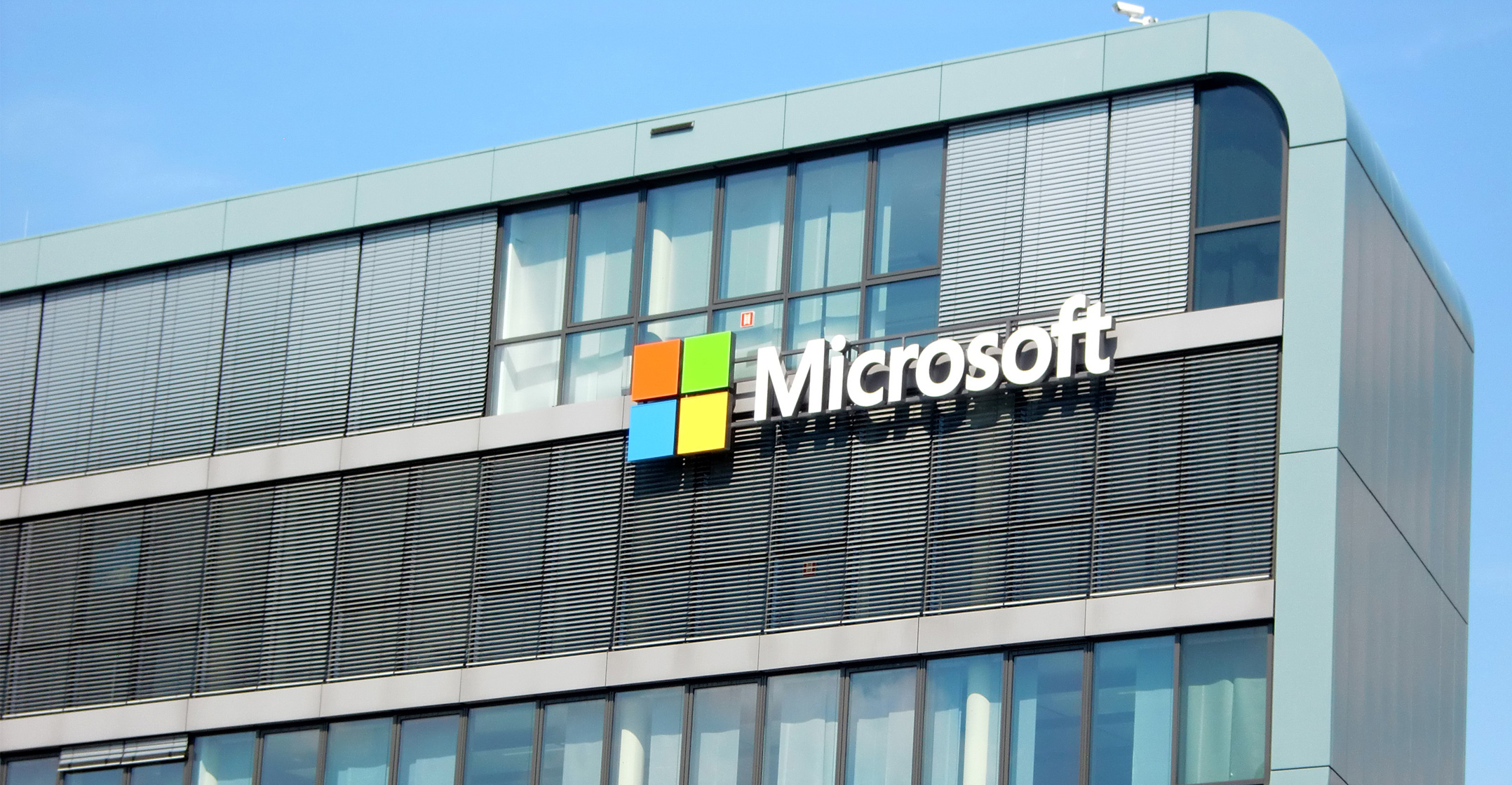
    No company has defied the pessimism more than Microsoft, and for a lot of sensible reasons

    Or maybe not — not if you think of it as the Microsoft market. No company has defied the pessimism more than Microsoft, and for a lot of sensible reasons. The Seattle-based maker of global business and consumer software led all publicly traded companies most of the year with a US$1.4-trillion market valuation, exceeded only by Saudi Arabian Oil which isn’t yet freely traded.

    Unlike the largest fossil fuel company, which lost 13% since its December $1.9-trillion initial public offering, Microsoft is within 5% of its 11 February record high and appreciated $947-billion since 2015, more than any of the 10 largest companies, including Apple, Alphabet and Amazon.com. The gap between Microsoft and Aramco narrowed to $229-billion from $840-billion, a trend likely to continue amid weak global growth in the months ahead.

    Mainstay

    That’s because Microsoft, unlike Aramco, is a mainstay of the global economy, developing and supplying 75% of the operating systems used by computers and servers worldwide, according to the market analysis company IDC.

    Microsoft’s vast infrastructure and productivity applications enable companies, governments and individuals to navigate increasing social and workforce disruption caused by the pandemic and other disasters stoked by global warming and climate change.

    As one of the anchors of the Nasdaq 100 Index (more than 80% are technology firms) Microsoft signifies the growing dependence of the economy on these companies, which this year outperformed the Dow Jones Industrial Average by the most since 2000 (Nasdaq 100 gained 8% as the DJIA lost 10%), according to data compiled by Bloomberg.

    “Microsoft could emerge stronger than most of its rivals once the Covid-19 crisis subsides, in our view, as enterprises spend more to upgrade their infrastructure and applications, translating into above-consensus, double-digit sales growth from fiscal 2022/2021,” said Anurag Rana, a senior analyst with Bloomberg Intelligence in a 15 May. “Its deep portfolio of cloud products, client relationships and security spending are differentiators.”

    Such confidence is prompted by the past five quarters, when Microsoft earnings for the first time exceeded forecasts by at least 10% after beating the average of analyst estimates in all but one of the 23 quarters since 2015, according to data compiled by Bloomberg. Unlike its five more glamorous peers — Facebook, Apple, Amazon, Netflix and Google (Alphabet) — Microsoft has an uninterrupted growth rate with the least volatility.

    To be sure, the Faang companies and similar technology marvels retained much of their value during the Coronavirus pandemic. Netflix has gained 28% since the end of 2019; Amazon is up 30%, Apple 9%, Facebook 10%. Tesla, the maker of electric, battery-powered vehicles, rallied 93% since the end of 2019 and is worth just $59-billion less than number-one Toyota.

    As legacy companies look to invest more digitally transforming their business, Microsoft should get its fair share of work

    Tesla anticipated the remotely engaged economy by selling its vehicles online and improving the customer experience with periodic, automatic software upgrades. The traditional auto companies haven’t fared well. BMW is down 24% since the end of 2019 and General Motors, the largest US auto maker, declined 28% and is worth only 26% of Tesla’s current market capitalisation of $149-billion.

    That’s why the Dow, once the benchmark of corporate America, is a shadow of its former self as industrial companies represent just 9% of the average, down from 16% in 2000.

    “Microsoft already had a great relationship with Fortune 2000 tech departments because of its dominance in Windows and Office software products,” said Bloomberg’s Rana in a recent interview. “As these legacy companies look to invest more digitally transforming their business post Covid-19, Microsoft should get its fair share of work” — lifting the stock market as it helps transform the economy.  — By Matthew A Winkler, (c) 2020 Bloomberg LP

    Follow TechCentral on Google News Add TechCentral as your preferred source on Google


    Alphabet BMW Facebook General Motors Google Microsoft Netflix Tesla top
    WhatsApp YouTube
    Share. Facebook Twitter LinkedIn WhatsApp Telegram Email Copy Link
    Previous ArticleTechCentral’s CxO Insights: Meet Absa CTO Andrew Baker
    Next Article Inside South Africa’s plan to regulate cryptocurrencies

    Related Posts

    Microsoft just had the biggest day in stock market history

    Microsoft just had the biggest day in stock market history

    31 July 2026
    How Chinese cars took over South African showrooms

    How Chinese cars took over South African showrooms

    30 July 2026
    Meta cash flow collapses as AI bill hits $145-billion - Mark Zuckerberg

    Meta cash flow collapses as AI bill hits $145-billion

    30 July 2026
    Company News
    Domains.co.za launches self-hosted n8n VPS hosting

    Domains.co.za launches self-hosted n8n VPS hosting

    31 July 2026
    Smarter.tech '26 shows why smarter technology begins with context - Obsidian Systems

    Context is the missing piece in enterprise AI: Obsidian

    31 July 2026
    Huawei launches 12 intelligent transport solutions in South Africa - Sam Tang

    Huawei launches 12 intelligent transport solutions in South Africa

    30 July 2026
    Opinion
    The author, Jannie van Zyl

    Selling vapour is corporate suicide in slow motion

    16 July 2026
    Brazil's online gambling crackdown is a lesson for South Africa

    How Amazon outmanoeuvred Starlink in South Africa

    15 July 2026
    The Popia problem with agentic AI - Herman Haasbroek

    The Popia problem with agentic AI

    14 July 2026

    Subscribe to Updates

    Get the best South African technology news and analysis delivered to your e-mail inbox every morning.

    Latest Posts
    Nedbank hires MTN's former tech chief as group CIO - Nikos Angelopoulos

    Nedbank hires MTN’s former tech chief as group CIO

    31 July 2026
    Eskom's diesel bill falls 86% as breakdowns hit eight-year low

    Eskom’s diesel bill falls 86% as breakdowns hit eight-year low

    31 July 2026
    Ramaphosa signs off on taking the grid away from Eskom

    Ramaphosa signs off on taking the grid away from Eskom

    31 July 2026
    TCS+ | Why South African workers must become supervisors of digital labour - Accelera Digital Group Cliff de Wit

    TCS+ | Why South African workers must become supervisors of digital labour

    31 July 2026
    © 2009 - 2026 NewsCentral Media
    Built and maintained by Chronon
    • Cookie policy (ZA)
    • TechCentral – privacy and Popia

    Type above and press Enter to search. Press Esc to cancel.

    Manage consent

    TechCentral uses cookies to enhance its offerings. Consenting to these technologies allows us to serve you better. Not consenting or withdrawing consent may adversely affect certain features and functions of the website.

    Functional Always active
    The technical storage or access is strictly necessary for the legitimate purpose of enabling the use of a specific service explicitly requested by the subscriber or user, or for the sole purpose of carrying out the transmission of a communication over an electronic communications network.
    Preferences
    The technical storage or access is necessary for the legitimate purpose of storing preferences that are not requested by the subscriber or user.
    Statistics
    The technical storage or access that is used exclusively for statistical purposes. The technical storage or access that is used exclusively for anonymous statistical purposes. Without a subpoena, voluntary compliance on the part of your Internet Service Provider, or additional records from a third party, information stored or retrieved for this purpose alone cannot usually be used to identify you.
    Marketing
    The technical storage or access is required to create user profiles to send advertising, or to track the user on a website or across several websites for similar marketing purposes.
    • Manage options
    • Manage services
    • Manage {vendor_count} vendors
    • Read more about these purposes
    View preferences
    • {title}
    • {title}
    • {title}