
Close Menu
TechCentralTechCentral

    Subscribe to the newsletter

    Get the best South African technology news and analysis delivered to your e-mail inbox every morning.

    Facebook X (Twitter) YouTube LinkedIn
    WhatsApp Facebook X (Twitter) LinkedIn YouTube
    TechCentralTechCentral
    • News
      Digital authoritarianism grows as African states normalise internet blackouts

      Digital authoritarianism grows as African states normalise internet blackouts

      19 December 2025
      Starlink satellite anomaly creates debris in rare orbital mishap

      Starlink satellite anomaly creates debris in rare orbital mishap

      19 December 2025
      TechCentral's South African Newsmakers of 2025

      TechCentral’s South African Newsmakers of 2025

      18 December 2025
      Malatsi buries Post Office's long-dead monopoly

      Malatsi buries Post Office monopoly the market ignored

      18 December 2025
      China races to crack EUV as chip war with the West intensifies

      China races to crack EUV lithography as chip war with the West intensifies

      18 December 2025
    • World
      Trump space order puts the moon back at centre of US, China rivalry - US President Donald Trump

      Trump space order puts the moon back at centre of US, China rivalry

      19 December 2025
      Warner Bros slams the door on Paramount

      Warner Bros slams the door on Paramount

      17 December 2025
      X moves to block bid to revive Twitter brand

      X moves to block bid to revive Twitter brand

      17 December 2025
      Oracle’s AI ambitions face scrutiny on earnings miss

      Oracle’s AI ambitions face scrutiny on earnings miss

      11 December 2025
      China will get Nvidia H200 chips - but not without paying Washington first

      China will get Nvidia H200 chips – but not without paying Washington first

      9 December 2025
    • In-depth
      Black Friday goes digital in South Africa as online spending surges to record high

      Black Friday goes digital in South Africa as online spending surges to record high

      4 December 2025
      Canal+ plays hardball - and DStv viewers feel the pain

      Canal+ plays hardball – and DStv viewers feel the pain

      3 December 2025
      Jensen Huang Nvidia

      So, will China really win the AI race?

      14 November 2025
      Valve's Linux console takes aim at Microsoft's gaming empire

      Valve’s Linux console takes aim at Microsoft’s gaming empire

      13 November 2025
      iOCO's extraordinary comeback plan - Rhys Summerton

      iOCO’s extraordinary comeback plan

      28 October 2025
    • TCS
      TCS+ | Africa's digital transformation - unlocking AI through cloud and culture - Cliff de Wit Accelera Digital Group

      TCS+ | Cloud without culture won’t deliver AI: Accelera’s Cliff de Wit

      12 December 2025
      TCS+ | How Cloud on Demand helps partners thrive in the AWS ecosystem - Odwa Ndyaluvane and Xenia Rhode

      TCS+ | How Cloud On Demand helps partners thrive in the AWS ecosystem

      4 December 2025
      TCS | MTN Group CEO Ralph Mupita on competition, AI and the future of mobile

      TCS | Ralph Mupita on competition, AI and the future of mobile

      28 November 2025
      TCS | Dominic Cull on fixing South Africa's ICT policy bottlenecks

      TCS | Dominic Cull on fixing South Africa’s ICT policy bottlenecks

      21 November 2025
      TCS | BMW CEO Peter van Binsbergen on the future of South Africa's automotive industry

      TCS | BMW CEO Peter van Binsbergen on the future of South Africa’s automotive industry

      6 November 2025
    • Opinion
      Netflix, Warner Bros deal raises fresh headaches for MultiChoice - Duncan McLeod

      Netflix, Warner Bros deal raises fresh headaches for MultiChoice

      5 December 2025
      BIN scans, DDoS and the next cybercrime wave hitting South Africa's banks - Entersekt Gerhard Oosthuizen

      BIN scans, DDoS and the next cybercrime wave hitting South Africa’s banks

      3 December 2025
      Your data, your hardware: the DIY AI revolution is coming - Duncan McLeod

      Your data, your hardware: the DIY AI revolution is coming

      20 November 2025
      Zero Carbon Charge founder Joubert Roux

      The energy revolution South Africa can’t afford to miss

      20 November 2025
      It's time for a new approach to government IT spend in South Africa - Richard Firth

      It’s time for a new approach to government IT spend in South Africa

      19 November 2025
    • Company Hubs
      • Africa Data Centres
      • AfriGIS
      • Altron Digital Business
      • Altron Document Solutions
      • Altron Group
      • Arctic Wolf
      • AvertITD
      • Braintree
      • CallMiner
      • CambriLearn
      • CYBER1 Solutions
      • Digicloud Africa
      • Digimune
      • Domains.co.za
      • ESET
      • Euphoria Telecom
      • Incredible Business
      • iONLINE
      • IQbusiness
      • Iris Network Systems
      • LSD Open
      • NEC XON
      • Netstar
      • Network Platforms
      • Next DLP
      • Ovations
      • Paracon
      • Paratus
      • Q-KON
      • SevenC
      • SkyWire
      • Solid8 Technologies
      • Telit Cinterion
      • Tenable
      • Vertiv
      • Videri Digital
      • Vodacom Business
      • Wipro
      • Workday
      • XLink
    • Sections
      • AI and machine learning
      • Banking
      • Broadcasting and Media
      • Cloud services
      • Contact centres and CX
      • Cryptocurrencies
      • Education and skills
      • Electronics and hardware
      • Energy and sustainability
      • Enterprise software
      • Financial services
      • Information security
      • Internet and connectivity
      • Internet of Things
      • Investment
      • IT services
      • Lifestyle
      • Motoring
      • Public sector
      • Retail and e-commerce
      • Satellite communications
      • Science
      • SMEs and start-ups
      • Social media
      • Talent and leadership
      • Telecoms
    • Events
    • Advertise
    TechCentralTechCentral
    Home » In-depth » Your devices can spy on your every move

    Your devices can spy on your every move

    By The Conversation26 April 2016
    Twitter LinkedIn Facebook WhatsApp Email Telegram Copy Link
    News Alerts
    WhatsApp

    spy-640

    We now have dozens of smart devices in our houses and even on our bodies. They improve our lives in so many ways — from lowering energy consumption in our homes to egging us on to be active.

    But these smart devices respond to whatever commands they are given: we’ve had security experts demonstrate how cars can be hijacked remotely and medical devices in your body can be hacked and turned into lethal weapons. These risks are now well-recognised by technology developers, and there is a great deal of excellent work going on toward how to avoid them.

    But there are other dangers we should be more concerned about that are getting less attention. Your gadgets could be providing a window that any hacker could see right through to spy on you.

    Your laptop has a video camera built into it. When it’s recording, a little green light blinks on so you’re aware you’re being recorded. But it can be instructed to record your activities without the green camera light being on. And this is not just an in-laboratory warning of a hypothetical danger; it has actually been done, by over-eager school officials and by peeping Toms.

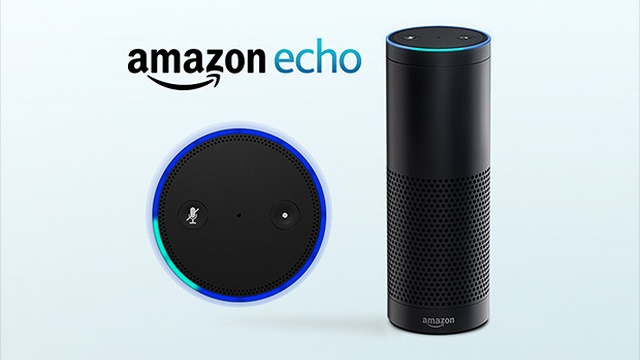
    At least you can turn off your laptop: when it is shut, the camera can see only “the other side” of the laptop. But this quick fix doesn’t apply to sound recording devices, like microphones. For example, your phone could listen to conversations in the room even when it appears to be off. So could your TV, or other smart appliances in your home. Some gadgets — such as Amazon’s Echo — are explicitly designed to be voice activated and constantly at the ready to act on your spoken commands.

    It’s not just audio and video recording we need to be concerned about. Your smart home monitor knows how many people are in your house and in which rooms at what times. Your smart water meter knows every time a toilet is flushed in your home. Your alarm clock knows what time you woke up each day last month. Your refrigerator knows every time you filled a glass of cold water. Your cellphone has a GPS built into it that can track your location, and hence record your movements. Yes, you can turn off location tracking, but does that mean the phone isn’t keeping track of your location? And do you really know for sure your GPS is off simply because your phone’s screen says it is? At the very least, your service provider knows where you are based on the cellphone towers your phone is communicating with.

    Who's listening?
    Who’s listening?

    We all love our smart gadgets. But beyond the convenience factor, the fact that our devices are networked means they can communicate in ways we don’t want them to, in addition to all the ways that we do.

    Next-generation wiretapping

    A bad actor could figure out how to take control of any of these technologies to learn private information about you. But maybe even more worryingly, could your technology provider become, voluntarily or under compulsion, a party to a scheme through which you unwittingly reveal your secrets?

    The recent battle between Apple and the FBI revolved around the Feds’ request that Apple develop a custom insecure version of iOS, the operating system of the iPhone, to facilitate their hacking into a terrorist’s cellphone. Is breaking into a locked phone just the next step beyond a traditional wiretap in which the government asks an Apple or a Samsung to use its technology to bug the conversations of a suspected terrorist?

    But modern phones can be used to do a lot more than listen in on conversations. Could companies be asked to keep location tracking on while indicating to the suspect that it is really off? It would seem to me hard to draw a line between these cases. No wonder some Apple engineers came out as “objectors of conscience” in the Apple-FBI matter. This case was dropped before Apple could be compelled to do anything, so there’s no legal precedent to guide us on how these next-step examples would play out in court.

    It is, of course, valuable for law enforcement to monitor criminal suspects, to investigate ongoing criminal behaviour and to collect evidence to prosecute. This is the motive behind wiretap laws that allow law enforcement to listen to your phone conversations with no notice to you.

    Wiretaps actually got their start in the 1800s as tools of corporate espionage. In 1928, the US supreme court ruled in Olmstead vs US that it was constitutional for law enforcement to use wiretaps, and that warrants weren’t required. This decision was superseded only in 1967, by Katz vs US, which established a citizen’s right to privacy, and required law enforcement to obtain warrants before bugging a phone conversation. This was long after the US congress had passed an act carefully restricting wiretaps, in 1934.

    In the early days of wiretapping, there was a physical “tap” — a side connection — that could be applied to a real wire carrying the conversation. Newer technologies eventually permitted the telephone company to encode and multiplex many telephone calls on the same physical wire.
    Is this thing on?
    Is this thing on?

    In the US, the Communications Assistance for Law Enforcement Act was passed by congress in 1994, due to worries about law enforcement’s ability to keep up with new communications technologies. It requires communication companies to provide a way for law enforcement to place a wiretap even on newer communication technologies.

    The law explicitly exempted information services, such as e-mail. This legal differentiation between communications technologies and information services means companies are obliged to help the government listen in on your phone calls (with a warrant) but are not obliged to help it read your e-mail messages (at least on account of this specific law).

    In 2004, the Federal Communications Commission ruled that services such as voice over IP (think Skype) were communications services covered by the law, and not exempt information services.

    Some have since wanted to further broaden this law, and doubtless the Apple-FBI dispute brings this issue to the forefront again. Law enforcement will presumably push for greater surveillance powers, and civil liberty advocates will resist.

    Nothing to hide?

    Perhaps you don’t care about the privacy of criminals. But note that surveillance is not just of known bad actors, but also of suspected bad actors.

    History teaches us that lists of suspects can sometimes be drawn way too broadly. You may remember the McCarthy era and J Edgar Hoover’s reign at the FBI, which infamously included bugging Martin Luther King Jr’s bedroom. Even today, there are attempts by the British Government Communications Headquarters to monitor everyone who visited the Wikileaks website, even just to browse. Some laws don’t make sense or aren’t fair, so even some “criminals” may still deserve privacy.

    And it’s not just law enforcement overreach we have to worry about. Technologies like Finspy are commercially available today to install malware on your computer or phone and “recruit” it to spy on you. Such technologies could be used by anyone, including the “bad actors,” without the cooperation of your device manufacturer or service provider.

    Wiretap laws apply to explicit communication actions taken by someone, such as actually making a phone call. Wiretaps do not track your movements in the house, they do not listen to your conversations when you are not on the phone, they do not record video of you in your bathroom — but these are all actions our various devices are now capable of performing. With the proliferation of devices in our lives, it is certainly possible to use them for surveillance purposes. There’s no question that by doing so, authorities will catch many bad actors. But there will also be a huge price to pay in terms of privacy and possibly wrongful arrests.

    Finally, this may feel futuristic, but I assure you it is not. The FBI was already using a cellphone microphone to eavesdrop on organised crime as long as a decade ago. Commercial interests are not too far behind in doing much the same, with the purpose of targeting a better sales pitch.

    Our omnipresent networked devices raise big questions that we should openly debate. How we balance these costs and benefits will determine the type of society we live in.The Conversation

    • HV Jagadish is Bernard A Galler collegiate professor of electrical engineering and computer science, University of Michigan
    • This article was originally published on The Conversation


    Subscribe to TechCentral Subscribe to TechCentral
    Share. Facebook Twitter LinkedIn WhatsApp Telegram Email Copy Link
    Previous ArticleGupta workers march on SA banks
    Next Article Brown vows not to privatise SOEs

    Related Posts

    Digital authoritarianism grows as African states normalise internet blackouts

    Digital authoritarianism grows as African states normalise internet blackouts

    19 December 2025
    Starlink satellite anomaly creates debris in rare orbital mishap

    Starlink satellite anomaly creates debris in rare orbital mishap

    19 December 2025
    Trump space order puts the moon back at centre of US, China rivalry - US President Donald Trump

    Trump space order puts the moon back at centre of US, China rivalry

    19 December 2025
    Company News
    Why TechCentral is the most powerful platform for reaching IT decision makers

    Why TechCentral is the most powerful platform for reaching IT decision makers

    17 December 2025
    Business trends to watch in 2026 - Domains.co.za

    Business trends to watch in 2026

    17 December 2025
    MTN Zambia launches world's first 4G cloud smartphone solution - Huawei

    MTN Zambia launches world’s first 4G cloud smartphone solution

    17 December 2025
    Opinion
    Netflix, Warner Bros deal raises fresh headaches for MultiChoice - Duncan McLeod

    Netflix, Warner Bros deal raises fresh headaches for MultiChoice

    5 December 2025
    BIN scans, DDoS and the next cybercrime wave hitting South Africa's banks - Entersekt Gerhard Oosthuizen

    BIN scans, DDoS and the next cybercrime wave hitting South Africa’s banks

    3 December 2025
    Your data, your hardware: the DIY AI revolution is coming - Duncan McLeod

    Your data, your hardware: the DIY AI revolution is coming

    20 November 2025

    Subscribe to Updates

    Get the best South African technology news and analysis delivered to your e-mail inbox every morning.

    Latest Posts
    Digital authoritarianism grows as African states normalise internet blackouts

    Digital authoritarianism grows as African states normalise internet blackouts

    19 December 2025
    Starlink satellite anomaly creates debris in rare orbital mishap

    Starlink satellite anomaly creates debris in rare orbital mishap

    19 December 2025
    Trump space order puts the moon back at centre of US, China rivalry - US President Donald Trump

    Trump space order puts the moon back at centre of US, China rivalry

    19 December 2025
    TechCentral's South African Newsmakers of 2025

    TechCentral’s South African Newsmakers of 2025

    18 December 2025
    © 2009 - 2025 NewsCentral Media
    • Cookie policy (ZA)
    • TechCentral – privacy and Popia

    Type above and press Enter to search. Press Esc to cancel.

    Manage consent

    TechCentral uses cookies to enhance its offerings. Consenting to these technologies allows us to serve you better. Not consenting or withdrawing consent may adversely affect certain features and functions of the website.

    Functional Always active
    The technical storage or access is strictly necessary for the legitimate purpose of enabling the use of a specific service explicitly requested by the subscriber or user, or for the sole purpose of carrying out the transmission of a communication over an electronic communications network.
    Preferences
    The technical storage or access is necessary for the legitimate purpose of storing preferences that are not requested by the subscriber or user.
    Statistics
    The technical storage or access that is used exclusively for statistical purposes. The technical storage or access that is used exclusively for anonymous statistical purposes. Without a subpoena, voluntary compliance on the part of your Internet Service Provider, or additional records from a third party, information stored or retrieved for this purpose alone cannot usually be used to identify you.
    Marketing
    The technical storage or access is required to create user profiles to send advertising, or to track the user on a website or across several websites for similar marketing purposes.
    • Manage options
    • Manage services
    • Manage {vendor_count} vendors
    • Read more about these purposes
    View preferences
    • {title}
    • {title}
    • {title}