Close Menu
TechCentralTechCentral

    Subscribe to the newsletter

    Get the best South African technology news and analysis delivered to your e-mail inbox every morning.

    Facebook X (Twitter) YouTube LinkedIn
    WhatsApp Facebook X (Twitter) LinkedIn YouTube
    TechCentralTechCentral
    • News
      Digital authoritarianism grows as African states normalise internet blackouts

      Digital authoritarianism grows as African states normalise internet blackouts

      19 December 2025
      Starlink satellite anomaly creates debris in rare orbital mishap

      Starlink satellite anomaly creates debris in rare orbital mishap

      19 December 2025
      TechCentral's South African Newsmakers of 2025

      TechCentral’s South African Newsmakers of 2025

      18 December 2025
      Malatsi buries Post Office's long-dead monopoly

      Malatsi buries Post Office monopoly the market ignored

      18 December 2025
      China races to crack EUV as chip war with the West intensifies

      China races to crack EUV lithography as chip war with the West intensifies

      18 December 2025
    • World
      Trump space order puts the moon back at centre of US, China rivalry - US President Donald Trump

      Trump space order puts the moon back at centre of US, China rivalry

      19 December 2025
      Warner Bros slams the door on Paramount

      Warner Bros slams the door on Paramount

      17 December 2025
      X moves to block bid to revive Twitter brand

      X moves to block bid to revive Twitter brand

      17 December 2025
      Oracle’s AI ambitions face scrutiny on earnings miss

      Oracle’s AI ambitions face scrutiny on earnings miss

      11 December 2025
      China will get Nvidia H200 chips - but not without paying Washington first

      China will get Nvidia H200 chips – but not without paying Washington first

      9 December 2025
    • In-depth
      Black Friday goes digital in South Africa as online spending surges to record high

      Black Friday goes digital in South Africa as online spending surges to record high

      4 December 2025
      Canal+ plays hardball - and DStv viewers feel the pain

      Canal+ plays hardball – and DStv viewers feel the pain

      3 December 2025
      Jensen Huang Nvidia

      So, will China really win the AI race?

      14 November 2025
      Valve's Linux console takes aim at Microsoft's gaming empire

      Valve’s Linux console takes aim at Microsoft’s gaming empire

      13 November 2025
      iOCO's extraordinary comeback plan - Rhys Summerton

      iOCO’s extraordinary comeback plan

      28 October 2025
    • TCS
      TCS+ | Africa's digital transformation - unlocking AI through cloud and culture - Cliff de Wit Accelera Digital Group

      TCS+ | Cloud without culture won’t deliver AI: Accelera’s Cliff de Wit

      12 December 2025
      TCS+ | How Cloud on Demand helps partners thrive in the AWS ecosystem - Odwa Ndyaluvane and Xenia Rhode

      TCS+ | How Cloud On Demand helps partners thrive in the AWS ecosystem

      4 December 2025
      TCS | MTN Group CEO Ralph Mupita on competition, AI and the future of mobile

      TCS | Ralph Mupita on competition, AI and the future of mobile

      28 November 2025
      TCS | Dominic Cull on fixing South Africa's ICT policy bottlenecks

      TCS | Dominic Cull on fixing South Africa’s ICT policy bottlenecks

      21 November 2025
      TCS | BMW CEO Peter van Binsbergen on the future of South Africa's automotive industry

      TCS | BMW CEO Peter van Binsbergen on the future of South Africa’s automotive industry

      6 November 2025
    • Opinion
      Netflix, Warner Bros deal raises fresh headaches for MultiChoice - Duncan McLeod

      Netflix, Warner Bros deal raises fresh headaches for MultiChoice

      5 December 2025
      BIN scans, DDoS and the next cybercrime wave hitting South Africa's banks - Entersekt Gerhard Oosthuizen

      BIN scans, DDoS and the next cybercrime wave hitting South Africa’s banks

      3 December 2025
      Your data, your hardware: the DIY AI revolution is coming - Duncan McLeod

      Your data, your hardware: the DIY AI revolution is coming

      20 November 2025
      Zero Carbon Charge founder Joubert Roux

      The energy revolution South Africa can’t afford to miss

      20 November 2025
      It's time for a new approach to government IT spend in South Africa - Richard Firth

      It’s time for a new approach to government IT spend in South Africa

      19 November 2025
    • Company Hubs
      • Africa Data Centres
      • AfriGIS
      • Altron Digital Business
      • Altron Document Solutions
      • Altron Group
      • Arctic Wolf
      • AvertITD
      • Braintree
      • CallMiner
      • CambriLearn
      • CYBER1 Solutions
      • Digicloud Africa
      • Digimune
      • Domains.co.za
      • ESET
      • Euphoria Telecom
      • Incredible Business
      • iONLINE
      • IQbusiness
      • Iris Network Systems
      • LSD Open
      • NEC XON
      • Netstar
      • Network Platforms
      • Next DLP
      • Ovations
      • Paracon
      • Paratus
      • Q-KON
      • SevenC
      • SkyWire
      • Solid8 Technologies
      • Telit Cinterion
      • Tenable
      • Vertiv
      • Videri Digital
      • Vodacom Business
      • Wipro
      • Workday
      • XLink
    • Sections
      • AI and machine learning
      • Banking
      • Broadcasting and Media
      • Cloud services
      • Contact centres and CX
      • Cryptocurrencies
      • Education and skills
      • Electronics and hardware
      • Energy and sustainability
      • Enterprise software
      • Financial services
      • Information security
      • Internet and connectivity
      • Internet of Things
      • Investment
      • IT services
      • Lifestyle
      • Motoring
      • Public sector
      • Retail and e-commerce
      • Satellite communications
      • Science
      • SMEs and start-ups
      • Social media
      • Talent and leadership
      • Telecoms
    • Events
    • Advertise
    TechCentralTechCentral
    Home » Top » Outfoxing the fraudsters

    Outfoxing the fraudsters

    By Editor24 February 2012
    Twitter LinkedIn Facebook WhatsApp Email Telegram Copy Link
    News Alerts
    WhatsApp

    Foreigners visiting America are taken aback by how lax locals are when using credit or debit cards to make purchases. Allowing a sales clerk to swipe a card at a check-out — instead of doing it personally on a shielded terminal while keying in a PIN number — is the first surprise. Handing over a credit card to a waiter in a restaurant, who disappears out of sight for five minutes before returning with a counterfoil for signature verification, is considered unimaginably stupid. Yet we all do it with only minor reservations.

    No wonder America leads the world in credit-card fraud. The US accounts for 47% of global credit and debit card fraud, even though it is responsible for only 27% of the total volume of purchases, according to a study by the Nilson Report, a newsletter for the payments industry. Though figures are notoriously hard to come by, the amount of fraud based on stolen card numbers in the US is around $14bn/year, reckons Javelin Strategy & Research, a financial information company based in Pleasanton, California.

    With the rest of the developed world having embraced more secure “smart cards” (or at least in the process of doing so), America remains the only major country that still relies on antiquated payment cards that encode their sensitive data in a magnetic stripe on the back. In security terms, that is about as safe as writing your account details on a postcard and sending it through the mail.

    Inevitably, international fraud migrates from places where security is high to places where it is low. It happened when Britain introduced “chip-and-pin” cards nearly a decade ago, causing credit-card fraud to plummet there, but to increase elsewhere in Europe. As tougher security measures have come into effect around the world, fraudsters have begun to focus their credit-card scams more than ever on the US.

    Credit-card fraud is usually perpetrated by copying or stealing card-authorisation forms from restaurants, stores or even a person’s own trash. Hacking into a credit-card processor’s database is another profitable approach for criminals. Meanwhile, fitting clandestine magnetic-stripe skimmers on petrol pumps and ATM machines has become increasingly common. And the old standby of using “phishing attacks” over the phone or the Internet — to con individuals into parting with their card’s security details — remains as widespread as ever.

    Several years ago, Symantec, a supplier of security software, found by far the most popular category of goods available on criminal networks was credit-card data — that is, the individual’s name, the 16-digit account number, the expiry date and the three-digit security code that is printed on the back of the card but not encoded in the magnetic stripe. Stolen credit-card details are sold in bulk, ranging in price from US$0,10 to nearly $1 per item.

    The answer, of course, is for American card companies and banks to do what has been done in the rest of the world — and start issuing chip-based credit and debit cards. Unfortunately, the payments industry in the US has been locked in a chicken-and-egg situation. Stores have had little reason to install smart-card readers while banks have been reluctant to issue smart cards; and banks have refused to issue them while stores do not accept them.

    The problem is compounded by the brutal competition in America between card issuers for free-spending customers. Few banks have been willing to force card holders to change their habits for fear of antagonising them. For their part, merchants fear it would take years to recoup the investment needed to upgrade their terminals and build new communications infrastructure. Javelin reckons adopting smart cards will cost the American payments industry $8bn.

    Meanwhile, Americans travelling abroad have been finding it increasingly difficult to use their old-fangled credit cards in shops, restaurants, hotels, stations and travel agencies. While merchants in Europe and elsewhere are obliged to honour all the credit cards they list as accepting, many find excuses for rejecting them. And automated kiosks for subway tickets and the like simply eject them. For customers who travel a lot, the bigger American banks will issue smart cards that conform to the international standard.

    So, it is not as though American issuers do not have the necessary technology. Indeed, the irony is that it was the American card companies, MasterCard and Visa, that did most to create the global standard back in 1996. Over the past decade, both card companies have introduced smart cards widely around the world. The international standard for such cards (as well as the point-of-sale terminals and ATMs used to read them) is known as EMV, which stands for Europay, MasterCard and Visa (Europay has since been absorbed by MasterCard).

    Nowadays, the standard’s management organisation, EMVCo, is owned by MasterCard, Visa, JCB of Japan and American Express. Its smart cards are used in various countries under the name “IC Credit” or “Chip and Pin”. They can take the form of either “contact” cards that are inserted in a terminal, or “contactless” ones for waving in front of a reader. To date, more than 1,3bn EMV cards have been issued globally, and some 21m point-of-sale terminals can now accept them. This represents nearly one out of two payment cards in use globally, and three out of four terminals on merchants premises around the world.

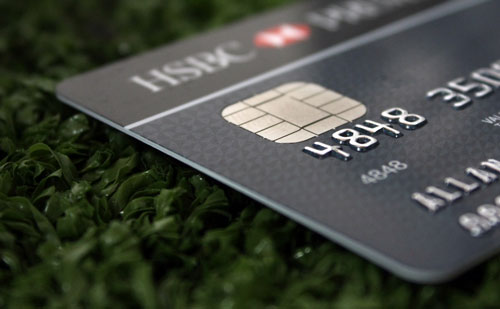
    Embedded in the surface of an EMV payment card is a microprocessor for storing the information and instructions needed to make a purchase. The chip’s contents are protected by security features based on both symmetric- and asymmetric-key technologies. Symmetric encryption uses a single mathematical key (or at least two closely related keys) to encrypt the plain-text version of a person’s account details for storing in the chip’s memory. For the card to be authenticated, the cypher-text stored in the chip is decoded using the same key. The key is thus a secret shared only by the user and the authenticator.

    By contrast, an asymmetric (or public key) approach requires two separate keys — one made public and the other kept secret — to encrypt the plain-text of an account, and then to decrypt the cypher-text for authentication. Asymmetric algorithms allow the authenticity of a message to be checked by creating a digital signature of the original plain-text using the private key, which can be authenticated using the public key. In countries where EMV cards using such encryption have been deployed credit-card fraud has fallen by as much as 80%.

    Finally, this year, Visa plans to bring EMV cards to America. To break the deadlock between merchants and banks, the card company will free retailers from having their payment systems checked for security every year — if, that is, they agree to upgrade their terminals. According to the National Retail Federation, such audits cost merchants hundreds of millions of dollars annually. In 2015, Visa intends to up the ante by shifting the liability for certain kinds of fraud from the banks to the stores. MasterCard has recently announced similar plans.

    By law, credit-card users in America are only responsible for the first $50 of any unauthorised charge. In practice, banks waive the fee and swallow the cost rather than risk having disgruntled customers defect to another card issuer. But in future when a customer presents a smart card to a store that cannot accept it — and the transaction has to rely instead on the card’s insecure magnetic stripe — then the store will be liable for the loss if there is any problem.

    Freed of the liability for fraud, the banks are going to have a huge incentive to hand out chip-and-pin cards to all their customers. Meanwhile, the stores will then have good financial reasons for upgrading their terminals. Doing so will help prevent their fraud costs from soaring out of control.

    But the real pay-off from smart cards, worldwide, will only come when they finally ditch the magnetic stripe they continue to sport for fallback purposes and become embedded in smart phones. People will then be able to make purchases securely with a click of a few buttons and a wave of the hand. The Japanese have been doing that for years. It is time the rest of us enjoyed similar benefits.  — (c) 2012 The Economist

    • Image: Allan Donque
    • Subscribe to our free daily newsletter
    • Follow us on Twitter or on Google+ or on Facebook
    • Visit our sister website, SportsCentral (still in beta)


    Subscribe to TechCentral Subscribe to TechCentral
    Share. Facebook Twitter LinkedIn WhatsApp Telegram Email Copy Link
    Previous ArticleStandard Bank defends FNB tweets
    Next Article Digital TV in SA: what went wrong

    Related Posts

    Digital authoritarianism grows as African states normalise internet blackouts

    Digital authoritarianism grows as African states normalise internet blackouts

    19 December 2025
    Starlink satellite anomaly creates debris in rare orbital mishap

    Starlink satellite anomaly creates debris in rare orbital mishap

    19 December 2025
    Trump space order puts the moon back at centre of US, China rivalry - US President Donald Trump

    Trump space order puts the moon back at centre of US, China rivalry

    19 December 2025
    Company News
    Why TechCentral is the most powerful platform for reaching IT decision makers

    Why TechCentral is the most powerful platform for reaching IT decision makers

    17 December 2025
    Business trends to watch in 2026 - Domains.co.za

    Business trends to watch in 2026

    17 December 2025
    MTN Zambia launches world's first 4G cloud smartphone solution - Huawei

    MTN Zambia launches world’s first 4G cloud smartphone solution

    17 December 2025
    Opinion
    Netflix, Warner Bros deal raises fresh headaches for MultiChoice - Duncan McLeod

    Netflix, Warner Bros deal raises fresh headaches for MultiChoice

    5 December 2025
    BIN scans, DDoS and the next cybercrime wave hitting South Africa's banks - Entersekt Gerhard Oosthuizen

    BIN scans, DDoS and the next cybercrime wave hitting South Africa’s banks

    3 December 2025
    Your data, your hardware: the DIY AI revolution is coming - Duncan McLeod

    Your data, your hardware: the DIY AI revolution is coming

    20 November 2025

    Subscribe to Updates

    Get the best South African technology news and analysis delivered to your e-mail inbox every morning.

    Latest Posts
    Digital authoritarianism grows as African states normalise internet blackouts

    Digital authoritarianism grows as African states normalise internet blackouts

    19 December 2025
    Starlink satellite anomaly creates debris in rare orbital mishap

    Starlink satellite anomaly creates debris in rare orbital mishap

    19 December 2025
    Trump space order puts the moon back at centre of US, China rivalry - US President Donald Trump

    Trump space order puts the moon back at centre of US, China rivalry

    19 December 2025
    TechCentral's South African Newsmakers of 2025

    TechCentral’s South African Newsmakers of 2025

    18 December 2025
    © 2009 - 2025 NewsCentral Media
    • Cookie policy (ZA)
    • TechCentral – privacy and Popia

    Type above and press Enter to search. Press Esc to cancel.

    Manage consent

    TechCentral uses cookies to enhance its offerings. Consenting to these technologies allows us to serve you better. Not consenting or withdrawing consent may adversely affect certain features and functions of the website.

    Functional Always active
    The technical storage or access is strictly necessary for the legitimate purpose of enabling the use of a specific service explicitly requested by the subscriber or user, or for the sole purpose of carrying out the transmission of a communication over an electronic communications network.
    Preferences
    The technical storage or access is necessary for the legitimate purpose of storing preferences that are not requested by the subscriber or user.
    Statistics
    The technical storage or access that is used exclusively for statistical purposes. The technical storage or access that is used exclusively for anonymous statistical purposes. Without a subpoena, voluntary compliance on the part of your Internet Service Provider, or additional records from a third party, information stored or retrieved for this purpose alone cannot usually be used to identify you.
    Marketing
    The technical storage or access is required to create user profiles to send advertising, or to track the user on a website or across several websites for similar marketing purposes.
    • Manage options
    • Manage services
    • Manage {vendor_count} vendors
    • Read more about these purposes
    View preferences
    • {title}
    • {title}
    • {title}