Close Menu
TechCentralTechCentral

    Subscribe to the newsletter

    Get the best South African technology news and analysis delivered to your e-mail inbox every morning.

    Facebook X (Twitter) YouTube LinkedIn
    WhatsApp Facebook X (Twitter) LinkedIn YouTube
    TechCentralTechCentral
    • News
      TechCentral's South African Newsmakers of 2025

      TechCentral’s South African Newsmakers of 2025

      18 December 2025
      Malatsi buries Post Office's long-dead monopoly

      Malatsi buries Post Office monopoly the market ignored

      18 December 2025
      China races to crack EUV as chip war with the West intensifies

      China races to crack EUV lithography as chip war with the West intensifies

      18 December 2025
      Coursera to buy Udemy, in which Prosus is an investor

      Coursera to buy Udemy, in which Prosus is an investor

      18 December 2025
      It has been a year of policy victories, but crypto firms warn momentum could fade without durable US legislation.- Donald Trump

      Crypto’s Trump-era boom faces a 2026 reality check

      18 December 2025
    • World
      Warner Bros slams the door on Paramount

      Warner Bros slams the door on Paramount

      17 December 2025
      X moves to block bid to revive Twitter brand

      X moves to block bid to revive Twitter brand

      17 December 2025
      Oracle’s AI ambitions face scrutiny on earnings miss

      Oracle’s AI ambitions face scrutiny on earnings miss

      11 December 2025
      China will get Nvidia H200 chips - but not without paying Washington first

      China will get Nvidia H200 chips – but not without paying Washington first

      9 December 2025
      IBM reportedly close to $11-billion deal to buy Confluent - Arvind Krishna

      IBM reportedly close to $11-billion deal to buy Confluent

      8 December 2025
    • In-depth
      Black Friday goes digital in South Africa as online spending surges to record high

      Black Friday goes digital in South Africa as online spending surges to record high

      4 December 2025
      Canal+ plays hardball - and DStv viewers feel the pain

      Canal+ plays hardball – and DStv viewers feel the pain

      3 December 2025
      Jensen Huang Nvidia

      So, will China really win the AI race?

      14 November 2025
      Valve's Linux console takes aim at Microsoft's gaming empire

      Valve’s Linux console takes aim at Microsoft’s gaming empire

      13 November 2025
      iOCO's extraordinary comeback plan - Rhys Summerton

      iOCO’s extraordinary comeback plan

      28 October 2025
    • TCS
      TCS+ | Africa's digital transformation - unlocking AI through cloud and culture - Cliff de Wit Accelera Digital Group

      TCS+ | Cloud without culture won’t deliver AI: Accelera’s Cliff de Wit

      12 December 2025
      TCS+ | How Cloud on Demand helps partners thrive in the AWS ecosystem - Odwa Ndyaluvane and Xenia Rhode

      TCS+ | How Cloud On Demand helps partners thrive in the AWS ecosystem

      4 December 2025
      TCS | MTN Group CEO Ralph Mupita on competition, AI and the future of mobile

      TCS | Ralph Mupita on competition, AI and the future of mobile

      28 November 2025
      TCS | Dominic Cull on fixing South Africa's ICT policy bottlenecks

      TCS | Dominic Cull on fixing South Africa’s ICT policy bottlenecks

      21 November 2025
      TCS | BMW CEO Peter van Binsbergen on the future of South Africa's automotive industry

      TCS | BMW CEO Peter van Binsbergen on the future of South Africa’s automotive industry

      6 November 2025
    • Opinion
      Netflix, Warner Bros deal raises fresh headaches for MultiChoice - Duncan McLeod

      Netflix, Warner Bros deal raises fresh headaches for MultiChoice

      5 December 2025
      BIN scans, DDoS and the next cybercrime wave hitting South Africa's banks - Entersekt Gerhard Oosthuizen

      BIN scans, DDoS and the next cybercrime wave hitting South Africa’s banks

      3 December 2025
      Your data, your hardware: the DIY AI revolution is coming - Duncan McLeod

      Your data, your hardware: the DIY AI revolution is coming

      20 November 2025
      Zero Carbon Charge founder Joubert Roux

      The energy revolution South Africa can’t afford to miss

      20 November 2025
      It's time for a new approach to government IT spend in South Africa - Richard Firth

      It’s time for a new approach to government IT spend in South Africa

      19 November 2025
    • Company Hubs
      • Africa Data Centres
      • AfriGIS
      • Altron Digital Business
      • Altron Document Solutions
      • Altron Group
      • Arctic Wolf
      • AvertITD
      • Braintree
      • CallMiner
      • CambriLearn
      • CYBER1 Solutions
      • Digicloud Africa
      • Digimune
      • Domains.co.za
      • ESET
      • Euphoria Telecom
      • Incredible Business
      • iONLINE
      • IQbusiness
      • Iris Network Systems
      • LSD Open
      • NEC XON
      • Netstar
      • Network Platforms
      • Next DLP
      • Ovations
      • Paracon
      • Paratus
      • Q-KON
      • SevenC
      • SkyWire
      • Solid8 Technologies
      • Telit Cinterion
      • Tenable
      • Vertiv
      • Videri Digital
      • Vodacom Business
      • Wipro
      • Workday
      • XLink
    • Sections
      • AI and machine learning
      • Banking
      • Broadcasting and Media
      • Cloud services
      • Contact centres and CX
      • Cryptocurrencies
      • Education and skills
      • Electronics and hardware
      • Energy and sustainability
      • Enterprise software
      • Financial services
      • Information security
      • Internet and connectivity
      • Internet of Things
      • Investment
      • IT services
      • Lifestyle
      • Motoring
      • Public sector
      • Retail and e-commerce
      • Satellite communications
      • Science
      • SMEs and start-ups
      • Social media
      • Talent and leadership
      • Telecoms
    • Events
    • Advertise
    TechCentralTechCentral
    Home » In-depth » Digital archiving: history flushed

    Digital archiving: history flushed

    By Editor29 April 2012
    Twitter LinkedIn Facebook WhatsApp Email Telegram Copy Link
    News Alerts
    WhatsApp

    In 1086, William the Conqueror completed a comprehensive survey of England and Wales. The Domesday Book, as it came to be called, contained details of 13 418 places and 112 boroughs — and is still available for public inspection at the National Archives in London. Not so the original version of a new survey that was commissioned for the 900th anniversary of The Domesday Book. It was recorded on special 12-inch laser discs. Their format is now obsolete.

    The digital era brought with it the promise of indefinite memory. Increased computing power and disk space combined with decreasing costs were supposed to make anything born digital possible to store for ever. But digital data often has a surprisingly short life. “If we’re not careful, we will know more about the beginning of the 20th century than the beginning of the 21st century,” says Adam Farquhar, who is in charge the British Library’s digital-preservation efforts.

    The most obvious problems for digital archivists have to do with hardware, but they are also the easiest to fix. Many archives replace their data-storage systems every three to five years to guard against obsolescence and decay. This is not as expensive as it sounds: hard drives are cheap and reliable. The threat of hardware failure is overcome by keeping copies in different places. The British Library has storage sites in London, Yorkshire, Wales and Scotland.

    Collecting digital material is trickier, particularly online. Archivists can only harvest those parts of the web that are freely accessible. Anything requiring user inputs — passwords, searches, forms — is off-limits. Streaming media, such as online videos, are hard to capture.

    Changes in software and file formats create more hurdles. “Many of the digital objects we create can only be rendered by the software that created them,” says Vint Cerf, a pioneer of the Internet who now works for Google. If the original program has gone, an archive of mint-condition files can be useless. By the time software is more than a decade old, running it usually requires hardware emulation — essentially fooling programs into thinking that they are running on old hardware.

    Although technical problems can usually be solved, regulatory obstacles are harder to overcome. Laws force copyright libraries, such as the Library of Congress, to seek permission before archiving a website. Regulation can be even more damaging when it comes to preserving such things as computer programs, games, music and books. These often come with digital-rights management (DRM) software to protect them against piracy. Archivists who want to circumvent such programs can find themselves on the wrong side of the law. America’s Digital Millennium Copyright Act (DMCA) makes such circumvention a criminal offence.

    Copyright and DRM will loom even larger as the nature of information systems evolves. The original Internet was by default an open environment, making copying easy. The mobile world, with its widely popular smartphone apps, is much less so. As companies more fiercely protect their wares, contemporary digital artefacts run the risk of never being archived. Libraries have no mandate to collect apps, such as Angry Birds or Instagram, which form part of popular culture.

    Despite all these difficulties, the world’s libraries have tried for over a decade to conserve some aspects of their national digital heritage. America’s Library of Congress started its digital-preservation programme in 2000 with US$100m from the government. Its Web archive currently stands at around 10 000 sites, many of them owned by the American government, and therefore exempt from copyright. Privately run sites are more difficult to include. For some archiving projects, only a fifth of webmasters reply to e-mails seeking permission for a copy.

    Digital pack rats
    Following the Library of Congress, most national libraries in rich countries now have some sort of digital-archiving programme. In Britain, for instance, the National Archives keeps copies of all government websites. The British Library is archiving all British online material.

    Yet the best-known digital preservation effort is the Internet Archive, a private non-profit effort. Its servers are home to the Wayback Machine, a popular Web service that lets users see how a website looked on specified dates in the past. Founded by Brewster Kahle in 1996, Internet Archive collects, stores and provides access to billions of Web pages as well as other digital media such as books, video and software. The collection stands at roughly 160bn web pages. It operates on the principle that it is better to seek forgiveness than to ask for permission.

    More recently, geeks have rushed in where official agencies fear to tread. They have always been pack rats. Today they gather on websites such as Tosec (short for “The Old School Emulation Centre”) to collect old software. But these collections have their own limitations. They focus heavily on games and operating systems; people tend not to have the same nostalgia for early versions of spreadsheet applications as they do for Super Mario Bros. More important, the material is very much under copyright.

    Despite the proliferation of archives, digital preservation is patchy at best. Until the law catches up with technology, digital history will have to be written in drips and drabs rather than the great gushes promised by the digital age.  — (c) 2012 The Economist

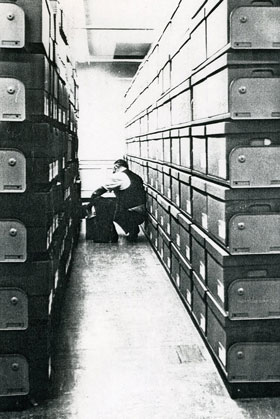
    • Image: Cushing Library/Flickr


    Subscribe to TechCentral Subscribe to TechCentral
    Share. Facebook Twitter LinkedIn WhatsApp Telegram Email Copy Link
    Previous ArticleDigital data: bit rot
    Next Article Mining asteroids: going platinum

    Related Posts

    TechCentral's South African Newsmakers of 2025

    TechCentral’s South African Newsmakers of 2025

    18 December 2025
    Malatsi buries Post Office's long-dead monopoly

    Malatsi buries Post Office monopoly the market ignored

    18 December 2025
    China races to crack EUV as chip war with the West intensifies

    China races to crack EUV lithography as chip war with the West intensifies

    18 December 2025
    Company News
    Why TechCentral is the most powerful platform for reaching IT decision makers

    Why TechCentral is the most powerful platform for reaching IT decision makers

    17 December 2025
    Business trends to watch in 2026 - Domains.co.za

    Business trends to watch in 2026

    17 December 2025
    MTN Zambia launches world's first 4G cloud smartphone solution - Huawei

    MTN Zambia launches world’s first 4G cloud smartphone solution

    17 December 2025
    Opinion
    Netflix, Warner Bros deal raises fresh headaches for MultiChoice - Duncan McLeod

    Netflix, Warner Bros deal raises fresh headaches for MultiChoice

    5 December 2025
    BIN scans, DDoS and the next cybercrime wave hitting South Africa's banks - Entersekt Gerhard Oosthuizen

    BIN scans, DDoS and the next cybercrime wave hitting South Africa’s banks

    3 December 2025
    Your data, your hardware: the DIY AI revolution is coming - Duncan McLeod

    Your data, your hardware: the DIY AI revolution is coming

    20 November 2025

    Subscribe to Updates

    Get the best South African technology news and analysis delivered to your e-mail inbox every morning.

    Latest Posts
    TechCentral's South African Newsmakers of 2025

    TechCentral’s South African Newsmakers of 2025

    18 December 2025
    Malatsi buries Post Office's long-dead monopoly

    Malatsi buries Post Office monopoly the market ignored

    18 December 2025
    China races to crack EUV as chip war with the West intensifies

    China races to crack EUV lithography as chip war with the West intensifies

    18 December 2025
    Coursera to buy Udemy, in which Prosus is an investor

    Coursera to buy Udemy, in which Prosus is an investor

    18 December 2025
    © 2009 - 2025 NewsCentral Media
    • Cookie policy (ZA)
    • TechCentral – privacy and Popia

    Type above and press Enter to search. Press Esc to cancel.

    Manage consent

    TechCentral uses cookies to enhance its offerings. Consenting to these technologies allows us to serve you better. Not consenting or withdrawing consent may adversely affect certain features and functions of the website.

    Functional Always active
    The technical storage or access is strictly necessary for the legitimate purpose of enabling the use of a specific service explicitly requested by the subscriber or user, or for the sole purpose of carrying out the transmission of a communication over an electronic communications network.
    Preferences
    The technical storage or access is necessary for the legitimate purpose of storing preferences that are not requested by the subscriber or user.
    Statistics
    The technical storage or access that is used exclusively for statistical purposes. The technical storage or access that is used exclusively for anonymous statistical purposes. Without a subpoena, voluntary compliance on the part of your Internet Service Provider, or additional records from a third party, information stored or retrieved for this purpose alone cannot usually be used to identify you.
    Marketing
    The technical storage or access is required to create user profiles to send advertising, or to track the user on a website or across several websites for similar marketing purposes.
    • Manage options
    • Manage services
    • Manage {vendor_count} vendors
    • Read more about these purposes
    View preferences
    • {title}
    • {title}
    • {title}