Close Menu
TechCentralTechCentral

    Subscribe to the newsletter

    Get the best South African technology news and analysis delivered to your e-mail inbox every morning.

    Facebook X (Twitter) YouTube LinkedIn
    WhatsApp Facebook X (Twitter) LinkedIn YouTube
    TechCentralTechCentral
    • News
      Digital authoritarianism grows as African states normalise internet blackouts

      Digital authoritarianism grows as African states normalise internet blackouts

      19 December 2025
      Starlink satellite anomaly creates debris in rare orbital mishap

      Starlink satellite anomaly creates debris in rare orbital mishap

      19 December 2025
      TechCentral's South African Newsmakers of 2025

      TechCentral’s South African Newsmakers of 2025

      18 December 2025
      Malatsi buries Post Office's long-dead monopoly

      Malatsi buries Post Office monopoly the market ignored

      18 December 2025
      China races to crack EUV as chip war with the West intensifies

      China races to crack EUV lithography as chip war with the West intensifies

      18 December 2025
    • World
      Trump space order puts the moon back at centre of US, China rivalry - US President Donald Trump

      Trump space order puts the moon back at centre of US, China rivalry

      19 December 2025
      Warner Bros slams the door on Paramount

      Warner Bros slams the door on Paramount

      17 December 2025
      X moves to block bid to revive Twitter brand

      X moves to block bid to revive Twitter brand

      17 December 2025
      Oracle’s AI ambitions face scrutiny on earnings miss

      Oracle’s AI ambitions face scrutiny on earnings miss

      11 December 2025
      China will get Nvidia H200 chips - but not without paying Washington first

      China will get Nvidia H200 chips – but not without paying Washington first

      9 December 2025
    • In-depth
      Black Friday goes digital in South Africa as online spending surges to record high

      Black Friday goes digital in South Africa as online spending surges to record high

      4 December 2025
      Canal+ plays hardball - and DStv viewers feel the pain

      Canal+ plays hardball – and DStv viewers feel the pain

      3 December 2025
      Jensen Huang Nvidia

      So, will China really win the AI race?

      14 November 2025
      Valve's Linux console takes aim at Microsoft's gaming empire

      Valve’s Linux console takes aim at Microsoft’s gaming empire

      13 November 2025
      iOCO's extraordinary comeback plan - Rhys Summerton

      iOCO’s extraordinary comeback plan

      28 October 2025
    • TCS
      TCS+ | Africa's digital transformation - unlocking AI through cloud and culture - Cliff de Wit Accelera Digital Group

      TCS+ | Cloud without culture won’t deliver AI: Accelera’s Cliff de Wit

      12 December 2025
      TCS+ | How Cloud on Demand helps partners thrive in the AWS ecosystem - Odwa Ndyaluvane and Xenia Rhode

      TCS+ | How Cloud On Demand helps partners thrive in the AWS ecosystem

      4 December 2025
      TCS | MTN Group CEO Ralph Mupita on competition, AI and the future of mobile

      TCS | Ralph Mupita on competition, AI and the future of mobile

      28 November 2025
      TCS | Dominic Cull on fixing South Africa's ICT policy bottlenecks

      TCS | Dominic Cull on fixing South Africa’s ICT policy bottlenecks

      21 November 2025
      TCS | BMW CEO Peter van Binsbergen on the future of South Africa's automotive industry

      TCS | BMW CEO Peter van Binsbergen on the future of South Africa’s automotive industry

      6 November 2025
    • Opinion
      Netflix, Warner Bros deal raises fresh headaches for MultiChoice - Duncan McLeod

      Netflix, Warner Bros deal raises fresh headaches for MultiChoice

      5 December 2025
      BIN scans, DDoS and the next cybercrime wave hitting South Africa's banks - Entersekt Gerhard Oosthuizen

      BIN scans, DDoS and the next cybercrime wave hitting South Africa’s banks

      3 December 2025
      Your data, your hardware: the DIY AI revolution is coming - Duncan McLeod

      Your data, your hardware: the DIY AI revolution is coming

      20 November 2025
      Zero Carbon Charge founder Joubert Roux

      The energy revolution South Africa can’t afford to miss

      20 November 2025
      It's time for a new approach to government IT spend in South Africa - Richard Firth

      It’s time for a new approach to government IT spend in South Africa

      19 November 2025
    • Company Hubs
      • Africa Data Centres
      • AfriGIS
      • Altron Digital Business
      • Altron Document Solutions
      • Altron Group
      • Arctic Wolf
      • AvertITD
      • Braintree
      • CallMiner
      • CambriLearn
      • CYBER1 Solutions
      • Digicloud Africa
      • Digimune
      • Domains.co.za
      • ESET
      • Euphoria Telecom
      • Incredible Business
      • iONLINE
      • IQbusiness
      • Iris Network Systems
      • LSD Open
      • NEC XON
      • Netstar
      • Network Platforms
      • Next DLP
      • Ovations
      • Paracon
      • Paratus
      • Q-KON
      • SevenC
      • SkyWire
      • Solid8 Technologies
      • Telit Cinterion
      • Tenable
      • Vertiv
      • Videri Digital
      • Vodacom Business
      • Wipro
      • Workday
      • XLink
    • Sections
      • AI and machine learning
      • Banking
      • Broadcasting and Media
      • Cloud services
      • Contact centres and CX
      • Cryptocurrencies
      • Education and skills
      • Electronics and hardware
      • Energy and sustainability
      • Enterprise software
      • Financial services
      • Information security
      • Internet and connectivity
      • Internet of Things
      • Investment
      • IT services
      • Lifestyle
      • Motoring
      • Public sector
      • Retail and e-commerce
      • Satellite communications
      • Science
      • SMEs and start-ups
      • Social media
      • Talent and leadership
      • Telecoms
    • Events
    • Advertise
    TechCentralTechCentral
    Home » In-depth » SA can no longer afford Eskom’s monopoly

    SA can no longer afford Eskom’s monopoly

    By Anton Eberhard28 August 2016
    Twitter LinkedIn Facebook WhatsApp Email Telegram Copy Link
    News Alerts
    WhatsApp

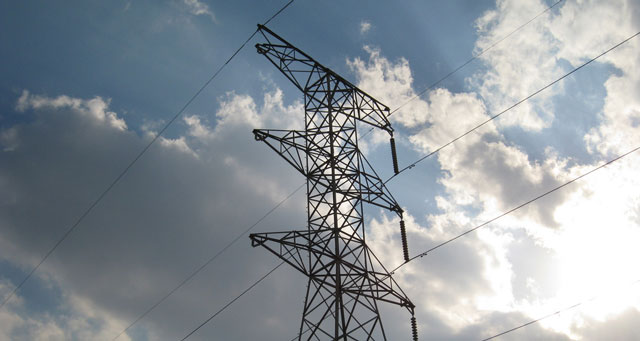
    eskom-640

    South Africa has not had load shedding for nearly a year. This is a welcome development after years of power cuts that constrained economic growth. Electricity consumption has more or less flattened out, giving the national utility, Eskom, more space to catch up on maintenance and meet demand.

    But all is not well in the country’s electricity sector.

    There are challenges around rising costs and electricity tariffs. Further improvements are needed in technical and commercial performance. And Eskom has to raise sufficient finance to complete its investment programme. This comes at a time when national treasury has no fiscal space for further equity injections.

    On top of this, municipal electricity distributors are not investing adequately in maintenance and service delivery. This could have catastrophic consequences for security and reliability of supply in the future.

    The current period provides an opportune time to consider the electricity sector’s medium and long-term future. Is the sector’s current structure fit-for-purpose? Does it provide a sustainable platform to achieve national goals and objectives?

    What the economy and people want from the sector is instinctively and practically clear: access to electricity that is adequate, reliable and affordable as well as competitive prices in the case of business. And this should be accomplished within the bounds of environmental sustainability and transparent governance frameworks to attract enough investment to meet current and future needs.

    At the moment it is not clear that the current structure can achieve these goals. This suggests that alternatives should be considered.

    The case for restructuring

    The past three decades have seen fundamental reform and restructuring of electricity sectors in countries all over the world. The old model, of a vertically integrated, state-owned monopoly, has been challenged. New models have been explored and adopted that involve different levels of integration or unbundling, competition and public or private ownership.

    It is striking that South Africa’s electricity sector has been largely immune to these global developments. In recent years there’s been private investment in a number of renewable energy independent power projects. But Eskom is now arguing that it doesn’t need them.

    The question of private or public should be unshackled from ideological predispositions. Debates around private participation in the electricity sector are often contentious. This includes whether privately owned entities are more efficient than public utilities. The country needs to consider restructuring proposals only in terms of whether they will support national economic and social development goals.

    Choices range from a fully state-owned electricity sector to one which is fully privatised, or somewhere in between.

    eskom-640

    In fact, South Africa already has a hybrid system. State-owned Eskom and local government distributors are complemented by private independent power projects. Eskom has been unable to fund all the country’s electricity needs. Over the past four years independent power projects have mobilised close to R200bn in private investment.

    It would seem sensible to retain a mixed electricity market — especially in power generation so that the country can secure adequate, timely and cost-effective capital investment.

    But if the state were to countenance privatisation, it would be a mistake to allow private investment in an unstructured, vertically integrated and dominant Eskom. This would repeat the mistakes made in the privatisation of Telkom. There the strategic private partner used Telkom’s monopoly to frustrate the entry and growth of new private players in the sector. It also maintained high prices.

    Building competition into power generation

    Globally, many years of experience show that effective competition is possible in power generation (and energy sales), while electricity transmission and distribution mostly remain natural monopolies.

    Independent power projects in South Africa already compete for the right to build, own and operate power stations based on long-term contracts and competitive prices. It makes sense to extend this kind of competition.

    It is possible for power stations also to compete in a power exchange. This typically happens in a day-ahead market where independent power projects (and perhaps also Eskom) compete to sell their power for each period in the day. Such wholesale power markets have potential price benefits. But they are not always effective in attracting new investment. A much more effective way of attracting investment is through competitive tenders for long-term contracts.

    Competition can also be encouraged by giving customers the right to choose their supplier. But international experience shows that while the benefits are potentially significant for large customers, they’re relatively modest for small users.

    A modest amendment to the Electricity Regulation Act could make explicit the possibility of direct agreements between independent power projects and qualifying customers. This would spur innovation and investment, and reduce costs.

    Traditionally, power systems have been vertically integrated: power generation, transmission and distribution functions have been combined in one company. But with generation potentially open to competition, many countries have decided to separate generation from the natural monopoly wire components.

    Eskom-640

    The challenge of the current system is that it can discourage investment in independent power projects. It can also make interconnection with the grid difficult or expensive and can constrain dispatch. This is because Eskom controls power purchases from independent power projects, as well as access to transmission, but also builds and operates its own power stations.

    An alternative would be to spin off state-owned generation into a separate Genco. This would leave Eskom to control only transmission (and the system operator and buying functions). Eskom could then — on a neutral, transparent and fair basis — contract either state Gencos or independent power projects, creating a platform for private investment.

    Overcoming state paralysis

    Despite ample evidence of best practice, South Africa seems to be in a state of paralysis.

    The difficulty in restructuring state-owned utilities when they are in crisis is that governments are careful not to propose interventions that might further destabilise them. But when the crisis recedes so does the political imperative for restructuring. When Eskom was load shedding, the focus was on immediate measures to keep the lights on and on improving its financial viability. It was more difficult to agree on far-reaching reforms that might prevent similar crises in the future.

    It requires vision, leadership and commitment to restructure state-owned enterprises. Any such process must remove impediments to investment and achieve efficiency improvements that facilitate economic growth and development.

    There is an alternative to Eskom’s leadership defending an old, vertically integrated, monopolistic electricity industry model — which international experience shows is moribund. Would the company not want its legacy to be distinguished by a reforming zeal that sets South Africa on a different path? This would embrace a model for attracting new investment and securing power supply while containing costs and prices, and promoting environmental sustainability.

    Perhaps South Africa’s fiscal position will have to deteriorate further before the country accepts that it can no longer fully fund its public utilities and that a greater openness to private investment is inevitable. It has already pumped R83bn into Eskom since 2008.

    It would be better to start that restructuring and reform process now before there is another crisis.The Conversation

    • Anton Eberhard is professor at the Graduate School of Business, University of Cape Town
    • This article was originally published on The Conversation


    Anton Eberhard Eskom Telkom
    Subscribe to TechCentral Subscribe to TechCentral
    Share. Facebook Twitter LinkedIn WhatsApp Telegram Email Copy Link
    Previous ArticleGuptas to quit SA for good
    Next Article Juno space probe makes history

    Related Posts

    Ramokgopa bullish on energy outlook as new projects get green light - Kgosientsho Ramokgopa

    Ramokgopa bullish on energy outlook as new projects get green light

    15 December 2025

    A leaner BCX positions itself as market consolidator

    11 December 2025
    Vodacom follows MTN with post-paid price hikes

    Vodacom follows MTN with post-paid price hikes

    11 December 2025
    Company News
    Why TechCentral is the most powerful platform for reaching IT decision makers

    Why TechCentral is the most powerful platform for reaching IT decision makers

    17 December 2025
    Business trends to watch in 2026 - Domains.co.za

    Business trends to watch in 2026

    17 December 2025
    MTN Zambia launches world's first 4G cloud smartphone solution - Huawei

    MTN Zambia launches world’s first 4G cloud smartphone solution

    17 December 2025
    Opinion
    Netflix, Warner Bros deal raises fresh headaches for MultiChoice - Duncan McLeod

    Netflix, Warner Bros deal raises fresh headaches for MultiChoice

    5 December 2025
    BIN scans, DDoS and the next cybercrime wave hitting South Africa's banks - Entersekt Gerhard Oosthuizen

    BIN scans, DDoS and the next cybercrime wave hitting South Africa’s banks

    3 December 2025
    Your data, your hardware: the DIY AI revolution is coming - Duncan McLeod

    Your data, your hardware: the DIY AI revolution is coming

    20 November 2025

    Subscribe to Updates

    Get the best South African technology news and analysis delivered to your e-mail inbox every morning.

    Latest Posts
    Digital authoritarianism grows as African states normalise internet blackouts

    Digital authoritarianism grows as African states normalise internet blackouts

    19 December 2025
    Starlink satellite anomaly creates debris in rare orbital mishap

    Starlink satellite anomaly creates debris in rare orbital mishap

    19 December 2025
    Trump space order puts the moon back at centre of US, China rivalry - US President Donald Trump

    Trump space order puts the moon back at centre of US, China rivalry

    19 December 2025
    TechCentral's South African Newsmakers of 2025

    TechCentral’s South African Newsmakers of 2025

    18 December 2025
    © 2009 - 2025 NewsCentral Media
    • Cookie policy (ZA)
    • TechCentral – privacy and Popia

    Type above and press Enter to search. Press Esc to cancel.

    Manage consent

    TechCentral uses cookies to enhance its offerings. Consenting to these technologies allows us to serve you better. Not consenting or withdrawing consent may adversely affect certain features and functions of the website.

    Functional Always active
    The technical storage or access is strictly necessary for the legitimate purpose of enabling the use of a specific service explicitly requested by the subscriber or user, or for the sole purpose of carrying out the transmission of a communication over an electronic communications network.
    Preferences
    The technical storage or access is necessary for the legitimate purpose of storing preferences that are not requested by the subscriber or user.
    Statistics
    The technical storage or access that is used exclusively for statistical purposes. The technical storage or access that is used exclusively for anonymous statistical purposes. Without a subpoena, voluntary compliance on the part of your Internet Service Provider, or additional records from a third party, information stored or retrieved for this purpose alone cannot usually be used to identify you.
    Marketing
    The technical storage or access is required to create user profiles to send advertising, or to track the user on a website or across several websites for similar marketing purposes.
    • Manage options
    • Manage services
    • Manage {vendor_count} vendors
    • Read more about these purposes
    View preferences
    • {title}
    • {title}
    • {title}