


Close Menu
TechCentralTechCentral

    Subscribe to the newsletter

    Get the best South African technology news and analysis delivered to your e-mail inbox every morning.

    Facebook X (Twitter) YouTube LinkedIn
    WhatsApp Facebook X (Twitter) LinkedIn YouTube
    TechCentralTechCentral
    • News
      Netflix, Warner Bros talks raise fresh headaches for MultiChoice

      Netflix, Warner Bros talks raise fresh headaches for MultiChoice

      5 December 2025
      Big Microsoft 365 price increases coming next year

      Big Microsoft price increases coming next year

      5 December 2025
      Vodacom to take control of Safaricom in R36-billion deal - Shameel Joosub

      Vodacom to take control of Safaricom in R36-billion deal

      4 December 2025
      Black Friday goes digital in South Africa as online spending surges to record high

      Black Friday goes digital in South Africa as online spending surges to record high

      4 December 2025
      BYD takes direct aim at Toyota with launch of sub-R500 000 Sealion 5 PHEV

      BYD takes direct aim at Toyota with launch of sub-R500 000 Sealion 5 PHEV

      4 December 2025
    • World
      Amazon and Google launch multi-cloud service for faster connectivity

      Amazon and Google launch multi-cloud service for faster connectivity

      1 December 2025
      Google makes final court plea to stop US breakup

      Google makes final court plea to stop US breakup

      21 November 2025
      Bezos unveils monster rocket: New Glenn 9x4 set to dwarf Saturn V

      Bezos unveils monster rocket: New Glenn 9×4 set to dwarf Saturn V

      21 November 2025
      Tech shares turbocharged by Nvidia's stellar earnings

      Tech shares turbocharged by stellar Nvidia earnings

      20 November 2025
      Config file blamed for Cloudflare meltdown that disrupted the web

      Config file blamed for Cloudflare meltdown that disrupted the web

      19 November 2025
    • In-depth
      Jensen Huang Nvidia

      So, will China really win the AI race?

      14 November 2025
      Valve's Linux console takes aim at Microsoft's gaming empire

      Valve’s Linux console takes aim at Microsoft’s gaming empire

      13 November 2025
      iOCO's extraordinary comeback plan - Rhys Summerton

      iOCO’s extraordinary comeback plan

      28 October 2025
      Why smart glasses keep failing - no, it's not the tech - Mark Zuckerberg

      Why smart glasses keep failing – it’s not the tech

      19 October 2025
      BYD to blanket South Africa with megawatt-scale EV charging network - Stella Li

      BYD to blanket South Africa with megawatt-scale EV charging network

      16 October 2025
    • TCS
      TCS+ | How Cloud on Demand helps partners thrive in the AWS ecosystem - Odwa Ndyaluvane and Xenia Rhode

      TCS+ | How Cloud On Demand helps partners thrive in the AWS ecosystem

      4 December 2025
      TCS | MTN Group CEO Ralph Mupita on competition, AI and the future of mobile

      TCS | Ralph Mupita on competition, AI and the future of mobile

      28 November 2025
      TCS | Dominic Cull on fixing South Africa's ICT policy bottlenecks

      TCS | Dominic Cull on fixing South Africa’s ICT policy bottlenecks

      21 November 2025
      TCS | BMW CEO Peter van Binsbergen on the future of South Africa's automotive industry

      TCS | BMW CEO Peter van Binsbergen on the future of South Africa’s automotive industry

      6 November 2025
      TCS | Why Altron is building an AI factory - Bongani Andy Mabaso

      TCS | Why Altron is building an AI factory in Johannesburg

      28 October 2025
    • Opinion
      Your data, your hardware: the DIY AI revolution is coming - Duncan McLeod

      Your data, your hardware: the DIY AI revolution is coming

      20 November 2025
      Zero Carbon Charge founder Joubert Roux

      The energy revolution South Africa can’t afford to miss

      20 November 2025
      It's time for a new approach to government IT spend in South Africa - Richard Firth

      It’s time for a new approach to government IT spend in South Africa

      19 November 2025
      How South Africa's broken Rica system fuels murder and mayhem - Farhad Khan

      How South Africa’s broken Rica system fuels murder and mayhem

      10 November 2025
      South Africa's AI data centre boom risks overloading a fragile grid - Paul Colmer

      South Africa’s AI data centre boom risks overloading a fragile grid

      30 October 2025
    • Company Hubs
      • Africa Data Centres
      • AfriGIS
      • Altron Digital Business
      • Altron Document Solutions
      • Altron Group
      • Arctic Wolf
      • AvertITD
      • Braintree
      • CallMiner
      • CambriLearn
      • CYBER1 Solutions
      • Digicloud Africa
      • Digimune
      • Domains.co.za
      • ESET
      • Euphoria Telecom
      • Incredible Business
      • iONLINE
      • IQbusiness
      • Iris Network Systems
      • LSD Open
      • NEC XON
      • Netstar
      • Network Platforms
      • Next DLP
      • Ovations
      • Paracon
      • Paratus
      • Q-KON
      • SevenC
      • SkyWire
      • Solid8 Technologies
      • Telit Cinterion
      • Tenable
      • Vertiv
      • Videri Digital
      • Vodacom Business
      • Wipro
      • Workday
      • XLink
    • Sections
      • AI and machine learning
      • Banking
      • Broadcasting and Media
      • Cloud services
      • Contact centres and CX
      • Cryptocurrencies
      • Education and skills
      • Electronics and hardware
      • Energy and sustainability
      • Enterprise software
      • Financial services
      • Information security
      • Internet and connectivity
      • Internet of Things
      • Investment
      • IT services
      • Lifestyle
      • Motoring
      • Public sector
      • Retail and e-commerce
      • Satellite communications
      • Science
      • SMEs and start-ups
      • Social media
      • Talent and leadership
      • Telecoms
    • Events
    • Advertise
    TechCentralTechCentral
    Home » In-depth » A guide to the antitrust case against Big Tech

    A guide to the antitrust case against Big Tech

    By Agency Staff9 June 2019
    Twitter LinkedIn Facebook WhatsApp Email Telegram Copy Link
    News Alerts
    WhatsApp

    The US government is sharpening its antitrust scrutiny of Big Tech. In a sign that formal inquiries could be forthcoming, the justice department and Federal Trade Commission last week divvied up antitrust oversight for Apple, Amazon.com, Facebook and Alphabet’s Google.

    While the timing caught some by surprise, the companies have been preparing for this moment for a while, hiring lawyers and lobbyists and publicly making their case. History may be on their side: corporate breakups are a significant, and rare, undertaking for the US government. The last major breakup of a monopoly was AT&T in 1982. Microsoft was ordered split up by a federal judge in 2000 after the justice department sued the software company in 1998, a decision that was reversed on appeal.

    In the past few years, there has been a groundswell of calls to at least rein in, if not break up, technology companies that are seen by some as having become too big and powerful in many ways. US senator Elizabeth Warren has made perhaps the most detailed case for breaking up and regulating the four companies, but the Massachusetts Democrat is not alone in her aggressive views on the industry.

    Any formal investigation will take a long time. Government scrutiny of Microsoft lasted years. As all sides dig in, here’s a look at some of the issues the government could home in on as it builds its case, and some of the ways the companies might argue their way out.

    Apple

    The case:
    Though perhaps best known for the iPhone, Apple’s vulnerability is the App Store, which supports tools and games for mobile devices and increasingly holds the key to the company’s growth. Apple and Google control more than 95% of all mobile app spending by consumers in the US, meaning that most developers must work with them to reach millions of smartphone users. Spotify is among those that have long complained about the 30% cut Apple takes of each app, claiming it amounts to an effective tax on competitors. Some smaller developers sued Apple this week, claiming the App Store suppresses competition. The European Union is already preparing to look into the case and Warren, in her proposal, said the App Store should be separated from the rest of Apple because its own apps compete with those of outside developers. Last month, the US supreme court ruled that a large antitrust case, regarding App Store pricing, could proceed.

    The defence:
    CEO Tim Cook is adamant that Apple is “not a monopoly” in any way. He points to its share of the smartphone market in the US, which is only about 30% and is even lower on PCs. “We don’t have a dominant position in any market,” he said in an interview Tuesday with CBS. Apple has long sought to distinguish itself from the rest of Big Tech, from providing tighter security on its hardware and software to highlighting that it doesn’t monetise users’ data. Regarding the App Store, Apple recently added a new section to its website to show the benefits it provides to developers, such as reaching a huge global audience and handling payment and identity details, thereby taking friction out of the sign-up process. Apple, along with Google, has also pointed out its ability to filter out fake apps and malicious software, making its store more secure.

    Facebook

    The case:
    Facebook has received a barrage of government criticism over the past year due to the sheer amount of data it collects on some two billion users and its control over content posted on the platform. Digital advertising, where Facebook and Google together control about 60% of spending in the US, is also an area where regulators might seek to base a case. Warren and Representative David Cicilline, the Democratic chairman of the house’s antitrust panel, have suggested that Facebook’s acquisitions of Instagram and WhatsApp might need to be unwound. Chris Hughes, one of the company’s co-founders, recently wrote at length why he thought Facebook is a monopoly run by a CEO whose “influence is staggering”.

    The defence:
    Facebook CEO Mark Zuckerberg has said he welcomes regulation, but that breaking up the company wouldn’t address legislators’ privacy and data concerns. In fact, Facebook argues that its size actually enables it to do the things that regulators want to see, such as better policing of content, which would be much harder if Instagram or WhatsApp were separate companies. Furthermore, in an age where the government is concerned about the rise of China, Facebook argues that the US needs its big tech companies. Breaking up Facebook would simply clear the way for Chinese tech companies, which don’t share American values, to step in and dominate, Zuckerberg has said. As for digital advertising, Facebook notes that it doesn’t even lead the market. EMarketer pegs its share at 22% of the US market in 2019. Facebook’s US$55-billion in advertising revenue last year was less than half of Google’s. And other social media companies are growing in key demographics, like Snapchat, which said earlier this year that it now reaches 90% of 13- to 24-year-olds in the US.

    Google

    The case:
    Google appears to be the company that’s facing the most serious antitrust scrutiny now, after the FTC closed a two-year investigation in 2013 without any action. The company has a large or a majority market share in several important industries: search, digital advertising and mobile operating systems. And Google could face concerns similar to Apple for its own app store. Google commands about 37% of the US digital ad market, according to EMarketer, where it sells much of the online real estate available to advertisers, such as search ads and spots that play before YouTube videos. In search, where Google has 90% of the market, opponents claim the company can manipulate rankings to favour its own listings. And Google’s Android smartphone operating system is by far the most popular in the world, with 85% of the market, outpacing Apple’s iOS with 14%, according to IDC. The company has already gone several rounds of antitrust scrutiny with the European Union and has been forced to pay billions of dollars in three different cases, including a record $5-billion fine for the practice of tying its search and browser tools to Android. Google has also made many enemies among smaller businesses, ranging from media to advertising technology companies that are now assembling evidence to help the justice department, according to a person familiar with the situation.

    The defence:
    Google has well-defined arguments ready to push back, honed over years of doing battle with the EU and the FTC. To counter the claim of favouritism in search, Google argues that it’s only trying to surface the best information faster for users. Google is appealing the $1.7-billion EU fine for stifling competition in the online advertising market. Regulators’ demands for Android will force Google to change its business model and start charging customers for the software, rather than giving it to handset makers for free, the company claims. Google may also argue that the global nature of the Internet means it doesn’t actually have the power that its critics say it does, pointing to companies such as Amazon and Tencent. The Internet has low barriers to entry, and if someone builds a better search engine or advertising system, customers can easily switch over, the argument goes. Google likes to say that “competition is only one click away”.
    Amazon

    The case:
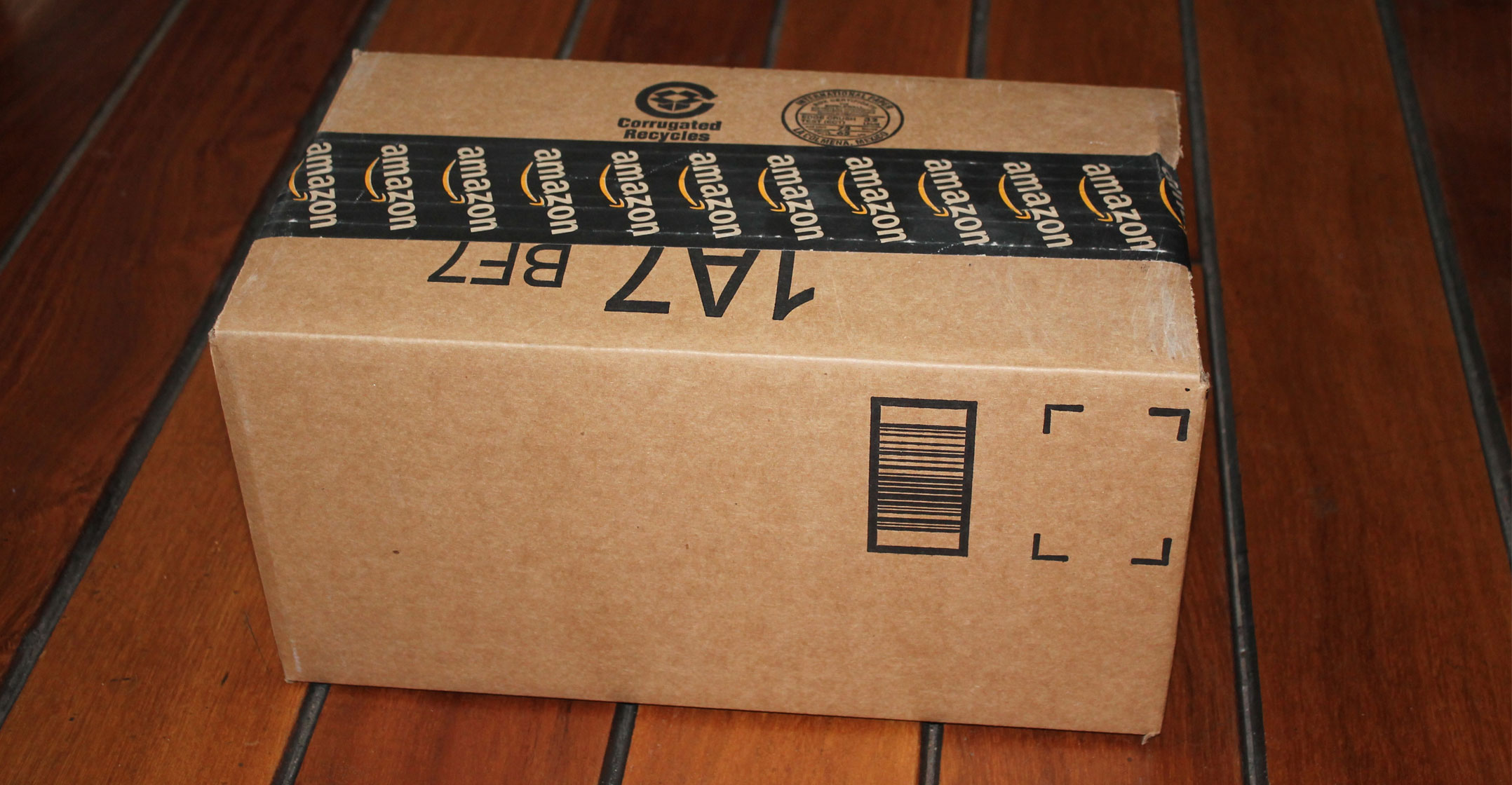
    The antitrust debate about Amazon focuses on the retailing giant’s perceived dominance of e-commerce, where it has nearly 50% of US online sales. Since it’s both a retailer and a marketplace for third-party sellers, Amazon has drawn scrutiny over whether it uses its clout and huge amount of sales data to give itself a leg up over smaller vendors — an issue the EU is already investigating. Warren has suggested that Amazon, like Apple, should be barred from competing with other players that sell on its marketplace. Regulators may also look into Amazon’s fulfilment practice, in which the company handles all aspects of fulfilling customer orders from shipping to packing and storing, according to Vox. The problem is that Amazon often charges much lower fees than competing platforms. Amazon Prime could also be a target. While consumers may love the fact that they can get free shipping on a wide range of goods and services with the subscription programme, the FTC has shown interest in the question of whether bundling these services allows Amazon to undercut competitors on price, according to Vox.

    The defence:
    Every time Amazon buys another company in another sector it sends a jolt of fear throughout the industry — whether groceries or pharmaceuticals or logistics. But Amazon claims it actually only holds a small percentage of the total retail market in the US and faces formidable competition from the likes of Walmart. The company, also a frequent target of senator Bernie Sanders of Vermont for its treatment of workers, also prides itself on being able to keep prices low for consumers.  — Reported by Molly Schuetz, with assistance from Gerrit De Vynck, David McLaughlin, Mark Gurman, Spencer Soper and Kurt Wagner, (c) 2019 Bloomberg LP



    Amazon Apple Facebook Google top
    Subscribe to TechCentral Subscribe to TechCentral
    Share. Facebook Twitter LinkedIn WhatsApp Telegram Email Copy Link
    Previous ArticleSA has ‘no choice’ but to increase funding for Eskom
    Next Article TalkCentral: Ep 262 – ‘Return of the cheese grater’

    Related Posts

    Black Friday goes digital in South Africa as online spending surges to record high

    Black Friday goes digital in South Africa as online spending surges to record high

    4 December 2025
    What South Africans searched for most in 2025

    What South Africans searched for most in 2025, according to Google

    4 December 2025
    Samsung goes trifold while Apple folds its arms

    Samsung goes trifold while Apple folds its arms

    2 December 2025
    Company News
    Beat the summer heat with Samsung's WindFree air conditioners

    Beat the summer heat with Samsung’s WindFree air conditioners

    5 December 2025
    AI is not a technology problem - iqbusiness

    AI is not a technology problem – iqbusiness

    5 December 2025
    Telcos are sitting on a data gold mine - but few know what do with it - Phillip du Plessis

    Telcos are sitting on a data gold mine – but few know what do with it

    4 December 2025
    Opinion
    Your data, your hardware: the DIY AI revolution is coming - Duncan McLeod

    Your data, your hardware: the DIY AI revolution is coming

    20 November 2025
    Zero Carbon Charge founder Joubert Roux

    The energy revolution South Africa can’t afford to miss

    20 November 2025
    It's time for a new approach to government IT spend in South Africa - Richard Firth

    It’s time for a new approach to government IT spend in South Africa

    19 November 2025

    Subscribe to Updates

    Get the best South African technology news and analysis delivered to your e-mail inbox every morning.

    Latest Posts
    Beat the summer heat with Samsung's WindFree air conditioners

    Beat the summer heat with Samsung’s WindFree air conditioners

    5 December 2025
    Netflix, Warner Bros talks raise fresh headaches for MultiChoice

    Netflix, Warner Bros talks raise fresh headaches for MultiChoice

    5 December 2025
    Big Microsoft 365 price increases coming next year

    Big Microsoft price increases coming next year

    5 December 2025
    AI is not a technology problem - iqbusiness

    AI is not a technology problem – iqbusiness

    5 December 2025
    © 2009 - 2025 NewsCentral Media
    • Cookie policy (ZA)
    • TechCentral – privacy and Popia

    Type above and press Enter to search. Press Esc to cancel.

    Manage consent

    TechCentral uses cookies to enhance its offerings. Consenting to these technologies allows us to serve you better. Not consenting or withdrawing consent may adversely affect certain features and functions of the website.

    Functional Always active
    The technical storage or access is strictly necessary for the legitimate purpose of enabling the use of a specific service explicitly requested by the subscriber or user, or for the sole purpose of carrying out the transmission of a communication over an electronic communications network.
    Preferences
    The technical storage or access is necessary for the legitimate purpose of storing preferences that are not requested by the subscriber or user.
    Statistics
    The technical storage or access that is used exclusively for statistical purposes. The technical storage or access that is used exclusively for anonymous statistical purposes. Without a subpoena, voluntary compliance on the part of your Internet Service Provider, or additional records from a third party, information stored or retrieved for this purpose alone cannot usually be used to identify you.
    Marketing
    The technical storage or access is required to create user profiles to send advertising, or to track the user on a website or across several websites for similar marketing purposes.
    • Manage options
    • Manage services
    • Manage {vendor_count} vendors
    • Read more about these purposes
    View preferences
    • {title}
    • {title}
    • {title}