Close Menu
TechCentralTechCentral

    Subscribe to the newsletter

    Get the best South African technology news and analysis delivered to your e-mail inbox every morning.

    Facebook X (Twitter) YouTube LinkedIn
    WhatsApp Facebook X (Twitter) LinkedIn YouTube
    TechCentralTechCentral
    • News
      Netflix, Warner Bros talks raise fresh headaches for MultiChoice

      Netflix, Warner Bros talks raise fresh headaches for MultiChoice

      5 December 2025
      Big Microsoft 365 price increases coming next year

      Big Microsoft price increases coming next year

      5 December 2025
      Vodacom to take control of Safaricom in R36-billion deal - Shameel Joosub

      Vodacom to take control of Safaricom in R36-billion deal

      4 December 2025
      Black Friday goes digital in South Africa as online spending surges to record high

      Black Friday goes digital in South Africa as online spending surges to record high

      4 December 2025
      BYD takes direct aim at Toyota with launch of sub-R500 000 Sealion 5 PHEV

      BYD takes direct aim at Toyota with launch of sub-R500 000 Sealion 5 PHEV

      4 December 2025
    • World
      Amazon and Google launch multi-cloud service for faster connectivity

      Amazon and Google launch multi-cloud service for faster connectivity

      1 December 2025
      Google makes final court plea to stop US breakup

      Google makes final court plea to stop US breakup

      21 November 2025
      Bezos unveils monster rocket: New Glenn 9x4 set to dwarf Saturn V

      Bezos unveils monster rocket: New Glenn 9×4 set to dwarf Saturn V

      21 November 2025
      Tech shares turbocharged by Nvidia's stellar earnings

      Tech shares turbocharged by stellar Nvidia earnings

      20 November 2025
      Config file blamed for Cloudflare meltdown that disrupted the web

      Config file blamed for Cloudflare meltdown that disrupted the web

      19 November 2025
    • In-depth
      Jensen Huang Nvidia

      So, will China really win the AI race?

      14 November 2025
      Valve's Linux console takes aim at Microsoft's gaming empire

      Valve’s Linux console takes aim at Microsoft’s gaming empire

      13 November 2025
      iOCO's extraordinary comeback plan - Rhys Summerton

      iOCO’s extraordinary comeback plan

      28 October 2025
      Why smart glasses keep failing - no, it's not the tech - Mark Zuckerberg

      Why smart glasses keep failing – it’s not the tech

      19 October 2025
      BYD to blanket South Africa with megawatt-scale EV charging network - Stella Li

      BYD to blanket South Africa with megawatt-scale EV charging network

      16 October 2025
    • TCS
      TCS+ | How Cloud on Demand helps partners thrive in the AWS ecosystem - Odwa Ndyaluvane and Xenia Rhode

      TCS+ | How Cloud On Demand helps partners thrive in the AWS ecosystem

      4 December 2025
      TCS | MTN Group CEO Ralph Mupita on competition, AI and the future of mobile

      TCS | Ralph Mupita on competition, AI and the future of mobile

      28 November 2025
      TCS | Dominic Cull on fixing South Africa's ICT policy bottlenecks

      TCS | Dominic Cull on fixing South Africa’s ICT policy bottlenecks

      21 November 2025
      TCS | BMW CEO Peter van Binsbergen on the future of South Africa's automotive industry

      TCS | BMW CEO Peter van Binsbergen on the future of South Africa’s automotive industry

      6 November 2025
      TCS | Why Altron is building an AI factory - Bongani Andy Mabaso

      TCS | Why Altron is building an AI factory in Johannesburg

      28 October 2025
    • Opinion
      Your data, your hardware: the DIY AI revolution is coming - Duncan McLeod

      Your data, your hardware: the DIY AI revolution is coming

      20 November 2025
      Zero Carbon Charge founder Joubert Roux

      The energy revolution South Africa can’t afford to miss

      20 November 2025
      It's time for a new approach to government IT spend in South Africa - Richard Firth

      It’s time for a new approach to government IT spend in South Africa

      19 November 2025
      How South Africa's broken Rica system fuels murder and mayhem - Farhad Khan

      How South Africa’s broken Rica system fuels murder and mayhem

      10 November 2025
      South Africa's AI data centre boom risks overloading a fragile grid - Paul Colmer

      South Africa’s AI data centre boom risks overloading a fragile grid

      30 October 2025
    • Company Hubs
      • Africa Data Centres
      • AfriGIS
      • Altron Digital Business
      • Altron Document Solutions
      • Altron Group
      • Arctic Wolf
      • AvertITD
      • Braintree
      • CallMiner
      • CambriLearn
      • CYBER1 Solutions
      • Digicloud Africa
      • Digimune
      • Domains.co.za
      • ESET
      • Euphoria Telecom
      • Incredible Business
      • iONLINE
      • IQbusiness
      • Iris Network Systems
      • LSD Open
      • NEC XON
      • Netstar
      • Network Platforms
      • Next DLP
      • Ovations
      • Paracon
      • Paratus
      • Q-KON
      • SevenC
      • SkyWire
      • Solid8 Technologies
      • Telit Cinterion
      • Tenable
      • Vertiv
      • Videri Digital
      • Vodacom Business
      • Wipro
      • Workday
      • XLink
    • Sections
      • AI and machine learning
      • Banking
      • Broadcasting and Media
      • Cloud services
      • Contact centres and CX
      • Cryptocurrencies
      • Education and skills
      • Electronics and hardware
      • Energy and sustainability
      • Enterprise software
      • Financial services
      • Information security
      • Internet and connectivity
      • Internet of Things
      • Investment
      • IT services
      • Lifestyle
      • Motoring
      • Public sector
      • Retail and e-commerce
      • Satellite communications
      • Science
      • SMEs and start-ups
      • Social media
      • Talent and leadership
      • Telecoms
    • Events
    • Advertise
    TechCentralTechCentral
    Home » In-depth » Around the world in 80 payments

    Around the world in 80 payments

    By The Conversation11 January 2016
    Twitter LinkedIn Facebook WhatsApp Email Telegram Copy Link
    News Alerts
    WhatsApp
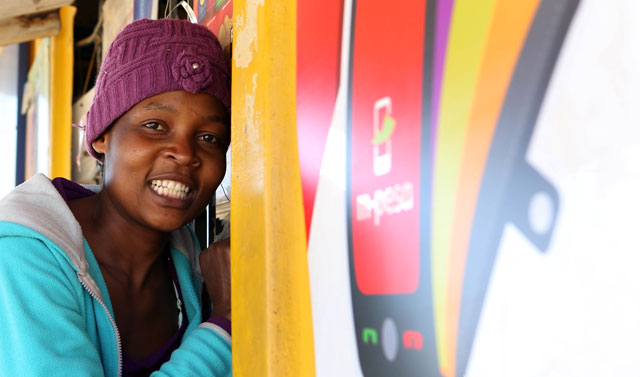
    M-Pesa has been launched in a number of African markets, but remains most popular in Kenya
    M-Pesa has been launched in a number of African markets, but remains most popular in Kenya

    Ever since computers were first introduced into the retail banking system in the late 1950s, there has been the vision of a future world where cash is obsolete. The near death of personal cheques, increase in debit and credit card use, and innovations such as PayPal, Square, Apple Pay and bitcoin, have led us to believe the cashless society is well within our reach.

    But data from Retail Banking Research, one of the most authoritative sources in the area, suggests that even though cashless payments are growing rapidly across the world, hard currency remains resilient. This trend was corroborated by a study commissioned by the ATM Industry Association of a panel of 13 countries. It suggested that global demand for cash grew by 4,5% between 2009 and 2013 (when the latest figures were available).

    So, 50 years into the journey and we are still not there yet. However, a number of innovations have taken place around the world. Here’s how different continents stack up.

    Europe
    One in 10 card payments were contactless for the first time in 2015 in the UK. By making small payments easier and quicker, contactless marks a major threat to cash. London is also fast becoming the world’s fintech capital, despite having substantially fewer resources available for investment than the US.

    Next summer, Copenhagen will host Money 20/20, the world’s major annual event for emerging payment technology. It will be the first time the forum convenes outside the US, bearing witness to the increasing importance of Europe when it comes to innovation in payments and financial technology. In countries like the Netherlands, there are cafes and even supermarkets that no longer accept cash.

    Many have pointed to the slow death of cash in Scandinavia, but cash is unlikely to completely die out — few may develop a mobile app suited to the needs of refugee migrants there, for example.

    North America
    Despite playing host to the world’s top technology firms and research centres, the US lags behind when it comes to implementing some of this tech. Chip-and-pin payment cards were only launched in October 2015 and do not seem to have done well over the Christmas holiday season, with reports of large retailers bypassing card readers and going back to signatures. This might seem backward but it’s important to remember that chip-and-pin cards are as much a protocol to determine who will bear the cost of fraud as a security feature.

    And, while the US has been slow to introduce chip and pin, there have been developments in smartphone payments. The bank JP Morgan Chase and retailer Walmart have both launched rivals to Apple Pay, which shows how retailers, banks and regulators are innovating to bring about faster payments and a potential cashless society.

    Africa and the Middle East
    The success of the mobile payments system M-Pesa in increasing financial inclusion in Kenya is well known, with the majority of the population able to transfer money using their phones, despite not having a bank account. And there has been similar growth of mobile payments in Botswana and South Africa. But the jury is out regarding the Cash-less Nigeria Project by its central bank, which aims to reduce the amount of physical cash circulating in the economy.

    Africa and the Middle East remain the areas with the lowest global numbers of adults with a bank account while Middle East and North Africa countries (as well as China and other Asia Pacific nations) have been and will continue to be the worlds’ growth markets for ATM manufacturers. This suggests the high use of banknotes in the everyday life of people in these regions.

    Asia, Latin America and Oceania
    In China, the mobile app WeChat is one to watch. WeChat, part of digital behemoth Tencent, part-owned by South Africa’s Naspers, has grown from its original service as a messaging app in 2011 to include taxi-hailing, food-ordering and money transfers. WeChat ranks as China’s most popular app with 650m users and is used to send both renminbi and cryptocurrencies like bitcoin between users.

    Technology as a promoter of financial inclusion is the name of the game in poor economies where the bottom third of the population hardly have any access to the financial sector and mobile money is seen as the potential solution. Chile is a notable example of successful government initiatives in this direction. But the one to watch is the Indian government’s drive to replace money with mobile payments on top of a growing private network made up of 140 000 private business and public sector bank correspondents.

    Cash is still king in most markets
    Cash is still king in most markets

    The challenge for mobile money, however, is that it sits at the intersection of finance and telecoms and so faces regulations from both. On top of that, India and other countries in Asia and Latin America have a significant number of transactions that take place outside the formal financial sector and, typically, an over-regulated telecoms sector. At the same time, those at the “bottom of the pyramid” are fearful of and distrust established financial institutions.

    Australia offers a much brighter outlook. The introduction of contactless payment cards in 2010 has proven hugely successful and as a result plastic has significantly eroded the use of cash and ATMs. Indeed, a recent study by the Reserve Bank of Australia found that the use of banknotes and coins fell from 69% in 2007 to just 47% in 2013. That decline took place across all age and income groups, with people in rural locations more likely to be using cash than those in major cities.

    While some countries have embraced mostly electronic forms of payment, this does not mean that others still using banknotes and coins are less efficient or backward as some might seem to think. Differences between countries and between rich and poor within them remain partly due to custom, culture and regulation. But also because new technology has failed to make its case to users.

    There is more innovative technology looking for a market than consumers looking for alternative ways to pay. And there is nothing wrong with existing forms of payment — they, and cash in particular, work well in most countries, for most consumers, 99% of the time. Of course, people change their habits and financial technology start-ups may one day disrupt the status quo.The Conversation

    Bernardo Batiz-Lazo is professor of business history and bank management, Bangor University; Leonidas Efthymiou is lecturer in management and strategy, Intercollege Larnaca; and Sophia Michael is languages department coordinator an lecturer of English, Intercollege Larnaca

    This article was originally published on The Conversation



    Apple Apple Pay Bitcoin M-Pesa PayPal Safaricom Square
    Subscribe to TechCentral Subscribe to TechCentral
    Share. Facebook Twitter LinkedIn WhatsApp Telegram Email Copy Link
    Previous ArticleFacebook’s Free Basics is no charity
    Next Article Backspace: ‘Not following’

    Related Posts

    Vodacom to take control of Safaricom in R36-billion deal - Shameel Joosub

    Vodacom to take control of Safaricom in R36-billion deal

    4 December 2025
    Samsung goes trifold while Apple folds its arms

    Samsung goes trifold while Apple folds its arms

    2 December 2025
    Samsung's first trifold smartphone is here

    Samsung’s first trifold smartphone is here

    2 December 2025
    Company News
    Beat the summer heat with Samsung's WindFree air conditioners

    Beat the summer heat with Samsung’s WindFree air conditioners

    5 December 2025
    AI is not a technology problem - iqbusiness

    AI is not a technology problem – iqbusiness

    5 December 2025
    Telcos are sitting on a data gold mine - but few know what do with it - Phillip du Plessis

    Telcos are sitting on a data gold mine – but few know what do with it

    4 December 2025
    Opinion
    Your data, your hardware: the DIY AI revolution is coming - Duncan McLeod

    Your data, your hardware: the DIY AI revolution is coming

    20 November 2025
    Zero Carbon Charge founder Joubert Roux

    The energy revolution South Africa can’t afford to miss

    20 November 2025
    It's time for a new approach to government IT spend in South Africa - Richard Firth

    It’s time for a new approach to government IT spend in South Africa

    19 November 2025

    Subscribe to Updates

    Get the best South African technology news and analysis delivered to your e-mail inbox every morning.

    Latest Posts
    Beat the summer heat with Samsung's WindFree air conditioners

    Beat the summer heat with Samsung’s WindFree air conditioners

    5 December 2025
    Netflix, Warner Bros talks raise fresh headaches for MultiChoice

    Netflix, Warner Bros talks raise fresh headaches for MultiChoice

    5 December 2025
    Big Microsoft 365 price increases coming next year

    Big Microsoft price increases coming next year

    5 December 2025
    AI is not a technology problem - iqbusiness

    AI is not a technology problem – iqbusiness

    5 December 2025
    © 2009 - 2025 NewsCentral Media
    • Cookie policy (ZA)
    • TechCentral – privacy and Popia

    Type above and press Enter to search. Press Esc to cancel.

    Manage consent

    TechCentral uses cookies to enhance its offerings. Consenting to these technologies allows us to serve you better. Not consenting or withdrawing consent may adversely affect certain features and functions of the website.

    Functional Always active
    The technical storage or access is strictly necessary for the legitimate purpose of enabling the use of a specific service explicitly requested by the subscriber or user, or for the sole purpose of carrying out the transmission of a communication over an electronic communications network.
    Preferences
    The technical storage or access is necessary for the legitimate purpose of storing preferences that are not requested by the subscriber or user.
    Statistics
    The technical storage or access that is used exclusively for statistical purposes. The technical storage or access that is used exclusively for anonymous statistical purposes. Without a subpoena, voluntary compliance on the part of your Internet Service Provider, or additional records from a third party, information stored or retrieved for this purpose alone cannot usually be used to identify you.
    Marketing
    The technical storage or access is required to create user profiles to send advertising, or to track the user on a website or across several websites for similar marketing purposes.
    • Manage options
    • Manage services
    • Manage {vendor_count} vendors
    • Read more about these purposes
    View preferences
    • {title}
    • {title}
    • {title}