Close Menu
TechCentralTechCentral

    Subscribe to the newsletter

    Get the best South African technology news and analysis delivered to your e-mail inbox every morning.

    Facebook X (Twitter) YouTube LinkedIn
    WhatsApp Facebook X (Twitter) LinkedIn YouTube
    TechCentralTechCentral
    • News
      TechCentral's South African Newsmakers of 2025

      TechCentral’s South African Newsmakers of 2025

      18 December 2025
      Malatsi buries Post Office's long-dead monopoly

      Malatsi buries Post Office monopoly the market ignored

      18 December 2025
      China races to crack EUV as chip war with the West intensifies

      China races to crack EUV lithography as chip war with the West intensifies

      18 December 2025
      Coursera to buy Udemy, in which Prosus is an investor

      Coursera to buy Udemy, in which Prosus is an investor

      18 December 2025
      It has been a year of policy victories, but crypto firms warn momentum could fade without durable US legislation.- Donald Trump

      Crypto’s Trump-era boom faces a 2026 reality check

      18 December 2025
    • World
      Warner Bros slams the door on Paramount

      Warner Bros slams the door on Paramount

      17 December 2025
      X moves to block bid to revive Twitter brand

      X moves to block bid to revive Twitter brand

      17 December 2025
      Oracle’s AI ambitions face scrutiny on earnings miss

      Oracle’s AI ambitions face scrutiny on earnings miss

      11 December 2025
      China will get Nvidia H200 chips - but not without paying Washington first

      China will get Nvidia H200 chips – but not without paying Washington first

      9 December 2025
      IBM reportedly close to $11-billion deal to buy Confluent - Arvind Krishna

      IBM reportedly close to $11-billion deal to buy Confluent

      8 December 2025
    • In-depth
      Black Friday goes digital in South Africa as online spending surges to record high

      Black Friday goes digital in South Africa as online spending surges to record high

      4 December 2025
      Canal+ plays hardball - and DStv viewers feel the pain

      Canal+ plays hardball – and DStv viewers feel the pain

      3 December 2025
      Jensen Huang Nvidia

      So, will China really win the AI race?

      14 November 2025
      Valve's Linux console takes aim at Microsoft's gaming empire

      Valve’s Linux console takes aim at Microsoft’s gaming empire

      13 November 2025
      iOCO's extraordinary comeback plan - Rhys Summerton

      iOCO’s extraordinary comeback plan

      28 October 2025
    • TCS
      TCS+ | Africa's digital transformation - unlocking AI through cloud and culture - Cliff de Wit Accelera Digital Group

      TCS+ | Cloud without culture won’t deliver AI: Accelera’s Cliff de Wit

      12 December 2025
      TCS+ | How Cloud on Demand helps partners thrive in the AWS ecosystem - Odwa Ndyaluvane and Xenia Rhode

      TCS+ | How Cloud On Demand helps partners thrive in the AWS ecosystem

      4 December 2025
      TCS | MTN Group CEO Ralph Mupita on competition, AI and the future of mobile

      TCS | Ralph Mupita on competition, AI and the future of mobile

      28 November 2025
      TCS | Dominic Cull on fixing South Africa's ICT policy bottlenecks

      TCS | Dominic Cull on fixing South Africa’s ICT policy bottlenecks

      21 November 2025
      TCS | BMW CEO Peter van Binsbergen on the future of South Africa's automotive industry

      TCS | BMW CEO Peter van Binsbergen on the future of South Africa’s automotive industry

      6 November 2025
    • Opinion
      Netflix, Warner Bros deal raises fresh headaches for MultiChoice - Duncan McLeod

      Netflix, Warner Bros deal raises fresh headaches for MultiChoice

      5 December 2025
      BIN scans, DDoS and the next cybercrime wave hitting South Africa's banks - Entersekt Gerhard Oosthuizen

      BIN scans, DDoS and the next cybercrime wave hitting South Africa’s banks

      3 December 2025
      Your data, your hardware: the DIY AI revolution is coming - Duncan McLeod

      Your data, your hardware: the DIY AI revolution is coming

      20 November 2025
      Zero Carbon Charge founder Joubert Roux

      The energy revolution South Africa can’t afford to miss

      20 November 2025
      It's time for a new approach to government IT spend in South Africa - Richard Firth

      It’s time for a new approach to government IT spend in South Africa

      19 November 2025
    • Company Hubs
      • Africa Data Centres
      • AfriGIS
      • Altron Digital Business
      • Altron Document Solutions
      • Altron Group
      • Arctic Wolf
      • AvertITD
      • Braintree
      • CallMiner
      • CambriLearn
      • CYBER1 Solutions
      • Digicloud Africa
      • Digimune
      • Domains.co.za
      • ESET
      • Euphoria Telecom
      • Incredible Business
      • iONLINE
      • IQbusiness
      • Iris Network Systems
      • LSD Open
      • NEC XON
      • Netstar
      • Network Platforms
      • Next DLP
      • Ovations
      • Paracon
      • Paratus
      • Q-KON
      • SevenC
      • SkyWire
      • Solid8 Technologies
      • Telit Cinterion
      • Tenable
      • Vertiv
      • Videri Digital
      • Vodacom Business
      • Wipro
      • Workday
      • XLink
    • Sections
      • AI and machine learning
      • Banking
      • Broadcasting and Media
      • Cloud services
      • Contact centres and CX
      • Cryptocurrencies
      • Education and skills
      • Electronics and hardware
      • Energy and sustainability
      • Enterprise software
      • Financial services
      • Information security
      • Internet and connectivity
      • Internet of Things
      • Investment
      • IT services
      • Lifestyle
      • Motoring
      • Public sector
      • Retail and e-commerce
      • Satellite communications
      • Science
      • SMEs and start-ups
      • Social media
      • Talent and leadership
      • Telecoms
    • Events
    • Advertise
    TechCentralTechCentral
    Home » News » Chinese anger over inability to compete with US in chips

    Chinese anger over inability to compete with US in chips

    By Agency Staff10 August 2022
    Twitter LinkedIn Facebook WhatsApp Email Telegram Copy Link
    News Alerts
    WhatsApp

    China’s top leadership has grown increasingly frustrated with a years-long failure to develop semiconductors that can replace US circuitry, an embarrassment capped by a flurry of anti-graft probes into top industry officials and the US$9-billion rescue of Tsinghua Unigroup.

    Senior officials are angry at how tens of billions of dollars funnelled into the industry over the past decade haven’t produced the sorts of breakthroughs that emerged from previous national-level scientific endeavours, according to people familiar with top government officials’ thinking. Washington, which has steadily ratcheted up restraints on China, has been able to strong-arm Beijing and successfully contain its technological ambitions, they said, asking not to be identified revealing sensitive deliberations.

    The investigations have sent shockwaves through a semiconductor industry long accustomed to top-level support. Xi Jinping’s government had allocated more than $100-billion to build up a domestic semiconductor sector so the country could break its dependence on the West. A key area of scrutiny is the National Integrated Circuit Industry Investment Fund — known within the industry as Big Fund — which had become Beijing’s primary vehicle for doling out capital to the country’s chip makers.

    If you’re going to be putting tens of billions of dollars in an industry … you’re going to have illicit dealings going on

    “If you’re going to be putting tens of billions of dollars in an industry, regardless of whether it’s a high technology one or just like building trains and airports, you’re going to have illicit dealings going on,” said Jordan Schneider, a senior analyst at Rhodium Group and host of the China Talk podcast.

    The government is investigating the head of the Big Fund, Ding Wenwu, who had once warned it was “unrealistic” to cut corners in developing chip technologies. Founded in 2014, the fund drew about $45-billion in capital and backed scores of companies, including Semiconductor Manufacturing International and Yangtze Memory Technologies. The fund operated mostly behind the scenes and kept investment standards away from public view, which some analysts said undercut accountability.

    Beijing’s frustration comes as Washington is slapping ever-tighter restrictions on China, adding to potential vulnerability for the Communist Party. The US is increasingly limiting the kind of chip-making equipment that American companies can export to Chinese customers, while enlisting allied countries so that key suppliers like the Netherlands’ ASML Holding and Japan’s Nikon join its technology blockade.

    Contingency plans

    This year, various government agencies began reviewing contingency plans for strategically important industries, in the event of stricter US sanctions, the people said. When senior officials examined the report on the chip sector last month, it became clear advances in the field may have been overstated and that many investments had failed to bear fruit, the people said.

    That ran contrary to a long-held belief that Beijing need only throw enough money at the problem. Xi has repeatedly urged breakthroughs in key technologies as the world faces “great changes not seen in a century”. The effort took on urgency during the Trump administration, which launched sanctions that proved effective at crippling Chinese giants including Huawei Technologies. Mastering advanced chip-making was regarded as the pinnacle of that initiative in China, which in 2020 accorded the same priority to that goal as developing the atomic bomb decades ago.

    The State Council Information Office didn’t respond to faxed inquiries. Unigroup representatives didn’t respond to requests for comment.

    Despite years of effort, China hasn’t made much progress in narrowing — let alone closing — the gap with the West. Chip-making machinery is still dominated by Dutch firm ASML, despite the efforts of state science institutions and firms like Naura Technology Group to design rival lithography machines. Japanese firms still control the supply of photoresists, a key chemical. Though tech giants such as Huawei drove intense research of local alternatives to US hardware, the country still relies on imports to meet the majority of its $155-billion in annual chip needs.
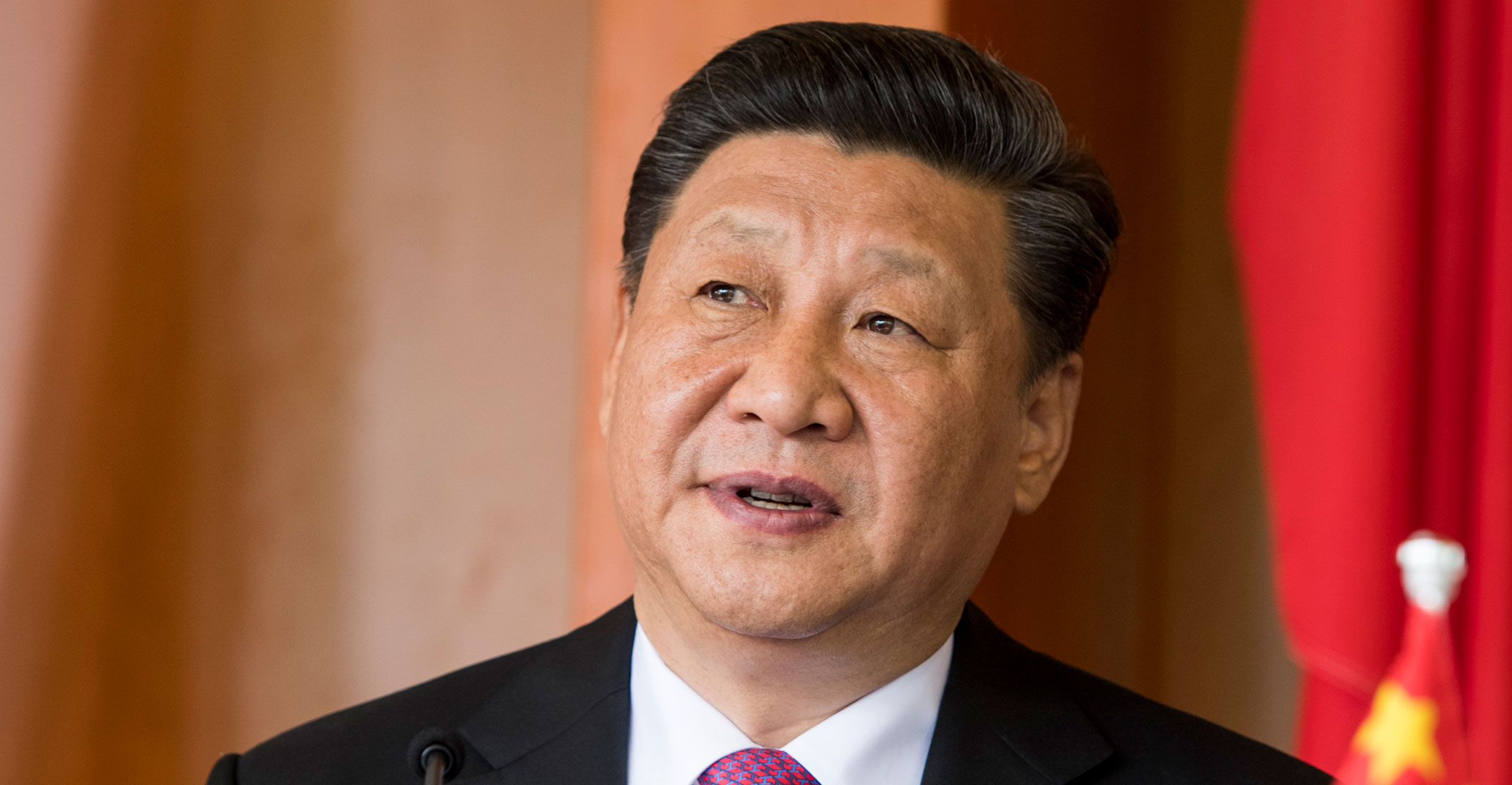
    Xi Jinping

    Critics of Beijing’s top-down policies have pointed out the enormous inefficiency that can result from freely doling out subsidies. Local media have reported about companies with scant experience winning incentives or grants for pursuing research. Powerful local interests have chased government money by championing projects in hopes of securing subsidies and, at times, political prestige. About 15 700 new semiconductor companies registered from January to May 2021, three times the number from the same period the previous year, according to an analysis by the South China Morning Post.

    China can point to some success. SMIC has made headway against foreign competitors — though industry experts say its advances may be overstated. The country also vastly increased memory chip capacity through Yangtze Memory and Changxin Memory Technologies.

    Local chip makers have also been able to go public. The most recent is Shenzhen Longsys Electronics, a Big Fund-backed memory chip maker, that fetched $365-million from a listing in Shenzhen last week.

    Still, Beijing’s frustration began to boil over in late 2021 when the Biden administration showed few signs of letting up on his predecessor’s campaign against China, and it became evident Unigroup — the standard-bearer for state-backed semiconductor innovation — was beginning to fail.

    The roster of investigations into chip industry figures now reads like a who’s who of China’s semiconductor pantheon. And the dragnet is expected to widen as investigations proceed, the people said.

    Graft busters last month announced an investigation into minister of industry & IT Xiao Yaqing

    In November, authorities announced probes into two executives linked to an investment firm that managed capital for the Big Fund. Last month, Ding, the fund’s chief, was also revealed to be under scrutiny. Several more people have been implicated, including former Unigroup chairman Zhao Weiguo and his co-president Diao Shijing.

    In addition, graft busters last month announced an investigation into minister of industry & IT Xiao Yaqing, the most senior sitting cabinet member to face a disciplinary probe in almost four years. His probe is not directly related to the Big Fund, one of the people said.

    Many of the chip-related investigations involve Tsinghua Unigroup, the Beijing-based giant Zhao led that was forced into a C¥60-billion ($8.9-billion) takeover to get out from under a mountain of debt. It began unravelling in 2021 after Beijing tightened lending nationwide, forcing the company into court receivership. When bidders for the company emerged, Zhao called their proposed takeover a “crime”.

    It’s not known whether Ding’s investigation is related to Unigroup. The Big Fund was involved in several projects Zhao spearheaded, including Yangtze Memory and Shanghai-based mobile communication chip giant Unisoc, according to company registration information. Unigroup also became a minority shareholder of the Big Fund under Ding’s watch.

    Probes of Zhao and Diao — a former MIIT official — were directly linked to alleged misconduct during their time at the chip giant, said another person, asking not to be named discussing a sensitive matter. Zhao and Ding didn’t pick up calls seeking comment. The Big Fund wasn’t immediately available for comment.

    Zhao was among the more highly regarded executives in China’s vast semiconductor arena. He made his name via several high-profile investments using state-backed capital, which expanded Unigroup’s reach into areas from mobile processors and memory to servers. His $23-billion bid for Micron Technology in 2015 was blocked by the US government at the eleventh hour.

    He went on to build the $30-billion Yangtze Memory in Wuhan, which now competes directly with Micron. But the 55-year-old was ousted after a consortium led by JAC Capital took over his company this year.

    Schneider of Rhodium Group said this series of chip probes have been unusually aggressive, perhaps because the industry is so critical to Xi’s strategic ambitions. In the past, China would cut off funding if there were signs of serious troubles, but semiconductors are the foundation of a robust tech sector.

    “Xi talks about the industry as needing to provide the Chinese people with full self-reliance,” he said.  — (c) 2022 Bloomberg LP
    Click here for South African tech news


    ASML Diao Shijing Micron Technology Naura Technology Group Nikon Shenzhen Longsys Electronics Tsinghua Unigroup Xi Jinping Yangtze Memory Technologies Zhao Weiguo
    Subscribe to TechCentral Subscribe to TechCentral
    Share. Facebook Twitter LinkedIn WhatsApp Telegram Email Copy Link
    Previous ArticleElon Musk sells $6.9-billion of Tesla to avoid Twitter fire sale
    Next Article BT, Seacom sign ‘strategic alliance’ for enterprise services

    Related Posts

    China races to crack EUV as chip war with the West intensifies

    China races to crack EUV lithography as chip war with the West intensifies

    18 December 2025
    China flaunts the future of war

    China flaunts the future of war

    11 September 2025
    China pushes US to loosen AI chip curbs - Xi Jinping

    China pushes US to loosen AI chip curbs

    11 August 2025
    Company News
    Why TechCentral is the most powerful platform for reaching IT decision makers

    Why TechCentral is the most powerful platform for reaching IT decision makers

    17 December 2025
    Business trends to watch in 2026 - Domains.co.za

    Business trends to watch in 2026

    17 December 2025
    MTN Zambia launches world's first 4G cloud smartphone solution - Huawei

    MTN Zambia launches world’s first 4G cloud smartphone solution

    17 December 2025
    Opinion
    Netflix, Warner Bros deal raises fresh headaches for MultiChoice - Duncan McLeod

    Netflix, Warner Bros deal raises fresh headaches for MultiChoice

    5 December 2025
    BIN scans, DDoS and the next cybercrime wave hitting South Africa's banks - Entersekt Gerhard Oosthuizen

    BIN scans, DDoS and the next cybercrime wave hitting South Africa’s banks

    3 December 2025
    Your data, your hardware: the DIY AI revolution is coming - Duncan McLeod

    Your data, your hardware: the DIY AI revolution is coming

    20 November 2025

    Subscribe to Updates

    Get the best South African technology news and analysis delivered to your e-mail inbox every morning.

    Latest Posts
    TechCentral's South African Newsmakers of 2025

    TechCentral’s South African Newsmakers of 2025

    18 December 2025
    Malatsi buries Post Office's long-dead monopoly

    Malatsi buries Post Office monopoly the market ignored

    18 December 2025
    China races to crack EUV as chip war with the West intensifies

    China races to crack EUV lithography as chip war with the West intensifies

    18 December 2025
    Coursera to buy Udemy, in which Prosus is an investor

    Coursera to buy Udemy, in which Prosus is an investor

    18 December 2025
    © 2009 - 2025 NewsCentral Media
    • Cookie policy (ZA)
    • TechCentral – privacy and Popia

    Type above and press Enter to search. Press Esc to cancel.

    Manage consent

    TechCentral uses cookies to enhance its offerings. Consenting to these technologies allows us to serve you better. Not consenting or withdrawing consent may adversely affect certain features and functions of the website.

    Functional Always active
    The technical storage or access is strictly necessary for the legitimate purpose of enabling the use of a specific service explicitly requested by the subscriber or user, or for the sole purpose of carrying out the transmission of a communication over an electronic communications network.
    Preferences
    The technical storage or access is necessary for the legitimate purpose of storing preferences that are not requested by the subscriber or user.
    Statistics
    The technical storage or access that is used exclusively for statistical purposes. The technical storage or access that is used exclusively for anonymous statistical purposes. Without a subpoena, voluntary compliance on the part of your Internet Service Provider, or additional records from a third party, information stored or retrieved for this purpose alone cannot usually be used to identify you.
    Marketing
    The technical storage or access is required to create user profiles to send advertising, or to track the user on a website or across several websites for similar marketing purposes.
    • Manage options
    • Manage services
    • Manage {vendor_count} vendors
    • Read more about these purposes
    View preferences
    • {title}
    • {title}
    • {title}