Close Menu
TechCentralTechCentral

    Subscribe to the newsletter

    Get the best South African technology news and analysis delivered to your e-mail inbox every morning.

    Facebook X (Twitter) YouTube LinkedIn
    WhatsApp Facebook X (Twitter) LinkedIn YouTube
    TechCentralTechCentral
    • News
      Eskom's diesel bill falls 86% as breakdowns hit eight-year low

      Eskom’s diesel bill falls 86% as breakdowns hit eight-year low

      31 July 2026
      Ramaphosa signs off on taking the grid away from Eskom

      Ramaphosa signs off on taking the grid away from Eskom

      31 July 2026
      Nedbank hires MTN's former tech chief as group CIO - Nikos Angelopoulos

      Nedbank hires MTN’s former tech chief as group CIO

      31 July 2026
      Microsoft just had the biggest day in stock market history

      Microsoft just had the biggest day in stock market history

      31 July 2026
      MTN Nigeria's growth engine stalled in second quarter - Karl Toriola

      MTN Nigeria’s growth engine stalled in second quarter

      31 July 2026
    • World
      Meta AI will now tell parents if their teen is in crisis

      Meta AI will now tell parents if their teen is in crisis

      17 July 2026
      IBM shares crash 25% as AI upends software spending - Arvind Krishna

      IBM shares crash 25% as AI upends software spending

      15 July 2026
      Jony Ive's first OpenAI device: an AI smart speaker - Jony Ive and Sam Altman

      Jony Ive’s first OpenAI device: an AI smart speaker

      15 July 2026
      Stripe, Advent in talks to buy PayPal for $53-billion

      Stripe, Advent in talks to buy PayPal for $53-billion

      15 July 2026
      Memory crisis sends smartphone market into steep decline

      Memory crisis sends smartphone market into steep decline

      13 July 2026
    • In-depth
      The plan to stop AI from breaking the world - Google DeepMind CEO Demis Hassabis. Image: John Sears

      The plan to stop AI from breaking the world

      16 July 2026
      The internet has a Strait of Hormuz problem

      The internet has a Strait of Hormuz problem

      15 July 2026
      AI boom sparks rally, frenzy and fear

      AI boom sparks rally, frenzy and fear

      11 June 2026
      Every plug-in hybrid on sale in South Africa, ranked by price - Lamborghini Temerario

      Every plug-in hybrid on sale in South Africa, ranked by price

      7 June 2026
      What Wi-Fi 8 will mean for wireless networks

      What Wi-Fi 8 will mean for wireless networks

      1 June 2026
    • TCS
      TCS+ | Why South African workers must become supervisors of digital labour - Accelera Digital Group Cliff de Wit

      TCS+ | Why South African workers must become supervisors of digital labour

      31 July 2026
      TCS | Rapid deployment rules can't work without municipalities: ACT - Nomvuyiso Batyi

      TCS | Icasa’s rules skip the real bottleneck: ACT

      30 July 2026
      TCS+ | iStore Business on why Apple makes sense for SMEs - Sudesh Pillay and Tamia Nontsikelelo

      TCS+ | iStore Business on why Apple makes sense for SMEs

      30 July 2026
      TCS+ | A smarter approach to cloud for South African businesses - Joel Chacko and Jonathan Oaker

      TCS+ | A smarter approach to cloud for South African businesses

      28 July 2026
      TCS | How Optasia lends billions to people banks can't see - Salvador Anglada

      TCS | How Optasia lends billions to people banks can’t see

      23 July 2026
    • Opinion
      The author, Jannie van Zyl

      Selling vapour is corporate suicide in slow motion

      16 July 2026
      Brazil's online gambling crackdown is a lesson for South Africa

      How Amazon outmanoeuvred Starlink in South Africa

      15 July 2026
      The Popia problem with agentic AI - Herman Haasbroek

      The Popia problem with agentic AI

      14 July 2026
      The author, Fanie van Rooyen

      South Africa can still catch the AI wave – here’s how

      7 July 2026
      The author, Fanie van Rooyen

      The AI utopia South Africa can’t afford

      1 July 2026
    • Company Hubs
      • 1Stream
      • Africa Data Centres
      • AfriGIS
      • Altron Digital Business
      • Altron Document Solutions
      • Altron Group
      • Arctic Wolf
      • Ascent Technology
      • AvertITD
      • BBD
      • Braintree
      • CallMiner
      • CambriLearn
      • CM Telecom
      • Contactable
      • CYBER1 Solutions
      • Digicloud Africa
      • Digimune
      • Domains.co.za
      • ESET
      • Euphoria Telecom
      • HOSTAFRICA
      • Incredible Business
      • iONLINE
      • IQbusiness
      • Iris Network Systems
      • Kaspersky
      • LSD Open
      • Mitel
      • NEC XON
      • Netstar
      • Network Platforms
      • Next DLP
      • Ovations
      • Paracon
      • Paratus
      • Q-KON
      • SevenC
      • SkyWire
      • Solid8 Technologies
      • Telit Cinterion
      • Telviva
      • Tenable
      • Vertiv
      • Videri Digital
      • Vodacom Business
      • Vox
      • Wipro
      • Workday
      • XLink
    • Sections
      • AI and machine learning
      • Banking
      • Broadcasting and Media
      • Cloud services
      • Contact centres and CX
      • Cryptocurrencies
      • Education and skills
      • Electronics and hardware
      • Energy and sustainability
      • Enterprise software
      • Financial services
      • HealthTech
      • Information security
      • Internet and connectivity
      • Internet of Things
      • Investment
      • IT services
      • Lifestyle
      • Policy and regulation
      • Public sector
      • Retail and e-commerce
      • Satellite communications
      • Science
      • SMEs and start-ups
      • Social media
      • Talent and leadership
      • Telecoms
      • Watts & Wheels
    • Events
    • Advertise
    TechCentralTechCentral
    Home » World » Chipzilla feels pain of falling data centre demand

    Chipzilla feels pain of falling data centre demand

    By Agency Staff26 April 2019
    Twitter LinkedIn Facebook WhatsApp Email Telegram Copy Link
    News Alerts
    WhatsApp

    Intel, which had been the biggest beneficiary of a years-long, multibillion-dollar spending spree by the cloud computing industry, signalled an end to an expansion that drove record revenue and profit.

    The world’s second largest semiconductor maker late on Thursday predicted its data centre group, which provides the chips that are at the heart of almost all server computers, will post a revenue decline in 2019, its first drop in a decade. Intel also cut its overall annual sales and earnings targets and said this quarter will be worse than analysts estimated, sending shares tumbling in extended trading.

    CEO Bob Swan can no longer rely on the business unit that had carried the company to a run of earnings growth even as the PC market wobbled. While admitting that the outlook has deteriorated from earlier projections, Swan said Intel’s customers, particularly those in China, are merely tapping the brakes after ordering chips at a frantic pace last year. Analysts said that’s not the whole story, and the downbeat forecast added to concerns that Intel may lose its lucrative stranglehold on the market for computer processors.

    The company urgently needs to solve recent manufacturing problems to head off possible gains by rival AMD

    “They’re undoubtedly losing share,’’ said Stacy Rasgon, an analyst at Sanford C Bernstein. The company urgently needs to solve recent manufacturing problems to head off possible gains by rival AMD, he said. “The overhang is still there. Is AMD going to take meaningful share?’’

    Intel shares slumped 7% in extended trading following the forecast, which was disclosed along with the company’s first-quarter earnings on Thursday. The stock had earlier slipped 1.9% to US$57.61 at the close in New York, leaving it up 23% this year. That performance trails the benchmark Philadelphia Stock Exchange Semiconductor Index’s 35% advance. AMD will report its quarterly numbers on 30 April.

    Hangover

    Intel’s overall sales in the first quarter were little changed at $16.1-billion. Analysts on average had predicted $16.03-billion in revenue. Net income slipped to $3.97-billion, or $0.87/share, while analysts had projected $0.82. In last year’s first quarter, Intel posted earnings of $4.45-billion, or $0.93. Gross margin, or the percentage of sales remaining after deducting the cost of production, was 56.6% in the quarter. Intel’s target range for that key indicator of efficiency for a manufacturing company is above 60%.

    Revenue in the current period will be about $15.6-billion and net income will be $0.83/share, the Santa Clara, California-based company said in a statement. That compares with average analysts’ estimates of $16.9-billion and $0.96/share, according to data compiled by Bloomberg. Sales for the year will be $69-billion, Intel said, below analyst projections of $71.3-billion.

    Swan said Intel is dealing with the hangover of “explosive growth” in 2018 and customers are working through their stockpiles of unused parts.
    “Last year we had outstanding growth and we were expecting a slowing in data centre (revenue),” he said in an interview after the report. “It’s going to take a little longer than we anticipated.” Swan also said that the steeper-than-expected drop in orders for some of his business had been more pronounced in China, where the company gets about a quarter of its annual revenue. “China headwinds have increased.”

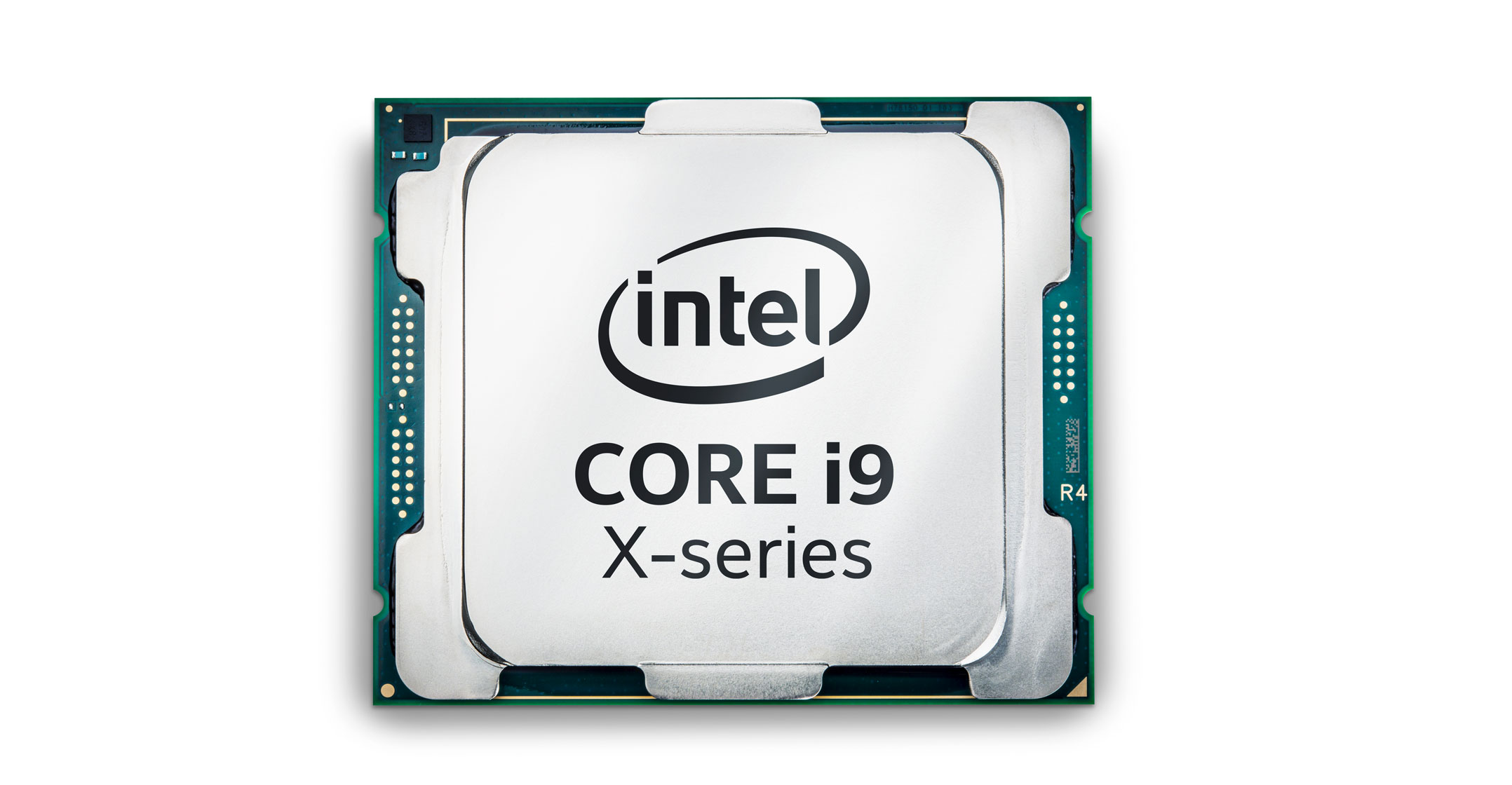
    The data centre unit declined 6.3% from a year earlier in the recent period, compared to growth of 9% in the fourth quarter. In January, Intel executives predicted that orders would pick up once customers worked through stockpiles of unused chips. Intel’s Xeon processors account for more than 95% of the market for chips that run servers, the machines that provide the backbone of the internet and corporate networks.

    Cloud computing companies such as Amazon.com, which reported strong earnings on Thursday, have ordered massive amounts of equipment to meet the insatiable demand for data processing. Such spending has been one of the key drivers of growth in the chip industry over the past few years. With its cautious outlook, Intel joined other chip makers, such as Xilinx and Texas Instruments, in signalling that massive spending on infrastructure isn’t going to come raging back this year.

    Though the server market is more profitable, Intel still gets the majority of its revenue from the PC market

    Intel’s first-quarter challenges weren’t confined to server chips. In memory, the company’s investments in a new type of semiconductor weren’t able to provide a cushion from a decline in the price of industry-standard parts it makes. Operating losses in that business widened to $297-million in the quarter, compared to a loss of $81-million in the same period a year earlier. Swan said the unit will have to do a better job of providing a return on investment, adding that he would look at options including partnerships.

    Intel also announced earlier this month that it will wind down a multibillion-dollar, decades-long effort to stake a claim in chips for the mobile phone industry. After Intel’s one significant customer, Apple, said it will return to using Qualcomm for its iPhones, Intel said it will stop developing chips for 5G smartphones and will complete an assessment of the opportunities for modems in PCs and other devices.

    Shortages

    Though the server market is more profitable, Intel still gets the majority of its revenue from the PC market, and its processors are the main component in most of the world’s laptops and desktops. That business posted first-quarter sales of $8.59-billion, up 4.5% from a year earlier. Shortages of some parts, caused by manufacturing issues at Intel’s plants, have limited shipments of PCs in recent quarters. Swan said those shortages will continue through the first half of the year.

    The company has been struggling to shift its factory network to more advanced techniques. That’s left Intel and the computer industry short of manufacturing capacity. In response, the company prioritised making chips that it can charge more for — server and high-end desktop processors — causing a scarcity of supply, particularly for cheaper laptops.

    Intel initially sparked concern last year that it may be losing its edge in manufacturing when the company confirmed that it wouldn’t mass produce semiconductors made with 10-nanometre technology until later this year. That may put it behind chip-making rivals such as Taiwan Semiconductor Manufacturing Co.  — Reported by Ian King, (c) 2019 Bloomberg LP

    Follow TechCentral on Google News Add TechCentral as your preferred source on Google


    Amazon AMD Intel
    WhatsApp YouTube
    Share. Facebook Twitter LinkedIn WhatsApp Telegram Email Copy Link
    Previous ArticleTether fraud probe sends cryptocurrencies tumbling
    Next Article Uber aims for $84-billion valuation in year’s largest IPO

    Related Posts

    Intel is back in the game - Intel CEO Lip-Bu Tan. Laure Andrillon/Reuters

    Intel is back in the game

    24 July 2026
    Massive changes coming to Amazon Prime Video - Jeff Bezos

    Massive changes coming to Amazon Prime Video

    23 July 2026
    The plan to stop AI from breaking the world - Google DeepMind CEO Demis Hassabis. Image: John Sears

    The plan to stop AI from breaking the world

    16 July 2026
    Company News
    Domains.co.za launches self-hosted n8n VPS hosting

    Domains.co.za launches self-hosted n8n VPS hosting

    31 July 2026
    Smarter.tech '26 shows why smarter technology begins with context - Obsidian Systems

    Context is the missing piece in enterprise AI: Obsidian

    31 July 2026
    Huawei launches 12 intelligent transport solutions in South Africa - Sam Tang

    Huawei launches 12 intelligent transport solutions in South Africa

    30 July 2026
    Opinion
    The author, Jannie van Zyl

    Selling vapour is corporate suicide in slow motion

    16 July 2026
    Brazil's online gambling crackdown is a lesson for South Africa

    How Amazon outmanoeuvred Starlink in South Africa

    15 July 2026
    The Popia problem with agentic AI - Herman Haasbroek

    The Popia problem with agentic AI

    14 July 2026

    Subscribe to Updates

    Get the best South African technology news and analysis delivered to your e-mail inbox every morning.

    Latest Posts
    Eskom's diesel bill falls 86% as breakdowns hit eight-year low

    Eskom’s diesel bill falls 86% as breakdowns hit eight-year low

    31 July 2026
    Ramaphosa signs off on taking the grid away from Eskom

    Ramaphosa signs off on taking the grid away from Eskom

    31 July 2026
    Domains.co.za launches self-hosted n8n VPS hosting

    Domains.co.za launches self-hosted n8n VPS hosting

    31 July 2026
    Smarter.tech '26 shows why smarter technology begins with context - Obsidian Systems

    Context is the missing piece in enterprise AI: Obsidian

    31 July 2026
    © 2009 - 2026 NewsCentral Media
    Built and maintained by Chronon
    • Cookie policy (ZA)
    • TechCentral – privacy and Popia

    Type above and press Enter to search. Press Esc to cancel.

    Manage consent

    TechCentral uses cookies to enhance its offerings. Consenting to these technologies allows us to serve you better. Not consenting or withdrawing consent may adversely affect certain features and functions of the website.

    Functional Always active
    The technical storage or access is strictly necessary for the legitimate purpose of enabling the use of a specific service explicitly requested by the subscriber or user, or for the sole purpose of carrying out the transmission of a communication over an electronic communications network.
    Preferences
    The technical storage or access is necessary for the legitimate purpose of storing preferences that are not requested by the subscriber or user.
    Statistics
    The technical storage or access that is used exclusively for statistical purposes. The technical storage or access that is used exclusively for anonymous statistical purposes. Without a subpoena, voluntary compliance on the part of your Internet Service Provider, or additional records from a third party, information stored or retrieved for this purpose alone cannot usually be used to identify you.
    Marketing
    The technical storage or access is required to create user profiles to send advertising, or to track the user on a website or across several websites for similar marketing purposes.
    • Manage options
    • Manage services
    • Manage {vendor_count} vendors
    • Read more about these purposes
    View preferences
    • {title}
    • {title}
    • {title}