Close Menu
TechCentralTechCentral

    Subscribe to the newsletter

    Get the best South African technology news and analysis delivered to your e-mail inbox every morning.

    Facebook X (Twitter) YouTube LinkedIn
    WhatsApp Facebook X (Twitter) LinkedIn YouTube
    TechCentralTechCentral
    • News
      Big Microsoft 365 price increases coming next year

      Big Microsoft price increases coming next year

      5 December 2025
      Vodacom to take control of Safaricom in R36-billion deal - Shameel Joosub

      Vodacom to take control of Safaricom in R36-billion deal

      4 December 2025
      Black Friday goes digital in South Africa as online spending surges to record high

      Black Friday goes digital in South Africa as online spending surges to record high

      4 December 2025
      BYD takes direct aim at Toyota with launch of sub-R500 000 Sealion 5 PHEV

      BYD takes direct aim at Toyota with launch of sub-R500 000 Sealion 5 PHEV

      4 December 2025
      'Get it now': Takealot in new instant deliveries pilot

      ‘Get it now’: Takealot in new instant deliveries pilot

      4 December 2025
    • World
      Amazon and Google launch multi-cloud service for faster connectivity

      Amazon and Google launch multi-cloud service for faster connectivity

      1 December 2025
      Google makes final court plea to stop US breakup

      Google makes final court plea to stop US breakup

      21 November 2025
      Bezos unveils monster rocket: New Glenn 9x4 set to dwarf Saturn V

      Bezos unveils monster rocket: New Glenn 9×4 set to dwarf Saturn V

      21 November 2025
      Tech shares turbocharged by Nvidia's stellar earnings

      Tech shares turbocharged by stellar Nvidia earnings

      20 November 2025
      Config file blamed for Cloudflare meltdown that disrupted the web

      Config file blamed for Cloudflare meltdown that disrupted the web

      19 November 2025
    • In-depth
      Jensen Huang Nvidia

      So, will China really win the AI race?

      14 November 2025
      Valve's Linux console takes aim at Microsoft's gaming empire

      Valve’s Linux console takes aim at Microsoft’s gaming empire

      13 November 2025
      iOCO's extraordinary comeback plan - Rhys Summerton

      iOCO’s extraordinary comeback plan

      28 October 2025
      Why smart glasses keep failing - no, it's not the tech - Mark Zuckerberg

      Why smart glasses keep failing – it’s not the tech

      19 October 2025
      BYD to blanket South Africa with megawatt-scale EV charging network - Stella Li

      BYD to blanket South Africa with megawatt-scale EV charging network

      16 October 2025
    • TCS
      TCS+ | How Cloud on Demand helps partners thrive in the AWS ecosystem - Odwa Ndyaluvane and Xenia Rhode

      TCS+ | How Cloud On Demand helps partners thrive in the AWS ecosystem

      4 December 2025
      TCS | MTN Group CEO Ralph Mupita on competition, AI and the future of mobile

      TCS | Ralph Mupita on competition, AI and the future of mobile

      28 November 2025
      TCS | Dominic Cull on fixing South Africa's ICT policy bottlenecks

      TCS | Dominic Cull on fixing South Africa’s ICT policy bottlenecks

      21 November 2025
      TCS | BMW CEO Peter van Binsbergen on the future of South Africa's automotive industry

      TCS | BMW CEO Peter van Binsbergen on the future of South Africa’s automotive industry

      6 November 2025
      TCS | Why Altron is building an AI factory - Bongani Andy Mabaso

      TCS | Why Altron is building an AI factory in Johannesburg

      28 October 2025
    • Opinion
      Your data, your hardware: the DIY AI revolution is coming - Duncan McLeod

      Your data, your hardware: the DIY AI revolution is coming

      20 November 2025
      Zero Carbon Charge founder Joubert Roux

      The energy revolution South Africa can’t afford to miss

      20 November 2025
      It's time for a new approach to government IT spend in South Africa - Richard Firth

      It’s time for a new approach to government IT spend in South Africa

      19 November 2025
      How South Africa's broken Rica system fuels murder and mayhem - Farhad Khan

      How South Africa’s broken Rica system fuels murder and mayhem

      10 November 2025
      South Africa's AI data centre boom risks overloading a fragile grid - Paul Colmer

      South Africa’s AI data centre boom risks overloading a fragile grid

      30 October 2025
    • Company Hubs
      • Africa Data Centres
      • AfriGIS
      • Altron Digital Business
      • Altron Document Solutions
      • Altron Group
      • Arctic Wolf
      • AvertITD
      • Braintree
      • CallMiner
      • CambriLearn
      • CYBER1 Solutions
      • Digicloud Africa
      • Digimune
      • Domains.co.za
      • ESET
      • Euphoria Telecom
      • Incredible Business
      • iONLINE
      • IQbusiness
      • Iris Network Systems
      • LSD Open
      • NEC XON
      • Netstar
      • Network Platforms
      • Next DLP
      • Ovations
      • Paracon
      • Paratus
      • Q-KON
      • SevenC
      • SkyWire
      • Solid8 Technologies
      • Telit Cinterion
      • Tenable
      • Vertiv
      • Videri Digital
      • Vodacom Business
      • Wipro
      • Workday
      • XLink
    • Sections
      • AI and machine learning
      • Banking
      • Broadcasting and Media
      • Cloud services
      • Contact centres and CX
      • Cryptocurrencies
      • Education and skills
      • Electronics and hardware
      • Energy and sustainability
      • Enterprise software
      • Financial services
      • Information security
      • Internet and connectivity
      • Internet of Things
      • Investment
      • IT services
      • Lifestyle
      • Motoring
      • Public sector
      • Retail and e-commerce
      • Satellite communications
      • Science
      • SMEs and start-ups
      • Social media
      • Talent and leadership
      • Telecoms
    • Events
    • Advertise
    TechCentralTechCentral
    Home » Top » Counting the cost of mass surveillance

    Counting the cost of mass surveillance

    By The Conversation6 October 2015
    Twitter LinkedIn Facebook WhatsApp Email Telegram Copy Link
    News Alerts
    WhatsApp
    gchq-640
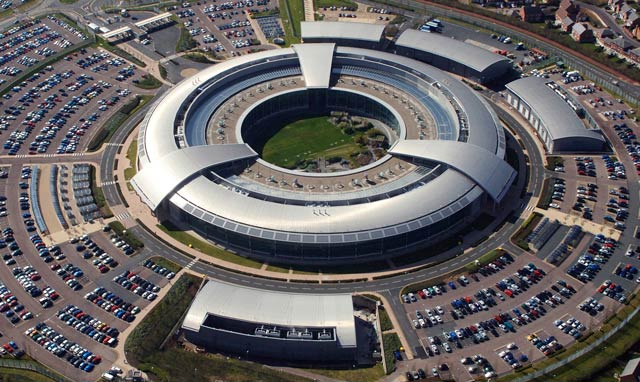
    GCHQ headquarters

    The release of yet more of Edward Snowden’s leaked files reveals the still-astonishing scale and breadth of government surveillance after more than a year of revelations. These recent papers revealed to The Intercept website discuss a programme within Britain’s GCHQ known as Karma Police, in which the intelligence agency gathered more than 1,1 trillion pieces of information on UK citizens between August 2007 and March 2009.

    Spurred on by the expansion of intercept warrants under the Terrorism Act 2006, this information is users’ Internet metadata — details of phone calls, e-mail messages and browser connections that includes passwords, contacts, phone numbers, e-mail addresses and folders used to organise e-mails, but not the actual content of messages or e-mails.

    Metadata can help identify people of interest, build profiles, and assist with decisions to start or escalate surveillance of individuals. All this information can be collected often at a fraction of the cost of doing this through traditional methods. In other words, metadata is not insignificant — and this is precisely why governments are so committed to collecting and processing it. However, bulk metadata collection — where information is collected from everyone whether a “person of interest” or not — is rightly a source of deep anxiety from both security and human rights perspectives.

    It’s not at all clear that bulk collection of metadata makes society “safer”. While such data may be (and often is) useful in investigating crime, its use in helping anticipate terrorist incidents is hotly disputed. This doesn’t mean that security services cannot point to situations in which they have disrupted possible attacks through information gleaned from such activities, but it does mean that the justification for bulk, rather than targeted, data collection has not been made.

    In fact, the question as to whether bulk collection of metadata, and the sheer volume of data it generates, may actually hinder effective identification of terrorist suspects and other serious crime hasn’t been satisfactorily addressed. Nor is it clear whether a bulk data collection approach, rather than one that emphasises directing more resources towards traditional police and human intelligence techniques, is any more efficient, especially in the UK where GCHQ and MI5 share information.

    Bulk metadata collection relies on algorithmic computer analysis followed by human judgment. It’s not clear how much is missed, or how many false positives are generated, by adopting a machine-centric approach over one that involves more human experience. Furthermore, we don’t know to what extent resources are diverted away from funding the human expertise of policing, relationship building and developing professional investigative instincts as a result of such programmes of data collection and processing.

    At the very least, intrusive operations such as this one should work; if they are to be accepted at all, they should be justified by their effectiveness, something that remains more a matter of rhetoric than of established fact.

    spy-640

    Even if bulk data collection does work, is this justification in itself? The answer must be determined by oversight and the importance we ascribe to our civil rights.

    No agency that collects and processes this volume of information should be without effective oversight. Yet we have seen that, despite GCHQ being subject to oversight from the Intelligence Services Commissioner for its intelligence function, and to the secretary of state for foreign and commonwealth affairs for its overseas-related work, its culture of secrecy and non-disclosure nevertheless means that we’re left to rely on leaks and whistleblowers to get a clear picture of what is happening. The WikiLeaks documents demonstrate this all too well, showing internal discussions that reveal GCHQ bosses felt their oversight bodies were “on side”.

    This is a matter of real concern from a human rights and civil liberties perspective. The growth of bulk data collection and computerised processing by government agencies is fundamentally shifting political, operational and potentially even popular conceptions of what “privacy” really entails. What are we entitled to keep to ourselves? When are we entitled to expect the state to have to justify its intrusions into that private space? The fact that this is metadata rather than content doesn’t remove the privacy implications of such surveillance.

    As the court of justice of the European Union said in April 2014, metadata “may allow very precise conclusions to be drawn concerning … private lives”. In order for any retention regime to be proportionate — and so stay within the requirements of human rights law — proper safeguards and limitations must be built in. Otherwise the effects of surveillance could be corrosive, creating a chilling sense that “one is being watched permanently”.

    As GCHQ continues to amass data on Internet users, it is time for political leaders to answer two vital questions: does bulk data collection work? And, if so, is it worth the cost?The Conversation

    • Fiona de Londras is professor of global legal studies at Birmingham Law School, University of Birmingham
    • This article was originally published on The Conversation


    Fiona de Londras GCHQ
    Subscribe to TechCentral Subscribe to TechCentral
    Share. Facebook Twitter LinkedIn WhatsApp Telegram Email Copy Link
    Previous ArticleANC urged to ditch nuclear plans
    Next Article How big will SA’s VOD market get?

    Related Posts

    Musk's xAI seeks funding at $18-billion valuation

    Warning that AI will lead to increase in cyberattacks

    24 January 2024

    UK spy chief warns China could win control of world’s ‘operating system’

    23 April 2021

    UK to phase out Huawei’s 5G role within months: report

    5 July 2020
    Company News
    AI is not a technology problem - iqbusiness

    AI is not a technology problem – iqbusiness

    5 December 2025
    Telcos are sitting on a data gold mine - but few know what do with it - Phillip du Plessis

    Telcos are sitting on a data gold mine – but few know what do with it

    4 December 2025
    Unlock smarter computing with your surface Copilot+ PC

    Unlock smarter computing with your Surface Copilot+ PC

    4 December 2025
    Opinion
    Your data, your hardware: the DIY AI revolution is coming - Duncan McLeod

    Your data, your hardware: the DIY AI revolution is coming

    20 November 2025
    Zero Carbon Charge founder Joubert Roux

    The energy revolution South Africa can’t afford to miss

    20 November 2025
    It's time for a new approach to government IT spend in South Africa - Richard Firth

    It’s time for a new approach to government IT spend in South Africa

    19 November 2025

    Subscribe to Updates

    Get the best South African technology news and analysis delivered to your e-mail inbox every morning.

    Latest Posts
    Big Microsoft 365 price increases coming next year

    Big Microsoft price increases coming next year

    5 December 2025
    AI is not a technology problem - iqbusiness

    AI is not a technology problem – iqbusiness

    5 December 2025
    Vodacom to take control of Safaricom in R36-billion deal - Shameel Joosub

    Vodacom to take control of Safaricom in R36-billion deal

    4 December 2025
    Black Friday goes digital in South Africa as online spending surges to record high

    Black Friday goes digital in South Africa as online spending surges to record high

    4 December 2025
    © 2009 - 2025 NewsCentral Media
    • Cookie policy (ZA)
    • TechCentral – privacy and Popia

    Type above and press Enter to search. Press Esc to cancel.

    Manage consent

    TechCentral uses cookies to enhance its offerings. Consenting to these technologies allows us to serve you better. Not consenting or withdrawing consent may adversely affect certain features and functions of the website.

    Functional Always active
    The technical storage or access is strictly necessary for the legitimate purpose of enabling the use of a specific service explicitly requested by the subscriber or user, or for the sole purpose of carrying out the transmission of a communication over an electronic communications network.
    Preferences
    The technical storage or access is necessary for the legitimate purpose of storing preferences that are not requested by the subscriber or user.
    Statistics
    The technical storage or access that is used exclusively for statistical purposes. The technical storage or access that is used exclusively for anonymous statistical purposes. Without a subpoena, voluntary compliance on the part of your Internet Service Provider, or additional records from a third party, information stored or retrieved for this purpose alone cannot usually be used to identify you.
    Marketing
    The technical storage or access is required to create user profiles to send advertising, or to track the user on a website or across several websites for similar marketing purposes.
    • Manage options
    • Manage services
    • Manage {vendor_count} vendors
    • Read more about these purposes
    View preferences
    • {title}
    • {title}
    • {title}