
Close Menu
TechCentralTechCentral

    Subscribe to the newsletter

    Get the best South African technology news and analysis delivered to your e-mail inbox every morning.

    Facebook X (Twitter) YouTube LinkedIn
    WhatsApp Facebook X (Twitter) LinkedIn YouTube
    TechCentralTechCentral
    • News
      Netflix, Warner Bros talks raise fresh headaches for MultiChoice

      Netflix, Warner Bros talks raise fresh headaches for MultiChoice

      5 December 2025
      Big Microsoft 365 price increases coming next year

      Big Microsoft price increases coming next year

      5 December 2025
      Vodacom to take control of Safaricom in R36-billion deal - Shameel Joosub

      Vodacom to take control of Safaricom in R36-billion deal

      4 December 2025
      Black Friday goes digital in South Africa as online spending surges to record high

      Black Friday goes digital in South Africa as online spending surges to record high

      4 December 2025
      BYD takes direct aim at Toyota with launch of sub-R500 000 Sealion 5 PHEV

      BYD takes direct aim at Toyota with launch of sub-R500 000 Sealion 5 PHEV

      4 December 2025
    • World
      Amazon and Google launch multi-cloud service for faster connectivity

      Amazon and Google launch multi-cloud service for faster connectivity

      1 December 2025
      Google makes final court plea to stop US breakup

      Google makes final court plea to stop US breakup

      21 November 2025
      Bezos unveils monster rocket: New Glenn 9x4 set to dwarf Saturn V

      Bezos unveils monster rocket: New Glenn 9×4 set to dwarf Saturn V

      21 November 2025
      Tech shares turbocharged by Nvidia's stellar earnings

      Tech shares turbocharged by stellar Nvidia earnings

      20 November 2025
      Config file blamed for Cloudflare meltdown that disrupted the web

      Config file blamed for Cloudflare meltdown that disrupted the web

      19 November 2025
    • In-depth
      Jensen Huang Nvidia

      So, will China really win the AI race?

      14 November 2025
      Valve's Linux console takes aim at Microsoft's gaming empire

      Valve’s Linux console takes aim at Microsoft’s gaming empire

      13 November 2025
      iOCO's extraordinary comeback plan - Rhys Summerton

      iOCO’s extraordinary comeback plan

      28 October 2025
      Why smart glasses keep failing - no, it's not the tech - Mark Zuckerberg

      Why smart glasses keep failing – it’s not the tech

      19 October 2025
      BYD to blanket South Africa with megawatt-scale EV charging network - Stella Li

      BYD to blanket South Africa with megawatt-scale EV charging network

      16 October 2025
    • TCS
      TCS+ | How Cloud on Demand helps partners thrive in the AWS ecosystem - Odwa Ndyaluvane and Xenia Rhode

      TCS+ | How Cloud On Demand helps partners thrive in the AWS ecosystem

      4 December 2025
      TCS | MTN Group CEO Ralph Mupita on competition, AI and the future of mobile

      TCS | Ralph Mupita on competition, AI and the future of mobile

      28 November 2025
      TCS | Dominic Cull on fixing South Africa's ICT policy bottlenecks

      TCS | Dominic Cull on fixing South Africa’s ICT policy bottlenecks

      21 November 2025
      TCS | BMW CEO Peter van Binsbergen on the future of South Africa's automotive industry

      TCS | BMW CEO Peter van Binsbergen on the future of South Africa’s automotive industry

      6 November 2025
      TCS | Why Altron is building an AI factory - Bongani Andy Mabaso

      TCS | Why Altron is building an AI factory in Johannesburg

      28 October 2025
    • Opinion
      Your data, your hardware: the DIY AI revolution is coming - Duncan McLeod

      Your data, your hardware: the DIY AI revolution is coming

      20 November 2025
      Zero Carbon Charge founder Joubert Roux

      The energy revolution South Africa can’t afford to miss

      20 November 2025
      It's time for a new approach to government IT spend in South Africa - Richard Firth

      It’s time for a new approach to government IT spend in South Africa

      19 November 2025
      How South Africa's broken Rica system fuels murder and mayhem - Farhad Khan

      How South Africa’s broken Rica system fuels murder and mayhem

      10 November 2025
      South Africa's AI data centre boom risks overloading a fragile grid - Paul Colmer

      South Africa’s AI data centre boom risks overloading a fragile grid

      30 October 2025
    • Company Hubs
      • Africa Data Centres
      • AfriGIS
      • Altron Digital Business
      • Altron Document Solutions
      • Altron Group
      • Arctic Wolf
      • AvertITD
      • Braintree
      • CallMiner
      • CambriLearn
      • CYBER1 Solutions
      • Digicloud Africa
      • Digimune
      • Domains.co.za
      • ESET
      • Euphoria Telecom
      • Incredible Business
      • iONLINE
      • IQbusiness
      • Iris Network Systems
      • LSD Open
      • NEC XON
      • Netstar
      • Network Platforms
      • Next DLP
      • Ovations
      • Paracon
      • Paratus
      • Q-KON
      • SevenC
      • SkyWire
      • Solid8 Technologies
      • Telit Cinterion
      • Tenable
      • Vertiv
      • Videri Digital
      • Vodacom Business
      • Wipro
      • Workday
      • XLink
    • Sections
      • AI and machine learning
      • Banking
      • Broadcasting and Media
      • Cloud services
      • Contact centres and CX
      • Cryptocurrencies
      • Education and skills
      • Electronics and hardware
      • Energy and sustainability
      • Enterprise software
      • Financial services
      • Information security
      • Internet and connectivity
      • Internet of Things
      • Investment
      • IT services
      • Lifestyle
      • Motoring
      • Public sector
      • Retail and e-commerce
      • Satellite communications
      • Science
      • SMEs and start-ups
      • Social media
      • Talent and leadership
      • Telecoms
    • Events
    • Advertise
    TechCentralTechCentral
    Home » In-depth » Europe’s failure to tame Google is a lesson for the US

    Europe’s failure to tame Google is a lesson for the US

    By Agency Staff6 July 2020
    Twitter LinkedIn Facebook WhatsApp Email Telegram Copy Link
    News Alerts
    WhatsApp

    As US authorities ready the biggest antitrust case of the new century, there are lessons to be learnt from Europe’s attempt to inject more competition into search, one of the most lucrative digital markets.

    Two years after a record fine and an order to give Europeans more choice, Google retains a vice-like grip on this business. In May 2018, just before the European Commission acted, Google had 97% of the mobile search market in the region, according to StatCounter. Its share for May this year was even higher.

    “We don’t want them to copy the current EU model because it’s fundamentally flawed,” said Gabriel Weinberg, CEO of rival search service DuckDuckGo, referring to the justice department and state regulators. The firm spoke recently with those authorities about Google’s dominance.

    This is likely to be the most important antitrust case since the DoJ sued Microsoft more than two decades ago

    How US regulators proceed, and whether they learn from Europe’s experience, will help determine the fate of what is likely to be the most important antitrust case since the DoJ sued Microsoft more than two decades ago. With more than US$100-billion in cash, and quarterly profit exceeding $6-billion, big fines have little impact on Google. So regulators are increasingly looking to remedies that may change the company’s behaviour and offer consumers more choice. The DoJ reached out to at least one European company, Ecosia, to discuss versions of Google’s remedy in the EU case, the German search engine has said.

    In 2018, Europe’s antitrust authorities focused on the subtle but important factors that solidified Google’s grip on the region’s mobile search market. Getting a service pre-installed on smartphones often leads to big user gains, as does appearing on the home screens of handsets. Google has used deals tied to its popular Android mobile operating system to ensure its search engine gets such prized placements, leaving little room for rivals.

    Choice screen

    The EU ordered Google to stop bundling its search and browser apps with Android. Google reacted by charging phone manufacturers to license Android. It also opted to appease regulators by offering choice to users — but only on new Android phones from 1 March and only via a “choice screen” of three alternative search apps shown once when people switch on the handsets for the first time.

    There’s a precedent for approaches like this working. In 2017, Russia’s antitrust watchdog ordered Google to let competing search engines and other apps be pre-installed on Android smartphones in the country. The company also had to create a “choice window” for devices already in the market, so users could choose their default search engine when they next updated the software on their devices. Since that ruling, Russia’s Yandex has grown its search market share in the country by 20 percentage points to 58%, according to Bernstein Research estimates.

    Europe’s choice screen has failed to produce similar results so far. In March and April, rivals DuckDuckGo, Givero and Seznam.cz won slots to appear but got no new downloads for their search apps. DuckDuckGo was offered to customers across Europe while Givero bid to appear only in Denmark and Seznam in the Czech Republic and Slovakia.
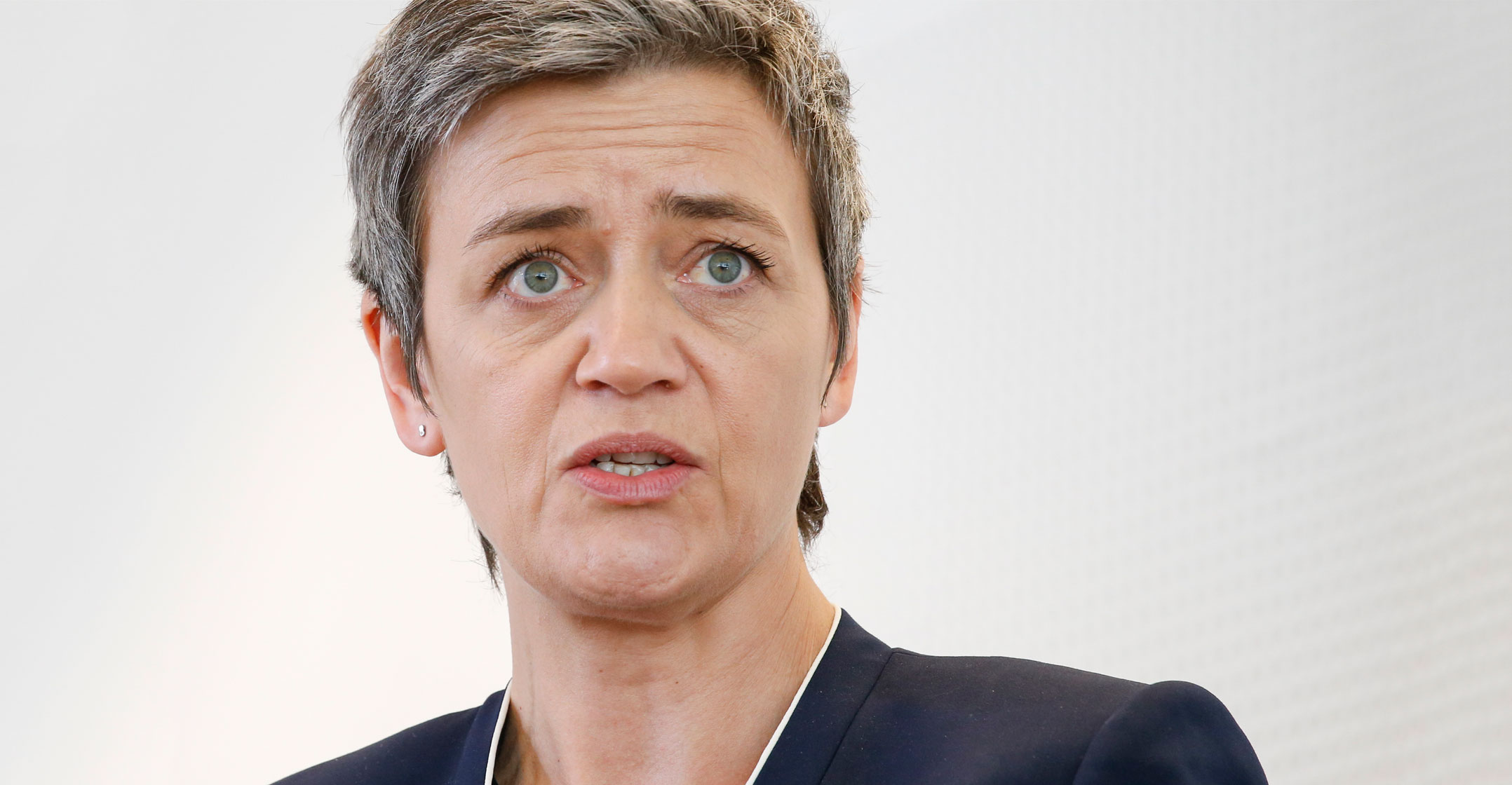
    The EU’s top antitrust watchdog, Margrethe Vestager

    In May, Seznam said it got fewer than a thousand downloads. Two other search providers said the choice screen has brought them no new customers. They asked not to be identified, citing a non-disclosure agreement with Google. Another search app, PrivacyWall, saw “no major market share shifts”, according to CEO Jonathan Wu. Microsoft’s Bing, a well-financed and capable challenger to Google, has barely appeared on the choice screen, winning just one slot in the UK from May to June. Microsoft and other search companies declined to comment.

    Bernstein analysts have already concluded that the choice screen is “unlikely to be a major disrupter to Google in its current form”, according to an 18 June research note.

    Google declined to give details on how many times the choice screen has been shown to European consumers. Android “provides people with unprecedented choice in deciding which applications they install, use and set as default on their devices,” the company said. “In developing the Choice Screen for Europe, we carefully balanced providing users with yet more choice while ensuring that we can continue to invest in developing and maintaining the open-source Android platform for the long term.”

    The Internet giant may be maintaining its lead in Europe because consumers think it has the best search engine

    However, the Internet giant may be maintaining its lead in Europe because consumers think it has the best search engine.

    Google invests billions of dollars a year to provide quick, accurate answers to queries. Wall Street analysts often say users would switch back to Google after using alternatives, and they’ve been right before. However, the case of Yandex suggests otherwise. Many Android phone owners in Russia have been using Yandex’s search engine for at least a year and the market share data indicate there’s been no big switch back to Google.

    It isn’t the European Commission’s job to force Google to be smaller or less dominant. Instead, the antitrust authority tries to set up mechanisms to trigger more choice and remove roadblocks. That means even if the choice screen is seen billions of times by consumers in the region, Google’s market share could remain at 97%.

    Flopped

    “The European Union probably did the best job they could with the rules that they had,” said Aitor Ortiz, an analyst with Bloomberg Intelligence. “The problem is maybe the rules were not fit for the purpose.”

    The real reason the European choice screen has flopped so far is that the remedy was designed poorly, according to Google rivals in the region.

    While Russia ordered Google to show consumers search alternatives on Android phones, the EU merely asked Google to choose how it could remedy alleged bad behaviour and a lack of competition. Google mimicked a pop-up menu first used in 2009 by Microsoft to resolve an EU antitrust probe into Web browsers. Showing users other browser options even helped Google’s Chrome gain ground against Microsoft’s Internet Explorer.

    Microsoft didn’t charge rivals to appear in this browser choice screen and showed as many as 12 rivals. In contrast, Google is using a paid auction to pick rival apps for each country. The highest bidders appear in three slots on the Android choice screen alongside Google. The company only gets paid when another app is downloaded, but it also gets valuable data on rivals’ business strategies.

    The approach “lets the fox watch the hens”, said Brian Schildt Laursen, owner of Denmark-based Givero. Apps “have to tell Google what markets are important to us, and what we are willing to pay to get into these markets”.

    “A general misunderstanding was that EU citizens from 1 March had a free choice of search engine on Android,” he added. “This was not the case.”

    A general misunderstanding was that EU citizens from 1 March had a free choice of search engine on Android. This was not the case

    Successful bidders are supposed to get monthly invoices from Google showing how many of their apps have been downloaded. That data should help rivals tweak their bidding strategies. But DuckDuckGo’s Weinberg said these reports have been pretty useless so far. “We’ve got two that are just flat zero,” he said. “We have not seen any real activations or any evidence that any real user has seen the preference menu.”

    DuckDuckGo has proposed changes that include scrapping the auction and replacing it with a non-pay-to-play model that includes far more than four search options for consumers.

    Weinberg and Schildt Laursen also blame another part of the process for delaying new Android phones that come with the choice screen. Unlike the Russian order, which applied to existing handsets, the EU remedy gives consumers a one-time prompt that will only pop up on new phones.

    Delays

    Android phone manufacturers must update their software and get Google to sign off on the new versions before shipping the latest devices. This means few smartphones even have the choice screen yet. The Covid-19 pandemic has also curbed purchases of new handsets and disrupted some production, adding to delays.

    Schildt Laursen said no new Android phones with the choice screen have come out in Denmark. DuckDuckGo and PrivacyWall said the only phone that has been approved and shipped to Europe recently is the Xiaomi Mi 10, which is relatively pricey and not widely available.

    The problems with the Android auction echo another EU antitrust order for Google’s shopping search that critics say enriches Google without delivering much real traffic to competing product search firms. While the EU hasn’t weighed in on whether these remedies are effective, it is preparing a legal pathway that would let it demand fast changes to anticompetitive behaviour instead of big fines.

    Margrethe Vestager, the EU’s top antitrust official, has voiced frustration about her inability to increase competition in tech markets. During a recent webinar, she blamed the pandemic for the initial poor results of the choice screen remedy, saying “very few Android phones have been shipped due to the Covid crisis”.

    More phones and more time may give a clearer picture on whether users will pick another search app when they are given the choice, she argued.

    For DuckDuckGo’s Weinberg, though, there’s already one clear lesson for the US: do it differently.

    A choice screen done right “could actually work”, he said.  — Reported by Aoife White and Natalia Drozdiak, (c) 2020 Bloomberg LP



    DuckDuckGo Google Margrethe Vestager Microsoft top Yandex
    Subscribe to TechCentral Subscribe to TechCentral
    Share. Facebook Twitter LinkedIn WhatsApp Telegram Email Copy Link
    Previous ArticleBackspace: ‘Google is king’
    Next Article Dell Technologies rings the changes – MD Doug Woolley on where to next

    Related Posts

    Big Microsoft 365 price increases coming next year

    Big Microsoft price increases coming next year

    5 December 2025
    What South Africans searched for most in 2025

    What South Africans searched for most in 2025, according to Google

    4 December 2025
    Unlock smarter computing with your surface Copilot+ PC

    Unlock smarter computing with your Surface Copilot+ PC

    4 December 2025
    Company News
    Beat the summer heat with Samsung's WindFree air conditioners

    Beat the summer heat with Samsung’s WindFree air conditioners

    5 December 2025
    AI is not a technology problem - iqbusiness

    AI is not a technology problem – iqbusiness

    5 December 2025
    Telcos are sitting on a data gold mine - but few know what do with it - Phillip du Plessis

    Telcos are sitting on a data gold mine – but few know what do with it

    4 December 2025
    Opinion
    Your data, your hardware: the DIY AI revolution is coming - Duncan McLeod

    Your data, your hardware: the DIY AI revolution is coming

    20 November 2025
    Zero Carbon Charge founder Joubert Roux

    The energy revolution South Africa can’t afford to miss

    20 November 2025
    It's time for a new approach to government IT spend in South Africa - Richard Firth

    It’s time for a new approach to government IT spend in South Africa

    19 November 2025

    Subscribe to Updates

    Get the best South African technology news and analysis delivered to your e-mail inbox every morning.

    Latest Posts
    Beat the summer heat with Samsung's WindFree air conditioners

    Beat the summer heat with Samsung’s WindFree air conditioners

    5 December 2025
    Netflix, Warner Bros talks raise fresh headaches for MultiChoice

    Netflix, Warner Bros talks raise fresh headaches for MultiChoice

    5 December 2025
    Big Microsoft 365 price increases coming next year

    Big Microsoft price increases coming next year

    5 December 2025
    AI is not a technology problem - iqbusiness

    AI is not a technology problem – iqbusiness

    5 December 2025
    © 2009 - 2025 NewsCentral Media
    • Cookie policy (ZA)
    • TechCentral – privacy and Popia

    Type above and press Enter to search. Press Esc to cancel.

    Manage consent

    TechCentral uses cookies to enhance its offerings. Consenting to these technologies allows us to serve you better. Not consenting or withdrawing consent may adversely affect certain features and functions of the website.

    Functional Always active
    The technical storage or access is strictly necessary for the legitimate purpose of enabling the use of a specific service explicitly requested by the subscriber or user, or for the sole purpose of carrying out the transmission of a communication over an electronic communications network.
    Preferences
    The technical storage or access is necessary for the legitimate purpose of storing preferences that are not requested by the subscriber or user.
    Statistics
    The technical storage or access that is used exclusively for statistical purposes. The technical storage or access that is used exclusively for anonymous statistical purposes. Without a subpoena, voluntary compliance on the part of your Internet Service Provider, or additional records from a third party, information stored or retrieved for this purpose alone cannot usually be used to identify you.
    Marketing
    The technical storage or access is required to create user profiles to send advertising, or to track the user on a website or across several websites for similar marketing purposes.
    • Manage options
    • Manage services
    • Manage {vendor_count} vendors
    • Read more about these purposes
    View preferences
    • {title}
    • {title}
    • {title}