Close Menu
TechCentralTechCentral

    Subscribe to the newsletter

    Get the best South African technology news and analysis delivered to your e-mail inbox every morning.

    Facebook X (Twitter) YouTube LinkedIn
    WhatsApp Facebook X (Twitter) LinkedIn YouTube
    TechCentralTechCentral
    • News
      Why Telkom is pouring capex into IT - Serame Taukobong

      Why Telkom is pouring capital spending into IT

      2 June 2026
      Telkom's data growth story still has years to run: CEO

      Telkom’s data growth story still has years to run: CEO

      2 June 2026
      Reserve Bank draws a line on inflation - Lesetja Kganyago. Siphiwe Sibeko/Reuters

      Reserve Bank draws a line on inflation

      2 June 2026

      Clashing judgments leave South Africa’s crypto law unsettled

      2 June 2026
      Telkom's four-year SIU standoff awaits a final ruling

      Telkom’s four-year SIU standoff awaits a final ruling

      2 June 2026
    • World
      Astronomers discover exoplanets with magnetic fields

      Strange winds reveal magnetic fields on distant ‘hot Jupiters’

      2 June 2026
      Nvidia's first CPUs to debut in Windows laptops this week

      Nvidia CPUs to debut in Windows laptops this week

      31 May 2026
      Watch: Bezos rocket erupts in fireball during ground test

      Watch: Bezos rocket erupts in fireball during ground test

      29 May 2026
      AI boom hands Samsung chip workers life-changing bonuses

      AI boom hands Samsung chip workers life-changing bonuses

      27 May 2026
      Luce lit: Ferrari unveils its first electric car

      Luce lit: Ferrari unveils its first electric car

      26 May 2026
    • In-depth
      Alfa's electric rebel - Alfa Romeo Junior Elettrica Veloce

      Alfa’s electric rebel

      29 April 2026
      Africa switches on as Europe dims the lights

      Africa switches on as Europe dims the lights

      9 April 2026
      The biggest untapped EV market on Earth is hiding in plain sight

      The biggest untapped EV market on Earth is hiding in plain sight

      1 April 2026
      AI, cybersecurity power standout year for Datatec - Jens Montanana

      The R16-billion tech giant hiding in plain sight

      26 March 2026
      The last generation of coders

      The last generation of coders

      18 February 2026
    • TCS
      TCS | Charge's R1.8-billion bet on an off-grid EV future - Charge chairman Joubert Roux

      TCS | Charge’s R1.8-billion bet on an off-grid EV future

      18 May 2026
      TCS+ | The Up&Up Group on the hidden cost of AI - Jason Harrison

      TCS+ | The Up&Up Group on the hidden cost of AI

      13 May 2026
      Michael Rossouw

      TCS+ | The retirement decision most South Africans get wrong

      6 May 2026
      TCS | The Cape Town start-up listening for TB with AI - Braden van Breda

      TCS | The Cape Town start-up listening for TB with AI

      4 May 2026

      TCS+ | ‘The ISP for ISPs’: Vox’s shift to wholesale aggregator

      20 April 2026
    • Opinion
      Treasury's crypto crackdown is a betrayal of Mandela's promise - Duncan McLeod

      Treasury’s crypto crackdown is a betrayal of Mandela’s promise

      22 May 2026
      South Africa is sleepwalking into another AI policy failure - Celeste Labuschagne

      South Africa is sleepwalking into another AI policy failure

      20 May 2026
      AI won't fix your culture - it will expose it - Jackie Kennedy

      AI won’t fix your culture – it will expose it

      19 May 2026
      Treasury's crypto crackdown is a betrayal of Mandela's promise - Duncan McLeod

      Free calls, dead voice and Shameel Joosub’s Spanish ghost

      22 April 2026
      The conflict of interest at the heart of PayShap's slow adoption - Cheslyn Jacobs

      The conflict of interest at the heart of PayShap’s slow adoption

      26 March 2026
    • Company Hubs
      • 1Stream
      • Africa Data Centres
      • AfriGIS
      • Altron Digital Business
      • Altron Document Solutions
      • Altron Group
      • Arctic Wolf
      • Ascent Technology
      • AvertITD
      • BBD
      • Braintree
      • CallMiner
      • CambriLearn
      • CM Telecom
      • Contactable
      • CYBER1 Solutions
      • Digicloud Africa
      • Digimune
      • Domains.co.za
      • ESET
      • Euphoria Telecom
      • HOSTAFRICA
      • Incredible Business
      • iONLINE
      • IQbusiness
      • Iris Network Systems
      • Kaspersky
      • LSD Open
      • Mitel
      • NEC XON
      • Netstar
      • Network Platforms
      • Next DLP
      • Ovations
      • Paracon
      • Paratus
      • Q-KON
      • SevenC
      • SkyWire
      • Solid8 Technologies
      • Telit Cinterion
      • Telviva
      • Tenable
      • Vertiv
      • Videri Digital
      • Vodacom Business
      • Wipro
      • Workday
      • XLink
    • Sections
      • AI and machine learning
      • Banking
      • Broadcasting and Media
      • Cloud services
      • Contact centres and CX
      • Cryptocurrencies
      • Education and skills
      • Electronics and hardware
      • Energy and sustainability
      • Enterprise software
      • Financial services
      • HealthTech
      • Information security
      • Internet and connectivity
      • Internet of Things
      • Investment
      • IT services
      • Lifestyle
      • Motoring
      • Policy and regulation
      • Public sector
      • Retail and e-commerce
      • Satellite communications
      • Science
      • SMEs and start-ups
      • Social media
      • Talent and leadership
      • Telecoms
    • Events
    • Advertise
    TechCentralTechCentral
    Home » Sections » Energy and sustainability » Heat pumps – what are they, and can they save you money?

    Heat pumps – what are they, and can they save you money?

    Heat pumps are significantly more efficient than geysers, but their upfront cost is higher.
    By Nkosinathi Ndlovu26 July 2024
    Twitter LinkedIn Facebook WhatsApp Email Telegram Copy Link
    News Alerts
    WhatsApp

    How heat pumps could solve South Africa's 'load reduction' problemSouth Africa has marked 120 days – almost four months – without load shedding, meaning the country’s electricity generation is outstripping demand from households and businesses.

    But a new problem has reared its head, leading local municipalities to implement planned outages during peak times that are not dissimilar to load shedding schedules.

    This so-called “load reduction” is a grid constraint problem, where local infrastructure – such as cabling and transformers – can’t handle the load on the system. Since geysers are a major contributor to peak demand loads, more efficient heat pumps present an alternative that can reduce loads while ensuring households have hot water.

    A typical geyser draws around 3kW of energy, and heat pumps only need about a quarter of that

    “Grids are failing because of all the geysers coming on at the same or similar times,” said Metrowatt CEO David Neale in an interview. “Load spikes are typically in the morning and early evening when hot water is needed for showers and other household uses. A typical geyser draws around 3kW of energy, and heat pumps only need about a quarter of that.”

    “If everybody had heat pumps you would reduce spike loads and protect the grid,” Neale said.

    In a geyser, an element is heated and the heat is then transferred to the surrounding water. A heat pump, on the other hand, works in the same way as a refrigerator or air conditioner by moving heat from one place to another.

    In the case of a fridge, heat from inside the unit is moved into the outside world – that is why the back of a fridge is usually hot.

    Reversed

    This process is reversed in a heat pump, where heat from the outside world is transferred into a reservoir containing water.

    Theoretically, the reservoir can be a mere container, but in practice a geyser is used because usually there is already one installed when the heat pump is put in. Also, the heating element inside the geyser acts a backup in the event of a fault with the heat pump.

    Since heat pumps only redirect heat instead of generating it, they are more efficient the hotter the climate in which they operate, making them suitable for South Africa’s warm summers.

    Read: South Africa defends 10% duty on solar panel imports

    According to Neale, although heat pumps are a little less efficient in winter, they are still effective. Despite their efficiency benefits, however, heat pumps are struggling to gain traction in the local market. Neale said this is because they are relatively expensive and are not straightforward to install.

    “It’s a hefty capital investment,” he said. “We see this with many products in South Africa, just as we do with solar: people don’t necessarily have the capital. There is also some engineering or build risk involved, and since heat pumps are new, few are willing to lose money getting it wrong.”

    Neale said South African regulators can play a meaningful role in incentivising the roll-out of heat pumps to households using a cash-back incentive, for example, but policy uncertainty makes it unlikely that they will. He cited national treasury’s backtracking on solar panel tax rebates as an example, where a 25% incentive was given to households in one year only for a 10% import duty to be slapped on importers the next year.

    Problems limiting heat pump adoption are not unique to South Africa.

    “Further policy support and technical innovation are needed, in particular to reduce upfront purchase and installation costs, remove market barriers to complex renovations, improve energy performance and durability, and exploit the potential of heat pumps as an enabler of power system integration and flexibility,” said the International Energy Association (IEA) in its The Future of Heat Pumps report, published in December 2022.

    Further policy support and technical innovation are needed, in particular to reduce upfront costs

    Adoption rates are much higher in colder environments where home heating requirements are more onerous. The IEA said that in Europe, heat pumps enjoyed a record year in 2022, with sales growing nearly 40%. In particular, sales of air-to-water models, which are compatible with radiators and underfloor heating systems, jumped by almost 50%, it said.

    Neale said that because the outside temperatures in some European countries are low, air-to-water systems are proving to be less effective there and geothermal solutions are gaining more traction as a result.

    In South Africa, heat pumps are mostly used as geysers or to heat pools. Heat pump efficiency is measured in “coefficient of performance” (COP) ratings, with many in South Africa averaging around three and four, said Neale.

    Efficiency

    A COP value of 1 means that 100% of the electricity input is used to heat the water. Geysers are generally assumed to have a COP value of 1, but in reality losses in heat transfer mean the true value is usually slightly below that.

    A COP value of 3 denotes 300% efficiency, in other words, the heat pump uses a third of the electricity used by a geyser to heat water to the same temperature. Put another way, the heat pump generates three times more energy in the form of heat as the electricity used to power it.

    According to Neale, when used to heat swimming pools, heat pumps typically output six times the efficiency.

    Read: South Africa to get its first fleet of electric buses

    But using heat pumps does come with a few caveats. For one, Neale said, they require regular maintenance in the same way air conditioners do. The copper fins used as a heat exchange on the back of the unit must be kept clean and the gas needs to be checked and refilled.

    Another important factor to note is that heat pumps are only efficient up to certain temperatures, and Neale advised owners of these devices to pay attention and ensure that they keep their usage within the optimal range to realise real savings. Typically, this is between 50ºC and 55ºC, he said. He estimated the average yearly maintenance to cost around R800.
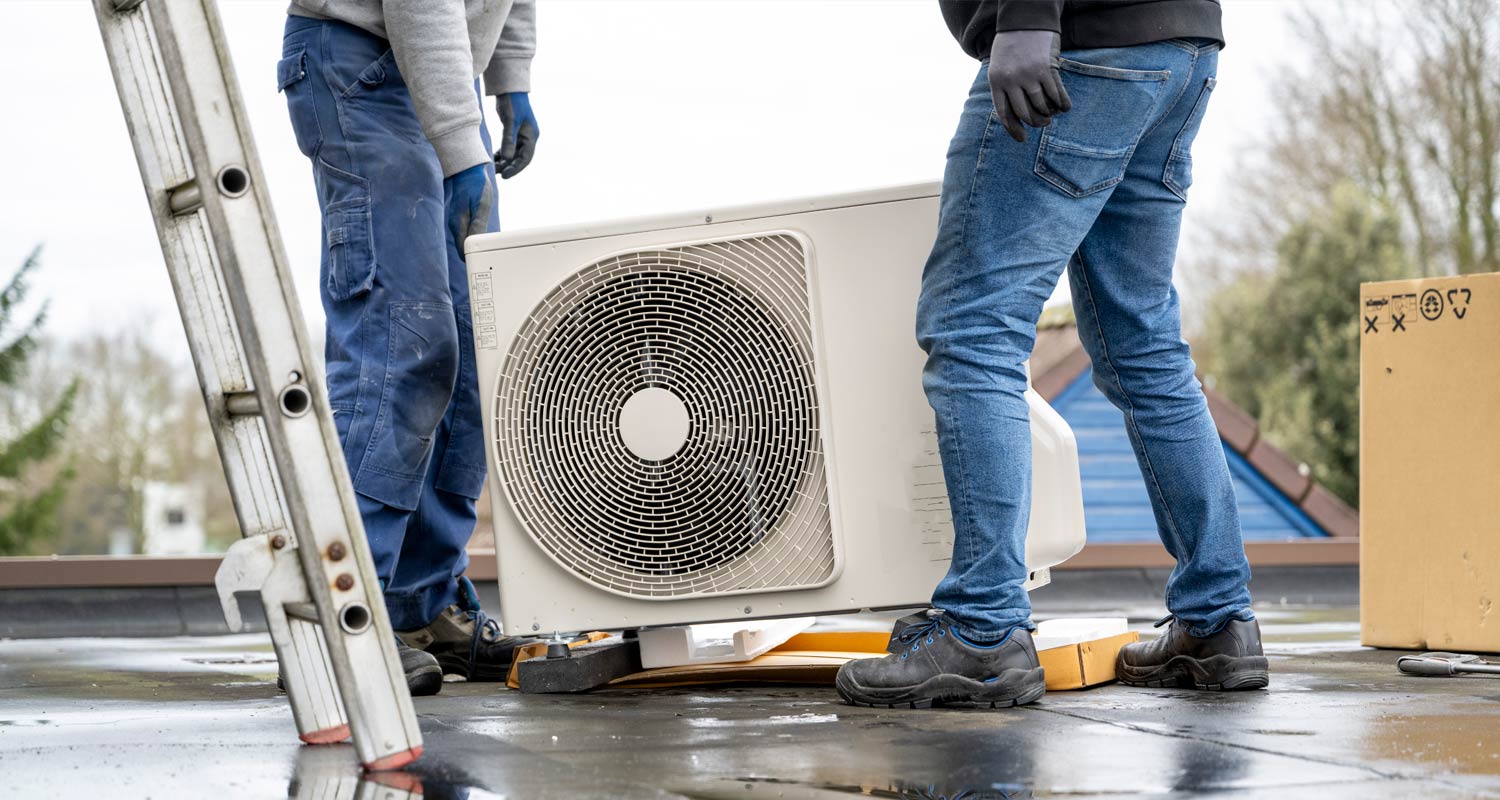
    “I have seen some manufacturers claim their heat pumps are optimal at 60ºC or 65ºC, but I would not put much credence in those claims,” said Neale.

    Most heat pumps sold today have a built-in smart management module that will manage how they function. If the heat pump is set to say, 55ºC, the heating element in the geyser will be used to get the water temperature up to 60ºC in the colder winter months when hotter water is more desirable.

    Neale said heat pumps are most suited to large water reservoirs – as in a single large geyser or a system where two geysers are placed next to each other and they serve the entire household. Heat pumps make less financial sense if the geysers in a home are small and far from one another, or if little water is used.

    “If you only use 4KWh/day on heating water, then the savings are marginal, but if you use, say, 20kWh/day, then a heat pump is a no-brainer: it will pay for itself in 18 months and last you 10 years or more.”  — © 2024 NewsCentral Media

    Read next: Demand declines for home solar installations

    Follow TechCentral on Google News Add TechCentral as your preferred source on Google


    David Neale heat pump heat pump South Africa Metrowatt
    WhatsApp YouTube
    Share. Facebook Twitter LinkedIn WhatsApp Telegram Email Copy Link
    Previous ArticleCrowdStrike disaster is a wake-up call for the cybersecurity industry
    Next Article Suspect arrested in DStv piracy raid

    Related Posts

    Smart tech can be a magic fix for South Africa's energy crisis

    Smart tech can be a magic fix for South Africa’s energy crisis

    10 November 2024
    I went solar at home ... this is what I learnt

    I went solar at home … this is what I learnt

    3 March 2024
    Tech sector feeling impact of Transnet ports chaos

    Tech sector feeling impact of Transnet ports chaos

    28 November 2023
    Company News
    The hidden infrastructure behind AI - Open Access Data Centres OADC

    The hidden infrastructure behind AI

    2 June 2026
    Addressing the 57% blind spot: Kaspersky on measuring SOC effectiveness

    Addressing the 57% blind spot: Kaspersky on measuring SOC effectiveness

    2 June 2026
    Strike48 report: security leaders wary of AI agents - Maidar Secure

    Strike48 report: security leaders wary of AI agents

    2 June 2026
    Opinion
    Treasury's crypto crackdown is a betrayal of Mandela's promise - Duncan McLeod

    Treasury’s crypto crackdown is a betrayal of Mandela’s promise

    22 May 2026
    South Africa is sleepwalking into another AI policy failure - Celeste Labuschagne

    South Africa is sleepwalking into another AI policy failure

    20 May 2026
    AI won't fix your culture - it will expose it - Jackie Kennedy

    AI won’t fix your culture – it will expose it

    19 May 2026

    Subscribe to Updates

    Get the best South African technology news and analysis delivered to your e-mail inbox every morning.

    Latest Posts
    Why Telkom is pouring capex into IT - Serame Taukobong

    Why Telkom is pouring capital spending into IT

    2 June 2026
    Telkom's data growth story still has years to run: CEO

    Telkom’s data growth story still has years to run: CEO

    2 June 2026
    Reserve Bank draws a line on inflation - Lesetja Kganyago. Siphiwe Sibeko/Reuters

    Reserve Bank draws a line on inflation

    2 June 2026
    Astronomers discover exoplanets with magnetic fields

    Strange winds reveal magnetic fields on distant ‘hot Jupiters’

    2 June 2026
    © 2009 - 2026 NewsCentral Media
    • Cookie policy (ZA)
    • TechCentral – privacy and Popia

    Type above and press Enter to search. Press Esc to cancel.

    Manage consent

    TechCentral uses cookies to enhance its offerings. Consenting to these technologies allows us to serve you better. Not consenting or withdrawing consent may adversely affect certain features and functions of the website.

    Functional Always active
    The technical storage or access is strictly necessary for the legitimate purpose of enabling the use of a specific service explicitly requested by the subscriber or user, or for the sole purpose of carrying out the transmission of a communication over an electronic communications network.
    Preferences
    The technical storage or access is necessary for the legitimate purpose of storing preferences that are not requested by the subscriber or user.
    Statistics
    The technical storage or access that is used exclusively for statistical purposes. The technical storage or access that is used exclusively for anonymous statistical purposes. Without a subpoena, voluntary compliance on the part of your Internet Service Provider, or additional records from a third party, information stored or retrieved for this purpose alone cannot usually be used to identify you.
    Marketing
    The technical storage or access is required to create user profiles to send advertising, or to track the user on a website or across several websites for similar marketing purposes.
    • Manage options
    • Manage services
    • Manage {vendor_count} vendors
    • Read more about these purposes
    View preferences
    • {title}
    • {title}
    • {title}