Close Menu
TechCentralTechCentral

    Subscribe to the newsletter

    Get the best South African technology news and analysis delivered to your e-mail inbox every morning.

    Facebook X (Twitter) YouTube LinkedIn
    WhatsApp Facebook X (Twitter) LinkedIn YouTube
    TechCentralTechCentral
    • News
      South Africa's AI policy is a bureaucrat's dream - Solly Malatsi

      South Africa’s draft AI policy is a bureaucrat’s dream

      10 April 2026
      Big Tech is going nuclear

      Big Tech is going nuclear

      10 April 2026
      5G expected to reshape South Africa's wireless broadband market

      5G expected to reshape South Africa’s wireless broadband market

      10 April 2026
      Warning that South Africa's digital competitiveness is in retreat

      Warning that South Africa’s digital competitiveness is in retreat

      10 April 2026
      South Africa's biggest banks are lining up behind Optasia - Salvador Anglada

      South Africa’s biggest banks are lining up behind Optasia

      10 April 2026
    • World
      Anthropic mulls building its own AI chips

      Anthropic mulls building its own AI chips

      10 April 2026
      DeepSeek V4 to run on Huawei silicon as China builds its own AI stack

      DeepSeek V4 to run on Huawei silicon as China builds its own AI stack

      4 April 2026
      Amazon in talks to buy satellite operator Globalstar

      Amazon in talks to buy satellite operator Globalstar

      2 April 2026

      Apple plans to open Siri to rival AI services

      27 March 2026
      It's official: ads are coming to ChatGPT

      It’s official: ads are coming to ChatGPT

      23 March 2026
    • In-depth
      Africa switches on as Europe dims the lights

      Africa switches on as Europe dims the lights

      9 April 2026
      The biggest untapped EV market on Earth is hiding in plain sight

      The biggest untapped EV market on Earth is hiding in plain sight

      1 April 2026
      The R18-billion tech giant hiding in plain sight - Jens Montanana

      The R16-billion tech giant hiding in plain sight

      26 March 2026
      The last generation of coders

      The last generation of coders

      18 February 2026
      Sentech is in dire straits

      Sentech is in dire straits

      10 February 2026
    • TCS
      TCS+ | Vodacom Business moves to crack the SME tech gap - Andrew Fulton, Sannesh Beharie

      TCS+ | Vodacom Business moves to crack the SME tech gap

      7 April 2026
      TCS | MTN's Divysh Joshi on the strategy behind Pi - Divyesh Joshi

      TCS | MTN’s Divyesh Joshi on the strategy behind Pi

      1 April 2026
      Anoosh Rooplal

      TCS | Anoosh Rooplal on the Post Office’s last stand

      27 March 2026
      Meet the CIO | HealthBridge CTO Anton Fatti on the future of digital health

      Meet the CIO | Healthbridge CTO Anton Fatti on the future of digital health

      23 March 2026
      TCS+ | Arctic Wolf unpacks the evolving threat landscape for SA businesses - Clare Loveridge and Jason Oehley

      TCS+ | Arctic Wolf unpacks the evolving threat landscape for SA businesses

      19 March 2026
    • Opinion
      The conflict of interest at the heart of PayShap's slow adoption - Cheslyn Jacobs

      The conflict of interest at the heart of PayShap’s slow adoption

      26 March 2026
      South Africa's energy future hinges on getting wheeling right - Aishah Gire

      South Africa’s energy future hinges on getting wheeling right

      10 March 2026
      Hold the doom: the case for a South African comeback - Duncan McLeod

      Apple just dropped a bomb on the Windows world

      5 March 2026
      R230-million in the bag for Endeavor's third Harvest Fund - Alison Collier

      VC’s centre of gravity is shifting – and South Africa is in the frame

      3 March 2026
      Hold the doom: the case for a South African comeback - Duncan McLeod

      Hold the doom: the case for a South African comeback

      26 February 2026
    • Company Hubs
      • 1Stream
      • Africa Data Centres
      • AfriGIS
      • Altron Digital Business
      • Altron Document Solutions
      • Altron Group
      • Arctic Wolf
      • Ascent Technology
      • AvertITD
      • BBD
      • Braintree
      • CallMiner
      • CambriLearn
      • CYBER1 Solutions
      • Digicloud Africa
      • Digimune
      • Domains.co.za
      • ESET
      • Euphoria Telecom
      • HOSTAFRICA
      • Incredible Business
      • iONLINE
      • IQbusiness
      • Iris Network Systems
      • Kaspersky
      • LSD Open
      • Mitel
      • NEC XON
      • Netstar
      • Network Platforms
      • Next DLP
      • Ovations
      • Paracon
      • Paratus
      • Q-KON
      • SevenC
      • SkyWire
      • Solid8 Technologies
      • Telit Cinterion
      • Telviva
      • Tenable
      • Vertiv
      • Videri Digital
      • Vodacom Business
      • Wipro
      • Workday
      • XLink
    • Sections
      • AI and machine learning
      • Banking
      • Broadcasting and Media
      • Cloud services
      • Contact centres and CX
      • Cryptocurrencies
      • Education and skills
      • Electronics and hardware
      • Energy and sustainability
      • Enterprise software
      • Financial services
      • HealthTech
      • Information security
      • Internet and connectivity
      • Internet of Things
      • Investment
      • IT services
      • Lifestyle
      • Motoring
      • Policy and regulation
      • Public sector
      • Retail and e-commerce
      • Satellite communications
      • Science
      • SMEs and start-ups
      • Social media
      • Talent and leadership
      • Telecoms
    • Events
    • Advertise
    TechCentralTechCentral
    Home » Opinion » Ayo Ajayi » How digital money could lift up Africa

    How digital money could lift up Africa

    By Ayo Ajayi29 October 2015
    Twitter LinkedIn Facebook WhatsApp Email Telegram Copy Link
    News Alerts
    WhatsApp

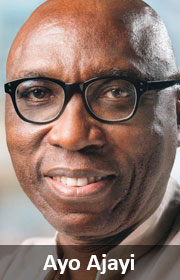
    ayo-ajayi-180This past April, the World Bank unveiled the Global Findex, the most comprehensive set of data on financial inclusion ever compiled. In strokes both broad and small, it paints a picture of where we stand in the fight to turn the 2bn unbanked poor of the world into active participants in a thriving, inclusive, digital economy.

    So where do we stand? In South Africa, the picture is promising: more than half of the poorest 40% in the country have a bank account of some kind. The picture seems somewhat less promising in other developing countries across sub-Saharan Africa, where three-quarters of the poorest 40% do not have an account of any kind.

    Look a little closer, though, and you can see signs of change. Sub-Saharan Africa is the only region in the world where more than 10% of adults, on average, report having a mobile money account. In Côte d’Ivoire, Somalia, Tanzania, Uganda and Zimbabwe, more adults use a mobile money account than a traditional account at a financial institution.

    So, overall, what the Global Findex says to me is this: we have work to do … and we are doing it. African nations are changing their own fortunes, and African companies are generating their own innovations. A self-sufficient Africa is emerging, and the world is taking notice.

    In Africa, and worldwide, the most important thing we can do to promote inclusion is to increase the availability and variety of digital financial services. Imagine every nation having a secure infrastructure that enables digital transactions at marginal cost. Imagine millions of poor people building up savings and making simple, convenient payments with the phones in their pockets. For many people, this is already happening. And I firmly believe, as does my team at the Bill & Melinda Gates Foundation, that we are only 15 years away from making this the norm for most people around the world.

    Financial inclusion is a global project, but in Africa it has both particular resonance and particular promise. We have large numbers of unbanked. And we have a remarkably strong current of innovation and progress in the realm of digital financial services.

    In addition to the popular M-Pesa service in Kenya, platforms like Zap in Tanzania and Orange Money in Uganda are successfully serving large numbers of customers and expanding their local digital economies. In South Africa, nonprofits like FinMark Trust and the Centre for Financial Regulation and Inclusion are doing fantastic work to make markets more open and amenable to the poor and unserved.

    Meanwhile, the Southern African Development Community (SADC) is mobilising its 15-nation membership to help create a mobile payments system that enables transactions across national borders — a welcome platform for the millions of migrants within the region, many of whose families rely on wages shared sent from abroad. Taken as a whole, the worth of Africa’s mobile money market is expected to top US$14bn in just another five years.

    This growth will be a catalyst for economic development across the continent. Out of the swelling number of digital accounts will grow an entire ecosystem supporting digital transactions: merchants accepting digital payments, parents paying their children’s school fees digitally, patients paying for healthcare services and insurance using their mobile phones, and new business models we haven’t even thought of yet — models that aren’t possible in a cash-based economy.
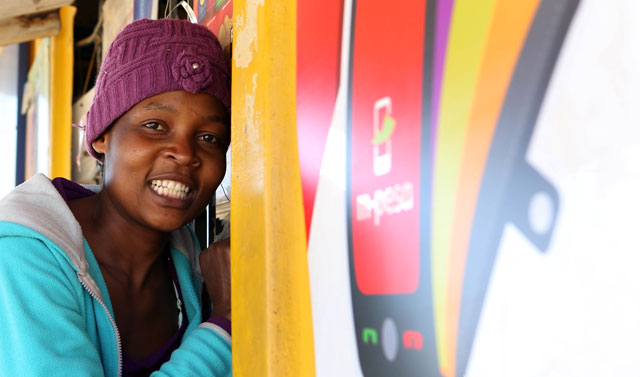
    M-Pesa has been launched in a number of African markets, but remains most popular in Kenya
    M-Pesa has been launched in a number of African markets, but remains most popular in Kenya

    And along with all this will come the jobs and industry associated with maintaining and operating the digital infrastructure on which such an ecosystem will depend. In this way, the digitisation of African finance can help increase the proliferation of technology and technological skills that accelerate growth exponentially.

    M-Pesa and other mobile money success stories draw attention to the critical role of the private sector in expanding financial inclusion. But it’s important to remember the critical role of government. Regulations and leadership set by national governments lay the foundation on which the private sector can flourish. Government sets the playing field, referees it, and enforces the need for security and integrity at all levels. The regulatory moves planned — and, to some degree, already accomplished — by the SADC nations are a wonderful example of how governments can plant a stake in the ground that gives the private sector the means and motivation to innovate.

    And the most important aspect of the tremendous, transcontinental success I foresee for digital financial services in Africa is that it will be rooted in local vision and action. Africa is shedding its reputation as a continent dependent on others for support. And the digital finance industry can be instrumental in cementing a new reputation: a self-sufficient, innovative continent, leading the way in bringing millions into the formal economy.

    • Ayo Ajayi is director of the Africa team for the Bill & Melinda Gates Foundation

    Follow TechCentral on Google News Add TechCentral as your preferred source on Google


    Ayo Ajayi Bill & Melinda Gates Foundation Bill Gates M-Pesa
    WhatsApp YouTube
    Share. Facebook Twitter LinkedIn WhatsApp Telegram Email Copy Link
    Previous ArticleBEE headache may be looming for ICT firms
    Next Article Backspace: ‘Student Farm’

    Related Posts

    Vodacom's real growth story isn't mobile

    Vodacom’s real growth story isn’t mobile

    4 February 2026
    Bill Gates, OpenAI team up for AI health push in Africa

    Bill Gates, OpenAI team up for AI health push in Africa

    21 January 2026
    digital ID

    Fragmented digital IDs are slowing Africa’s fintech boom

    14 November 2025
    Company News
    Vertiv AI Innovation Roadshow returns to Africa as virtual event

    Vertiv AI Innovation Roadshow returns to Africa as virtual event

    10 April 2026
    What South African parents look for in an online school - CambriLearn

    What South African parents look for in an online school

    9 April 2026
    Modernising legacy systems - without the downtime - BBD Software

    Modernising legacy systems – without the downtime

    9 April 2026
    Opinion
    The conflict of interest at the heart of PayShap's slow adoption - Cheslyn Jacobs

    The conflict of interest at the heart of PayShap’s slow adoption

    26 March 2026
    South Africa's energy future hinges on getting wheeling right - Aishah Gire

    South Africa’s energy future hinges on getting wheeling right

    10 March 2026
    Hold the doom: the case for a South African comeback - Duncan McLeod

    Apple just dropped a bomb on the Windows world

    5 March 2026

    Subscribe to Updates

    Get the best South African technology news and analysis delivered to your e-mail inbox every morning.

    Latest Posts
    South Africa's AI policy is a bureaucrat's dream - Solly Malatsi

    South Africa’s draft AI policy is a bureaucrat’s dream

    10 April 2026
    Big Tech is going nuclear

    Big Tech is going nuclear

    10 April 2026
    5G expected to reshape South Africa's wireless broadband market

    5G expected to reshape South Africa’s wireless broadband market

    10 April 2026
    Warning that South Africa's digital competitiveness is in retreat

    Warning that South Africa’s digital competitiveness is in retreat

    10 April 2026
    © 2009 - 2026 NewsCentral Media
    • Cookie policy (ZA)
    • TechCentral – privacy and Popia

    Type above and press Enter to search. Press Esc to cancel.

    Manage consent

    TechCentral uses cookies to enhance its offerings. Consenting to these technologies allows us to serve you better. Not consenting or withdrawing consent may adversely affect certain features and functions of the website.

    Functional Always active
    The technical storage or access is strictly necessary for the legitimate purpose of enabling the use of a specific service explicitly requested by the subscriber or user, or for the sole purpose of carrying out the transmission of a communication over an electronic communications network.
    Preferences
    The technical storage or access is necessary for the legitimate purpose of storing preferences that are not requested by the subscriber or user.
    Statistics
    The technical storage or access that is used exclusively for statistical purposes. The technical storage or access that is used exclusively for anonymous statistical purposes. Without a subpoena, voluntary compliance on the part of your Internet Service Provider, or additional records from a third party, information stored or retrieved for this purpose alone cannot usually be used to identify you.
    Marketing
    The technical storage or access is required to create user profiles to send advertising, or to track the user on a website or across several websites for similar marketing purposes.
    • Manage options
    • Manage services
    • Manage {vendor_count} vendors
    • Read more about these purposes
    View preferences
    • {title}
    • {title}
    • {title}