Close Menu
TechCentralTechCentral

    Subscribe to the newsletter

    Get the best South African technology news and analysis delivered to your e-mail inbox every morning.

    Facebook X (Twitter) YouTube LinkedIn
    WhatsApp Facebook X (Twitter) LinkedIn YouTube
    TechCentralTechCentral
    • News
      Eskom's diesel bill falls 86% as breakdowns hit eight-year low

      Eskom’s diesel bill falls 86% as breakdowns hit eight-year low

      31 July 2026
      Ramaphosa signs off on taking the grid away from Eskom

      Ramaphosa signs off on taking the grid away from Eskom

      31 July 2026
      Nedbank hires MTN's former tech chief as group CIO - Nikos Angelopoulos

      Nedbank hires MTN’s former tech chief as group CIO

      31 July 2026
      Microsoft just had the biggest day in stock market history

      Microsoft just had the biggest day in stock market history

      31 July 2026
      MTN Nigeria's growth engine stalled in second quarter - Karl Toriola

      MTN Nigeria’s growth engine stalled in second quarter

      31 July 2026
    • World
      Meta AI will now tell parents if their teen is in crisis

      Meta AI will now tell parents if their teen is in crisis

      17 July 2026
      IBM shares crash 25% as AI upends software spending - Arvind Krishna

      IBM shares crash 25% as AI upends software spending

      15 July 2026
      Jony Ive's first OpenAI device: an AI smart speaker - Jony Ive and Sam Altman

      Jony Ive’s first OpenAI device: an AI smart speaker

      15 July 2026
      Stripe, Advent in talks to buy PayPal for $53-billion

      Stripe, Advent in talks to buy PayPal for $53-billion

      15 July 2026
      Memory crisis sends smartphone market into steep decline

      Memory crisis sends smartphone market into steep decline

      13 July 2026
    • In-depth
      The plan to stop AI from breaking the world - Google DeepMind CEO Demis Hassabis. Image: John Sears

      The plan to stop AI from breaking the world

      16 July 2026
      The internet has a Strait of Hormuz problem

      The internet has a Strait of Hormuz problem

      15 July 2026
      AI boom sparks rally, frenzy and fear

      AI boom sparks rally, frenzy and fear

      11 June 2026
      Every plug-in hybrid on sale in South Africa, ranked by price - Lamborghini Temerario

      Every plug-in hybrid on sale in South Africa, ranked by price

      7 June 2026
      What Wi-Fi 8 will mean for wireless networks

      What Wi-Fi 8 will mean for wireless networks

      1 June 2026
    • TCS
      TCS+ | Why South African workers must become supervisors of digital labour - Accelera Digital Group Cliff de Wit

      TCS+ | Why South African workers must become supervisors of digital labour

      31 July 2026
      TCS | Rapid deployment rules can't work without municipalities: ACT - Nomvuyiso Batyi

      TCS | Icasa’s rules skip the real bottleneck: ACT

      30 July 2026
      TCS+ | iStore Business on why Apple makes sense for SMEs - Sudesh Pillay and Tamia Nontsikelelo

      TCS+ | iStore Business on why Apple makes sense for SMEs

      30 July 2026
      TCS+ | A smarter approach to cloud for South African businesses - Joel Chacko and Jonathan Oaker

      TCS+ | A smarter approach to cloud for South African businesses

      28 July 2026
      TCS | How Optasia lends billions to people banks can't see - Salvador Anglada

      TCS | How Optasia lends billions to people banks can’t see

      23 July 2026
    • Opinion
      The author, Jannie van Zyl

      Selling vapour is corporate suicide in slow motion

      16 July 2026
      Brazil's online gambling crackdown is a lesson for South Africa

      How Amazon outmanoeuvred Starlink in South Africa

      15 July 2026
      The Popia problem with agentic AI - Herman Haasbroek

      The Popia problem with agentic AI

      14 July 2026
      The author, Fanie van Rooyen

      South Africa can still catch the AI wave – here’s how

      7 July 2026
      The author, Fanie van Rooyen

      The AI utopia South Africa can’t afford

      1 July 2026
    • Company Hubs
      • 1Stream
      • Africa Data Centres
      • AfriGIS
      • Altron Digital Business
      • Altron Document Solutions
      • Altron Group
      • Arctic Wolf
      • Ascent Technology
      • AvertITD
      • BBD
      • Braintree
      • CallMiner
      • CambriLearn
      • CM Telecom
      • Contactable
      • CYBER1 Solutions
      • Digicloud Africa
      • Digimune
      • Domains.co.za
      • ESET
      • Euphoria Telecom
      • HOSTAFRICA
      • Incredible Business
      • iONLINE
      • IQbusiness
      • Iris Network Systems
      • Kaspersky
      • LSD Open
      • Mitel
      • NEC XON
      • Netstar
      • Network Platforms
      • Next DLP
      • Ovations
      • Paracon
      • Paratus
      • Q-KON
      • SevenC
      • SkyWire
      • Solid8 Technologies
      • Telit Cinterion
      • Telviva
      • Tenable
      • Vertiv
      • Videri Digital
      • Vodacom Business
      • Vox
      • Wipro
      • Workday
      • XLink
    • Sections
      • AI and machine learning
      • Banking
      • Broadcasting and Media
      • Cloud services
      • Contact centres and CX
      • Cryptocurrencies
      • Education and skills
      • Electronics and hardware
      • Energy and sustainability
      • Enterprise software
      • Financial services
      • HealthTech
      • Information security
      • Internet and connectivity
      • Internet of Things
      • Investment
      • IT services
      • Lifestyle
      • Policy and regulation
      • Public sector
      • Retail and e-commerce
      • Satellite communications
      • Science
      • SMEs and start-ups
      • Social media
      • Talent and leadership
      • Telecoms
      • Watts & Wheels
    • Events
    • Advertise
    TechCentralTechCentral
    Home » Sections » Energy and sustainability » How Eskom clawed its way back from the brink

    How Eskom clawed its way back from the brink

    Eskom’s success is foundational to South Africa’s economic future, writes Business Leadership South Africa CEO Busi Mavuso.
    By Busi Mavuso13 October 2025
    Twitter LinkedIn Facebook WhatsApp Email Telegram Copy Link
    News Alerts
    WhatsApp

    How Eskom clawed its way back from the brinkEskom’s return to profitability after eight years offers some welcome positive news for the power utility and the broader economy. I want to congratulate Eskom for its financial results released last month, which showed it made a profit before tax of R23.9-billion. It is the first time the utility has posted a profit in eight years. I was impressed that this was achieved not just from higher tariffs, but from a fundamental and significant improvement in the operations of the state-owned entity.

    Load shedding was damaging to Eskom for many reasons, but one obvious consequence was that it had less electricity to sell and therefore less revenue it could earn. It also meant that Eskom ran its diesel-based open-cycle gas turbines much more, which cost considerably more than its other electricity production.

    The significant improvement in performance of its main fleet has enabled it not only to be a more reliable supplier of electricity, but also to use the OCGTs much less. The reduction in load shedding, while hugely beneficial to the whole economy, has also been good for Eskom’s revenue.

    A major concern is municipal debt levels. These climbed 27% during the period to R94.6-billion

    Profits were also substantially helped by a favourable settlement with the South African Revenue Service over fuel levy rebates, which accounted for half the total. Overall, Eskom managed to grow revenue by 15% while reducing the cost of primary energy by 14%. That is a significant achievement, and CEO Dan Marokane and the board deserve congratulations.

    The performance improvement has been helped considerably by the National Electricity Crisis Committee and efforts to support the improvement in plant performance. Over 350 private sector experts were mobilised through Necom and they have put over 12 000 hours of expertise into Eskom and other companies in the electricity supply value chain. Eskom’s turnaround plan has been a partnership with the SOE, involving Necom, the ministry of electricity & energy and many other parts of government. The 98% reduction in load shedding between 2023 and 2025 is the fruit of this effort.

    More effort required

    Of course, not everything has been achieved. Eskom’s energy availability factor, which improved from 54.6% in 2024 to 60.6%, was still behind the target for the year of 65%. Next year, the target is 70%, so much more effort is going to be required.

    The other major concern is municipal debt levels. These climbed 27% during the period to R94.6-billion. The hard work that national treasury has put into the municipal debt relief programme is not resulting in an improvement in municipal payments. One astounding statistic in its integrated annual report is that average debtor days for municipalities is now at a record 216. Ten years ago, it was 43 days. This is a serious problem that goes way beyond Eskom. The utility will never be able to achieve financial stability when a large part of its customer base simply doesn’t pay.

    Read: Eskom in dramatic swing into profit

    It requires systemic change to turn around performance, effectively a direct intervention in how municipalities manage their finances to enforce payment to Eskom before the revenues that are collected from electricity distribution are used for anything else. But it also needs improvements in collections at municipal level, which will require technical support. Enforcing payment is complex, but it is a problem that cannot be wished away. Government is focused on finding solutions and we will be there to support where we can.

    The other negative in the financial results is that Eskom’s auditors again had a qualified audit opinion on the financial statements. This is despite Eskom having set up an audit recovery programme after the 2024 audit resulted in a qualification. Clean audits are the minimum expectation that the public should have for the performance of state institutions. It is fundamental to be able to rely on the numbers.

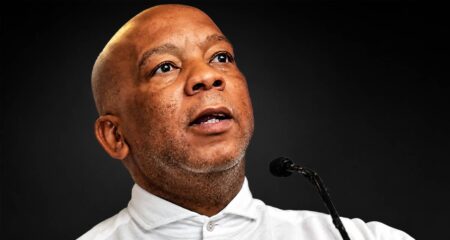
    The author, Business Leadership South Africa CEO Busi Mavuso
    The author, Business Leadership South Africa CEO Busi Mavuso

    But while the qualification is a distinct negative, there has been an improvement and this year’s is narrowly focused on Eskom’s compliance with the Public Finance Management Act, particularly records regarding losses due to criminal conduct in the year. This is a requirement that private sector companies would not have to meet. It is important that Eskom continues to improve record keeping to avoid a similar outcome next year. That would be another significant achievement. As it is, there has been a major improvement in losses related to crime, fraud and corruption, and systems have been considerably strengthened.

    Overall, this year’s results show that Eskom is getting a grip on its many performance challenges, with significant improvements in many areas of how the utility is run. That can start to rebuild confidence from the public and other stakeholders that the SOE has a clear future as an efficient and competitive electricity producer. The improved financial performance also gives it a path towards being able to raise debt in the markets to support investment in capacity. Thanks to this year’s performance, that is now looking feasible, provided the municipal debt issues can be dealt with.

    The unbundling of Eskom is proceeding, though not with the urgency I would like to see

    The unbundling of Eskom is proceeding, though not with the urgency I would like to see. During the year, the National Transmission Company of South Africa began trading as an independent business within Eskom. It will become the centre of the electricity system with multiple generators of electricity supplying it. Eskom notes that several regulatory dependencies remain to be fulfilled, though it is critical that all role players act with urgency. Eskom’s commitment to seeing through this process must be steadfast.

    Eskom also recognises that the double-digit tariff increases it has experienced over the last several years cannot go on. It is taken as a given that it will see single digit increases in future and must manage its costs accordingly. Its financials show that the amount it earns per kilowatt-hour is now more than double what it was six years ago. That cannot happen again. Indeed, a competitive market of the future must aim to push prices for consumers down.

    Not insurmountable

    The Eskom turnaround has positive macroeconomic implications, in providing stable electricity to the economy, but also in reducing the fiscal risks to the state. That can translate into improved overall creditworthiness of the state and with it, improved credit ratings. All South Africans are already benefitting from a more reliable power supply and the confidence that brings to investment and economic activity.

    This year’s results demonstrate that operational excellence and financial discipline are achievable at Eskom when there is sustained focus and partnership between the utility, government and the private sector. The challenges that remain, particularly municipal debt, are significant, but they are not insurmountable if approached with the same determination that has delivered the improvements we’ve seen this year.

    Read: Eskom working to end load reduction within 18 months

    Marokane and his team have earned the breathing room to tackle these remaining issues. Business stands ready to continue supporting this progress, because Eskom’s success is foundational to South Africa’s economic future.

    • The author, Busi Mavuso, is CEO of Business Leadership South Africa
    • Read more articles by Busi Mavuso on TechCentral

    Get breaking news from TechCentral on WhatsApp. Sign up here.

    Follow TechCentral on Google News Add TechCentral as your preferred source on Google


    Busi Mavuso Dan Marokane Eskom
    WhatsApp YouTube
    Share. Facebook Twitter LinkedIn WhatsApp Telegram Email Copy Link
    Previous ArticleAbsa is planning to launch an MVNO
    Next Article Home affairs promises full automation by next year

    Related Posts

    Eskom's diesel bill falls 86% as breakdowns hit eight-year low

    Eskom’s diesel bill falls 86% as breakdowns hit eight-year low

    31 July 2026
    Ramaphosa signs off on taking the grid away from Eskom

    Ramaphosa signs off on taking the grid away from Eskom

    31 July 2026
    Huawei Connect 2026: taking South African AI beyond pilots

    Huawei Connect 2026: taking South African AI beyond pilots

    29 July 2026
    Company News
    Domains.co.za launches self-hosted n8n VPS hosting

    Domains.co.za launches self-hosted n8n VPS hosting

    31 July 2026
    Smarter.tech '26 shows why smarter technology begins with context - Obsidian Systems

    Context is the missing piece in enterprise AI: Obsidian

    31 July 2026
    Huawei launches 12 intelligent transport solutions in South Africa - Sam Tang

    Huawei launches 12 intelligent transport solutions in South Africa

    30 July 2026
    Opinion
    The author, Jannie van Zyl

    Selling vapour is corporate suicide in slow motion

    16 July 2026
    Brazil's online gambling crackdown is a lesson for South Africa

    How Amazon outmanoeuvred Starlink in South Africa

    15 July 2026
    The Popia problem with agentic AI - Herman Haasbroek

    The Popia problem with agentic AI

    14 July 2026

    Subscribe to Updates

    Get the best South African technology news and analysis delivered to your e-mail inbox every morning.

    Latest Posts
    Eskom's diesel bill falls 86% as breakdowns hit eight-year low

    Eskom’s diesel bill falls 86% as breakdowns hit eight-year low

    31 July 2026
    Ramaphosa signs off on taking the grid away from Eskom

    Ramaphosa signs off on taking the grid away from Eskom

    31 July 2026
    Domains.co.za launches self-hosted n8n VPS hosting

    Domains.co.za launches self-hosted n8n VPS hosting

    31 July 2026
    Smarter.tech '26 shows why smarter technology begins with context - Obsidian Systems

    Context is the missing piece in enterprise AI: Obsidian

    31 July 2026
    © 2009 - 2026 NewsCentral Media
    Built and maintained by Chronon
    • Cookie policy (ZA)
    • TechCentral – privacy and Popia

    Type above and press Enter to search. Press Esc to cancel.

    Manage consent

    TechCentral uses cookies to enhance its offerings. Consenting to these technologies allows us to serve you better. Not consenting or withdrawing consent may adversely affect certain features and functions of the website.

    Functional Always active
    The technical storage or access is strictly necessary for the legitimate purpose of enabling the use of a specific service explicitly requested by the subscriber or user, or for the sole purpose of carrying out the transmission of a communication over an electronic communications network.
    Preferences
    The technical storage or access is necessary for the legitimate purpose of storing preferences that are not requested by the subscriber or user.
    Statistics
    The technical storage or access that is used exclusively for statistical purposes. The technical storage or access that is used exclusively for anonymous statistical purposes. Without a subpoena, voluntary compliance on the part of your Internet Service Provider, or additional records from a third party, information stored or retrieved for this purpose alone cannot usually be used to identify you.
    Marketing
    The technical storage or access is required to create user profiles to send advertising, or to track the user on a website or across several websites for similar marketing purposes.
    • Manage options
    • Manage services
    • Manage {vendor_count} vendors
    • Read more about these purposes
    View preferences
    • {title}
    • {title}
    • {title}