Close Menu
TechCentralTechCentral

    Subscribe to the newsletter

    Get the best South African technology news and analysis delivered to your e-mail inbox every morning.

    Facebook X (Twitter) YouTube LinkedIn
    WhatsApp Facebook X (Twitter) LinkedIn YouTube
    TechCentralTechCentral
    • News
      TechCentral's South African Newsmakers of 2025

      TechCentral’s South African Newsmakers of 2025

      18 December 2025
      Malatsi buries Post Office's long-dead monopoly

      Malatsi buries Post Office monopoly the market ignored

      18 December 2025
      China races to crack EUV as chip war with the West intensifies

      China races to crack EUV lithography as chip war with the West intensifies

      18 December 2025
      Coursera to buy Udemy, in which Prosus is an investor

      Coursera to buy Udemy, in which Prosus is an investor

      18 December 2025
      It has been a year of policy victories, but crypto firms warn momentum could fade without durable US legislation.- Donald Trump

      Crypto’s Trump-era boom faces a 2026 reality check

      18 December 2025
    • World
      Warner Bros slams the door on Paramount

      Warner Bros slams the door on Paramount

      17 December 2025
      X moves to block bid to revive Twitter brand

      X moves to block bid to revive Twitter brand

      17 December 2025
      Oracle’s AI ambitions face scrutiny on earnings miss

      Oracle’s AI ambitions face scrutiny on earnings miss

      11 December 2025
      China will get Nvidia H200 chips - but not without paying Washington first

      China will get Nvidia H200 chips – but not without paying Washington first

      9 December 2025
      IBM reportedly close to $11-billion deal to buy Confluent - Arvind Krishna

      IBM reportedly close to $11-billion deal to buy Confluent

      8 December 2025
    • In-depth
      Black Friday goes digital in South Africa as online spending surges to record high

      Black Friday goes digital in South Africa as online spending surges to record high

      4 December 2025
      Canal+ plays hardball - and DStv viewers feel the pain

      Canal+ plays hardball – and DStv viewers feel the pain

      3 December 2025
      Jensen Huang Nvidia

      So, will China really win the AI race?

      14 November 2025
      Valve's Linux console takes aim at Microsoft's gaming empire

      Valve’s Linux console takes aim at Microsoft’s gaming empire

      13 November 2025
      iOCO's extraordinary comeback plan - Rhys Summerton

      iOCO’s extraordinary comeback plan

      28 October 2025
    • TCS
      TCS+ | Africa's digital transformation - unlocking AI through cloud and culture - Cliff de Wit Accelera Digital Group

      TCS+ | Cloud without culture won’t deliver AI: Accelera’s Cliff de Wit

      12 December 2025
      TCS+ | How Cloud on Demand helps partners thrive in the AWS ecosystem - Odwa Ndyaluvane and Xenia Rhode

      TCS+ | How Cloud On Demand helps partners thrive in the AWS ecosystem

      4 December 2025
      TCS | MTN Group CEO Ralph Mupita on competition, AI and the future of mobile

      TCS | Ralph Mupita on competition, AI and the future of mobile

      28 November 2025
      TCS | Dominic Cull on fixing South Africa's ICT policy bottlenecks

      TCS | Dominic Cull on fixing South Africa’s ICT policy bottlenecks

      21 November 2025
      TCS | BMW CEO Peter van Binsbergen on the future of South Africa's automotive industry

      TCS | BMW CEO Peter van Binsbergen on the future of South Africa’s automotive industry

      6 November 2025
    • Opinion
      Netflix, Warner Bros deal raises fresh headaches for MultiChoice - Duncan McLeod

      Netflix, Warner Bros deal raises fresh headaches for MultiChoice

      5 December 2025
      BIN scans, DDoS and the next cybercrime wave hitting South Africa's banks - Entersekt Gerhard Oosthuizen

      BIN scans, DDoS and the next cybercrime wave hitting South Africa’s banks

      3 December 2025
      Your data, your hardware: the DIY AI revolution is coming - Duncan McLeod

      Your data, your hardware: the DIY AI revolution is coming

      20 November 2025
      Zero Carbon Charge founder Joubert Roux

      The energy revolution South Africa can’t afford to miss

      20 November 2025
      It's time for a new approach to government IT spend in South Africa - Richard Firth

      It’s time for a new approach to government IT spend in South Africa

      19 November 2025
    • Company Hubs
      • Africa Data Centres
      • AfriGIS
      • Altron Digital Business
      • Altron Document Solutions
      • Altron Group
      • Arctic Wolf
      • AvertITD
      • Braintree
      • CallMiner
      • CambriLearn
      • CYBER1 Solutions
      • Digicloud Africa
      • Digimune
      • Domains.co.za
      • ESET
      • Euphoria Telecom
      • Incredible Business
      • iONLINE
      • IQbusiness
      • Iris Network Systems
      • LSD Open
      • NEC XON
      • Netstar
      • Network Platforms
      • Next DLP
      • Ovations
      • Paracon
      • Paratus
      • Q-KON
      • SevenC
      • SkyWire
      • Solid8 Technologies
      • Telit Cinterion
      • Tenable
      • Vertiv
      • Videri Digital
      • Vodacom Business
      • Wipro
      • Workday
      • XLink
    • Sections
      • AI and machine learning
      • Banking
      • Broadcasting and Media
      • Cloud services
      • Contact centres and CX
      • Cryptocurrencies
      • Education and skills
      • Electronics and hardware
      • Energy and sustainability
      • Enterprise software
      • Financial services
      • Information security
      • Internet and connectivity
      • Internet of Things
      • Investment
      • IT services
      • Lifestyle
      • Motoring
      • Public sector
      • Retail and e-commerce
      • Satellite communications
      • Science
      • SMEs and start-ups
      • Social media
      • Talent and leadership
      • Telecoms
    • Events
    • Advertise
    TechCentralTechCentral
    Home » In-depth » How secure is your phone’s lock screen?

    How secure is your phone’s lock screen?

    By The Conversation6 April 2016
    Twitter LinkedIn Facebook WhatsApp Email Telegram Copy Link
    News Alerts
    WhatsApp

    iphone-user-640

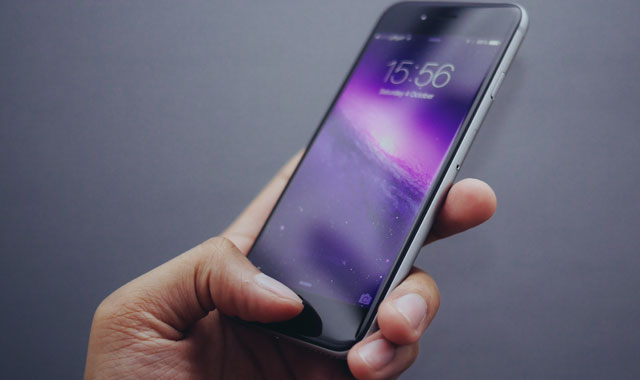
    One consequence of the Apple vs FBI drama has been to shine a spotlight on the security of smartphone lock screens.

    The fact that the FBI managed to hack the iPhone of the San Bernardino shooter without Apple’s help raises questions about whether Pin codes and swipe patterns are as secure as we think.

    In fact, they’re probably not as secure as we’d hope. No device as complex as a smartphone or tablet is ever completely secure, but device manufactures and developers are still doing their best to keep your data safe.

    The first line of defence is your lock screen, typically protected by a Pin code or password.

    When it comes to smartphones, the humble four-digit Pin code is the most popular choice. Unfortunately, even ignoring terrible Pin combinations such as “1234”, “1111” or “7777”, four-digit Pin codes are still incredibly weak, since there are only 10 000 unique possible Pins.

    If you lose your device, and there are no other protections, it would only take a couple of days for someone to find the correct Pin through brute force.

    A random, six-digit Pin will afford you better security, given that there are a million possible combinations. However, with a weak Pin and a bit of time and luck, it’s still possible for someone to bypass this using something like Rubber Ducky, a tool designed to try every Pin combination without triggering other security mechanisms.

    Checks and balances

    Fortunately, there other safeguards in place. On iPhones and iPads, for instance, there is a forced delay of 80ms between Pin or password attempts.

    And after 10 incorrect attempts, the device will either time-out for increasing periods of time, lock out completely, or potentially delete all data permanently, depending on your settings.

    Similarly, Android devices enforce time delays after a number of passcode or password entries. However, stock Android devices will not delete their contents after any number of incorrect entries.

    Swipe patterns are also a good security mechanism, as there are more possible combinations than a four-digit Pin. Additionally, you can’t set your swipe pattern to be the same as your banking PIN or password, so if one is compromised, then the others remain secure.

    However, all of these security controls can potentially be thwarted. By simply observing the fingerprints on a device’s display on an unclean screen, it is possible to discern a swipe pattern or passcode. When it comes to touch screen devices, cleanliness is next to secure-ness.

    Bypasses

    Speaking of fingers, biometrics have increased in popularity recently. Biometric security controls simply means that traits of a human body can be used to identify someone and therefore unlock something.

    In the case of smartphones, there are competing systems that offer various levels of security. Android has facial, voice and fingerprint unlocking, while iOS has fingerprint unlocking only.

    Generally, biometrics on their own are not inherently secure. When used as the only protection mechanism, they’re often very unreliable, either allowing too many unauthorised users to access a device (false positives), or by creating a frustrating user experience by locking out legitimate users (false negatives).

    Some methods of bypassing these biometric protections have been widely publicised, such as using a gummi bear or PVA glue to bypass Apple’s TouchID, or using a picture to fool facial recognition on Android.

    To combat this, Apple disables the TouchID after five incorrect fingerprint attempts, requiring a passcode or password entry to re-enable the sensor. Likewise, current versions of Android enforce increasing time-outs on after a number of incorrect entries.

    These methods help strike a balance between security and usability, which is crucial for making sure smartphones don’t end up hurled at a wall.

    Although these lock screen protections are in place, your device may still contain bugs in its software that can allow attackers to bypass them. A quick search for “smartphone lock screen bypasses” on your favourite search engine will yield more results than you’d probably care to read.

    Lock screen bypasses are particularly problematic for older devices that are no longer receiving security updates, but new devices are not immune. For example, the latest major iOS release (iOS 9.0) contained a flaw that allowed users to access the device without entering a valid passcode via the Clock app, which is accessible on the lock screen. Similar bugs have been discovered for Android devices as well.

    All of these efforts could be thrown out the window if you install an app that includes malware.

    So, lock screens, Pin codes, passwords and swipe patters should only be considered your first line of defence rather than a foolproof means of securing your device.The Conversation

    • Clinton Carpene is post-doctoral researcher in network security, Edith Cowan University
    • This article was originally published on The Conversation


    Subscribe to TechCentral Subscribe to TechCentral
    Share. Facebook Twitter LinkedIn WhatsApp Telegram Email Copy Link
    Previous Article10 start-ups named for Barclays Accelerator
    Next Article Opera founder releases new Web browser

    Related Posts

    TechCentral's South African Newsmakers of 2025

    TechCentral’s South African Newsmakers of 2025

    18 December 2025
    Malatsi buries Post Office's long-dead monopoly

    Malatsi buries Post Office monopoly the market ignored

    18 December 2025
    China races to crack EUV as chip war with the West intensifies

    China races to crack EUV lithography as chip war with the West intensifies

    18 December 2025
    Company News
    Why TechCentral is the most powerful platform for reaching IT decision makers

    Why TechCentral is the most powerful platform for reaching IT decision makers

    17 December 2025
    Business trends to watch in 2026 - Domains.co.za

    Business trends to watch in 2026

    17 December 2025
    MTN Zambia launches world's first 4G cloud smartphone solution - Huawei

    MTN Zambia launches world’s first 4G cloud smartphone solution

    17 December 2025
    Opinion
    Netflix, Warner Bros deal raises fresh headaches for MultiChoice - Duncan McLeod

    Netflix, Warner Bros deal raises fresh headaches for MultiChoice

    5 December 2025
    BIN scans, DDoS and the next cybercrime wave hitting South Africa's banks - Entersekt Gerhard Oosthuizen

    BIN scans, DDoS and the next cybercrime wave hitting South Africa’s banks

    3 December 2025
    Your data, your hardware: the DIY AI revolution is coming - Duncan McLeod

    Your data, your hardware: the DIY AI revolution is coming

    20 November 2025

    Subscribe to Updates

    Get the best South African technology news and analysis delivered to your e-mail inbox every morning.

    Latest Posts
    TechCentral's South African Newsmakers of 2025

    TechCentral’s South African Newsmakers of 2025

    18 December 2025
    Malatsi buries Post Office's long-dead monopoly

    Malatsi buries Post Office monopoly the market ignored

    18 December 2025
    China races to crack EUV as chip war with the West intensifies

    China races to crack EUV lithography as chip war with the West intensifies

    18 December 2025
    Coursera to buy Udemy, in which Prosus is an investor

    Coursera to buy Udemy, in which Prosus is an investor

    18 December 2025
    © 2009 - 2025 NewsCentral Media
    • Cookie policy (ZA)
    • TechCentral – privacy and Popia

    Type above and press Enter to search. Press Esc to cancel.

    Manage consent

    TechCentral uses cookies to enhance its offerings. Consenting to these technologies allows us to serve you better. Not consenting or withdrawing consent may adversely affect certain features and functions of the website.

    Functional Always active
    The technical storage or access is strictly necessary for the legitimate purpose of enabling the use of a specific service explicitly requested by the subscriber or user, or for the sole purpose of carrying out the transmission of a communication over an electronic communications network.
    Preferences
    The technical storage or access is necessary for the legitimate purpose of storing preferences that are not requested by the subscriber or user.
    Statistics
    The technical storage or access that is used exclusively for statistical purposes. The technical storage or access that is used exclusively for anonymous statistical purposes. Without a subpoena, voluntary compliance on the part of your Internet Service Provider, or additional records from a third party, information stored or retrieved for this purpose alone cannot usually be used to identify you.
    Marketing
    The technical storage or access is required to create user profiles to send advertising, or to track the user on a website or across several websites for similar marketing purposes.
    • Manage options
    • Manage services
    • Manage {vendor_count} vendors
    • Read more about these purposes
    View preferences
    • {title}
    • {title}
    • {title}