

Close Menu
TechCentralTechCentral

    Subscribe to the newsletter

    Get the best South African technology news and analysis delivered to your e-mail inbox every morning.

    Facebook X (Twitter) YouTube LinkedIn
    WhatsApp Facebook X (Twitter) LinkedIn YouTube
    TechCentralTechCentral
    • News
      Digital authoritarianism grows as African states normalise internet blackouts

      Digital authoritarianism grows as African states normalise internet blackouts

      19 December 2025
      Starlink satellite anomaly creates debris in rare orbital mishap

      Starlink satellite anomaly creates debris in rare orbital mishap

      19 December 2025
      TechCentral's South African Newsmakers of 2025

      TechCentral’s South African Newsmakers of 2025

      18 December 2025
      Malatsi buries Post Office's long-dead monopoly

      Malatsi buries Post Office monopoly the market ignored

      18 December 2025
      China races to crack EUV as chip war with the West intensifies

      China races to crack EUV lithography as chip war with the West intensifies

      18 December 2025
    • World
      Trump space order puts the moon back at centre of US, China rivalry - US President Donald Trump

      Trump space order puts the moon back at centre of US, China rivalry

      19 December 2025
      Warner Bros slams the door on Paramount

      Warner Bros slams the door on Paramount

      17 December 2025
      X moves to block bid to revive Twitter brand

      X moves to block bid to revive Twitter brand

      17 December 2025
      Oracle’s AI ambitions face scrutiny on earnings miss

      Oracle’s AI ambitions face scrutiny on earnings miss

      11 December 2025
      China will get Nvidia H200 chips - but not without paying Washington first

      China will get Nvidia H200 chips – but not without paying Washington first

      9 December 2025
    • In-depth
      Black Friday goes digital in South Africa as online spending surges to record high

      Black Friday goes digital in South Africa as online spending surges to record high

      4 December 2025
      Canal+ plays hardball - and DStv viewers feel the pain

      Canal+ plays hardball – and DStv viewers feel the pain

      3 December 2025
      Jensen Huang Nvidia

      So, will China really win the AI race?

      14 November 2025
      Valve's Linux console takes aim at Microsoft's gaming empire

      Valve’s Linux console takes aim at Microsoft’s gaming empire

      13 November 2025
      iOCO's extraordinary comeback plan - Rhys Summerton

      iOCO’s extraordinary comeback plan

      28 October 2025
    • TCS
      TCS+ | Africa's digital transformation - unlocking AI through cloud and culture - Cliff de Wit Accelera Digital Group

      TCS+ | Cloud without culture won’t deliver AI: Accelera’s Cliff de Wit

      12 December 2025
      TCS+ | How Cloud on Demand helps partners thrive in the AWS ecosystem - Odwa Ndyaluvane and Xenia Rhode

      TCS+ | How Cloud On Demand helps partners thrive in the AWS ecosystem

      4 December 2025
      TCS | MTN Group CEO Ralph Mupita on competition, AI and the future of mobile

      TCS | Ralph Mupita on competition, AI and the future of mobile

      28 November 2025
      TCS | Dominic Cull on fixing South Africa's ICT policy bottlenecks

      TCS | Dominic Cull on fixing South Africa’s ICT policy bottlenecks

      21 November 2025
      TCS | BMW CEO Peter van Binsbergen on the future of South Africa's automotive industry

      TCS | BMW CEO Peter van Binsbergen on the future of South Africa’s automotive industry

      6 November 2025
    • Opinion
      Netflix, Warner Bros deal raises fresh headaches for MultiChoice - Duncan McLeod

      Netflix, Warner Bros deal raises fresh headaches for MultiChoice

      5 December 2025
      BIN scans, DDoS and the next cybercrime wave hitting South Africa's banks - Entersekt Gerhard Oosthuizen

      BIN scans, DDoS and the next cybercrime wave hitting South Africa’s banks

      3 December 2025
      Your data, your hardware: the DIY AI revolution is coming - Duncan McLeod

      Your data, your hardware: the DIY AI revolution is coming

      20 November 2025
      Zero Carbon Charge founder Joubert Roux

      The energy revolution South Africa can’t afford to miss

      20 November 2025
      It's time for a new approach to government IT spend in South Africa - Richard Firth

      It’s time for a new approach to government IT spend in South Africa

      19 November 2025
    • Company Hubs
      • Africa Data Centres
      • AfriGIS
      • Altron Digital Business
      • Altron Document Solutions
      • Altron Group
      • Arctic Wolf
      • AvertITD
      • Braintree
      • CallMiner
      • CambriLearn
      • CYBER1 Solutions
      • Digicloud Africa
      • Digimune
      • Domains.co.za
      • ESET
      • Euphoria Telecom
      • Incredible Business
      • iONLINE
      • IQbusiness
      • Iris Network Systems
      • LSD Open
      • NEC XON
      • Netstar
      • Network Platforms
      • Next DLP
      • Ovations
      • Paracon
      • Paratus
      • Q-KON
      • SevenC
      • SkyWire
      • Solid8 Technologies
      • Telit Cinterion
      • Tenable
      • Vertiv
      • Videri Digital
      • Vodacom Business
      • Wipro
      • Workday
      • XLink
    • Sections
      • AI and machine learning
      • Banking
      • Broadcasting and Media
      • Cloud services
      • Contact centres and CX
      • Cryptocurrencies
      • Education and skills
      • Electronics and hardware
      • Energy and sustainability
      • Enterprise software
      • Financial services
      • Information security
      • Internet and connectivity
      • Internet of Things
      • Investment
      • IT services
      • Lifestyle
      • Motoring
      • Public sector
      • Retail and e-commerce
      • Satellite communications
      • Science
      • SMEs and start-ups
      • Social media
      • Talent and leadership
      • Telecoms
    • Events
    • Advertise
    TechCentralTechCentral
    Home » Opinion » Roger Hislop » IoT’s key feature is the pennies it can pinch

    IoT’s key feature is the pennies it can pinch

    By Roger Hislop10 August 2017
    Twitter LinkedIn Facebook WhatsApp Email Telegram Copy Link
    News Alerts
    WhatsApp

    Not since utility computing became on-demand computing became grid computing became cloud computing has there been more fuss about a technology concept that is 40 years old. The Internet of things (IoT), once known as the industrial Internet, or machine to machine (M2M), or wireless telemetry, is not new. What is new? The incredibly low price point at which devices can be hooked up to the Internet, securely and conveniently.

    My first job out of varsity was for a process automation and Scada (system control and data acquisition) company called D Le Roux and Associates, which had a locally developed DOS-based Scada system called Turbo Link. The company grew and adapted and acquired its local competitor, to become Adroit Technology — to this day a leader and innovator in the industrial control space.

    Why is this important to the IoT story? Because there are a number of companies in South Africa that have been doing “Internet of things” for decades. Trinity Telecoms. Beyond Wireless. Xlink. They’ve been doing things with Zigby, with GPRS (2G), with a variety of technologies.

    You can make a weatherproof device that you can stick under a bridge to monitor stresses, and not have to touch it again for 10 years

    This begs the question: if IoT-like tech has been around for so long, why is it now flooding your LinkedIn timeline, and taking up hours at every Gartner conference?

    The short answer is LPWAN, or low-power wide-area networking.

    The “low power” part is the key. New technologies that that can transmit data over long distances using very little radio power. Devices designed from the ground up to eke out every tiny milliwatt, to sleep as much as they can, to strip out every bit of overhead unless it’s absolutely vital.

    This is why you can take an LPWAN device, and power it for five or 10 years with just one small battery. You can make a weatherproof device that you can stick under a bridge to monitor stresses, and not have to touch it again for 10 years. You could toss one into a grain hopper. Insert in an animal’s horn. Glue inside a fridge. Tuck inside a light fixture. Wrap around an ignition lead. LPWAN devices can reach a base station five, 10, even 20km away, and whatever you are controlling or monitoring will probably reach its end of life before the IoT device’s battery dies.

    Really cheap

    That makes deploying IoT technology really, really cheap.

    Of these newly minted technologies, the best known are LoRaWAN (long-range WAN) and Sigfox. These two technologies both run in licence-exempt spectrum in the 800MHz band, so they have great signal propagation and penetration characteristics — and don’t attract any licence fees. Another is RPMA from Ingenu, that uses the 2.4GHz band that Wi-Fi uses.

    From the point of view of a technology entrepreneur, or hobbyist, or hardware systems developer, LPWAN technology is available in integrated circuits costing less than a dollar, and are easy to work with — any competent electronics technician with basic equipment can build a device that is Internet connected.
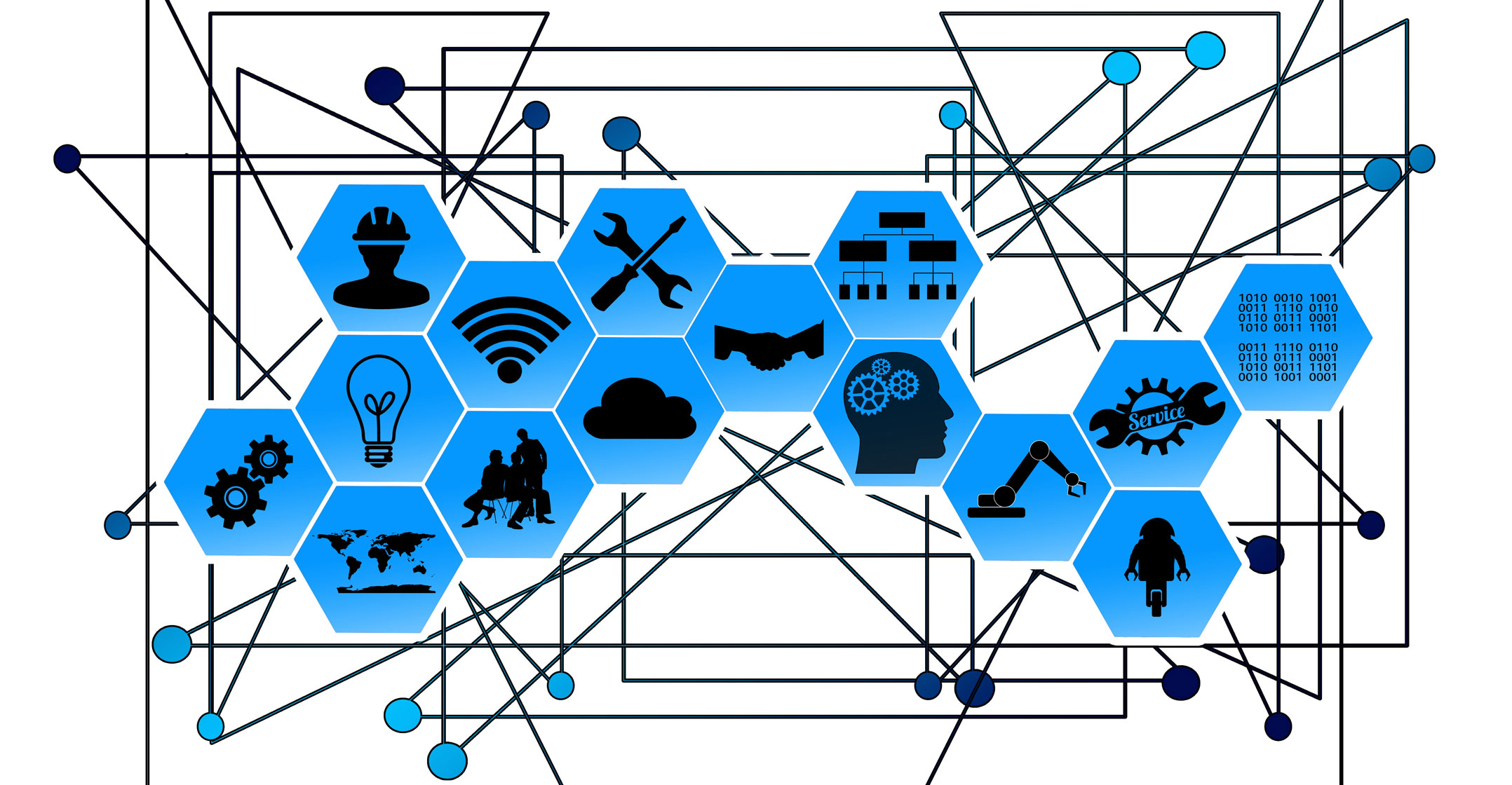
    There is already a massive ecosystem of manufacturers that have made every conceivable device that you can buy off the shelf, from smoke alarms to temperature sensors to smart asset tags.

    From a software development point of view, you can take the payloads sent by the devices and knock out a quick Web service to display information, or apply some rules to kick off a process. Communication to and from the device is done using straightforward application programming interfaces. You can hook things up via a communications service provider that makes provisioning devices and getting data off them a 1-2-3 click process.

    It used to be prohibitively expensive to hook up switches or motors or gizmos to Internet-based control systems. Now it’s dirt cheap

    This is what makes the new generation of IoT technology exciting … what used to cost thousands of rand can now cost hundreds. It used to be prohibitively expensive to hook up switches or motors or gizmos to Internet-based control systems. Now it’s dirt cheap.

    You can be looking at around R50/year (per year!) to let a device send you a few messages a day, maybe R150/year for a couple of hundred messages per day.

    At a radio level, LPWAN technologies are difficult to interfere with or jam – LoRa, with its sophisticated spread-spectrum coding, Sigfox with a clever ultra-narrowband chirped modulation.

    They are also designed to be secure at a network level — devices have unique hardware identifiers that are linked to 128-bit keys, either pre-provisioned, or provisioned over the air. Traffic is encrypted between network server, through the base station to the device. If you like, you can also independently encrypt the payload, so even if the session is exposed, your device data is safe. There are potential theoretical vulnerabilities, as with any technology, so working with a competent network and device implementation partner is, of course, recommended.

    Growing ecosystem

    Right now in South Africa we have a rapidly growing ecosystem around IoT. Dark Fibre Africa’s Sqwidnet has become the Sigfox network operator here (there is only one Sigfox operator per country). Comsol is building a national IoT network based on LoRaWAN. FastNet, which was an early pioneer in LoRa, is also building network coverage. A dark horse in this race is Vodacom, which has made noises about retrofitting its LTE network with NB-IoT (narrowband IoT) — while there’s a lot of noise about it in the market, it may be a year or two to commercial deployment.

    Author Roger Hislop argues that IoT is world-changing technology

    But this is the first time I’ve been genuinely excited about a new technology in 20 years. Wi-Fi freed us from the shackles of thin grey cables. Yay, convenience! Hypervisor freed us from the drag of hardware costs. Yay, cost efficiencies! Network virtualisation (SDN, NFV) freed us from the ball-and-chain of command line, hardware-level network configuration. Yay, policy-based network configurations!

    Bah.

    That’s progress. That’s amazing progress. But it’s not exciting.

    LPWAN technologies make the Internet of things possible — they allow anyone with a creative idea to dream up a new product, to make someone’s job easier, to unlock a new efficiency in business, to measure something that was before just a guess.

    Not because any of the ideas in IoT are necessarily new — but because the idea used to be unfeasible, impractical, not viable, unaffordable. Now, if you can think it, you can do it.

    That’s when technology becomes world changing.

    • Roger Hislop is a research and innovation specialist in the product engineering team at Internet Solutions, looking at new technologies and their opportunities for commercialisation



    Comsol Dark Fibre Africa DFA FastNet Internet Solutions Roger Hislop Sigfox top Vodacom
    Subscribe to TechCentral Subscribe to TechCentral
    Share. Facebook Twitter LinkedIn WhatsApp Telegram Email Copy Link
    Previous ArticleMicrosoft, Kaspersky end antitrust dispute
    Next Article GSMA blasts SA’s wholesale network plans

    Related Posts

    TechCentral's South African Newsmakers of 2025

    TechCentral’s South African Newsmakers of 2025

    18 December 2025
    Vodacom follows MTN with post-paid price hikes

    Vodacom follows MTN with post-paid price hikes

    11 December 2025
    Nkosana Makate

    Makate sees off challenge to his ‘please call me’ payout

    9 December 2025
    Company News
    Why TechCentral is the most powerful platform for reaching IT decision makers

    Why TechCentral is the most powerful platform for reaching IT decision makers

    17 December 2025
    Business trends to watch in 2026 - Domains.co.za

    Business trends to watch in 2026

    17 December 2025
    MTN Zambia launches world's first 4G cloud smartphone solution - Huawei

    MTN Zambia launches world’s first 4G cloud smartphone solution

    17 December 2025
    Opinion
    Netflix, Warner Bros deal raises fresh headaches for MultiChoice - Duncan McLeod

    Netflix, Warner Bros deal raises fresh headaches for MultiChoice

    5 December 2025
    BIN scans, DDoS and the next cybercrime wave hitting South Africa's banks - Entersekt Gerhard Oosthuizen

    BIN scans, DDoS and the next cybercrime wave hitting South Africa’s banks

    3 December 2025
    Your data, your hardware: the DIY AI revolution is coming - Duncan McLeod

    Your data, your hardware: the DIY AI revolution is coming

    20 November 2025

    Subscribe to Updates

    Get the best South African technology news and analysis delivered to your e-mail inbox every morning.

    Latest Posts
    Digital authoritarianism grows as African states normalise internet blackouts

    Digital authoritarianism grows as African states normalise internet blackouts

    19 December 2025
    Starlink satellite anomaly creates debris in rare orbital mishap

    Starlink satellite anomaly creates debris in rare orbital mishap

    19 December 2025
    Trump space order puts the moon back at centre of US, China rivalry - US President Donald Trump

    Trump space order puts the moon back at centre of US, China rivalry

    19 December 2025
    TechCentral's South African Newsmakers of 2025

    TechCentral’s South African Newsmakers of 2025

    18 December 2025
    © 2009 - 2025 NewsCentral Media
    • Cookie policy (ZA)
    • TechCentral – privacy and Popia

    Type above and press Enter to search. Press Esc to cancel.

    Manage consent

    TechCentral uses cookies to enhance its offerings. Consenting to these technologies allows us to serve you better. Not consenting or withdrawing consent may adversely affect certain features and functions of the website.

    Functional Always active
    The technical storage or access is strictly necessary for the legitimate purpose of enabling the use of a specific service explicitly requested by the subscriber or user, or for the sole purpose of carrying out the transmission of a communication over an electronic communications network.
    Preferences
    The technical storage or access is necessary for the legitimate purpose of storing preferences that are not requested by the subscriber or user.
    Statistics
    The technical storage or access that is used exclusively for statistical purposes. The technical storage or access that is used exclusively for anonymous statistical purposes. Without a subpoena, voluntary compliance on the part of your Internet Service Provider, or additional records from a third party, information stored or retrieved for this purpose alone cannot usually be used to identify you.
    Marketing
    The technical storage or access is required to create user profiles to send advertising, or to track the user on a website or across several websites for similar marketing purposes.
    • Manage options
    • Manage services
    • Manage {vendor_count} vendors
    • Read more about these purposes
    View preferences
    • {title}
    • {title}
    • {title}