Close Menu
TechCentralTechCentral

    Subscribe to the newsletter

    Get the best South African technology news and analysis delivered to your e-mail inbox every morning.

    Facebook X (Twitter) YouTube LinkedIn
    WhatsApp Facebook X (Twitter) LinkedIn YouTube
    TechCentralTechCentral
    • News
      Gautrain to takes on Uber and Bolt: report

      Gautrain to take on Uber and Bolt: report

      22 May 2026
      Three years in, PayShap pivots to merchants

      Three years in, PayShap pivots to merchants

      21 May 2026
      Two telcos, $1-trillion and two very different fintech bets - Vodacom and MTN

      Two telcos, $1-trillion and two very different fintech bets

      21 May 2026
      There's an oddity hiding in South Africa's EV market

      There’s an oddity hiding in South Africa’s EV market

      21 May 2026
      Rica blindspot exposed

      Rica blindspot exposed

      21 May 2026
    • World
      SpaceX's record-setting IPO is here

      SpaceX’s record-setting IPO is here

      21 May 2026
      Vatican confronts the age of artificial intelligence. Edgar Beltrán/The Pillar 

      Vatican confronts the age of artificial intelligence

      19 May 2026
      The walkout that could hit every laptop and AI server - Samsung

      The walkout that could hit every laptop and AI server

      18 May 2026
      Pop star sues Samsung for $15-million - Dua Lipa

      Pop star sues Samsung for $15-million

      11 May 2026
      OpenAI's new audio APIs aim for conversational voice agents

      OpenAI’s new audio APIs aim for conversational voice agents

      8 May 2026
    • In-depth
      Alfa's electric rebel - Alfa Romeo Junior Elettrica Veloce

      Alfa’s electric rebel

      29 April 2026
      Africa switches on as Europe dims the lights

      Africa switches on as Europe dims the lights

      9 April 2026
      The biggest untapped EV market on Earth is hiding in plain sight

      The biggest untapped EV market on Earth is hiding in plain sight

      1 April 2026
      Datatec is firing on all cylinders - Jens Montanana

      The R16-billion tech giant hiding in plain sight

      26 March 2026
      The last generation of coders

      The last generation of coders

      18 February 2026
    • TCS
      TCS+ | The Up&Up Group on the hidden cost of AI - Jason Harrison

      TCS+ | The Up&Up Group on the hidden cost of AI

      13 May 2026
      Michael Rossouw

      TCS+ | The retirement decision most South Africans get wrong

      6 May 2026
      TCS | The Cape Town start-up listening for TB with AI - Braden van Breda

      TCS | The Cape Town start-up listening for TB with AI

      4 May 2026

      TCS+ | ‘The ISP for ISPs’: Vox’s shift to wholesale aggregator

      20 April 2026
      TCS | Werner Lindemann on how AI is rewriting the infosec rulebook

      TCS | Werner Lindemann on how AI is rewriting the infosec rulebook

      15 April 2026
    • Opinion
      AI won't fix your culture - it will expose it - Jackie Kennedy

      AI won’t fix your culture – it will expose it

      19 May 2026
      Free calls, dead voice and Shameel Joosub's Spanish ghost - Duncan McLeod

      Free calls, dead voice and Shameel Joosub’s Spanish ghost

      22 April 2026
      The conflict of interest at the heart of PayShap's slow adoption - Cheslyn Jacobs

      The conflict of interest at the heart of PayShap’s slow adoption

      26 March 2026
      South Africa's energy future hinges on getting wheeling right - Aishah Gire

      South Africa’s energy future hinges on getting wheeling right

      10 March 2026
      Free calls, dead voice and Shameel Joosub's Spanish ghost - Duncan McLeod

      Apple just dropped a bomb on the Windows world

      5 March 2026
    • Company Hubs
      • 1Stream
      • Africa Data Centres
      • AfriGIS
      • Altron Digital Business
      • Altron Document Solutions
      • Altron Group
      • Arctic Wolf
      • Ascent Technology
      • AvertITD
      • BBD
      • Braintree
      • CallMiner
      • CambriLearn
      • CM Telecom
      • Contactable
      • CYBER1 Solutions
      • Digicloud Africa
      • Digimune
      • Domains.co.za
      • ESET
      • Euphoria Telecom
      • HOSTAFRICA
      • Incredible Business
      • iONLINE
      • IQbusiness
      • Iris Network Systems
      • Kaspersky
      • LSD Open
      • Mitel
      • NEC XON
      • Netstar
      • Network Platforms
      • Next DLP
      • Ovations
      • Paracon
      • Paratus
      • Q-KON
      • SevenC
      • SkyWire
      • Solid8 Technologies
      • Telit Cinterion
      • Telviva
      • Tenable
      • Vertiv
      • Videri Digital
      • Vodacom Business
      • Wipro
      • Workday
      • XLink
    • Sections
      • AI and machine learning
      • Banking
      • Broadcasting and Media
      • Cloud services
      • Contact centres and CX
      • Cryptocurrencies
      • Education and skills
      • Electronics and hardware
      • Energy and sustainability
      • Enterprise software
      • Financial services
      • HealthTech
      • Information security
      • Internet and connectivity
      • Internet of Things
      • Investment
      • IT services
      • Lifestyle
      • Motoring
      • Policy and regulation
      • Public sector
      • Retail and e-commerce
      • Satellite communications
      • Science
      • SMEs and start-ups
      • Social media
      • Talent and leadership
      • Telecoms
    • Events
    • Advertise
    TechCentralTechCentral
    Home » In-depth » LED lighting could be harmful to health

    LED lighting could be harmful to health

    By The Conversation10 September 2018
    Twitter LinkedIn Facebook WhatsApp Email Telegram Copy Link
    News Alerts
    WhatsApp

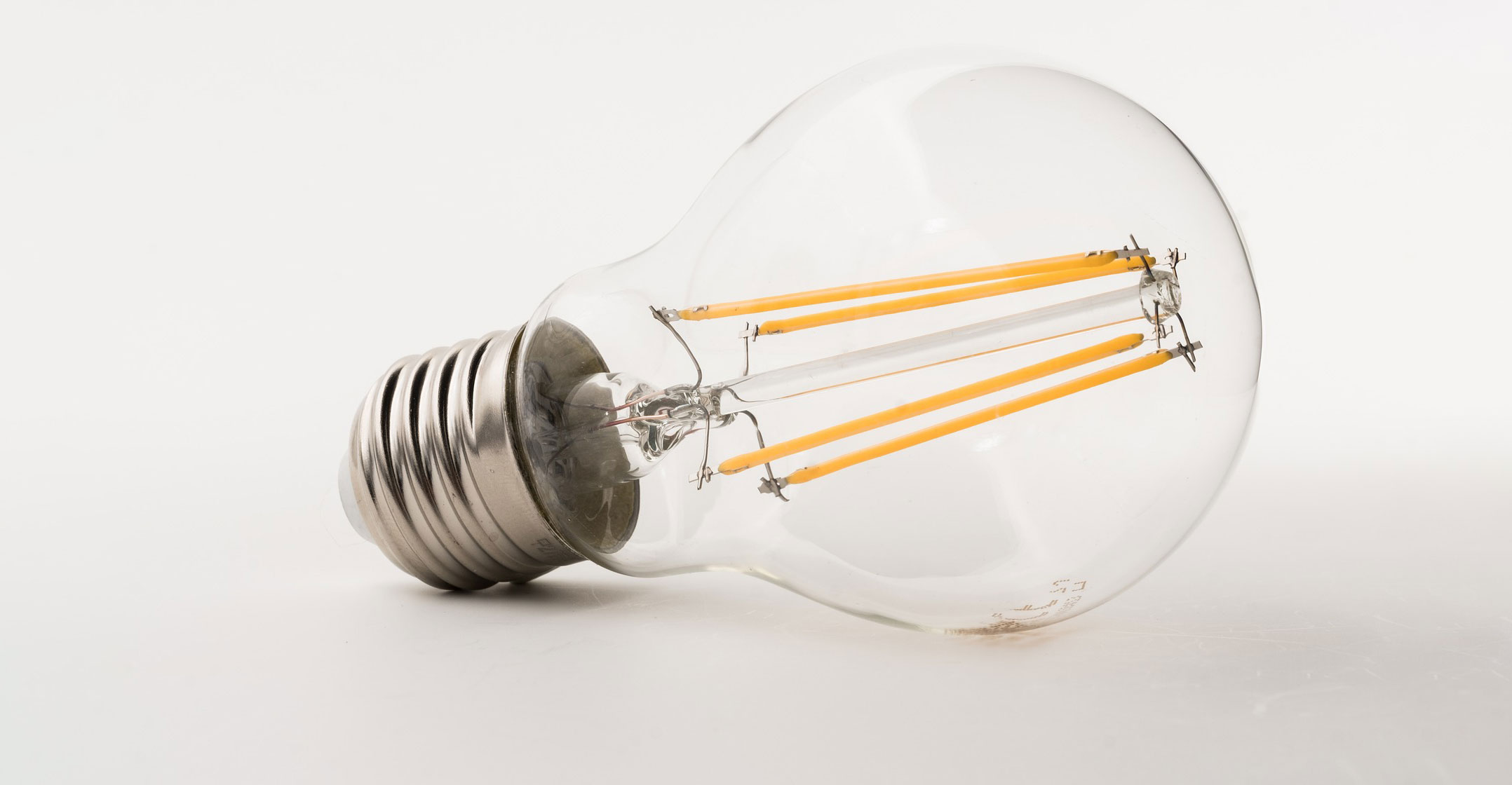
    The European Union recently announced a ban on halogen light bulbs, to persuade the public to switch to LED lamps. It’s unlikely to raise many eyebrows. There are, after all, lots of different lamps on the market. Some generate light by a white-hot filament (incandescent lamps, such as halogen), some by an electrical discharge through a gas (such as fluorescent lamps) and some by the passage of electrons through a semiconductor (LEDs).

    LEDs are low-voltage devices and the light they give depends on the circuitry hidden in the lamp itself, which changes the alternating current to provide the low voltage the LED needs. Some electronic circuitry is insufficient to reduce the variation in the supply voltage and this process can generate flicker.

    Some LEDs flicker badly, some flicker a little, and some do not flicker at all. People may not realise when they buy LEDs just how much the flicker varies from one lamp to another. It all depends on the hidden circuitry.

    Halogen lamps have little flicker because the filament gets white hot and retains the light throughout the cycle of the electricity supply

    LEDs are more energy efficient and can help towards commitments to lower carbon emissions from electricity generation. Yet flicker has proved a problem, as it did before in the case of fluorescent lighting.

    Halogen lamps have little flicker because the filament gets white hot and retains the light throughout the cycle of the electricity supply.

    Flicker can be bad for your health. Even if it is so fast that you can’t see it and are unaware of it, it can cause headaches and eyestrain and interfere with the control of eye movements. Most lamps flicker between bright and dim but the flicker from LEDs changes almost instantly between bright and black.

    This means that sometimes people can see a trail of the same image of a lamp repeated one after the other, every time their eyes move across it. This pattern is particularly noticeable with the LED tail lights of cars, but it can sometimes be seen with LED room lights.

    Flicker

    The trail of images occurs because the eyes move extremely rapidly when you change gaze from one point to another, up to about 700 degrees per second. Emily Brown, a fellow researcher at the University of Essex, and I have shown that the pattern can sometimes be seen when the lamp flickers at frequencies as high as 10 000 times per second.

    Above this frequency, the pattern is too fine to be seen even when the retinal image of the lamp is very small. The pattern is most visible when the lamp flickers about 600-1 000 times per second, and it can be irritating.

    We discovered in 1989 that the magnetic ballast used to control fluorescent lighting gave the lamps a 100-per-second flicker that you could not see but that caused headaches and eyestrain. More efficient electronic ballasts were then becoming available and are now commonplace — and they are healthier because they do not cause flicker in the same way as magnetic ballasts.
    If magnetic ballasts had been banned in the early 1990s so as to increase the sales of electronic ballasts, we could have avoided the current situation in which unhealthy fluorescent lighting with magnetic ballast is still being used in 80% of UK classrooms, giving children headaches and costing more to run.

    A ban on magnetic ballasts for fluorescent lighting would have been a good idea for health and energy efficiency. Banning halogen lamps may make lighting more energy efficient but perhaps at the expense of our health, at least until LEDs stop flickering.

    LEDs that don’t flicker are not much more expensive — they have a similar retail price to those that do flicker. Some circuits are better designed than others, but currently the public has no way of knowing whether the LED lamp they are considering purchasing will flicker or not. And they need to know, given that some LEDs flicker even more than the worst fluorescent lighting.

    If you can persuade the shop to ignite the lamp, then you can tell if it is flickering using a child’s fidget spinner. If the spinner appears to rotate in a direction opposite to the direction of spin — just as the spokes on wagon wheels appear to turn backwards in old westerns — then the lamp is flickering, whether you are aware of the flicker or not.

    It would be useful if regulators were to specify a product marking system for LEDs, analogous to that for food. The product marking would give greater weight to those types of flicker that are known to be a health hazard. Unless the public can purchase LEDs that give as good a light as the halogen lamps they are set to replace, the latest ban is only going to keep consumers in the dark.The Conversation

    • Written by Arnold J Wilkins, professor of psychology, University of Essex
    • This article is republished from The Conversation under a Creative Commons licence

    Follow TechCentral on Google News Add TechCentral as your preferred source on Google


    top
    WhatsApp YouTube
    Share. Facebook Twitter LinkedIn WhatsApp Telegram Email Copy Link
    Previous ArticleCrypto wipeout deepens to $640-billion
    Next Article Backspace: ‘Elon on Mars’

    Related Posts

    18GW in unplanned breakdowns cripple Eskom

    2 November 2021

    Nersa kicks the Karpowership can down the road

    13 September 2021

    If you think South African load shedding is bad, try Zimbabwe’s

    13 September 2021
    Company News
    Why your tracking system fails the moment it matters most - Sigfox South Africa

    Why your tracking system fails the moment it matters most

    22 May 2026
    South Africa's operators can fix Rica - and win big doing it - Contactable

    South Africa’s operators can fix Rica – and win big doing it

    21 May 2026
    Check Point swaps static rules for agentic AI - Jonathan Zanger

    Check Point swaps static rules for agentic AI

    21 May 2026
    Opinion
    AI won't fix your culture - it will expose it - Jackie Kennedy

    AI won’t fix your culture – it will expose it

    19 May 2026
    Free calls, dead voice and Shameel Joosub's Spanish ghost - Duncan McLeod

    Free calls, dead voice and Shameel Joosub’s Spanish ghost

    22 April 2026
    The conflict of interest at the heart of PayShap's slow adoption - Cheslyn Jacobs

    The conflict of interest at the heart of PayShap’s slow adoption

    26 March 2026

    Subscribe to Updates

    Get the best South African technology news and analysis delivered to your e-mail inbox every morning.

    Latest Posts
    Why your tracking system fails the moment it matters most - Sigfox South Africa

    Why your tracking system fails the moment it matters most

    22 May 2026
    Gautrain to takes on Uber and Bolt: report

    Gautrain to take on Uber and Bolt: report

    22 May 2026
    Three years in, PayShap pivots to merchants

    Three years in, PayShap pivots to merchants

    21 May 2026
    Two telcos, $1-trillion and two very different fintech bets - Vodacom and MTN

    Two telcos, $1-trillion and two very different fintech bets

    21 May 2026
    © 2009 - 2026 NewsCentral Media
    • Cookie policy (ZA)
    • TechCentral – privacy and Popia

    Type above and press Enter to search. Press Esc to cancel.

    Manage consent

    TechCentral uses cookies to enhance its offerings. Consenting to these technologies allows us to serve you better. Not consenting or withdrawing consent may adversely affect certain features and functions of the website.

    Functional Always active
    The technical storage or access is strictly necessary for the legitimate purpose of enabling the use of a specific service explicitly requested by the subscriber or user, or for the sole purpose of carrying out the transmission of a communication over an electronic communications network.
    Preferences
    The technical storage or access is necessary for the legitimate purpose of storing preferences that are not requested by the subscriber or user.
    Statistics
    The technical storage or access that is used exclusively for statistical purposes. The technical storage or access that is used exclusively for anonymous statistical purposes. Without a subpoena, voluntary compliance on the part of your Internet Service Provider, or additional records from a third party, information stored or retrieved for this purpose alone cannot usually be used to identify you.
    Marketing
    The technical storage or access is required to create user profiles to send advertising, or to track the user on a website or across several websites for similar marketing purposes.
    • Manage options
    • Manage services
    • Manage {vendor_count} vendors
    • Read more about these purposes
    View preferences
    • {title}
    • {title}
    • {title}