Close Menu
TechCentralTechCentral

    Subscribe to the newsletter

    Get the best South African technology news and analysis delivered to your e-mail inbox every morning.

    Facebook X (Twitter) YouTube LinkedIn
    WhatsApp Facebook X (Twitter) LinkedIn YouTube
    TechCentralTechCentral
    • News
      Skills authority to probe MICT Seta leadership crisis - Buti Manamela

      Skills authority to probe MICT Seta leadership crisis

      21 July 2026
      Home affairs opens visa fast lane - with tech talent a top priority

      Home affairs opens visa fast lane – with tech talent a top priority

      21 July 2026
      Mastercard bets billions on the tech that could eat its lunch - Prakriti Singh

      Mastercard bets billions on the tech that could eat its lunch

      21 July 2026
      From care homes to production lines, the robots are coming

      From care homes to production lines, the robots are coming

      21 July 2026
      Remote work in South Africa hits record high

      Remote work in South Africa hits record high

      21 July 2026
    • World
      Meta AI will now tell parents if their teen is in crisis

      Meta AI will now tell parents if their teen is in crisis

      17 July 2026
      IBM shares crash 25% as AI upends software spending - Arvind Krishna

      IBM shares crash 25% as AI upends software spending

      15 July 2026
      Jony Ive's first OpenAI device: an AI smart speaker - Jony Ive and Sam Altman

      Jony Ive’s first OpenAI device: an AI smart speaker

      15 July 2026
      Stripe, Advent in talks to buy PayPal for $53-billion

      Stripe, Advent in talks to buy PayPal for $53-billion

      15 July 2026
      Memory crisis sends smartphone market into steep decline

      Memory crisis sends smartphone market into steep decline

      13 July 2026
    • In-depth
      The plan to stop AI from breaking the world - Google DeepMind CEO Demis Hassabis. Image: John Sears

      The plan to stop AI from breaking the world

      16 July 2026
      The internet has a Strait of Hormuz problem

      The internet has a Strait of Hormuz problem

      15 July 2026
      AI boom sparks rally, frenzy and fear

      AI boom sparks rally, frenzy and fear

      11 June 2026
      Every plug-in hybrid on sale in South Africa, ranked by price - Lamborghini Temerario

      Every plug-in hybrid on sale in South Africa, ranked by price

      7 June 2026
      What Wi-Fi 8 will mean for wireless networks

      What Wi-Fi 8 will mean for wireless networks

      1 June 2026
    • TCS
      Watts & Wheels S1E7: 'Ferrari's EV breaks the internet'

      Watts & Wheels S1E7: ‘Ferrari’s EV breaks the internet’

      8 July 2026
      TCS+ | How Tracker is turning vehicle data into business strategy - Silvia Schollenberger

      TCS+ | How Tracker is turning vehicle data into business strategy

      1 July 2026
      TCS+ | IBM Bob: an AI-powered 'development partner' for the enterprise - David Spurway

      TCS+ | IBM Bob: an AI-powered development partner for the enterprise

      30 June 2026
      Watts & Wheels S1E6: 'A flawless Alfa and a bakkie that divides'

      Watts & Wheels S1E6: ‘A flawless Alfa and a bakkie that divides’

      17 June 2026
      Watts & Wheels S1E6: 'A flawless Alfa and a bakkie that divides'

      Watts & Wheels S1E5: ‘A Bentley of the bush and a car that swims’

      8 June 2026
    • Opinion
      Selling vapour is corporate suicide in slow motion - Jannie van Zyl

      Selling vapour is corporate suicide in slow motion

      16 July 2026
      Brazil's online gambling crackdown is a lesson for South Africa

      How Amazon outmanoeuvred Starlink in South Africa

      15 July 2026
      The Popia problem with agentic AI - Herman Haasbroek

      The Popia problem with agentic AI

      14 July 2026
      The author, Fanie van Rooyen

      South Africa can still catch the AI wave – here’s how

      7 July 2026
      The author, Fanie van Rooyen

      The AI utopia South Africa can’t afford

      1 July 2026
    • Company Hubs
      • 1Stream
      • Africa Data Centres
      • AfriGIS
      • Altron Digital Business
      • Altron Document Solutions
      • Altron Group
      • Arctic Wolf
      • Ascent Technology
      • AvertITD
      • BBD
      • Braintree
      • CallMiner
      • CambriLearn
      • CM Telecom
      • Contactable
      • CYBER1 Solutions
      • Digicloud Africa
      • Digimune
      • Domains.co.za
      • ESET
      • Euphoria Telecom
      • HOSTAFRICA
      • Incredible Business
      • iONLINE
      • IQbusiness
      • Iris Network Systems
      • Kaspersky
      • LSD Open
      • Mitel
      • NEC XON
      • Netstar
      • Network Platforms
      • Next DLP
      • Ovations
      • Paracon
      • Paratus
      • Q-KON
      • SevenC
      • SkyWire
      • Solid8 Technologies
      • Telit Cinterion
      • Telviva
      • Tenable
      • Vertiv
      • Videri Digital
      • Vodacom Business
      • Wipro
      • Workday
      • XLink
    • Sections
      • AI and machine learning
      • Banking
      • Broadcasting and Media
      • Cloud services
      • Contact centres and CX
      • Cryptocurrencies
      • Education and skills
      • Electronics and hardware
      • Energy and sustainability
      • Enterprise software
      • Financial services
      • HealthTech
      • Information security
      • Internet and connectivity
      • Internet of Things
      • Investment
      • IT services
      • Lifestyle
      • Policy and regulation
      • Public sector
      • Retail and e-commerce
      • Satellite communications
      • Science
      • SMEs and start-ups
      • Social media
      • Talent and leadership
      • Telecoms
      • Watts & Wheels
    • Events
    • Advertise
    TechCentralTechCentral
    Home » Sections » Enterprise software » Microsoft’s winning formula may be starting to fray

    Microsoft’s winning formula may be starting to fray

    Microsoft’s AI spending spree and Copilot push are testing investor and user patience after a decade of extraordinary gains.
    By Duncan McLeod2 February 2026
    Twitter LinkedIn Facebook WhatsApp Email Telegram Copy Link
    News Alerts
    WhatsApp
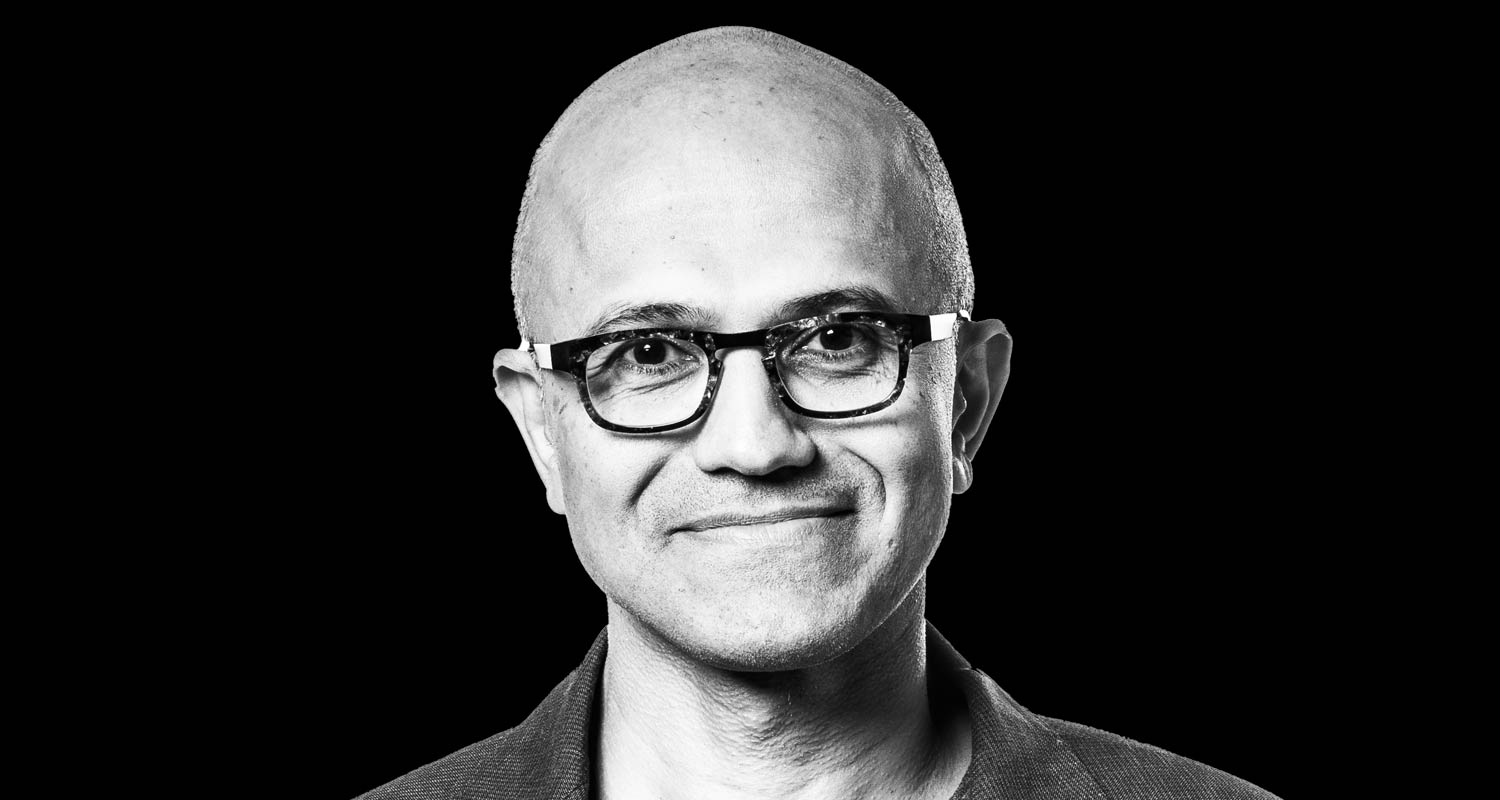
    Microsoft's winning formula is starting to fray - Satya Nadella
    Microsoft CEO Satya Nadella … trillions of dollars of investor wealth have been created on his watch

    For more than a decade, Satya Nadella’s tenure at Microsoft has been held up as one of the great corporate turnarounds of the modern technology era. He rescued the company from the strategic drift and cultural sclerosis of the Steve Ballmer years, refocused it on cloud computing, embraced open source and transformed Microsoft into a growth juggernaut once again.

    The numbers speak for themselves. Under Nadella, Microsoft created extraordinary shareholder wealth, with its market capitalisation soaring and its relevance restored across enterprise IT. Azure became a genuine rival to Amazon Web Services. Microsoft rediscovered its ability to ship software people actually wanted to use. For years, it felt like Nadella could do no wrong.

    But recent events raise an uncomfortable question: has the Nadella era peaked?

    That promise is artificial intelligence. And increasingly, it looks like Microsoft may be overplaying its hand

    Microsoft’s second-quarter financial results last week, which rattled investors and sent the share price sharply lower, suggest that the market is becoming uneasy.

    In the quarter, Microsoft beat market expectations with revenue of US$81.3-billion and net income of $38.5-billion, but investors focused less on the earnings surge and more on the cost of getting there.

    Azure cloud revenue grew 39%, in line with estimates but slightly slower than the previous quarter, while capital expenditure linked to AI and data centre expansion jumped to $37.5-billion – well above analyst expectations. As a result, Microsoft’s shares fell sharply, dropping about 10% and marking their steepest one-day decline since March 2020.

    The sell-off reflects growing concern that Microsoft may be overspending on AI infrastructure before demand and profitability are fully proven, the Wall Street Journal reported (paywall) last week. Executives acknowledged that limited AI hardware availability is constraining Azure’s growth, even as demand continues to exceed supply.

    Running ahead

    Even so, investors are increasingly wary of how much of Microsoft’s cloud growth depends on AI – and whether the massive data centre buildout can be justified if AI adoption spreads more slowly than anticipated.

    Nadella himself has cautioned that AI’s real-world impact is still lagging its technical capabilities, reinforcing fears that the sector could be running ahead of sustainable returns.

    Microsoft is no longer the world’s most valuable company. In fact, it is no longer even in the top three. That alone does not define success or failure (Microsoft continues to be a highly successful enterprise, as the latest earnings attest), but it does signal a shift in sentiment – and sentiment matters for a company that has spent aggressively on a promise about the future.

    Read: Big Microsoft price increases coming in 2026

    That promise is artificial intelligence. And increasingly, it looks like Microsoft may be overplaying its hand.

    There is no doubt that AI is a transformative technology. Large language models, generative tools and AI-assisted software development will change how work gets done. Microsoft was smart to partner early, and to integrate AI capabilities across its stack.

    Microsoft South Africa
    The entrance to Microsoft South Africa’s head office in Johannesburg

    But the problem is not that Microsoft is investing in AI. The problem is that it is injecting AI into absolutely everything, whether users want it or not.

    Copilot is now in everything, from Word, Excel and Outlook to Teams, Windows, Edge and seemingly any surface Microsoft can find. It is starting to feel less like thoughtful product design and more like a frantic attempt to justify the billions being poured into AI infrastructure. We do not need Copilot in everything from SwiftKey to Minesweeper. AI should be available when you want it, not shoved relentlessly down our throats.

    Indeed, forced adoption is not adoption at all. If customers are not pulling these tools into their workflows because they genuinely add value – and are instead being nudged, nagged or defaulted into them – Microsoft risks inflating usage metrics without building durable demand. That is a dangerous game when you are spending tens of billions of dollars on data centres to support those services.

    Slowing growth in some areas, combined with relentless capital intensity, is a toxic mix for valuation

    Which brings us to capital expenditure.

    Microsoft’s AI-driven spending spree has been breathtaking. Data centres, GPUs, power contracts, networking infrastructure – the company is spending like a business convinced that exponential demand is inevitable. Investors, however, are beginning to ask the more difficult questions: what if that demand does not materialise at the scale or speed being assumed? The future trajectory of the US stock market depends on the answer to that question.

    The market reaction to Microsoft’s recent results suggests that investor concerns are growing. Slowing growth in some areas, combined with relentless capital intensity, is a toxic mix for valuation. Overspending on infrastructure ahead of proven adoption is how tech giants turn visionary bets into margin-destroying mistakes. Witness the dot-com boom and bust for evidence of this.

    Windows

    Then there’s Windows. Nowhere is Microsoft’s strategic confusion more visible than in its operating system using by hundreds of million of people daily.

    Once the beating heart of the company, Windows today feels like more of an unloved afterthought. Windows 11 has been a particular disappointment. Compared to the polish of Apple’s macOS or the flexibility and performance of modern Linux distributions, Windows 11 often feels cluttered, inconsistent and bloated.

    Instead of fixing the basics, Microsoft’s answer appears to be: add more AI!

    Read: Valve’s Linux console takes aim at Microsoft’s gaming empire

    This is exactly the wrong approach. Injecting Copilot into a flawed operating system does not make it better; it makes the flaws more irritating. Users do not want AI panels and pop-ups layered on top of an experience that already struggles with coherence. Windows needs a top-to-bottom rethink – a genuine overhaul of performance, UI consistency, reliability and system services.

    Why is Microsoft not doing that?
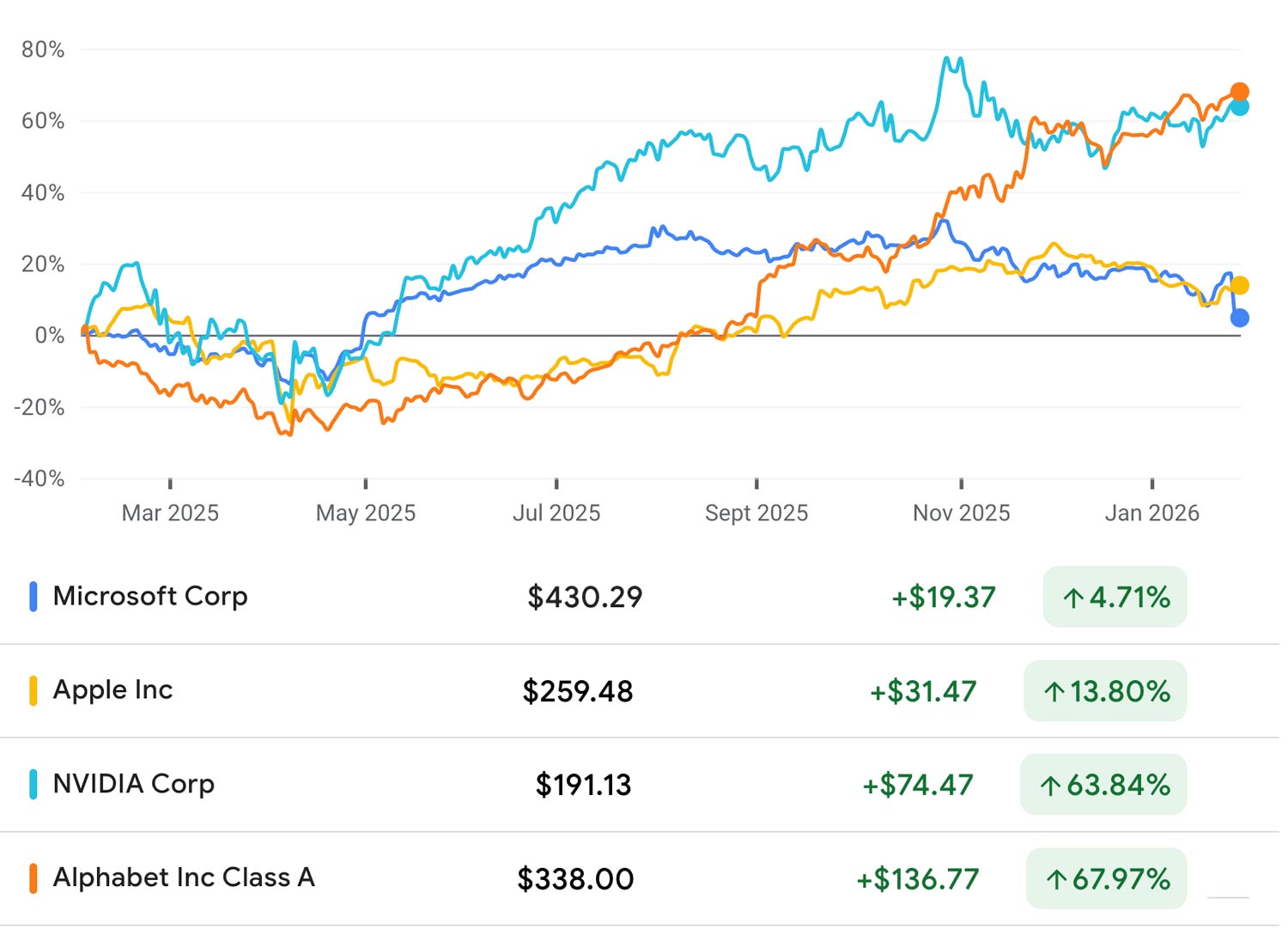
    Microsoft vs Nvidia, Apple and Alphabet over the past year
    Microsoft vs Nvidia, Apple and Alphabet over the past year. Image: Google Finance

    The cynical – and probably correct – answer is that Windows is no longer where the profits are. Azure and enterprise services drive Microsoft’s financial engine. Windows is a distribution channel, not a growth business. Spending the kind of money required to reinvent Windows would not move the revenue needle in the way another hyperscale data centre might.

    That logic makes sense on a spreadsheet. It makes less sense for the long-term health of the ecosystem. Windows is still the primary computing interface for office workers around the world. Neglecting its quality while stuffing it with AI features risks alienating the very base Microsoft depends on.

    None of this criticism seeks to undermine Nadella’s achievements. Compared to the Ballmer years – a period marked by missed mobile opportunities, strategic arrogance and cultural stagnation – Nadella’s leadership has been extraordinary. He modernised Microsoft’s culture, embraced developers and open ecosystems, and made the company relevant again.

    The biggest gains of the Nadella era may already be behind us. That does not mean decline is inevitable

    But great leadership eras do end. The most dangerous moment for any successful CEO is when yesterday’s winning strategy becomes tomorrow’s overreach.

    Microsoft today feels like a company spending first and asking questions later. It feels like a company that has forgotten that restraint, focus and user trust matter as much as ambition.

    The biggest gains of the Nadella era may already be behind us. That does not mean decline is inevitable – but it does mean Microsoft needs to slow down a bit and listen more carefully to its users.

    Read: Vukani Mngxati appointed as CEO of Microsoft South Africa

    There is little doubt that AI will shape the future of computing. But the future does not belong to companies that force technology onto their users to fit their business models. It belongs to those that deploy it where it truly belongs – and have the discipline to hold back where it does not.  – © 2026 NewsCentral Media

    Get breaking news from TechCentral on WhatsApp. Sign up here.

    Follow TechCentral on Google News Add TechCentral as your preferred source on Google


    WhatsApp YouTube
    Share. Facebook Twitter LinkedIn WhatsApp Telegram Email Copy Link
    Previous ArticleMeet the CIO | Inside the JSE’s tech engine with CIO Tebalo Tsoaeli
    Next Article Haier plants its flag in South Africa

    Related Posts

    Skills authority to probe MICT Seta leadership crisis - Buti Manamela

    Skills authority to probe MICT Seta leadership crisis

    21 July 2026
    Home affairs opens visa fast lane - with tech talent a top priority

    Home affairs opens visa fast lane – with tech talent a top priority

    21 July 2026
    Mastercard bets billions on the tech that could eat its lunch - Prakriti Singh

    Mastercard bets billions on the tech that could eat its lunch

    21 July 2026
    Company News
    Cloud adoption is done. Execution is the new frontier - Cloud on Demand

    Cloud adoption is done. Execution is the new frontier

    21 July 2026
    Data poisoning in AI models: what businesses need to know - Domains.co.za

    Data poisoning in AI models: what businesses need to know

    21 July 2026
    The AI-led industrial revolution has begun - CallMiner Bruce McMahon

    The AI-led industrial revolution has begun

    20 July 2026
    Opinion
    Selling vapour is corporate suicide in slow motion - Jannie van Zyl

    Selling vapour is corporate suicide in slow motion

    16 July 2026
    Brazil's online gambling crackdown is a lesson for South Africa

    How Amazon outmanoeuvred Starlink in South Africa

    15 July 2026
    The Popia problem with agentic AI - Herman Haasbroek

    The Popia problem with agentic AI

    14 July 2026

    Subscribe to Updates

    Get the best South African technology news and analysis delivered to your e-mail inbox every morning.

    Latest Posts
    Skills authority to probe MICT Seta leadership crisis - Buti Manamela

    Skills authority to probe MICT Seta leadership crisis

    21 July 2026
    Home affairs opens visa fast lane - with tech talent a top priority

    Home affairs opens visa fast lane – with tech talent a top priority

    21 July 2026
    Mastercard bets billions on the tech that could eat its lunch - Prakriti Singh

    Mastercard bets billions on the tech that could eat its lunch

    21 July 2026
    From care homes to production lines, the robots are coming

    From care homes to production lines, the robots are coming

    21 July 2026
    © 2009 - 2026 NewsCentral Media
    Built and maintained by Chronon
    • Cookie policy (ZA)
    • TechCentral – privacy and Popia

    Type above and press Enter to search. Press Esc to cancel.

    Manage consent

    TechCentral uses cookies to enhance its offerings. Consenting to these technologies allows us to serve you better. Not consenting or withdrawing consent may adversely affect certain features and functions of the website.

    Functional Always active
    The technical storage or access is strictly necessary for the legitimate purpose of enabling the use of a specific service explicitly requested by the subscriber or user, or for the sole purpose of carrying out the transmission of a communication over an electronic communications network.
    Preferences
    The technical storage or access is necessary for the legitimate purpose of storing preferences that are not requested by the subscriber or user.
    Statistics
    The technical storage or access that is used exclusively for statistical purposes. The technical storage or access that is used exclusively for anonymous statistical purposes. Without a subpoena, voluntary compliance on the part of your Internet Service Provider, or additional records from a third party, information stored or retrieved for this purpose alone cannot usually be used to identify you.
    Marketing
    The technical storage or access is required to create user profiles to send advertising, or to track the user on a website or across several websites for similar marketing purposes.
    • Manage options
    • Manage services
    • Manage {vendor_count} vendors
    • Read more about these purposes
    View preferences
    • {title}
    • {title}
    • {title}