


Close Menu
TechCentralTechCentral

    Subscribe to the newsletter

    Get the best South African technology news and analysis delivered to your e-mail inbox every morning.

    Facebook X (Twitter) YouTube LinkedIn
    WhatsApp Facebook X (Twitter) LinkedIn YouTube
    TechCentralTechCentral
    • News
      Sentech is in dire straits

      Sentech is in dire straits

      10 February 2026
      A million reasons monopolies don't work

      A million reasons monopolies don’t work

      10 February 2026
      South Africa's data centre market ripe for consolidation - Joshua Smythwood

      South Africa’s data centre market ripe for consolidation

      10 February 2026
      Watts & Wheels S1E4: 'We drive an electric Uber'

      Watts & Wheels S1E4: ‘We drive an electric Uber’

      10 February 2026
      Online sales can't save Pick n Pay from Black Friday hangover

      Online sales can’t save Pick n Pay from Black Friday hangover

      10 February 2026
    • World
      EU regulators take aim at WhatsApp

      EU regulators take aim at WhatsApp

      9 February 2026
      Musk hits brakes on Mars mission

      Musk hits brakes on Mars mission

      9 February 2026
      Crypto firm accidentally sends R700-billion in bitcoin to its users

      Crypto firm accidentally sends R700-billion in bitcoin to its users

      8 February 2026
      AI won't replace software, says Nvidia CEO amid market rout - Jensen Huang

      AI won’t replace software, says Nvidia CEO amid market rout

      4 February 2026
      Apple acquires audio AI start-up Q.ai

      Apple acquires audio AI start-up Q.ai

      30 January 2026
    • In-depth
      How liberalisation is rewiring South Africa's power sector

      How liberalisation is rewiring South Africa’s power sector

      21 January 2026
      The top-performing South African tech shares of 2025

      The top-performing South African tech shares of 2025

      12 January 2026
      Digital authoritarianism grows as African states normalise internet blackouts

      Digital authoritarianism grows as African states normalise internet blackouts

      19 December 2025
      TechCentral's South African Newsmakers of 2025

      TechCentral’s South African Newsmakers of 2025

      18 December 2025
      Black Friday goes digital in South Africa as online spending surges to record high

      Black Friday goes digital in South Africa as online spending surges to record high

      4 December 2025
    • TCS
      TCS+ | How Cloud On Demand is helping SA businesses succeed in the cloud - Xhenia Rhode, Dion Kalicharan

      TCS+ | Cloud On Demand and Consnet: inside a real-world AWS partner success story

      30 January 2026
      Watts & Wheels S1E4: 'We drive an electric Uber'

      Watts & Wheels S1E3: ‘BYD’s Corolla Cross challenger’

      30 January 2026
      Watts & Wheels S1E4: 'We drive an electric Uber'

      Watts & Wheels S1E2: ‘China attacks, BMW digs in, Toyota’s sublime supercar’

      23 January 2026

      TCS+ | Why cybersecurity is becoming a competitive advantage for SA businesses

      20 January 2026
      Watts & Wheels S1E4: 'We drive an electric Uber'

      Watts & Wheels: S1E1 – ‘William, Prince of Wheels’

      8 January 2026
    • Opinion
      South Africa's skills advantage is being overlooked at home - Richard Firth

      South Africa’s skills advantage is being overlooked at home

      29 January 2026
      Why Elon Musk's Starlink is a 'hard no' for me - Songezo Zibi

      Why Elon Musk’s Starlink is a ‘hard no’ for me

      26 January 2026
      South Africa's new fibre broadband battle - Duncan McLeod

      South Africa’s new fibre broadband battle

      20 January 2026
      AI moves from pilots to production in South African companies - Nazia Pillay SAP

      AI moves from pilots to production in South African companies

      20 January 2026
      South Africa's new fibre broadband battle - Duncan McLeod

      ANC’s attack on Solly Malatsi shows how BEE dogma trumps economic reality

      14 December 2025
    • Company Hubs
      • Africa Data Centres
      • AfriGIS
      • Altron Digital Business
      • Altron Document Solutions
      • Altron Group
      • Arctic Wolf
      • AvertITD
      • Braintree
      • CallMiner
      • CambriLearn
      • CYBER1 Solutions
      • Digicloud Africa
      • Digimune
      • Domains.co.za
      • ESET
      • Euphoria Telecom
      • Incredible Business
      • iONLINE
      • IQbusiness
      • Iris Network Systems
      • LSD Open
      • NEC XON
      • Netstar
      • Network Platforms
      • Next DLP
      • Ovations
      • Paracon
      • Paratus
      • Q-KON
      • SevenC
      • SkyWire
      • Solid8 Technologies
      • Telit Cinterion
      • Tenable
      • Vertiv
      • Videri Digital
      • Vodacom Business
      • Wipro
      • Workday
      • XLink
    • Sections
      • AI and machine learning
      • Banking
      • Broadcasting and Media
      • Cloud services
      • Contact centres and CX
      • Cryptocurrencies
      • Education and skills
      • Electronics and hardware
      • Energy and sustainability
      • Enterprise software
      • Financial services
      • Information security
      • Internet and connectivity
      • Internet of Things
      • Investment
      • IT services
      • Lifestyle
      • Motoring
      • Public sector
      • Retail and e-commerce
      • Satellite communications
      • Science
      • SMEs and start-ups
      • Social media
      • Talent and leadership
      • Telecoms
    • Events
    • Advertise
    TechCentralTechCentral
    Home » News » Nersa tariff review could shock grid-tied solar users

    Nersa tariff review could shock grid-tied solar users

    By Staff Reporter25 January 2022
    Twitter LinkedIn Facebook WhatsApp Email Telegram Copy Link
    News Alerts
    WhatsApp

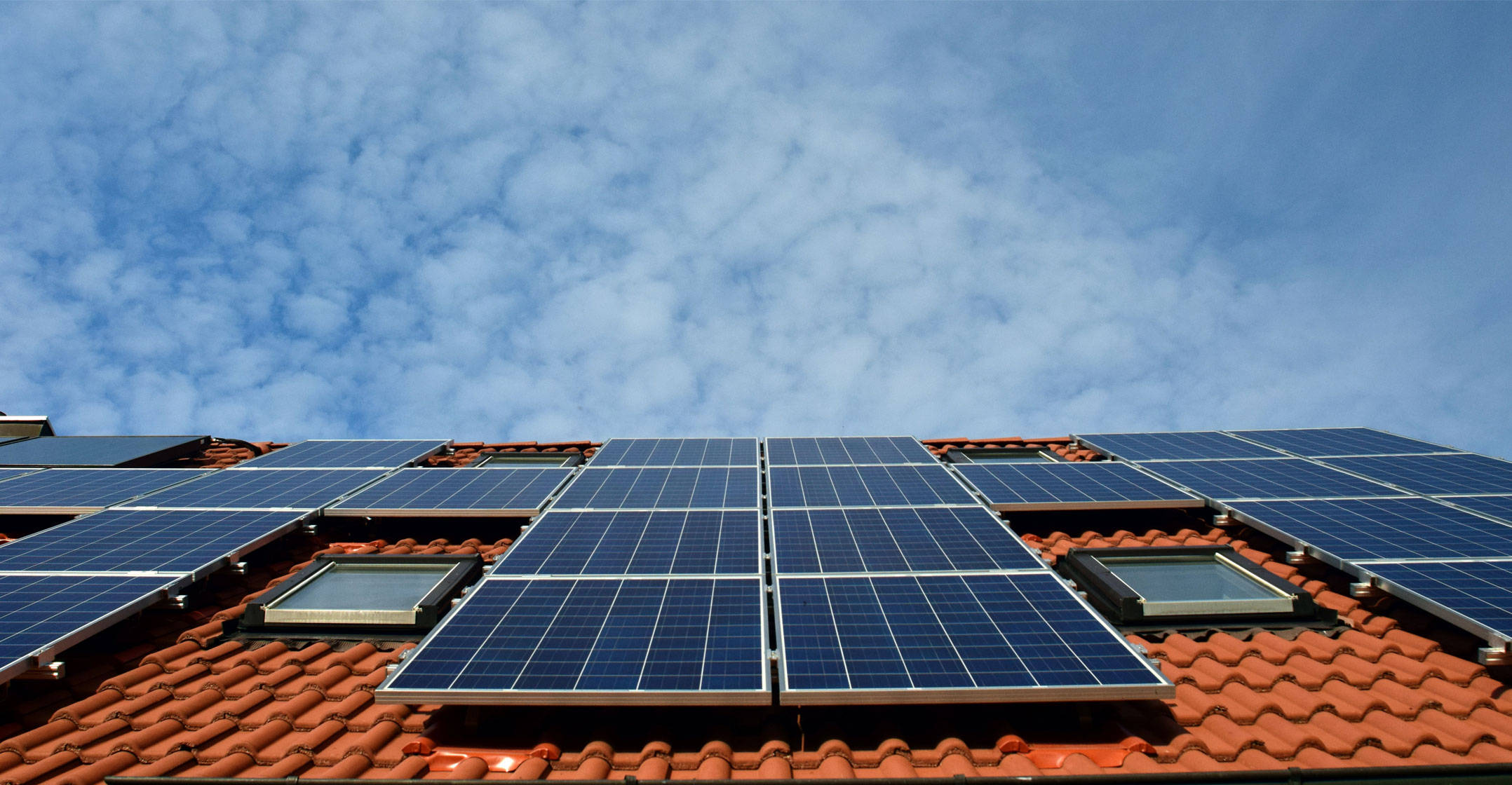
    Consumers who generate their own electricity, typically using solar panels by day and relying on Eskom when the sun goes down or is obscured by clouds, may see a drastic increase in Eskom charges a year from now if energy regulator Nersa gets its way.

    That may turn the business case for current installations on its head but also encourage consumers to defect from the grid completely.

    Nersa started with a process to change the way electricity tariffs are determined in 2021. In a document that sets out the reasons for its recent adoption of three principles that will underpin the new methodology, Nersa says the tariff for these variable loads is likely to be five to 10 times that of baseload usage (industrial customers).

    Nersa’s quest to change the methodology follows several court rulings where Eskom successfully challenged Nersa’s tariff determinations and objections from consumers about price instability because of retrospective changes to tariffs in terms of the Regulatory Clearing Account (RCA) methodology.

    Last year, Nersa embarked on a confusing process with public participation that later crystallised into three principles underpinning tariff determination, namely:

    • Unbundling across the value chain, which refers to the separation of costs of, for example generation, transmission and distribution in the case of Eskom;
    • Unbundling of services within each activity, for example the cost associated with each power station within generation;
    • Cost of service determination which differentiates between three different load profiles, namely constant power demand (baseload) from industrial customers, day or mid-merit demand supplied largely by solar, and wind, tied to the grid or not and variable demand which includes peak or grid-based back-up demand.

    Nersa wants tariffs to reflect the true cost of power supply.

    Currently, Eskom’s industrial tariffs include a subsidy of about 14% which benefits households. The generation capacity that provides baseload supply – coal and nuclear – have lower associated cost than those used in the peak, so it stands to reason that those tariffs will be lower if Nersa’s plans are implemented.

    Generation units serving peak load, on the other hand – open-cycle gas turbines and pump storage – are much more costly to run, which means the tariffs of those users will be higher.

    Nersa in its document indicates a clear focus on variable demand.

    Eskom has so far been very critical of Nersa’s plans to change the methodology.

    Court order

    It obtained a court order to compel Nersa to use the existing methodology for the coming financial year starting on 1 April. This came after Nersa tried to implement the principles straight away even though it failed to develop a clear methodology from it.

    The second part of the court application that will deal with the next two financial years is still pending, but at the public hearings last week about its pending tariff increase Eskom clearly stated that a new methodology cannot be implemented hastily. According to Eskom it can only be done in 2025 or 2026.

    While the utility and its regulator seem to be on a collision course once again, Eskom has also indicated that it would like to change the structure of its tariffs.

    The current tariffs mostly consist of a smaller fixed charge and a larger energy or usage charge. The underlying assumption is that the fixed costs will be recovered through the energy charge. This however relies on the customer buying significant volumes of energy.
    Eskom will therefore hardly cover its fixed charges through such a tariff structure if the consumer only relies on it for backup or peak supply a few hours per day.

    Morne Mostert, head of local government at AfriForum, says it would be unfair if users who are making plans to keep their lights on due to Eskom’s failures are punished. It will merely lead to more users defecting from the grid completely. “Nobody wins, not Eskom nor the consumer.”

    Jan-Hendrik Kruger, MD of Nuvo Energy says more and more people are trying to become completely self-reliant, partly due to rising tariffs, but increasingly due to the unreliability of Eskom’s supply. He says renewable energy can be supplemented by battery storage, provided one can afford it, adding that there are good financing options available.

    Practically speaking it is, however, not always that easy. Some people simply don’t have enough space available for sufficient solar panels on either their roofs or on the ground.

    On a small scale, such plants can provide electricity at R1.20/kWh as opposed to Eskom tariffs that amount to R4.40/kWh

    He says some renewable independent power producers (IPPs) are prepared to provide consistent electricity from a combination of solar panels and battery storage. “On a small scale, such plants can provide electricity at R1.20/kWh as opposed to Eskom tariffs that amount to R4.40/kWh in some instances according to the 2020/2021 tariffs.

    “Eskom can do the same on a bigger scale and is considering it, but they take too long to implement it.”

    According to its published timetable Nersa plans to publish a discussion document on the new methodology next month. During May, it will hold public hearings on the matter and plans to finalise the methodology in August, in time to apply it to the tariff determination for 2023/2024.

    • This article was originally published by Moneyweb and is republished by TechCentral with permission


    Eskom Nersa
    WhatsApp YouTube Follow on Google News Add as preferred source on Google
    Share. Facebook Twitter LinkedIn WhatsApp Telegram Email Copy Link
    Previous ArticlePBT Group to list on A2X Markets
    Next Article What is Wordle and why is the world obsessed?

    Related Posts

    Nersa blunder triggers sharper electricity tariff increases

    Nersa blunder triggers sharper electricity tariff increases

    9 February 2026
    Eskom unbundling U-turn threatens to undo hard-won electricity gains

    Eskom unbundling U-turn threatens to undo hard-won electricity gains

    9 February 2026
    Eskom lifts load reduction for 140 000 customers

    Eskom lifts load reduction for 140 000 customers

    8 February 2026
    Company News
    Breaking down the data silos: why single views require collaboration - Altron Digital Business

    Breaking down the data silos: why single views require collaboration

    10 February 2026
    How Avast and Gen Digital are raising the bar in cybersecurity

    How Avast and Gen Digital are raising the bar in cybersecurity

    10 February 2026
    How mobile platforms are transforming online trading - Exness

    How mobile platforms are transforming online trading

    10 February 2026
    Opinion
    South Africa's skills advantage is being overlooked at home - Richard Firth

    South Africa’s skills advantage is being overlooked at home

    29 January 2026
    Why Elon Musk's Starlink is a 'hard no' for me - Songezo Zibi

    Why Elon Musk’s Starlink is a ‘hard no’ for me

    26 January 2026
    South Africa's new fibre broadband battle - Duncan McLeod

    South Africa’s new fibre broadband battle

    20 January 2026

    Subscribe to Updates

    Get the best South African technology news and analysis delivered to your e-mail inbox every morning.

    Latest Posts
    Sentech is in dire straits

    Sentech is in dire straits

    10 February 2026
    A million reasons monopolies don't work

    A million reasons monopolies don’t work

    10 February 2026
    South Africa's data centre market ripe for consolidation - Joshua Smythwood

    South Africa’s data centre market ripe for consolidation

    10 February 2026
    Watts & Wheels S1E4: 'We drive an electric Uber'

    Watts & Wheels S1E4: ‘We drive an electric Uber’

    10 February 2026
    © 2009 - 2026 NewsCentral Media
    • Cookie policy (ZA)
    • TechCentral – privacy and Popia

    Type above and press Enter to search. Press Esc to cancel.

    Manage consent

    TechCentral uses cookies to enhance its offerings. Consenting to these technologies allows us to serve you better. Not consenting or withdrawing consent may adversely affect certain features and functions of the website.

    Functional Always active
    The technical storage or access is strictly necessary for the legitimate purpose of enabling the use of a specific service explicitly requested by the subscriber or user, or for the sole purpose of carrying out the transmission of a communication over an electronic communications network.
    Preferences
    The technical storage or access is necessary for the legitimate purpose of storing preferences that are not requested by the subscriber or user.
    Statistics
    The technical storage or access that is used exclusively for statistical purposes. The technical storage or access that is used exclusively for anonymous statistical purposes. Without a subpoena, voluntary compliance on the part of your Internet Service Provider, or additional records from a third party, information stored or retrieved for this purpose alone cannot usually be used to identify you.
    Marketing
    The technical storage or access is required to create user profiles to send advertising, or to track the user on a website or across several websites for similar marketing purposes.
    • Manage options
    • Manage services
    • Manage {vendor_count} vendors
    • Read more about these purposes
    View preferences
    • {title}
    • {title}
    • {title}