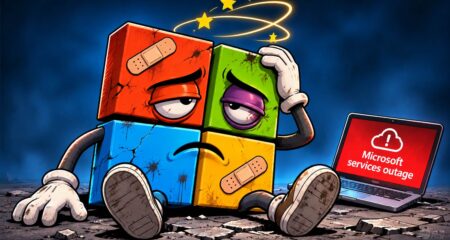
South African organisations woke up to dead inboxes as Microsoft struggled to restore Outlook, Teams and Copilot.
South African organisations woke up to dead inboxes as Microsoft struggled to restore Outlook, Teams and Copilot.
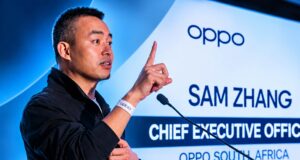





Sakeliga CEO Piet le Roux explains why the business group is taking Icasa to court.

A telecoms lawyer who supports the ownership requirement says Sakeliga’s main argument is strong.
Nine in 10 large South African organisations now use generative AI, but 73% have no tools to measure its value.

Tyme Group, controlled by billionaire Patrice Motsepe, has raised $250-million in a new funding round.

Openserve CEO Althon Beukes is stepping down from his role at the helm of the Telkom-owned fibre network operator.
Icasa has cleared the sale of Telkom’s masts and towers business, Swiftnet, to a private equity consortium led by Actis.

The Democratic Republic of Congo has accused Apple of using conflict minerals in its supply chain.

A new call centre facility in Paarl, built by Sigma Connected Group, will serve energy and financial services clients in the UK.

Mysterious “drones” over the US are fuelling conspiracies faster than they fly. This and more in today’s Bookmarks.

Data centre operators may not deserve the premium valuations attached to them given mounting cost pressure and intense competition.

The UK’s biggest mobile and broadband providers are set to increase charges above the soaring rate of inflation early next year.

Citing a stubborn fuel leak, the space agency said the debut mission of its moon-to-Mars Artemis programme will be delayed by at least several weeks.

China has become the first country to approve a needle-free, inhaled version of a Covid-19 vaccine.

If you are one of 2.2bn Facebook users worldwide, you have probably been alarmed by the recent coverage of the Cambridge Analytica scandal, a story that began when The Guardian revealed 50m (now thought to be 87m) user
As the US and China threaten to impose tariffs on goods from aluminium to wine, the two nations are waging a separate economic battle that could determine who owns the next wave of computing. Chinese universities and US