
Close Menu
TechCentralTechCentral

    Subscribe to the newsletter

    Get the best South African technology news and analysis delivered to your e-mail inbox every morning.

    Facebook X (Twitter) YouTube LinkedIn
    WhatsApp Facebook X (Twitter) LinkedIn YouTube
    TechCentralTechCentral
    • News
      Here comes the next wave of Chinese AI models

      Here comes the next wave of Chinese AI models

      12 February 2026
      Jumia aims for profit as it fends off Chinese rivals

      Jumia aims for profit as it fends off Chinese rivals

      12 February 2026
      Broadband Infraco in limbo

      Broadband Infraco in limbo

      11 February 2026
      Home affairs' R10 ID fee is forcing companies to rethink identity verification

      Standard Bank joins smart ID push with fee-free launch

      11 February 2026
      Zscaler assets seized from South African data centres

      Zscaler assets seized from South African data centres

      11 February 2026
    • World
      EU regulators take aim at WhatsApp

      EU regulators take aim at WhatsApp

      9 February 2026
      Musk hits brakes on Mars mission

      Musk hits brakes on Mars mission

      9 February 2026
      Crypto firm accidentally sends R700-billion in bitcoin to its users

      Crypto firm accidentally sends R700-billion in bitcoin to its users

      8 February 2026
      AI won't replace software, says Nvidia CEO amid market rout - Jensen Huang

      AI won’t replace software, says Nvidia CEO amid market rout

      4 February 2026
      Apple acquires audio AI start-up Q.ai

      Apple acquires audio AI start-up Q.ai

      30 January 2026
    • In-depth
      How liberalisation is rewiring South Africa's power sector

      How liberalisation is rewiring South Africa’s power sector

      21 January 2026
      The top-performing South African tech shares of 2025

      The top-performing South African tech shares of 2025

      12 January 2026
      Digital authoritarianism grows as African states normalise internet blackouts

      Digital authoritarianism grows as African states normalise internet blackouts

      19 December 2025
      TechCentral's South African Newsmakers of 2025

      TechCentral’s South African Newsmakers of 2025

      18 December 2025
      Black Friday goes digital in South Africa as online spending surges to record high

      Black Friday goes digital in South Africa as online spending surges to record high

      4 December 2025
    • TCS
      Watts & Wheels S1E4: 'We drive an electric Uber'

      Watts & Wheels S1E4: ‘We drive an electric Uber’

      10 February 2026
      TCS+ | How Cloud On Demand is helping SA businesses succeed in the cloud - Xhenia Rhode, Dion Kalicharan

      TCS+ | Cloud On Demand and Consnet: inside a real-world AWS partner success story

      30 January 2026
      Watts & Wheels S1E4: 'We drive an electric Uber'

      Watts & Wheels S1E3: ‘BYD’s Corolla Cross challenger’

      30 January 2026
      Watts & Wheels S1E4: 'We drive an electric Uber'

      Watts & Wheels S1E2: ‘China attacks, BMW digs in, Toyota’s sublime supercar’

      23 January 2026

      TCS+ | Why cybersecurity is becoming a competitive advantage for SA businesses

      20 January 2026
    • Opinion
      South Africa's skills advantage is being overlooked at home - Richard Firth

      South Africa’s skills advantage is being overlooked at home

      29 January 2026
      Why Elon Musk's Starlink is a 'hard no' for me - Songezo Zibi

      Why Elon Musk’s Starlink is a ‘hard no’ for me

      26 January 2026
      South Africa's new fibre broadband battle - Duncan McLeod

      South Africa’s new fibre broadband battle

      20 January 2026
      AI moves from pilots to production in South African companies - Nazia Pillay SAP

      AI moves from pilots to production in South African companies

      20 January 2026
      South Africa's new fibre broadband battle - Duncan McLeod

      ANC’s attack on Solly Malatsi shows how BEE dogma trumps economic reality

      14 December 2025
    • Company Hubs
      • Africa Data Centres
      • AfriGIS
      • Altron Digital Business
      • Altron Document Solutions
      • Altron Group
      • Arctic Wolf
      • AvertITD
      • Braintree
      • CallMiner
      • CambriLearn
      • CYBER1 Solutions
      • Digicloud Africa
      • Digimune
      • Domains.co.za
      • ESET
      • Euphoria Telecom
      • Incredible Business
      • iONLINE
      • IQbusiness
      • Iris Network Systems
      • LSD Open
      • Mitel
      • NEC XON
      • Netstar
      • Network Platforms
      • Next DLP
      • Ovations
      • Paracon
      • Paratus
      • Q-KON
      • SevenC
      • SkyWire
      • Solid8 Technologies
      • Telit Cinterion
      • Tenable
      • Vertiv
      • Videri Digital
      • Vodacom Business
      • Wipro
      • Workday
      • XLink
    • Sections
      • AI and machine learning
      • Banking
      • Broadcasting and Media
      • Cloud services
      • Contact centres and CX
      • Cryptocurrencies
      • Education and skills
      • Electronics and hardware
      • Energy and sustainability
      • Enterprise software
      • Financial services
      • Information security
      • Internet and connectivity
      • Internet of Things
      • Investment
      • IT services
      • Lifestyle
      • Motoring
      • Public sector
      • Retail and e-commerce
      • Satellite communications
      • Science
      • SMEs and start-ups
      • Social media
      • Talent and leadership
      • Telecoms
    • Events
    • Advertise
    TechCentralTechCentral
    Home » Opinion » Duncan McLeod » Reasons not to get excited about 5G – yet

    Reasons not to get excited about 5G – yet

    By Duncan McLeod8 January 2018
    Twitter LinkedIn Facebook WhatsApp Email Telegram Copy Link
    News Alerts
    WhatsApp

    MTN on Monday took the wraps off the first 5G trial by a mobile operator in South Africa. The company was able to demonstrate throughput speeds of more than 20Gbit/s (that’s over 20 000Mbit/s!) in a controlled test environment at its head office in Johannesburg using equipment supplied by partner Ericsson.

    But South Africans shouldn’t get too excited just yet about connections to their mobile phones that are more than 20 times faster than the speediest fibre-to-the-home lines currently available to local consumers. It’s not the technology road map that could slow deployment so much as regulators and policy makers, who must still make up their minds about how to allocate the radio frequency spectrum operators need for 4G, never mind 5G.

    There’s no doubt that 5G has enormous potential — and application — in everything from autonomous cars to virtual and augmented reality. Its super-fast speeds and incredibly low latency (network round-trip times) promise to usher in the hyper-connected society. It will be transformative for cloud computing, too. Everything will be available instantly, on demand.

    Whereas older mobile generations – 2G, 3G and 4G – were typically deployed using large base stations, covering big areas, 5G will, at least in the next few years, require the roll-out of a very dense network

    But there are at least two big potential roadblocks to this connected future.

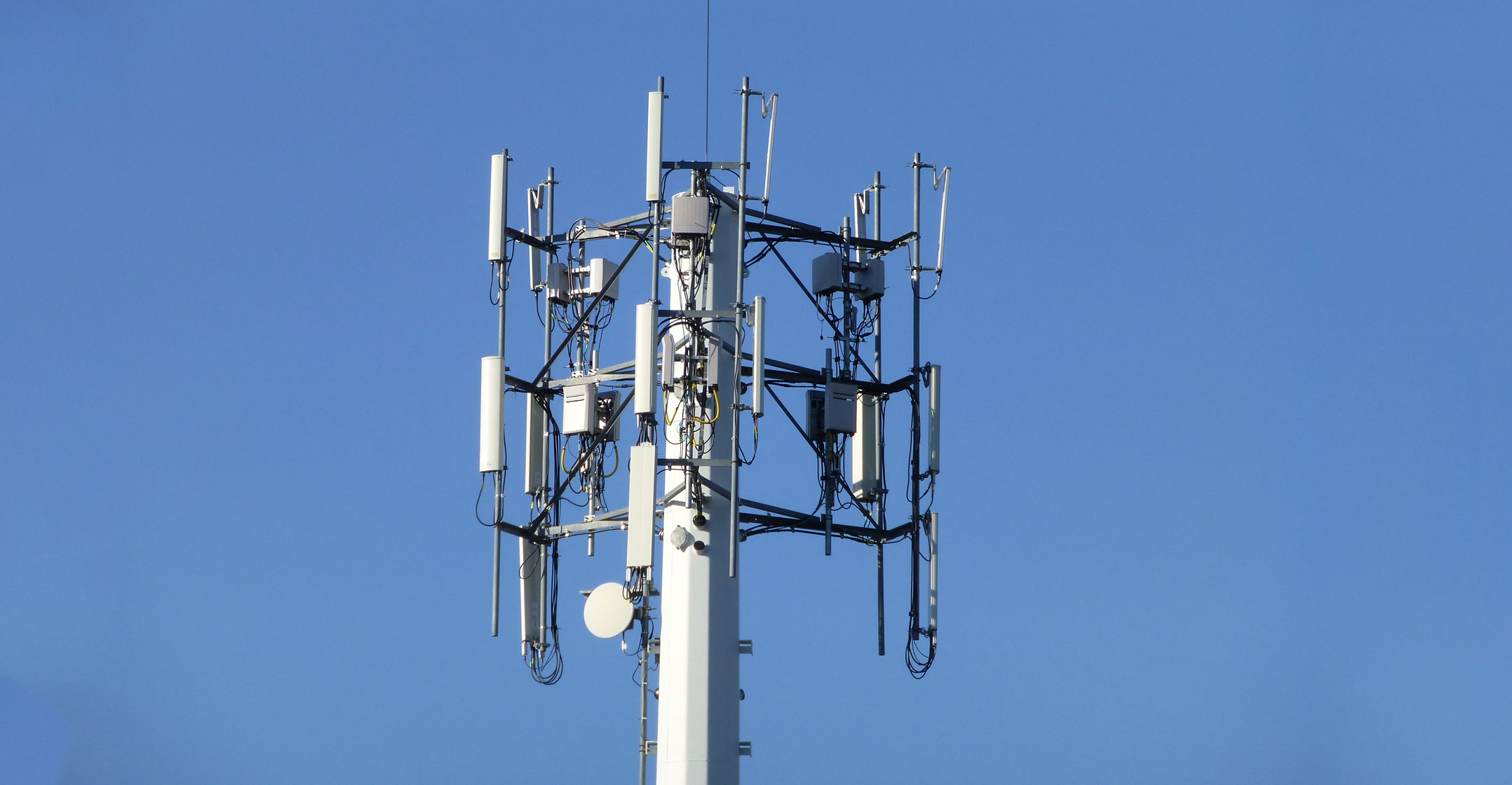
    The first is the cost of deploying 5G infrastructure. Whereas older mobile generations – 2G, 3G and 4G – were typically deployed using large base stations, covering big areas, 5G will, at least in the next few years, require the roll-out of a very dense network. Each city block could have dozens of micro base stations, using high frequency bands, to ensure adequate coverage. Outside dense urban areas, 4G and 3G (and even 2G) will continue to be used intensively. That’s because, at least for the foreseeable future, 5G will use very high frequency bands (including the so-called millimetre-wave bands), where radio signals can’t travel far (or penetrate well into buildings).

    Operators will be hoping to get access to spectrum between 3GHz and 6GHz for 5G (the 3.5GHz band, for example), which will allow for more traditional mobile roll-outs (big base stations covering relatively large areas), but even then it will remain a technology limited to use in urban centres. Only once sub-1GHz spectrum becomes available for 5G applications will this change, and this could take many years, decades perhaps, especially in a country like South Africa where television broadcasters are still hogging much of this spectrum.

    This means 5G, when it arrives, will be expensive to deploy at scale and limited to urban areas — and adopted by high-end customers who can afford the expensive smartphones and modems needed to connect (much like 3G and 4G in their early stages of deployment).

    Spectrum

    The other obstacle to adoption, and arguably the bigger one, is out of the control of MTN and the other mobile operators: access to spectrum. 5G demands a lot of spectrum — more than previous generations. Indeed, in MTN’s trial, the communications regulator, Icasa, has given it access to a massive 800MHz in the 15GHz band. That might be overkill for a commercial roll-out, but it does show just how bandwidth-hungry newer mobile broadband technologies will be (despite big improvements over the years in spectral efficiency of radio communications).

    Figuring out how spectrum will be awarded in South Africa for 5G could take years. Government will probably want to expand its planned (and untested) wholesale open-access network (Woan) to include 5G. The idea behind the Woan is that operators should compete at the services rather than the infrastructure level to ensure spectrum is shared and used efficiently. Critics of the plan — this publication included — have warned that the Woan could result in a new infrastructure monopoly, ultimately harming consumers through high prices, poor service and the wrong technology choices.
    It may be years yet before the Woan is operational, and spectrum for even the older 4G is allocated. It’s still not clear whether the incumbent operators will get the amount they need, what with government’s worrying noises that most of it may be reserved for the Woan. Government is sitting on a CSIR report on how much spectrum should be reserved for the Woan. Given how critical the findings of that report will be to the sector, government should have published it already. One wonders why it hasn’t been.

    Already, MTN and Vodacom — South Africa’s two biggest mobile operators and the biggest investors in the sector — are gearing up for 5G. But will they be allowed to deploy it?

    If they had the spectrum they needed, the first 5G devices would likely be in the hands of consumers by this time next year. Instead, they now face a prolonged period of uncertainty about just how they’ll get access (assuming it’s not denied to them, which it might be) while government figures out how it’s going to impose an infrastructure monopoly in the sector, one that holds the real possibility of hampering innovation and investment and ultimately harming consumers.

    By all means, government should implement the Woan. It could likely be very beneficial for smaller players, including Telkom, Cell C and Internet service providers who are keen to enter the mobile space. But it should also allow Vodacom, MTN and others to build their own networks as they see fit. That means giving them the spectrum they need to build their own 4G — and now 5G — networks.

    • Duncan McLeod is editor of TechCentral


    Cell C Duncan McLeod Icasa MTN Telkom top Vodacom
    WhatsApp YouTube Follow on Google News Add as preferred source on Google
    Share. Facebook Twitter LinkedIn WhatsApp Telegram Email Copy Link
    Previous ArticleVW, Uber to deploy Nvidia’s self-driving tech
    Next Article MTN launches 5G trial, gets over 20Gbit/s

    Related Posts

    A million reasons monopolies don't work

    A million reasons monopolies don’t work

    10 February 2026
    Watts & Wheels S1E4: 'We drive an electric Uber'

    Watts & Wheels S1E4: ‘We drive an electric Uber’

    10 February 2026
    Vumatel tops a million subscribers in South African broadband milestone - Dietlof Mare

    Vumatel tops a million subscribers in South African broadband milestone

    9 February 2026
    Company News
    How NEC XON tackled identity risk for a major telco - Michael de Neuilly Rice

    How NEC XON tackled identity risk for a major telco

    11 February 2026

    Why Acer is the strategic choice for South Africa’s educational future

    11 February 2026
    Fyndae is building Africa's human verification layer for community security and collaboration

    Fyndae wants to turn lost-item recovery into Africa’s trust infrastructure

    11 February 2026
    Opinion
    South Africa's skills advantage is being overlooked at home - Richard Firth

    South Africa’s skills advantage is being overlooked at home

    29 January 2026
    Why Elon Musk's Starlink is a 'hard no' for me - Songezo Zibi

    Why Elon Musk’s Starlink is a ‘hard no’ for me

    26 January 2026
    South Africa's new fibre broadband battle - Duncan McLeod

    South Africa’s new fibre broadband battle

    20 January 2026

    Subscribe to Updates

    Get the best South African technology news and analysis delivered to your e-mail inbox every morning.

    Latest Posts
    Here comes the next wave of Chinese AI models

    Here comes the next wave of Chinese AI models

    12 February 2026
    Jumia aims for profit as it fends off Chinese rivals

    Jumia aims for profit as it fends off Chinese rivals

    12 February 2026
    Broadband Infraco in limbo

    Broadband Infraco in limbo

    11 February 2026
    Home affairs' R10 ID fee is forcing companies to rethink identity verification

    Standard Bank joins smart ID push with fee-free launch

    11 February 2026
    © 2009 - 2026 NewsCentral Media
    • Cookie policy (ZA)
    • TechCentral – privacy and Popia

    Type above and press Enter to search. Press Esc to cancel.

    Manage consent

    TechCentral uses cookies to enhance its offerings. Consenting to these technologies allows us to serve you better. Not consenting or withdrawing consent may adversely affect certain features and functions of the website.

    Functional Always active
    The technical storage or access is strictly necessary for the legitimate purpose of enabling the use of a specific service explicitly requested by the subscriber or user, or for the sole purpose of carrying out the transmission of a communication over an electronic communications network.
    Preferences
    The technical storage or access is necessary for the legitimate purpose of storing preferences that are not requested by the subscriber or user.
    Statistics
    The technical storage or access that is used exclusively for statistical purposes. The technical storage or access that is used exclusively for anonymous statistical purposes. Without a subpoena, voluntary compliance on the part of your Internet Service Provider, or additional records from a third party, information stored or retrieved for this purpose alone cannot usually be used to identify you.
    Marketing
    The technical storage or access is required to create user profiles to send advertising, or to track the user on a website or across several websites for similar marketing purposes.
    • Manage options
    • Manage services
    • Manage {vendor_count} vendors
    • Read more about these purposes
    View preferences
    • {title}
    • {title}
    • {title}