
Close Menu
TechCentralTechCentral

    Subscribe to the newsletter

    Get the best South African technology news and analysis delivered to your e-mail inbox every morning.

    Facebook X (Twitter) YouTube LinkedIn
    WhatsApp Facebook X (Twitter) LinkedIn YouTube
    TechCentralTechCentral
    • News
      Telkom's prepaid growth is running on credit - Serame Taukobong

      Telkom’s prepaid growth is running on credit

      3 August 2026
      The debate about the grid is over

      The debate about the grid is over

      3 August 2026
      Nedbank hires MTN's former tech chief as group CIO - Nikos Angelopoulos

      Nedbank hires MTN’s former tech chief as group CIO

      31 July 2026
      Eskom's diesel bill falls 86% as breakdowns hit eight-year low

      Eskom’s diesel bill falls 86% as breakdowns hit eight-year low

      31 July 2026
      Ramaphosa signs off on taking the grid away from Eskom

      Ramaphosa signs off on taking the grid away from Eskom

      31 July 2026
    • World
      Meta AI will now tell parents if their teen is in crisis

      Meta AI will now tell parents if their teen is in crisis

      17 July 2026
      IBM shares crash 25% as AI upends software spending - Arvind Krishna

      IBM shares crash 25% as AI upends software spending

      15 July 2026
      Jony Ive's first OpenAI device: an AI smart speaker - Jony Ive and Sam Altman

      Jony Ive’s first OpenAI device: an AI smart speaker

      15 July 2026
      Stripe, Advent in talks to buy PayPal for $53-billion

      Stripe, Advent in talks to buy PayPal for $53-billion

      15 July 2026
      Memory crisis sends smartphone market into steep decline

      Memory crisis sends smartphone market into steep decline

      13 July 2026
    • In-depth
      The plan to stop AI from breaking the world - Google DeepMind CEO Demis Hassabis. Image: John Sears

      The plan to stop AI from breaking the world

      16 July 2026
      The internet has a Strait of Hormuz problem

      The internet has a Strait of Hormuz problem

      15 July 2026
      AI boom sparks rally, frenzy and fear

      AI boom sparks rally, frenzy and fear

      11 June 2026
      Every plug-in hybrid on sale in South Africa, ranked by price - Lamborghini Temerario

      Every plug-in hybrid on sale in South Africa, ranked by price

      7 June 2026
      What Wi-Fi 8 will mean for wireless networks

      What Wi-Fi 8 will mean for wireless networks

      1 June 2026
    • TCS
      TCS+ | Why South African workers must become supervisors of digital labour - Accelera Digital Group Cliff de Wit

      TCS+ | Why South African workers must become supervisors of digital labour

      31 July 2026
      TCS | Rapid deployment rules can't work without municipalities: ACT - Nomvuyiso Batyi

      TCS | Icasa’s rules skip the real bottleneck: ACT

      30 July 2026
      TCS+ | iStore Business on why Apple makes sense for SMEs - Sudesh Pillay and Tamia Nontsikelelo

      TCS+ | iStore Business on why Apple makes sense for SMEs

      30 July 2026
      TCS+ | A smarter approach to cloud for South African businesses - Joel Chacko and Jonathan Oaker

      TCS+ | A smarter approach to cloud for South African businesses

      28 July 2026
      TCS | How Optasia lends billions to people banks can't see - Salvador Anglada

      TCS | How Optasia lends billions to people banks can’t see

      23 July 2026
    • Opinion
      The author, Jannie van Zyl

      Selling vapour is corporate suicide in slow motion

      16 July 2026
      Brazil's online gambling crackdown is a lesson for South Africa

      How Amazon outmanoeuvred Starlink in South Africa

      15 July 2026
      The Popia problem with agentic AI - Herman Haasbroek

      The Popia problem with agentic AI

      14 July 2026
      The author, Fanie van Rooyen

      South Africa can still catch the AI wave – here’s how

      7 July 2026
      The author, Fanie van Rooyen

      The AI utopia South Africa can’t afford

      1 July 2026
    • Company Hubs
      • 1Stream
      • Africa Data Centres
      • AfriGIS
      • Altron Digital Business
      • Altron Document Solutions
      • Altron Group
      • Arctic Wolf
      • Ascent Technology
      • AvertITD
      • BBD
      • Braintree
      • CallMiner
      • CambriLearn
      • CM Telecom
      • Contactable
      • CYBER1 Solutions
      • Digicloud Africa
      • Digimune
      • Domains.co.za
      • ESET
      • Euphoria Telecom
      • HOSTAFRICA
      • Incredible Business
      • iONLINE
      • IQbusiness
      • Iris Network Systems
      • Kaspersky
      • LSD Open
      • Mitel
      • NEC XON
      • Netstar
      • Network Platforms
      • Next DLP
      • Ovations
      • Paracon
      • Paratus
      • Q-KON
      • SevenC
      • SkyWire
      • Solid8 Technologies
      • Telit Cinterion
      • Telviva
      • Tenable
      • Vertiv
      • Videri Digital
      • Vodacom Business
      • Vox
      • Wipro
      • Workday
      • XLink
    • Sections
      • AI and machine learning
      • Banking
      • Broadcasting and Media
      • Cloud services
      • Contact centres and CX
      • Cryptocurrencies
      • Education and skills
      • Electronics and hardware
      • Energy and sustainability
      • Enterprise software
      • Financial services
      • HealthTech
      • Information security
      • Internet and connectivity
      • Internet of Things
      • Investment
      • IT services
      • Lifestyle
      • Policy and regulation
      • Public sector
      • Retail and e-commerce
      • Satellite communications
      • Science
      • SMEs and start-ups
      • Social media
      • Talent and leadership
      • Telecoms
      • Watts & Wheels
    • Events
    • Advertise
    TechCentralTechCentral
    Home » Opinion » Duncan McLeod » Reasons not to get excited about 5G – yet

    Reasons not to get excited about 5G – yet

    By Duncan McLeod8 January 2018
    Twitter LinkedIn Facebook WhatsApp Email Telegram Copy Link
    News Alerts
    WhatsApp

    MTN on Monday took the wraps off the first 5G trial by a mobile operator in South Africa. The company was able to demonstrate throughput speeds of more than 20Gbit/s (that’s over 20 000Mbit/s!) in a controlled test environment at its head office in Johannesburg using equipment supplied by partner Ericsson.

    But South Africans shouldn’t get too excited just yet about connections to their mobile phones that are more than 20 times faster than the speediest fibre-to-the-home lines currently available to local consumers. It’s not the technology road map that could slow deployment so much as regulators and policy makers, who must still make up their minds about how to allocate the radio frequency spectrum operators need for 4G, never mind 5G.

    There’s no doubt that 5G has enormous potential — and application — in everything from autonomous cars to virtual and augmented reality. Its super-fast speeds and incredibly low latency (network round-trip times) promise to usher in the hyper-connected society. It will be transformative for cloud computing, too. Everything will be available instantly, on demand.

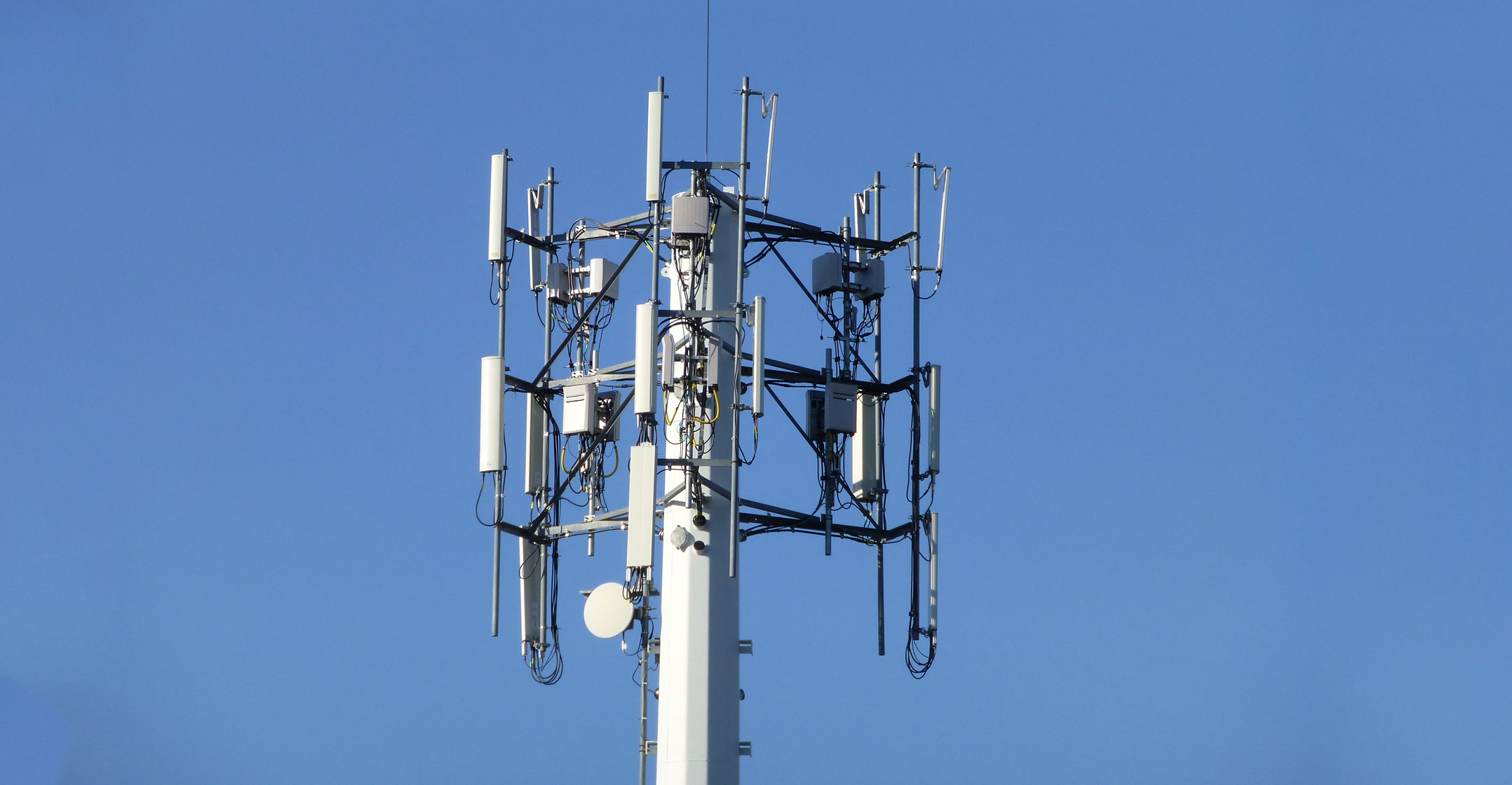
    Whereas older mobile generations – 2G, 3G and 4G – were typically deployed using large base stations, covering big areas, 5G will, at least in the next few years, require the roll-out of a very dense network

    But there are at least two big potential roadblocks to this connected future.

    The first is the cost of deploying 5G infrastructure. Whereas older mobile generations – 2G, 3G and 4G – were typically deployed using large base stations, covering big areas, 5G will, at least in the next few years, require the roll-out of a very dense network. Each city block could have dozens of micro base stations, using high frequency bands, to ensure adequate coverage. Outside dense urban areas, 4G and 3G (and even 2G) will continue to be used intensively. That’s because, at least for the foreseeable future, 5G will use very high frequency bands (including the so-called millimetre-wave bands), where radio signals can’t travel far (or penetrate well into buildings).

    Operators will be hoping to get access to spectrum between 3GHz and 6GHz for 5G (the 3.5GHz band, for example), which will allow for more traditional mobile roll-outs (big base stations covering relatively large areas), but even then it will remain a technology limited to use in urban centres. Only once sub-1GHz spectrum becomes available for 5G applications will this change, and this could take many years, decades perhaps, especially in a country like South Africa where television broadcasters are still hogging much of this spectrum.

    This means 5G, when it arrives, will be expensive to deploy at scale and limited to urban areas — and adopted by high-end customers who can afford the expensive smartphones and modems needed to connect (much like 3G and 4G in their early stages of deployment).

    Spectrum

    The other obstacle to adoption, and arguably the bigger one, is out of the control of MTN and the other mobile operators: access to spectrum. 5G demands a lot of spectrum — more than previous generations. Indeed, in MTN’s trial, the communications regulator, Icasa, has given it access to a massive 800MHz in the 15GHz band. That might be overkill for a commercial roll-out, but it does show just how bandwidth-hungry newer mobile broadband technologies will be (despite big improvements over the years in spectral efficiency of radio communications).

    Figuring out how spectrum will be awarded in South Africa for 5G could take years. Government will probably want to expand its planned (and untested) wholesale open-access network (Woan) to include 5G. The idea behind the Woan is that operators should compete at the services rather than the infrastructure level to ensure spectrum is shared and used efficiently. Critics of the plan — this publication included — have warned that the Woan could result in a new infrastructure monopoly, ultimately harming consumers through high prices, poor service and the wrong technology choices.
    It may be years yet before the Woan is operational, and spectrum for even the older 4G is allocated. It’s still not clear whether the incumbent operators will get the amount they need, what with government’s worrying noises that most of it may be reserved for the Woan. Government is sitting on a CSIR report on how much spectrum should be reserved for the Woan. Given how critical the findings of that report will be to the sector, government should have published it already. One wonders why it hasn’t been.

    Already, MTN and Vodacom — South Africa’s two biggest mobile operators and the biggest investors in the sector — are gearing up for 5G. But will they be allowed to deploy it?

    If they had the spectrum they needed, the first 5G devices would likely be in the hands of consumers by this time next year. Instead, they now face a prolonged period of uncertainty about just how they’ll get access (assuming it’s not denied to them, which it might be) while government figures out how it’s going to impose an infrastructure monopoly in the sector, one that holds the real possibility of hampering innovation and investment and ultimately harming consumers.

    By all means, government should implement the Woan. It could likely be very beneficial for smaller players, including Telkom, Cell C and Internet service providers who are keen to enter the mobile space. But it should also allow Vodacom, MTN and others to build their own networks as they see fit. That means giving them the spectrum they need to build their own 4G — and now 5G — networks.

    • Duncan McLeod is editor of TechCentral

    Follow TechCentral on Google News Add TechCentral as your preferred source on Google


    Cell C Duncan McLeod Icasa MTN Telkom top Vodacom
    WhatsApp YouTube
    Share. Facebook Twitter LinkedIn WhatsApp Telegram Email Copy Link
    Previous ArticleVW, Uber to deploy Nvidia’s self-driving tech
    Next Article MTN launches 5G trial, gets over 20Gbit/s

    Related Posts

    Telkom's prepaid growth is running on credit - Serame Taukobong

    Telkom’s prepaid growth is running on credit

    3 August 2026
    MTN Nigeria's growth engine stalled in second quarter - Karl Toriola

    MTN Nigeria’s growth engine stalled in second quarter

    31 July 2026
    The retailer that is about to become your bank

    The retailer that is about to become your bank

    30 July 2026
    Company News
    Google Cloud, AI adoption gain momentum in Africa - Digicloud Africa

    Google Cloud, AI adoption gain momentum in Africa

    3 August 2026
    Domains.co.za launches self-hosted n8n VPS hosting

    Domains.co.za launches self-hosted n8n VPS hosting

    31 July 2026
    Smarter.tech '26 shows why smarter technology begins with context - Obsidian Systems

    Context is the missing piece in enterprise AI: Obsidian

    31 July 2026
    Opinion
    The author, Jannie van Zyl

    Selling vapour is corporate suicide in slow motion

    16 July 2026
    Brazil's online gambling crackdown is a lesson for South Africa

    How Amazon outmanoeuvred Starlink in South Africa

    15 July 2026
    The Popia problem with agentic AI - Herman Haasbroek

    The Popia problem with agentic AI

    14 July 2026

    Subscribe to Updates

    Get the best South African technology news and analysis delivered to your e-mail inbox every morning.

    Latest Posts
    Google Cloud, AI adoption gain momentum in Africa - Digicloud Africa

    Google Cloud, AI adoption gain momentum in Africa

    3 August 2026
    Telkom's prepaid growth is running on credit - Serame Taukobong

    Telkom’s prepaid growth is running on credit

    3 August 2026
    The debate about the grid is over

    The debate about the grid is over

    3 August 2026
    Nedbank hires MTN's former tech chief as group CIO - Nikos Angelopoulos

    Nedbank hires MTN’s former tech chief as group CIO

    31 July 2026
    © 2009 - 2026 NewsCentral Media
    Built and maintained by Chronon
    • Cookie policy (ZA)
    • TechCentral – privacy and Popia

    Type above and press Enter to search. Press Esc to cancel.

    Manage consent

    TechCentral uses cookies to enhance its offerings. Consenting to these technologies allows us to serve you better. Not consenting or withdrawing consent may adversely affect certain features and functions of the website.

    Functional Always active
    The technical storage or access is strictly necessary for the legitimate purpose of enabling the use of a specific service explicitly requested by the subscriber or user, or for the sole purpose of carrying out the transmission of a communication over an electronic communications network.
    Preferences
    The technical storage or access is necessary for the legitimate purpose of storing preferences that are not requested by the subscriber or user.
    Statistics
    The technical storage or access that is used exclusively for statistical purposes. The technical storage or access that is used exclusively for anonymous statistical purposes. Without a subpoena, voluntary compliance on the part of your Internet Service Provider, or additional records from a third party, information stored or retrieved for this purpose alone cannot usually be used to identify you.
    Marketing
    The technical storage or access is required to create user profiles to send advertising, or to track the user on a website or across several websites for similar marketing purposes.
    • Manage options
    • Manage services
    • Manage {vendor_count} vendors
    • Read more about these purposes
    View preferences
    • {title}
    • {title}
    • {title}