Close Menu
TechCentralTechCentral

    Subscribe to the newsletter

    Get the best South African technology news and analysis delivered to your e-mail inbox every morning.

    Facebook X (Twitter) YouTube LinkedIn
    WhatsApp Facebook X (Twitter) LinkedIn YouTube
    TechCentralTechCentral
    • News
      Mythos forces South African banks onto high alert - Graham Lee

      Mythos forces South African banks onto high alert

      23 April 2026
      Free calls, dead voice and Shameel Joosub's Spanish ghost

      Free calls, dead voice and Shameel Joosub’s Spanish ghost

      22 April 2026
      Capitec CEO Graham Lee

      Capitec blows up MVNO pricing with free on-net calls

      22 April 2026
      Eskom developing bitcoin mining plan but needs Nersa's nod - Agnes Mlambo

      Eskom developing bitcoin mining plan but needs Nersa’s nod

      22 April 2026
      Capitec bets big on AI - and keeps hiring

      Capitec bets big on AI – and keeps hiring

      22 April 2026
    • World
      More organic compounds detected on Mars - Nasa Curiosity rover

      More organic compounds detected on Mars

      21 April 2026
      Adobe bets on AI agents to fend off cheaper rivals

      Adobe bets on AI agents to fend off cheaper rivals

      16 April 2026
      Google poised to lose ad crown to Meta

      Google poised to lose ad crown to Meta

      14 April 2026
      Grand Theft Data - hackers hit Rockstar Games - Grand Theft Auto

      Grand Theft Data – hackers hit Rockstar Games

      14 April 2026
      UK PM Keir Starmer declares war on doomscrolling

      UK PM Keir Starmer declares war on doomscrolling

      13 April 2026
    • In-depth
      Africa switches on as Europe dims the lights

      Africa switches on as Europe dims the lights

      9 April 2026
      The biggest untapped EV market on Earth is hiding in plain sight

      The biggest untapped EV market on Earth is hiding in plain sight

      1 April 2026
      The R18-billion tech giant hiding in plain sight - Jens Montanana

      The R16-billion tech giant hiding in plain sight

      26 March 2026
      The last generation of coders

      The last generation of coders

      18 February 2026
      Sentech is in dire straits

      Sentech is in dire straits

      10 February 2026
    • TCS

      TCS+ | ‘The ISP for ISPs’: Vox’s shift to wholesale aggregator

      20 April 2026
      TCS | Werner Lindemann on how AI is rewriting the infosec rulebook

      TCS | Werner Lindemann on how AI is rewriting the infosec rulebook

      15 April 2026
      TCS | Donovan Marsh on AI and the future of filmmaking

      TCS | Donovan Marsh on AI and the future of filmmaking

      7 April 2026
      TCS+ | Vodacom Business moves to crack the SME tech gap - Andrew Fulton, Sannesh Beharie

      TCS+ | Vodacom Business moves to crack the SME tech gap

      7 April 2026
      TCS | MTN's Divysh Joshi on the strategy behind Pi - Divyesh Joshi

      TCS | MTN’s Divyesh Joshi on the strategy behind Pi

      1 April 2026
    • Opinion
      The conflict of interest at the heart of PayShap's slow adoption - Cheslyn Jacobs

      The conflict of interest at the heart of PayShap’s slow adoption

      26 March 2026
      South Africa's energy future hinges on getting wheeling right - Aishah Gire

      South Africa’s energy future hinges on getting wheeling right

      10 March 2026
      Hold the doom: the case for a South African comeback - Duncan McLeod

      Apple just dropped a bomb on the Windows world

      5 March 2026
      R230-million in the bag for Endeavor's third Harvest Fund - Alison Collier

      VC’s centre of gravity is shifting – and South Africa is in the frame

      3 March 2026
      Hold the doom: the case for a South African comeback - Duncan McLeod

      Hold the doom: the case for a South African comeback

      26 February 2026
    • Company Hubs
      • 1Stream
      • Africa Data Centres
      • AfriGIS
      • Altron Digital Business
      • Altron Document Solutions
      • Altron Group
      • Arctic Wolf
      • Ascent Technology
      • AvertITD
      • BBD
      • Braintree
      • CallMiner
      • CambriLearn
      • CYBER1 Solutions
      • Digicloud Africa
      • Digimune
      • Domains.co.za
      • ESET
      • Euphoria Telecom
      • HOSTAFRICA
      • Incredible Business
      • iONLINE
      • IQbusiness
      • Iris Network Systems
      • Kaspersky
      • LSD Open
      • Mitel
      • NEC XON
      • Netstar
      • Network Platforms
      • Next DLP
      • Ovations
      • Paracon
      • Paratus
      • Q-KON
      • SevenC
      • SkyWire
      • Solid8 Technologies
      • Telit Cinterion
      • Telviva
      • Tenable
      • Vertiv
      • Videri Digital
      • Vodacom Business
      • Wipro
      • Workday
      • XLink
    • Sections
      • AI and machine learning
      • Banking
      • Broadcasting and Media
      • Cloud services
      • Contact centres and CX
      • Cryptocurrencies
      • Education and skills
      • Electronics and hardware
      • Energy and sustainability
      • Enterprise software
      • Financial services
      • HealthTech
      • Information security
      • Internet and connectivity
      • Internet of Things
      • Investment
      • IT services
      • Lifestyle
      • Motoring
      • Policy and regulation
      • Public sector
      • Retail and e-commerce
      • Satellite communications
      • Science
      • SMEs and start-ups
      • Social media
      • Talent and leadership
      • Telecoms
    • Events
    • Advertise
    TechCentralTechCentral
    Home » Sections » Energy and sustainability » Rising prices are deepening the electricity divide in SA

    Rising prices are deepening the electricity divide in SA

    On 1 July, electricity costs for some of South Africa’s poorest people went up by as much as 60%.
    By Antony Sguazzin14 August 2024
    Twitter LinkedIn Facebook WhatsApp Email Telegram Copy Link
    News Alerts
    WhatsApp

    Rising prices are deepening the electricity divide in South AfricaLate last year, residents of Yeoville and Bellevue — crumbling inner city areas of Johannesburg — went without power for four weeks after a 63-year-old cable broke. For several months after, power to the electricity supply was rotated between the two areas in four-hour blocks. Then the cuts were reduced to two hours a day as the city’s aging infrastructure grappled with overloading.

    And yet, on 1 July, electricity costs for some of South Africa’s poorest people, including in Yeoville and Bellevue, went up as much as 60%.

    A few hundred metres away, across one of Johannesburg’s main transport arteries, a different scene is playing out. St John’s College, one of South Africa’s most expensive schools, reduced its reliance on the grid — and cut its costs — by installing solar panels.

    Residents with post-paid utility accounts currently fork over an electricity connection fee of about R1 150/month

    In the gap between Yeoville and St John’s lies a central struggle affecting the poor in South Africa’s richest city, a title it holds due the concentration of businesses and the number of millionaires. Reducing reliance on the erratic and costly electricity supply requires adopting renewable energy solutions that are themselves prohibitively expensive for most. Local utilities, meanwhile, say more home solar and batteries are contributing to strain on their coffers, forcing them to increase rates to maintain service.

    “We are very adversely affected. It’s a problem,” says Tsepo Matubatuba, a 67-year-old retired priest. Last month, Matubatuba helped form the Yeoville Bellevue Electricity Movement to protest against rising costs and the neglect poorer suburbs are subjected to when power supplies break down.

    Electricity prices have roughly tripled in South Africa over the past 14 years, which along with increased power cuts has prompted many rich households and businesses to spend thousands of rand each on clean energy solutions. A typical solar-and-battery setup costs about R150 000 and roughly 670MW of solar power has been added to residential rooftops nationwide, according to GoSolr, South Africa’s biggest renter of panels and batteries for homes. About half of that capacity is in Johannesburg.

    Prepaid pinch

    City residents with post-paid utility accounts currently fork over an electricity connection fee of about R1 150/month, plus sliding-scale costs based on actual usage. But that fee proved prohibitive for poor people. So, City Power, Johannesburg’s utility, started offering prepaid meters: no fee, and higher rates.

    The prepaid option is meant to ensure that people actually pay for their electricity usage, and that City Power doesn’t have to chase customers over outstanding bills. But to the utility’s consternation, the option also caught on with the middle class — especially those using less power after installing solar and batteries. Roughly 115 000 customers that City Power considers “affluent” have moved onto prepaid meters, meaning they can skip the R1 150 monthly service charge.

    Then last month, City Power increased the cost of prepaid power by 12.7% — more than double inflation — and added a R230 monthly service charge. Together those measures equate to a 60% increase in electricity costs for the poorest families, which use about 200kWh/month, according to EE Business Intelligence.

    Read: Delinquent municipalities owe Eskom R82-billion

    “The reality for many South African households is: pay for electricity or feed your children,” says Tracy Ledger, head of the energy transition program at Johannesburg’s Public Affairs Research Institute. “Prepaid meters have become a way of punishing people for being poor.”

    City Power argues that the monthly charge is necessary to help fill a R40-billion maintenance and upgrade backlog, and similar measures have been put in place by other South African municipalities. Johannesburg has been trying to implement the charge since 2018, and earlier this year floated a plan that would have imposed a fee of more than R500/month.
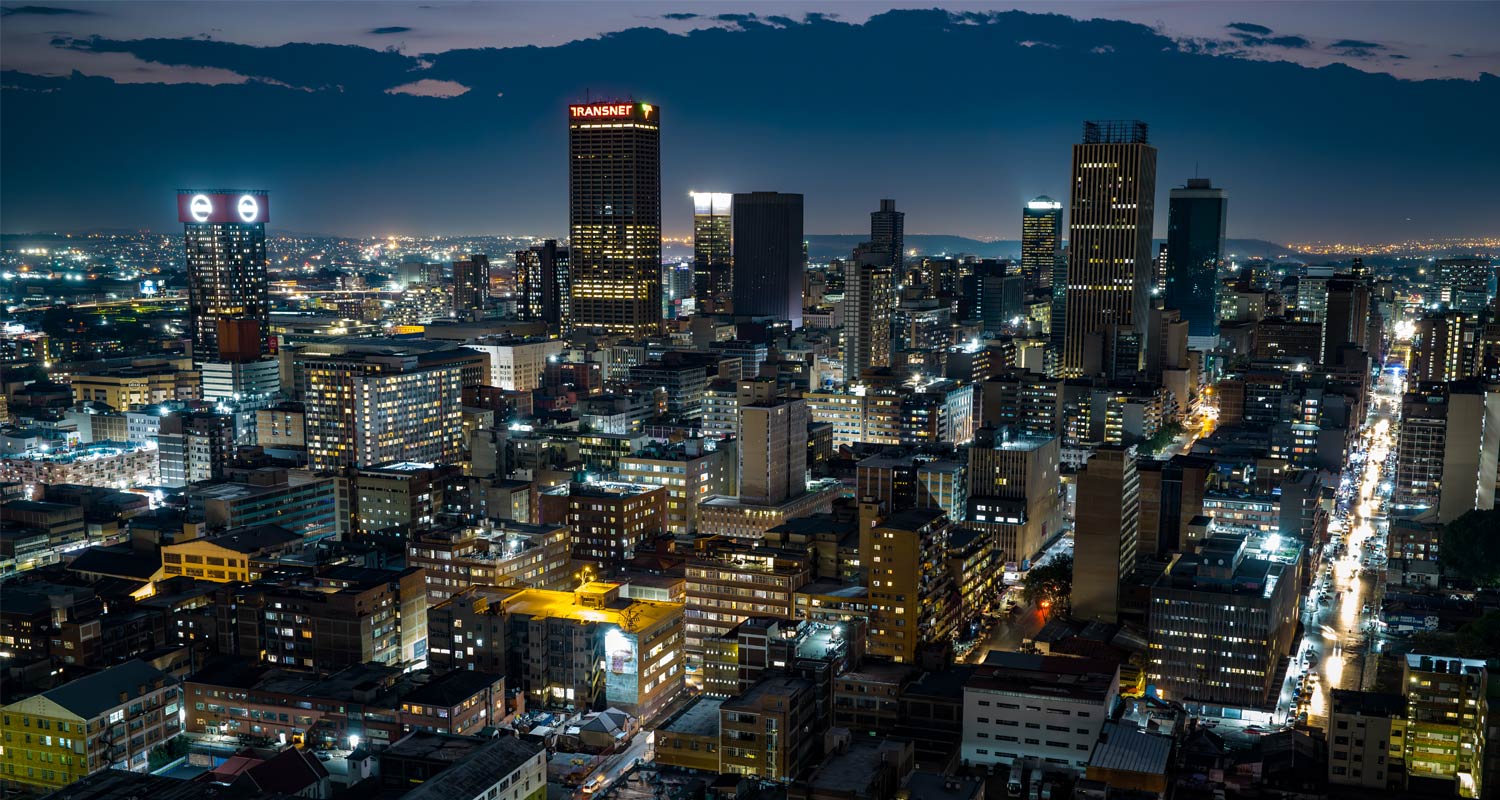
    Johannesburg is South Africa’s biggest and richest city

    But critics say the increase is the latest example of a city run by chaotic and constantly changing coalitions milking its poor. On Tuesday, Johannesburg mayor Kabelo Gwamanda quit after months of political infighting and amid persistent struggles to balance the budget. The city has had eight mayors since 2019.

    South Africa does offer the poor a way to apply for free electricity. National treasury allocates money to different municipalities to supply free services based on the number of poor households in their cities. In the most recent financial year, the treasury allocated R1.8-billion to Johannesburg for more than 1.1 million indigent households’ electricity, the most of any of the country’s five biggest metropolitan areas.

    “We appeal to our indigent customers to take advantage of this benefit,” says a spokesman for City Power.

    Free basic services have been very badly implemented. Hands-down the worst offender is Johannesburg

    It’s unclear how much of that money actually reaches low-income people. To receive the benefit, one must get onto Johannesburg’s indigent register, a process that requires an array of documents and income of less than R6 213/month. Only South African citizens or permanent residents can apply, and the application process must be repeated every six months.

    Belinda Kayser-Echeozonjoku, caucus leader for the Democratic Alliance, the biggest opposition party in the city council, says the indigent register is inaccurate. She and other critics also argue the new charge was imposed without adequate consultation. A number of prepaid meter owners say they were unaware it existed until they bought power in July.

    “Free basic services [in Johannesburg] have been very badly implemented,” Ledger says, adding that the money national treasury allocates can easily be channelled to general use. “Hands-down the worst offender — gold medal — is the City of Johannesburg.”

    In a televised interview on Tuesday, energy minister Kgosientsho Ramokgopa emphasised that municipalities receive money to subsidise electricity for the poor. “It’s not a funding problem, it’s an execution problem,” he says.

    Indigent register

    City Power says it gives 50kWh of free electricity each month to just under 11 000 Johannesburg households with prepaid meters. That’s out of the 171 000 households with prepaid meters that the utility deems “non-affluent”, a number that lines up with 2022 data from Statistics South Africa. By contrast, Cape Town provides free power to 316 000 people and the City of Tshwane — which includes Pretoria — provides the service to 155 000 people, according to Statistics South Africa.

    Johannesburg itself says that it covers some electricity costs for about 175 000 households through its Expanded Social Package Programme via City Power and Eskom. Eskom says it supplies 6 384 households in Johannesburg and is compensated by the city.

    Read: Eskom’s extraordinary turnaround

    Sitting in the well-kept house he bought in 1996 and now shares with his wife, daughter and dog, Matubatuba says it’s practically impossible to get on the indigent register. Many of Yeoville’s residents are foreigners from as far away as Ethiopia and the Democratic Republic of Congo; some of them are undocumented. But even South Africans feel defeated by the red tape.

    “It’s a melting pot; all of Africa is here,” Matubatuba says as children play soccer on the street outside. “People will try and they will be given the runaround and then they give up.”
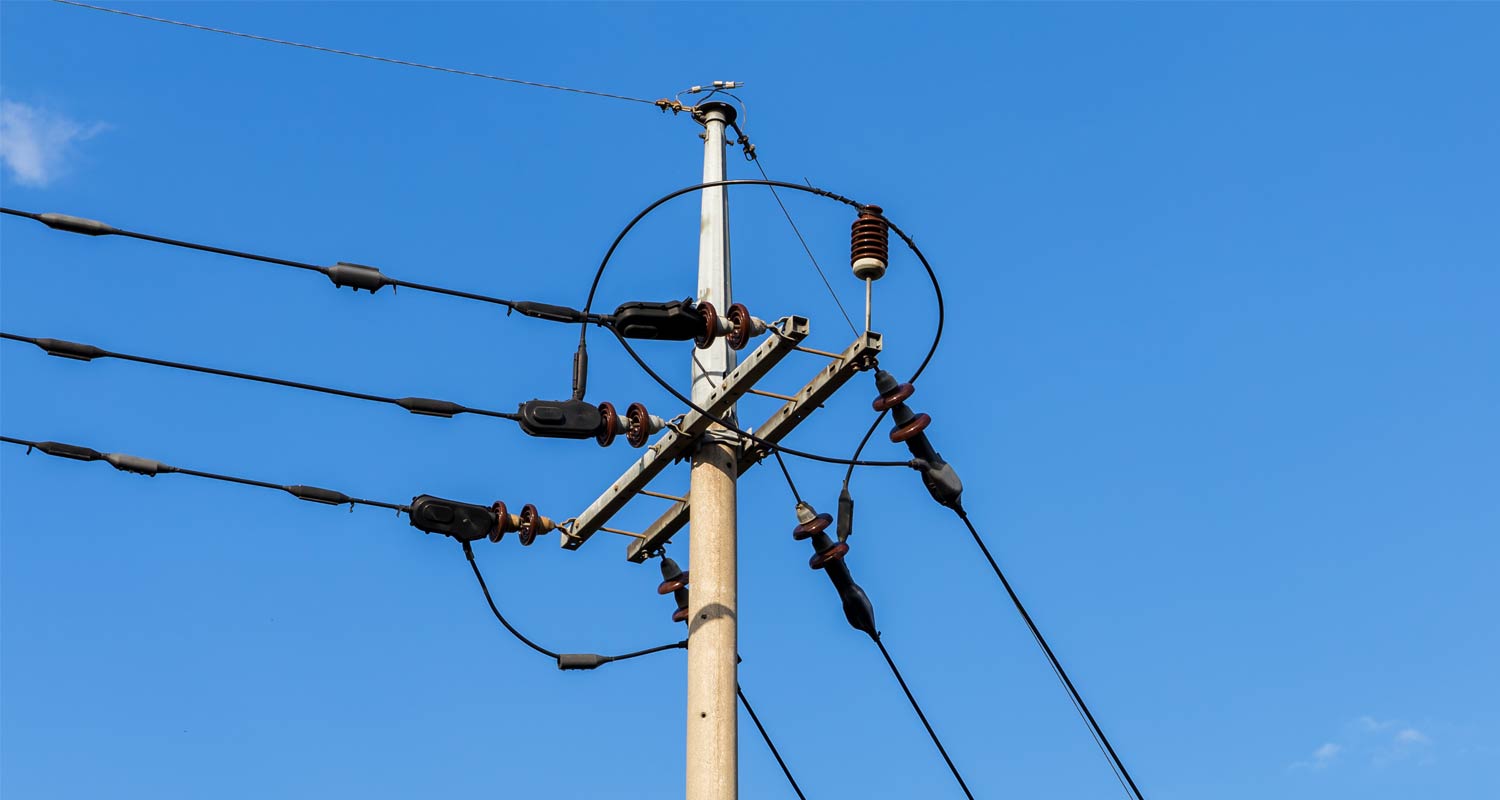
    Johannesburg’s problems have been compounded by its inability to enforce laws and collect revenue, and by its failure to tackle the proliferation of illegal connections to the grid. (City Power says the unlawful connections are why it regularly cuts off power in Yeoville.) In July, activists that included Matubatuba’s group led a protest in the city centre over dissatisfaction with electricity services, and called for Gwamanda’s removal.

    For now, Matubatuba and his neighbours have to endure what he says is an untenable situation. Many buildings in the overcrowded neighbourhood have been taken over by squatters, and power outages are causing crime to surge in what is already one of the city’s most dangerous areas.

    There are “house and people robberies, muggings, hijackings of cars, killings by stabbing and shootings”, Matubatuba says. During outages, people also steal power cables — leading to blackouts that in some areas last even longer.  — (c) 2024 Bloomberg LP

    TCS | ESP app’s Herman Maritz on Eskom’s miraculous turnaround

    Follow TechCentral on Google News Add TechCentral as your preferred source on Google


    City Power Eskom Tsepo Matubatuba
    WhatsApp YouTube
    Share. Facebook Twitter LinkedIn WhatsApp Telegram Email Copy Link
    Previous ArticleWhy your small business needs to get serious about cybersecurity
    Next Article South Africa publishes national AI policy framework

    Related Posts

    Eskom developing bitcoin mining plan but needs Nersa's nod - Agnes Mlambo

    Eskom developing bitcoin mining plan but needs Nersa’s nod

    22 April 2026
    Eskom to decide fate of older coal stations by September - Dan Marokane

    Eskom to decide fate of older coal stations by September

    22 April 2026
    New Wits-built app to warn South Africans of pollution spikes - Bruce Mellado

    New Wits-built app to warn South Africans of pollution spikes

    20 April 2026
    Company News
    How AnyDesk is redefining remote access for African enterprises

    How AnyDesk is redefining remote access for African enterprises

    22 April 2026
    Centracom's Pindrop takes the pain out of wholesale fibre

    Centracom’s Pindrop takes the pain out of wholesale fibre

    22 April 2026
    Conversational AI is rewriting the customer service playbook - CallMiner

    Conversational AI is rewriting the customer service playbook

    22 April 2026
    Opinion
    The conflict of interest at the heart of PayShap's slow adoption - Cheslyn Jacobs

    The conflict of interest at the heart of PayShap’s slow adoption

    26 March 2026
    South Africa's energy future hinges on getting wheeling right - Aishah Gire

    South Africa’s energy future hinges on getting wheeling right

    10 March 2026
    Hold the doom: the case for a South African comeback - Duncan McLeod

    Apple just dropped a bomb on the Windows world

    5 March 2026

    Subscribe to Updates

    Get the best South African technology news and analysis delivered to your e-mail inbox every morning.

    Latest Posts
    Mythos forces South African banks onto high alert - Graham Lee

    Mythos forces South African banks onto high alert

    23 April 2026
    Free calls, dead voice and Shameel Joosub's Spanish ghost

    Free calls, dead voice and Shameel Joosub’s Spanish ghost

    22 April 2026
    Capitec CEO Graham Lee

    Capitec blows up MVNO pricing with free on-net calls

    22 April 2026
    Eskom developing bitcoin mining plan but needs Nersa's nod - Agnes Mlambo

    Eskom developing bitcoin mining plan but needs Nersa’s nod

    22 April 2026
    © 2009 - 2026 NewsCentral Media
    • Cookie policy (ZA)
    • TechCentral – privacy and Popia

    Type above and press Enter to search. Press Esc to cancel.

    Manage consent

    TechCentral uses cookies to enhance its offerings. Consenting to these technologies allows us to serve you better. Not consenting or withdrawing consent may adversely affect certain features and functions of the website.

    Functional Always active
    The technical storage or access is strictly necessary for the legitimate purpose of enabling the use of a specific service explicitly requested by the subscriber or user, or for the sole purpose of carrying out the transmission of a communication over an electronic communications network.
    Preferences
    The technical storage or access is necessary for the legitimate purpose of storing preferences that are not requested by the subscriber or user.
    Statistics
    The technical storage or access that is used exclusively for statistical purposes. The technical storage or access that is used exclusively for anonymous statistical purposes. Without a subpoena, voluntary compliance on the part of your Internet Service Provider, or additional records from a third party, information stored or retrieved for this purpose alone cannot usually be used to identify you.
    Marketing
    The technical storage or access is required to create user profiles to send advertising, or to track the user on a website or across several websites for similar marketing purposes.
    • Manage options
    • Manage services
    • Manage {vendor_count} vendors
    • Read more about these purposes
    View preferences
    • {title}
    • {title}
    • {title}