Close Menu
TechCentralTechCentral

    Subscribe to the newsletter

    Get the best South African technology news and analysis delivered to your e-mail inbox every morning.

    Facebook X (Twitter) YouTube LinkedIn
    WhatsApp Facebook X (Twitter) LinkedIn YouTube
    TechCentralTechCentral
    • News
      No partner, no funding: Post Office wants out of rescue anyway

      No partner, no funding: Post Office wants out of rescue anyway

      18 August 2026
      South Africa's fraud problem is persuasion, not hacking

      South Africa’s fraud problem is persuasion, not hacking

      18 August 2026
      Your iPhone is about to get a massive upgrade

      Your iPhone is about to get a massive upgrade

      18 August 2026
      Absa writes off another R200-million in software - Johnson Idesoh

      Absa writes off another R200-million in software

      18 August 2026
      Sars maps out the tech stack that will replace VAT returns

      Sars maps out the tech stack that will replace VAT returns

      17 August 2026
    • World
      Russia building its own Starlink - and faster than expected - Vadym Skibitskyi

      Russia building its own Starlink – and faster than expected

      11 August 2026
      Meta AI will now tell parents if their teen is in crisis

      Meta AI will now tell parents if their teen is in crisis

      17 July 2026
      IBM shares crash 25% as AI upends software spending - Arvind Krishna

      IBM shares crash 25% as AI upends software spending

      15 July 2026
      Jony Ive's first OpenAI device: an AI smart speaker - Jony Ive and Sam Altman

      Jony Ive’s first OpenAI device: an AI smart speaker

      15 July 2026
      Stripe, Advent in talks to buy PayPal for $53-billion

      Stripe, Advent in talks to buy PayPal for $53-billion

      15 July 2026
    • In-depth
      Google DeepMind CEO Demis Hassabis. Image: John Sears

      The plan to stop AI from breaking the world

      16 July 2026
      The internet has a Strait of Hormuz problem

      The internet has a Strait of Hormuz problem

      15 July 2026
      AI boom sparks rally, frenzy and fear

      AI boom sparks rally, frenzy and fear

      11 June 2026
      Every plug-in hybrid on sale in South Africa, ranked by price - Lamborghini Temerario

      Every plug-in hybrid on sale in South Africa, ranked by price

      7 June 2026
      What Wi-Fi 8 will mean for wireless networks

      What Wi-Fi 8 will mean for wireless networks

      1 June 2026
    • TCS
      Meet the CIO | Discovery's Derek Wilcocks on AI, guardrails and growth

      Meet the CIO | Derek Wilcocks on how AI personalised Vitality

      13 August 2026
      TCS | Money just became native to the internet - Steven Boykey Sidley

      TCS | Money just became native to the internet – Steven Boykey Sidley

      12 August 2026
      TCS+ | Specops' Darren James on continuous trust in an AI world

      TCS+ | Specops’ Darren James on continuous trust in an AI world

      7 August 2026
      TCS+ | How AI is turning hardware into a subscription service - Shane van der Merwe Merchant West

      TCS+ | How AI is turning hardware into a subscription service

      6 August 2026
      TCS+ | Why South African workers must become supervisors of digital labour - Accelera Digital Group Cliff de Wit

      TCS+ | Why South African workers must become supervisors of digital labour

      31 July 2026
    • Opinion
      The author, Jannie van Zyl

      Selling vapour is corporate suicide in slow motion

      16 July 2026
      Brazil's online gambling crackdown is a lesson for South Africa

      How Amazon outmanoeuvred Starlink in South Africa

      15 July 2026
      The Popia problem with agentic AI - Herman Haasbroek

      The Popia problem with agentic AI

      14 July 2026
      The author, Fanie van Rooyen

      South Africa can still catch the AI wave – here’s how

      7 July 2026
      The author, Fanie van Rooyen

      The AI utopia South Africa can’t afford

      1 July 2026
    • Company Hubs
      • 1Stream
      • Africa Data Centres
      • AfriGIS
      • Altron Digital Business
      • Altron Document Solutions
      • Altron Group
      • Arctic Wolf
      • Ascent Technology
      • AvertITD
      • BBD
      • Braintree
      • CallMiner
      • CambriLearn
      • CM Telecom
      • Contactable
      • CYBER1 Solutions
      • Digicloud Africa
      • Digimune
      • Domains.co.za
      • ESET
      • Euphoria Telecom
      • HOSTAFRICA
      • Incredible Business
      • iONLINE
      • IQbusiness
      • Iris Network Systems
      • Kaspersky
      • LSD Open
      • Mitel
      • NEC XON
      • Netstar
      • Network Platforms
      • Next DLP
      • Ovations
      • Paracon
      • Paratus
      • Q-KON
      • SevenC
      • SkyWire
      • Solid8 Technologies
      • Telit Cinterion
      • Telviva
      • Tenable
      • Vertiv
      • Videri Digital
      • Vodacom Business
      • Vox
      • Wipro
      • Workday
      • XLink
    • Sections
      • AI and machine learning
      • Banking
      • Broadcasting and Media
      • Cloud services
      • Contact centres and CX
      • Cryptocurrencies
      • Education and skills
      • Electronics and hardware
      • Energy and sustainability
      • Enterprise software
      • Financial services
      • HealthTech
      • Information security
      • Internet and connectivity
      • Internet of Things
      • Investment
      • IT services
      • Lifestyle
      • Policy and regulation
      • Public sector
      • Retail and e-commerce
      • Satellite communications
      • Science
      • SMEs and start-ups
      • Social media
      • Talent and leadership
      • Telecoms
      • Watts & Wheels
    • Events
    • Advertise
    TechCentralTechCentral
    Home » News » SA mobile contract price hikes unjustified: study

    SA mobile contract price hikes unjustified: study

    By Agency Staff21 May 2015
    Twitter LinkedIn Facebook WhatsApp Email Telegram Copy Link
    News Alerts
    WhatsApp

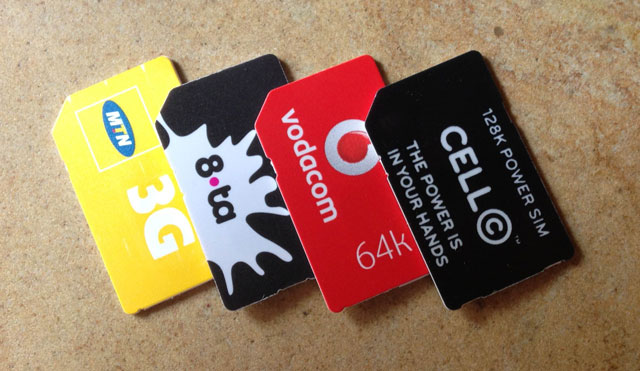
    sims-640

    Local mobile operators’ claims that rising input costs are fuelling contract price hikes are not reflected in these companies’ financial statements, says a research body.

    Research ICT Africa has put together a research brief that asks whether post-paid price increases by South African operators are justifiable.

    Vodacom, MTN and Cell C have this year raised contract prices because of what they say are inflationary adjustments, cost pressures faced by increasing electricity tariffs, electricity substitution costs incurred owing to load shedding, the depreciation of the rand, rising hardware costs and network expansion.

    But Research ICT Africa’s analysis of publicly listed Vodacom and MTN found that these rising costs are not reflected in the companies’ financial results.

    For example, the research organisation says Vodacom’s capital expenditure per subscriber fell from R249 in 2012 to R218 in 2014. Meanwhile, MTN’s capital expenditure per subscriber slipped from R252 in 2012 to R203 in 2014.

    “They make these claims that they have to increase investment and if you look at capital expenditure per subscriber, which would measure investment… You’ll see that this has been on the decline over time since 2012,” Safia Khan, the author of the report, said.

    “And in order to maintain a good quality of service, investment per subscriber should be increasing. So, they claim that they’re facing these increases in investment costs and what have you, but if you look at their investment per subscriber, it’s actually been on the decline,” Khan said.

    She further said results from Vodacom and MTN indicate they are experiencing healthy profits.

    Khan said the average margins of a telecoms operator around the world are usually 20%. However, South African operators have much higher margins. “Vodacom and MTN both have margins of well above 30%. So they’re doing quite fine,” said Khan.

    The report highlights that Vodacom’s earnings before interest, taxes, depreciation and amortisation (Ebitda) margin was 36,8% in 2010 and 37,4% in 2014. Meanwhile, MTN’s Ebitda margin fell from 44% in 2010 to 32,1% in 2014.

    The research also indicates that Vodacom’s revenues grew from R50,4bn in 2010 to R61,8 in in 2014. This shows Vodacom’s revenue grew faster than its operating expenses, which expanded from R31,9bn in 2010 to R38,6bn in 2014.

    “And you can see that the financial growth for Vodacom has increased at a rate that’s faster than the growth in its expenses, which means that it’s operating at a profit and that profit isn’t in any way jeopardised,” Khan said.

    The report paints a similar picture for MTN, which had revenues of R41,4bn in 2012 and R38,9bn in 2014. MTN’s operating expenditure, meanwhile, was relatively static from R27,9bn in 2012 to R26,4bn in 2014 while its capital expenditure was R6,4bn in 2012 and R5,7bn in 2014, according to the researchers.

    “And if you look at the health of both MTN and Vodacom, which is measured by the Ebitda margin … you’ll see that both of them have healthy Ebitda margins and Ebitda margins measure the core operating profitability of a business,” said Khan.

    Reasons for the price hikes then could be attributed to other factors such as mobile termination rates (MTRs), Khan said.

    MTRs are the rates telecoms operators charge each other for terminating calls on their networks, and the Independent Communications Authority of South Africa (Icasa) has adjusted these rates to ensure that smaller operators such as Cell C and Telkom Mobile earn more from MTRs than bigger players Vodacom and MTN.

    Vodacom, for example, reported a R2bn hit on its service revenues owing to what the company said was the 50% cut in MTRs.

    “I think they’re trying to replace revenues lost because there was that whole mobile termination rates saga, and then Icasa won and MTRs have to go down,” Khan said.

    “The revenues they are generating from voice has been on the decline, globally. This is a global trend … and more and more people are taking up data and using things like WhatsApp and Skype and over-the-top services,” she said.

    The researchers further say that South Africa’s increasing contract prices go against global trends in the mobile phone market.

    The contract price hikes in South Africa have also complied with local laws because the companies stuck to a 20-day notice period in terms of notifying their customers.

    “The three biggest operators increased postpaid prices more or less at the same time because they can. If only one had increased prices then consumers could have switched at the next opportunity to one of the other operators,”  reads the report.

    “Post-paid subscribers are locked into contracts with high termination fees, leaving them with no choice but to accept the price hikes,” the report said.  — Fin24

    Follow TechCentral on Google News Add TechCentral as your preferred source on Google


    Cell C Icasa MTN Research ICT Africa Safia Khan Telkom Telkom Mobile Vodacom
    WhatsApp YouTube
    Share. Facebook Twitter LinkedIn WhatsApp Telegram Email Copy Link
    Previous ArticleWhy MTN workers went on strike
    Next Article Price increases could bite mobile operators

    Related Posts

    Starlink direct-to-mobile network launched in key Sadc country

    Starlink direct-to-mobile network launched in key Sadc country

    17 August 2026
    Still no end in sight to South Africa's digital migration saga

    Still no end in sight to South Africa’s digital migration saga

    17 August 2026
    Icasa retracts collusion claim against mobile operators

    Icasa retracts collusion claim against mobile operators

    14 August 2026
    Company News
    Paratus Rwanda marks first year with AfPIF opening reception

    Paratus Rwanda marks first year with AfPIF opening reception

    18 August 2026
    Digital sovereignty on the agenda at Africa Cybersecurity Indaba

    Digital sovereignty on the agenda at Africa Cybersecurity Indaba

    18 August 2026
    Avast, AVG and Norton in 2026: smarter security for a new generation of threats

    Avast, AVG and Norton in 2026: smarter security for a new generation of threats

    17 August 2026
    Opinion
    The author, Jannie van Zyl

    Selling vapour is corporate suicide in slow motion

    16 July 2026
    Brazil's online gambling crackdown is a lesson for South Africa

    How Amazon outmanoeuvred Starlink in South Africa

    15 July 2026
    The Popia problem with agentic AI - Herman Haasbroek

    The Popia problem with agentic AI

    14 July 2026

    Subscribe to Updates

    Get the best South African technology news and analysis delivered to your e-mail inbox every morning.

    Latest Posts
    No partner, no funding: Post Office wants out of rescue anyway

    No partner, no funding: Post Office wants out of rescue anyway

    18 August 2026
    South Africa's fraud problem is persuasion, not hacking

    South Africa’s fraud problem is persuasion, not hacking

    18 August 2026
    Paratus Rwanda marks first year with AfPIF opening reception

    Paratus Rwanda marks first year with AfPIF opening reception

    18 August 2026
    Digital sovereignty on the agenda at Africa Cybersecurity Indaba

    Digital sovereignty on the agenda at Africa Cybersecurity Indaba

    18 August 2026
    © 2009 - 2026 NewsCentral Media
    Built and maintained by Chronon
    • Cookie policy (ZA)
    • TechCentral – privacy and Popia

    Type above and press Enter to search. Press Esc to cancel.

    Manage consent

    TechCentral uses cookies to enhance its offerings. Consenting to these technologies allows us to serve you better. Not consenting or withdrawing consent may adversely affect certain features and functions of the website.

    Functional Always active
    The technical storage or access is strictly necessary for the legitimate purpose of enabling the use of a specific service explicitly requested by the subscriber or user, or for the sole purpose of carrying out the transmission of a communication over an electronic communications network.
    Preferences
    The technical storage or access is necessary for the legitimate purpose of storing preferences that are not requested by the subscriber or user.
    Statistics
    The technical storage or access that is used exclusively for statistical purposes. The technical storage or access that is used exclusively for anonymous statistical purposes. Without a subpoena, voluntary compliance on the part of your Internet Service Provider, or additional records from a third party, information stored or retrieved for this purpose alone cannot usually be used to identify you.
    Marketing
    The technical storage or access is required to create user profiles to send advertising, or to track the user on a website or across several websites for similar marketing purposes.
    • Manage options
    • Manage services
    • Manage {vendor_count} vendors
    • Read more about these purposes
    View preferences
    • {title}
    • {title}
    • {title}