Close Menu
TechCentralTechCentral

    Subscribe to the newsletter

    Get the best South African technology news and analysis delivered to your e-mail inbox every morning.

    Facebook X (Twitter) YouTube LinkedIn
    WhatsApp Facebook X (Twitter) LinkedIn YouTube
    TechCentralTechCentral
    • News
      Vuyani Jarana: Mobile coverage masks a deeper broadband failure

      Vuyani Jarana: Mobile coverage masks a deeper broadband failure

      30 January 2026
      SABC Plus to flight Microsoft AI training videos

      SABC Plus to flight Microsoft AI training videos

      30 January 2026
      Fibre ducts

      Fibre industry consolidation in KZN

      30 January 2026
      Watts & Wheels S1E3: 'BYD's Corolla Cross challenger'

      Watts & Wheels S1E3: ‘BYD’s Corolla Cross challenger’

      30 January 2026
      What ordinary South Africans really think of AI

      What ordinary South Africans really think of AI

      30 January 2026
    • World
      Apple acquires audio AI start-up Q.ai

      Apple acquires audio AI start-up Q.ai

      30 January 2026
      SpaceX IPO may be largest in history

      SpaceX IPO may be largest in history

      28 January 2026
      Nvidia throws AI at the weather

      Nvidia throws AI at weather forecasting

      27 January 2026
      Debate erupts over value of in-flight Wi-Fi

      Debate erupts over value of in-flight Wi-Fi

      26 January 2026
      Intel takes another hit - Intel CEO Lip-Bu Tan. Laure Andrillon/Reuters

      Intel takes another hit

      23 January 2026
    • In-depth
      How liberalisation is rewiring South Africa's power sector

      How liberalisation is rewiring South Africa’s power sector

      21 January 2026
      The top-performing South African tech shares of 2025

      The top-performing South African tech shares of 2025

      12 January 2026
      Digital authoritarianism grows as African states normalise internet blackouts

      Digital authoritarianism grows as African states normalise internet blackouts

      19 December 2025
      TechCentral's South African Newsmakers of 2025

      TechCentral’s South African Newsmakers of 2025

      18 December 2025
      Black Friday goes digital in South Africa as online spending surges to record high

      Black Friday goes digital in South Africa as online spending surges to record high

      4 December 2025
    • TCS
      TCS+ | How Cloud On Demand is helping SA businesses succeed in the cloud - Xhenia Rhode, Dion Kalicharan

      TCS+ | Cloud On Demand and Consnet: inside a real-world AWS partner success story

      30 January 2026
      Watts & Wheels S1E3: 'BYD's Corolla Cross challenger'

      Watts & Wheels S1E2: ‘China attacks, BMW digs in, Toyota’s sublime supercar’

      23 January 2026

      TCS+ | Why cybersecurity is becoming a competitive advantage for SA businesses

      20 January 2026
      Watts & Wheels S1E3: 'BYD's Corolla Cross challenger'

      Watts & Wheels: S1E1 – ‘William, Prince of Wheels’

      8 January 2026
      TCS+ | Africa's digital transformation - unlocking AI through cloud and culture - Cliff de Wit Accelera Digital Group

      TCS+ | Cloud without culture won’t deliver AI: Accelera’s Cliff de Wit

      12 December 2025
    • Opinion
      South Africa's skills advantage is being overlooked at home - Richard Firth

      South Africa’s skills advantage is being overlooked at home

      29 January 2026
      Why Elon Musk's Starlink is a 'hard no' for me - Songezo Zibi

      Why Elon Musk’s Starlink is a ‘hard no’ for me

      26 January 2026
      South Africa's new fibre broadband battle - Duncan McLeod

      South Africa’s new fibre broadband battle

      20 January 2026
      AI moves from pilots to production in South African companies - Nazia Pillay SAP

      AI moves from pilots to production in South African companies

      20 January 2026
      South Africa's new fibre broadband battle - Duncan McLeod

      ANC’s attack on Solly Malatsi shows how BEE dogma trumps economic reality

      14 December 2025
    • Company Hubs
      • Africa Data Centres
      • AfriGIS
      • Altron Digital Business
      • Altron Document Solutions
      • Altron Group
      • Arctic Wolf
      • AvertITD
      • Braintree
      • CallMiner
      • CambriLearn
      • CYBER1 Solutions
      • Digicloud Africa
      • Digimune
      • Domains.co.za
      • ESET
      • Euphoria Telecom
      • Incredible Business
      • iONLINE
      • IQbusiness
      • Iris Network Systems
      • LSD Open
      • NEC XON
      • Netstar
      • Network Platforms
      • Next DLP
      • Ovations
      • Paracon
      • Paratus
      • Q-KON
      • SevenC
      • SkyWire
      • Solid8 Technologies
      • Telit Cinterion
      • Tenable
      • Vertiv
      • Videri Digital
      • Vodacom Business
      • Wipro
      • Workday
      • XLink
    • Sections
      • AI and machine learning
      • Banking
      • Broadcasting and Media
      • Cloud services
      • Contact centres and CX
      • Cryptocurrencies
      • Education and skills
      • Electronics and hardware
      • Energy and sustainability
      • Enterprise software
      • Financial services
      • Information security
      • Internet and connectivity
      • Internet of Things
      • Investment
      • IT services
      • Lifestyle
      • Motoring
      • Public sector
      • Retail and e-commerce
      • Satellite communications
      • Science
      • SMEs and start-ups
      • Social media
      • Talent and leadership
      • Telecoms
    • Events
    • Advertise
    TechCentralTechCentral
    Home » In-depth » Smart home assistants dominate at CES

    Smart home assistants dominate at CES

    By Agency Staff5 January 2017
    Twitter LinkedIn Facebook WhatsApp Email Telegram Copy Link
    News Alerts
    WhatsApp
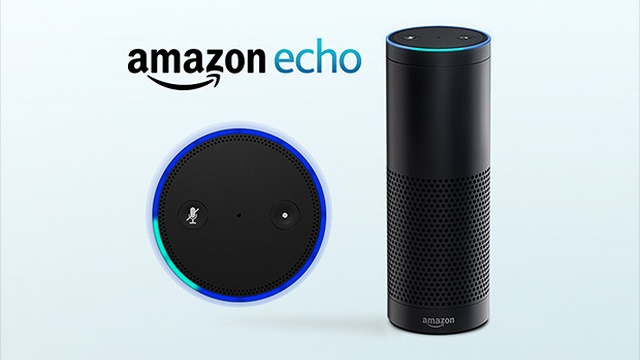
    Amazon’s Echo

    For years, the biggest names in tech crammed the Consumer Electronics Show floor with fridges, light switches and microwave ovens to preview a futuristic world where you could control every appliance in the home with your voice.

    But most of these products, bogged down by glitchy software and hard-to-navigate interfaces, failed to go mainstream.

    This year may be different. Aided by new artificial intelligence software that makes it easier for gadgets to understand speech, tech giants led by Amazon.com are locked in a race for dominance of digital home assistants.

    “People are a bit disappointed with assistants, because there are no clear use cases,” said Greg Gerard, creative chairman of Holi, which is debuting a US$199 smart alarm clock called Bonjour. “We have one.”

    Gerard must show regular consumers the value of smart assistant technology. But he doesn’t need to convince big technology firms, which all believe voice-based interactions with devices will explode in popularity. Almost every major tech company has or will soon introduce a digital assistant product powered by AI. And they’re making a concerted effort to spread the technology everywhere.

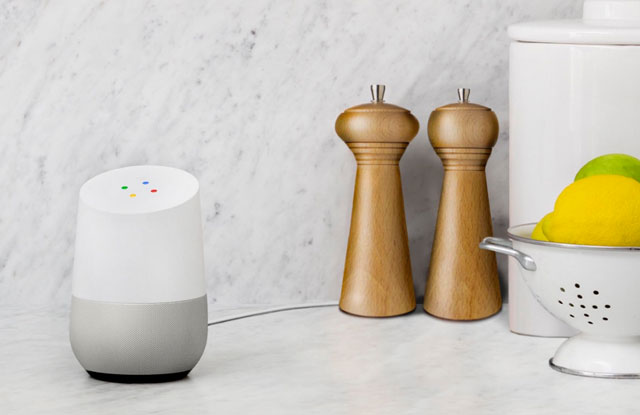
    Google is using CES to tout tie-ups with its smart Home speaker, a device similar to Amazon’s Echo. Microsoft has invested heavily in its assistant, Cortana. Samsung is set to unveil its assistant tech for its phones and other devices in 2017. Last month, Facebook CEO Mark Zuckerberg showed off a smart home assistant he said he coded himself.

    Behind the scenes at CES, these tech behemoths will fight to get their voice-based systems into televisions, cable boxes and every home appliance, not just smartphones and PCs. Analysts expect several dozen announcements around voice systems at this week’s event in Las Vegas, including new functions for Internet-connected devices and cars. Ford unveiled an integration with Alexa on Wednesday.

    Then there are the specialised assistants, ranging from the Bonjour clock, which Gerard said will arrive later this year, to a personal home robot from startup Jibo — a compact, futuristic device designed to recognise human emotions, said company CEO Steve Chambers.

    Research firm Tractica estimates about 40m homes will use a voice-activated digital assistant by 2021.

    Mark Zuckerberg

    Amazon’s version, Alexa, introduced in 2014 on the Echo speaker, works with more than 6 000 applications, according to a company spokeswoman. On Tuesday, Amazon announced a partnership with Whirlpool, adding voice command capabilities to Whirlpool washers, dryers, ovens and refrigerators.

    Amazon has built an effective developer outreach strategy and introduced a $100m investment fund for start-ups creating products around voice applications. Unlike other tech peers, Amazon has a dominant sales channel for its voice-assistance partners.

    “Amazon has been brilliant about it,” said Mark Beccue, an analyst at Tractica. “They might be the best trigger to the smart home, to making it a mass-market product.”

    Google makes its splash

    Last year, Biz Stone revamped his start-up, Jelly Industries, as a search engine — something that puts it up against Google. But when Google began hunting partners last month for its Home speaker, Jelly was among the first to sign on.

    Google was a zealous suitor. Employees treated him to lunch and when the deal closed a Google operative sent him an animated .gif of Seinfeld characters dancing. “They’ve been a joy to work with,” said Stone, who co-founded Twitter.

    Google’s aggressive courtship is understandable; it’s behind Amazon. Since inception, Google’s business was based on keyboard-based searches. Now the Web giant is refocusing its strategy around its voice assistant, a system that sits in its speaker, Pixel smartphone and — if Google succeeds — every device imaginable. On Tuesday at CES, Google announced a partnership with Hyundai that lets drivers control some car functions by talking to the Home speaker. It’s expected to unveil more assistant partnerships with devices like smart TVs.

    Google has an edge in building voice technology, thanks to its unmatched repository of search data. But the company must prove it can distribute its assistant widely. Hurdles exist. The same month Google debuted its Pixel phone, Samsung, the largest Android phone manufacturer, acquired Viv Labs, a start-up building a voice-powered assistant. Samsung plans to roll out an AI platform for its devices this year, the company said in a statement. Apple, which tightly controls about 40% of US smartphones, is investing in a similar push with its Siri voice assistant.

    Microsoft already has software tools for developers to embed Cortana into devices, and its automotive partners will announce new integrations at CES, said Matthew Quinlan, Cortana’s director of product marketing. “For Cortana to do her job, she needs to be in a lot of different devices.”
    Google Home

    And there’s Facebook. The company has said that Zuckerberg’s smart-home tech was merely a demonstration. Yet the social network is testing more bot integrations with the AI-assistant in its popular Messenger chat app, a product Google has struggled to deliver.

    Still, Amazon remains the one to catch. For developers building voice-assisted tools, the company offers support from its already popular cloud-computing platform, giving it another edge.

    “You are not going to see a clear number 2 emerge in 2017,” said Forrester analyst Mike Gualtieri. “Technologically, Google is the closest competitor. But in terms of Google’s ability to get it into homes, I question that.”

    Assistant nightmare

    Another question is how to make money from a voice-controlled home. Profit margins on hardware sales are usually thin and voice-controlled computers may throw a wrench in established business models, like text-based Web search.

    Some investors backing the technology aren’t concerned. “There are lots and lots of ways you can monetise when you control the interface,” said John Lilly, a venture capitalist with Greylock Partners. “You control control information flow. You can route requests. You can certainly ship people stuff.”

    Lilly, who backs AI assistant startup Ozlo, insists young companies can make dents in the market with more advanced technology, like systems that can carry on complex conversations, rather than the relatively simple commands Alexa uses. However, analysts are sceptical that start-ups can match the budgets and data reserves of public tech companies.

    Still, that may not dissuade companies, large and small, from trying to build their own voice assistants. With that rush, the question of who controls the tools will become paramount.

    “In less than three years, every home will have the opportunity to have this digital assistant,” said Forrester’s Gualtieri. “Now you’ll have the question of who am I talking to: Amazon Echo or my refrigerator? So that could be a nightmare.”  — (c) 2017 Bloomberg LP



    Amazon Biz Stone CES Cortana Google Greg Gerard Holi Jelly Industries Mark Zuckerberg Microsoft
    WhatsApp YouTube Follow on Google News Add as preferred source on Google
    Share. Facebook Twitter LinkedIn WhatsApp Telegram Email Copy Link
    Previous ArticleMusk’s Gigafactory has been activated
    Next Article Bitcoin crashes as much as 23% in one day

    Related Posts

    SABC Plus to flight Microsoft AI training videos

    SABC Plus to flight Microsoft AI training videos

    30 January 2026
    What ordinary South Africans really think of AI

    What ordinary South Africans really think of AI

    30 January 2026
    Cloud adoption the weak link in SA's digital government push: Microsoft - Vukani Mngxati

    Cloud adoption the weak link in SA’s digital government push: Microsoft

    29 January 2026
    Company News
    Huawei turns 25 in South Africa, celebrates with major device discounts

    Huawei turns 25 in South Africa, celebrates with major device discounts

    30 January 2026
    Phishing has not disappeared, but it has grown up - KnowBe4

    Phishing has not disappeared, but it has grown up

    30 January 2026
    Smartphone affordability: South Africa's new economic divide - PayJoy

    Smartphone affordability: South Africa’s new economic divide

    29 January 2026
    Opinion
    South Africa's skills advantage is being overlooked at home - Richard Firth

    South Africa’s skills advantage is being overlooked at home

    29 January 2026
    Why Elon Musk's Starlink is a 'hard no' for me - Songezo Zibi

    Why Elon Musk’s Starlink is a ‘hard no’ for me

    26 January 2026
    South Africa's new fibre broadband battle - Duncan McLeod

    South Africa’s new fibre broadband battle

    20 January 2026

    Subscribe to Updates

    Get the best South African technology news and analysis delivered to your e-mail inbox every morning.

    Latest Posts
    Vuyani Jarana: Mobile coverage masks a deeper broadband failure

    Vuyani Jarana: Mobile coverage masks a deeper broadband failure

    30 January 2026
    TCS+ | How Cloud On Demand is helping SA businesses succeed in the cloud - Xhenia Rhode, Dion Kalicharan

    TCS+ | Cloud On Demand and Consnet: inside a real-world AWS partner success story

    30 January 2026
    Huawei turns 25 in South Africa, celebrates with major device discounts

    Huawei turns 25 in South Africa, celebrates with major device discounts

    30 January 2026
    SABC Plus to flight Microsoft AI training videos

    SABC Plus to flight Microsoft AI training videos

    30 January 2026
    © 2009 - 2026 NewsCentral Media
    • Cookie policy (ZA)
    • TechCentral – privacy and Popia

    Type above and press Enter to search. Press Esc to cancel.

    Manage consent

    TechCentral uses cookies to enhance its offerings. Consenting to these technologies allows us to serve you better. Not consenting or withdrawing consent may adversely affect certain features and functions of the website.

    Functional Always active
    The technical storage or access is strictly necessary for the legitimate purpose of enabling the use of a specific service explicitly requested by the subscriber or user, or for the sole purpose of carrying out the transmission of a communication over an electronic communications network.
    Preferences
    The technical storage or access is necessary for the legitimate purpose of storing preferences that are not requested by the subscriber or user.
    Statistics
    The technical storage or access that is used exclusively for statistical purposes. The technical storage or access that is used exclusively for anonymous statistical purposes. Without a subpoena, voluntary compliance on the part of your Internet Service Provider, or additional records from a third party, information stored or retrieved for this purpose alone cannot usually be used to identify you.
    Marketing
    The technical storage or access is required to create user profiles to send advertising, or to track the user on a website or across several websites for similar marketing purposes.
    • Manage options
    • Manage services
    • Manage {vendor_count} vendors
    • Read more about these purposes
    View preferences
    • {title}
    • {title}
    • {title}